伊利金典纯牛奶

Search documents
中国必选消费品3月价格报告:白酒批价跌多涨少,婴配粉外大众品均加大折扣
Haitong Securities International· 2026-03-27 05:29
Investment Rating - The report assigns an "Outperform" rating to multiple companies in the essential consumer goods sector, including Guizhou Moutai, Wuliangye, and Yili [1]. Core Insights - The wholesale prices of baijiu are experiencing more declines than increases, with significant discounts being applied to general consumer goods, excluding infant formula [1][32]. - The report highlights a trend of increasing discounts across various consumer goods categories, indicating a competitive pricing environment [5][19]. Summary by Category Baijiu Pricing Trends - Among 38 monitored baijiu products, 18 saw price declines, 13 experienced increases, and 7 remained stable. The month-on-month price changes for products above 1500 yuan ranged from -10% to -3%, while year-on-year changes were between -25% and -15% [32]. - In the 700-1500 yuan price range, 4 out of 5 products saw price declines month-on-month, with changes ranging from -8% to -2% [33]. - For products priced between 500-700 yuan, 2 products increased in price while 2 decreased, with month-on-month changes from -5% to +3% [34]. - In the 300-500 yuan category, 5 products increased while 5 decreased, with month-on-month changes ranging from -4% to +4% [35]. - For products below 300 yuan, 6 increased in price while 4 decreased, with month-on-month changes from -5% to +5% [36]. Discount Trends in Consumer Goods - Discounts for liquid milk products increased from an average of 66.1% to 64.5%, while median discounts remained stable [19][22]. - The average discount for condiments decreased from 86.2% to 74.9%, indicating a significant reduction in pricing strategies [19][22]. - Convenience foods saw a drop in average discounts from 92.6% to 87.3% [19][22]. - Beer products experienced a decrease in average discounts from 81.6% to 79.4% [19][22]. - Soft drinks also saw a reduction in average discounts from 85.4% to 79.1% [19][22]. - In contrast, discounts for infant formula products narrowed, with average discounts increasing from 88.4% to 93.3% [20][39].





败诉!蒙牛被判不正当竞争,赔偿伊利500万
Guo Ji Jin Rong Bao· 2025-10-10 15:52
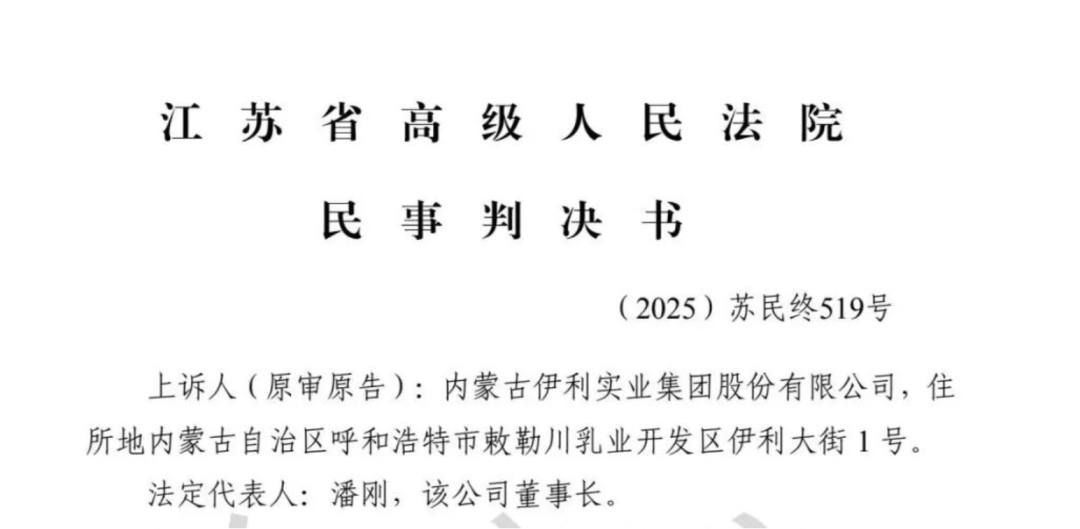
Core Viewpoint - The recent court ruling in favor of Yili against Mengniu highlights ongoing competition and branding issues in the dairy industry, particularly regarding packaging similarities that can confuse consumers [1][8]. Legal Dispute Summary - The Jiangsu Provincial High Court ruled that Mengniu's "Selected Pasture" milk packaging closely resembles Yili's "Jindian" packaging, constituting unfair competition. Mengniu is required to cease the infringing behavior and pay Yili 5 million yuan in damages [1][8]. - Yili requested Mengniu to publish a statement in major newspapers to mitigate the negative impact of the infringement [1]. Packaging Similarity Analysis - The packaging of Yili's "Jindian" and Mengniu's "Selected Pasture" is described as "highly similar," particularly in color scheme and layout, which could lead to consumer confusion [3][4]. - A survey indicated that 82.6% of respondents found the packaging similar, and 83.9% believed there was a connection between the two products [4]. Court Findings - The court determined that the similarity in packaging focuses on the main identifying features and overall visual effect rather than a detailed comparison of each side [6]. - The high recognition of Yili's packaging, combined with the similarities and the potential for consumer confusion, led to the conclusion that Mengniu's actions constituted unfair competition [7][8]. Historical Context of Disputes - This is not the first dispute between Yili and Mengniu over packaging. Previous cases include a 2015 ruling where Mengniu was found to have engaged in unfair competition regarding the "Future Star" yogurt [10][12]. - In 2023, Yili also sued Mengniu's subsidiary for similar reasons, resulting in Mengniu changing its packaging and paying compensation [14]. Market Position and Financial Performance - Yili's revenue for the first half of the year was 61.933 billion yuan, a 3.37% increase, while Mengniu's revenue was 41.567 billion yuan, a 6.95% decline, indicating a widening gap between the two companies [15]. - Yili's diverse business structure, including significant revenue from milk powder and ice cream, contrasts with Mengniu's reliance on liquid milk, which has seen a decline in sales [17][18].


乳业“618”分化:伊利领跑,婴配粉、鲜奶冷淡丨消费现场
2 1 Shi Ji Jing Ji Bao Dao· 2025-06-22 23:43
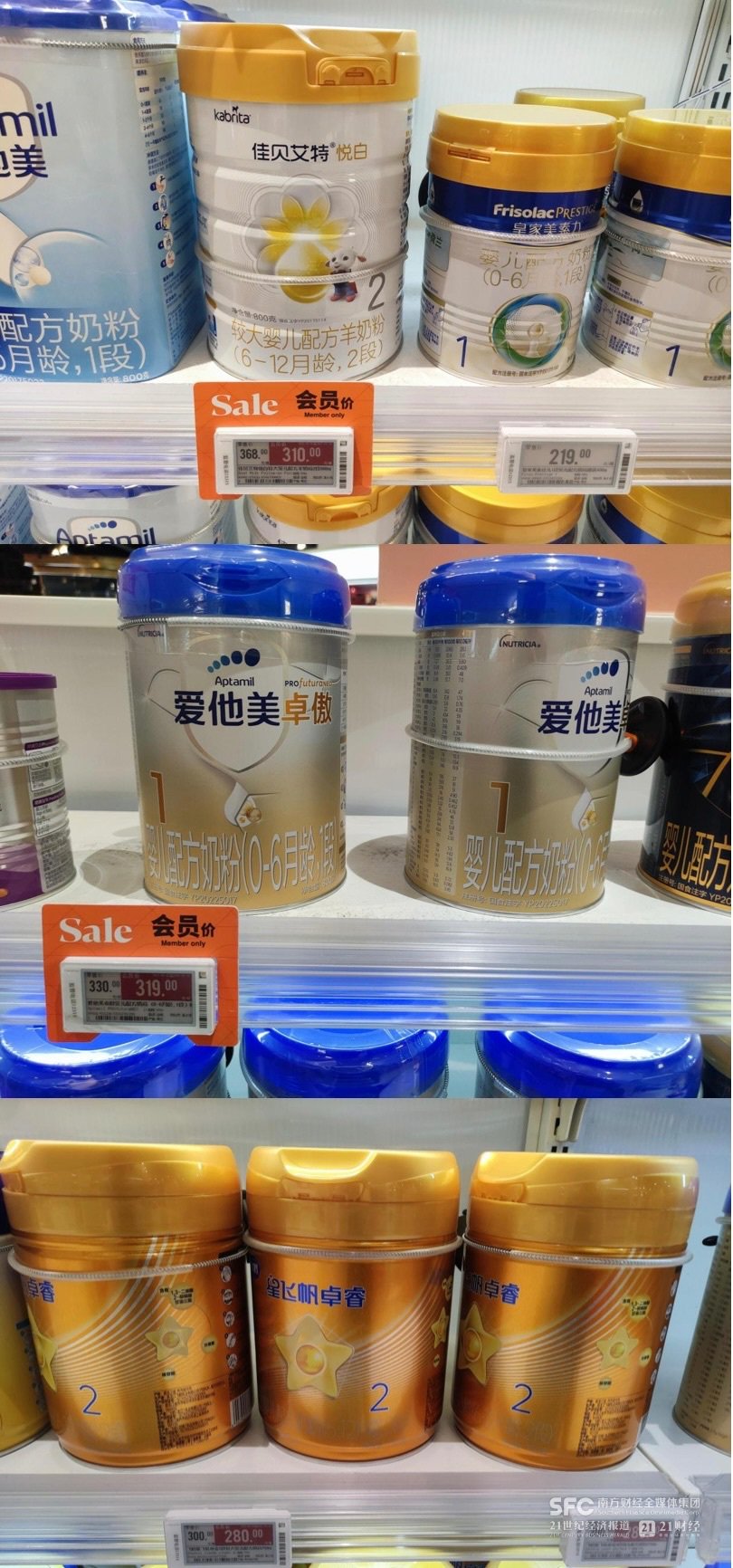
Group 1: E-commerce Sales Growth - The "618" shopping festival is projected to reach a total e-commerce sales of 855.6 billion yuan in 2025, marking a year-on-year growth of 15.2% [2] - The duration of this year's "618" event has been extended from May 13 to June 18, compared to last year's May 20 to June 18, which may amplify this year's growth [2] - In May 2025, the total retail sales of consumer goods in China reached 41,326 billion yuan, with a year-on-year growth of 6.4%, driven by the "618" promotions and trade-in subsidies [2] Group 2: Dairy Industry Performance - Yili has increasingly focused on the "618" event, reporting a 12.3% year-on-year growth in user purchases on major e-commerce platforms during this period [5] - Yili's infant nutrition products saw a growth of over 33%, while its adult nutrition products topped the e-commerce sales charts [5] - Despite the growth, Yili's revenue in 2024 was 115.78 billion yuan, down 8.2% year-on-year, with liquid milk revenue declining by 3.1% [9][10] Group 3: Market Trends and Challenges - The overall demand in the dairy industry is contracting, with a 2.7% year-on-year decline in total sales across all channels in 2024 [10] - The infant formula market is shifting towards high-end products, with the ultra-high-end segment growing by 13.3% in early 2025, while other segments are experiencing declines [15] - Major brands like Danone and FrieslandCampina reported significant growth in their high-end infant formula products in 2024, indicating a trend towards premiumization in the market [16] Group 4: Pricing Strategies - Discounts in the infant formula market are limited, with brands like Feihe offering minimal promotions, contrasting sharply with aggressive discounting strategies seen in other sectors [13][14] - The fresh milk market is also experiencing limited discounts, with ongoing price wars among brands, but demand remains stable due to supply chain constraints [19][20]