
低空物流航线

Search documents
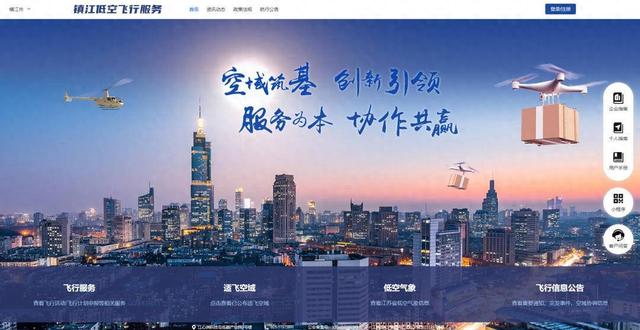
镇江低空经济发展迈出关键步 首批3条低空物流航线、8个空域获批
Xin Lang Cai Jing· 2026-01-24 14:29
Core Viewpoint - The city of Zhenjiang is advancing its low-altitude economy by establishing low-altitude flight service guarantees, with the approval of three low-altitude logistics routes and eight airspaces, marking a significant step in building an efficient low-altitude flight service network [1][3] Group 1: Low-Altitude Economy Development - Zhenjiang's transportation authorities are focusing on the development needs of the low-altitude economy and have successfully obtained approvals for the first batch of low-altitude logistics routes and airspaces [1] - The city is adhering to the provincial "four ones" principle, which includes "one standard, one platform, one regulation, and one network," to ensure the standardized development of the low-altitude economy [3] Group 2: Low-Altitude Flight Service Platform - The Jiangsu low-altitude flight service platform is being utilized to provide support for low-altitude flight activities, including airspace queries, weather information sharing, flight status monitoring, and warning information [3] - The Zhenjiang Comprehensive Transportation Development Center is focused on providing precise services such as airspace and route applications, flight plan declarations, and operational monitoring to ensure safe, efficient, and convenient low-altitude flight activities [3] Group 3: Compliance and Regulation - There is a call for all relevant enterprises and institutions in Zhenjiang to strictly adhere to laws, regulations, and flight management rules to promote compliant flight activities [3] - The development of the low-altitude economy is expected to gain momentum with the full launch of the "14th Five-Year Plan" [3]

珠海金湾拟打造全省最大“低空培训+休闲文旅”航空基地
Nan Fang Ri Bao Wang Luo Ban· 2025-12-15 07:44
Core Insights - The Zhuhai Jinwan District plans to implement a new action for cultivating emerging industries, focusing on accelerating the development of strategic emerging industry clusters such as aerospace and low-altitude economy, aiming to create the largest "low-altitude training + leisure tourism" aviation base in the province [1] - From January to October this year, the low-altitude economy in Jinwan District achieved an industrial output value of 2.097 billion yuan, representing a year-on-year increase of over 900% [1] - The district has established a complete industrial chain for the low-altitude economy, including upstream core technology research and design, midstream component and aircraft manufacturing, and downstream aviation exhibitions and low-altitude industry applications [1] - A total of 8 low-altitude economy-related projects have been successfully launched in Jinwan District this year, with a total agreed investment amount exceeding 6 billion yuan [1] - The Xingwan International Aviation Base has been built as the main low-altitude infrastructure, continuously innovating low-altitude economic application scenarios [1] - The base successfully tested a low-altitude logistics route from Yangjiang to Zhuhai, filling a gap in the low-altitude corridor from the western bank of the Pearl River Estuary to the coastal areas of Guangdong West [1] - The first fixed route flight from Shenzhen Nanshou Airport to Zhuhai Jinwan Xingwan Base was completed using an EC225 helicopter with a maximum capacity of 19 passengers [1] - The Xingwan Base has excellent airspace resources with a true height of 1,000 meters, a 500-meter long runway, and a 10,000 square meter helipad, meeting 90% of the current domestic market demand for drone testing [1] Focus on Low-Altitude Testing - Jinwan District will further leverage the "one-stop flight service" resources of the Xingwan Base in the "low-altitude + testing" field, gradually constructing a comprehensive testing system that integrates drone research and design, technical verification, and airworthiness certification [2] - This initiative aims to effectively address industry pain points such as airspace coordination difficulties, high testing costs, and fragmented scenarios [2]
中国光谷:“一束光”照亮一座宜居宜业现代化新城
Zhong Guo Xin Wen Wang· 2025-11-06 09:49
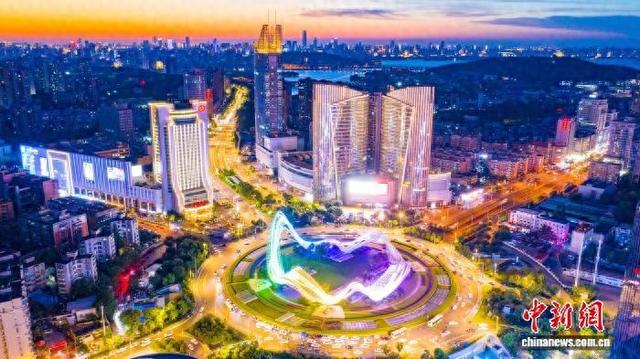
Core Insights - Wuhan East Lake New Technology Development Zone, known as "China Optics Valley," has transformed from agricultural land into the world's largest optical communication R&D and production base, covering 518 square kilometers and housing a population of 2 million [1] Group 1: Community and Social Development - The Left Ridge Street Zhiyuan Community and Huashan Street Lanyuan Community have been recognized as national model elderly-friendly communities, showcasing effective community governance [3] - The Zhiyuan Community features a 200-square-meter elderly care center that integrates care, dining, and social services, enhancing the quality of life for seniors [3] - The Lanyuan Community, with a 25% aging rate, employs over 500 volunteers and has established a "time bank" to optimize community elderly care resources [3] Group 2: Education and Living Environment - The region has implemented an "education group" strategy, adding 10 new schools and 14,000 student places to accommodate the growing school-age population, with nearly 40% of new teachers holding master's degrees [4] - Urban management and ecological construction have been prioritized, resulting in the establishment of 28 pocket parks and a 10-kilometer central ecological corridor that connects communities and schools [4] - The area has introduced a 9-kilometer low-altitude logistics route, allowing for rapid delivery of goods to residents [4] Group 3: Cultural and Commercial Development - The local demographic, with over 30% under 30 years old, has led to a vibrant cultural and sports scene, with significant local consumption rates [6] - The Wuhan Tennis Open and numerous concerts have been hosted at the Wuhan International Tennis Center, attracting thousands of attendees and enhancing local entertainment options [6] - The commercial landscape is expanding, with new projects set to increase commercial space by over 700,000 square meters by 2026, marking a shift from a historically low commercial presence to a diverse retail environment [6]
低空经济利好,广东出台支持措施
Zhong Guo Zheng Quan Bao· 2025-10-24 13:26
Core Viewpoint - Guangdong Province has introduced significant support measures to promote the high-quality development of the low-altitude economy, aiming to leverage its advantages and establish itself as a national leader in this sector [1] Group 1: Key Measures - The measures include 16 specific initiatives such as accelerating key technology breakthroughs, enhancing industrial innovation platforms, fostering new low-altitude consumption models, and strengthening financial support for the low-altitude economy [1] - The measures will be effective for three years from the date of publication and are aimed at businesses and institutions engaged in low-altitude economic activities within Guangdong [1] Group 2: Key Technology Initiatives - The measures emphasize the acceleration of key core technology breakthroughs, focusing on new aircraft configurations, critical components, basic software, and low-altitude flight support [2] - A selection mechanism for key technology projects in the low-altitude sector will be established, involving various stakeholders such as government departments, universities, research institutions, and enterprises [2] Group 3: New Consumption Models - The measures promote urban air traffic applications, supporting pilot projects in cities like Guangzhou, Shenzhen, and Zhuhai to establish low-altitude passenger routes and cross-border drone logistics [3] - There is a focus on developing low-altitude tourism, including the issuance of consumption vouchers and collaboration with travel agencies to create sightseeing and themed tours [3] Group 4: Financial Support - The measures highlight the importance of enhancing financial services for the low-altitude economy, encouraging investment from various financial institutions and providing comprehensive financial services throughout the lifecycle of low-altitude enterprises [4] - There will be increased policy support for loan interest subsidies and risk compensation, as well as efforts to facilitate the listing of qualified low-altitude companies [4]
广东:支持广州、深圳、珠海先行先试 稳步开通市内和城际低空客运航线
Zheng Quan Shi Bao Wang· 2025-10-24 09:08
Core Viewpoint - The Guangdong Provincial Government has issued measures to support the high-quality development of the low-altitude economy, focusing on urban air traffic applications and logistics [1] Group 1: Urban Air Traffic Development - The government supports Guangzhou, Shenzhen, and Zhuhai to pilot urban and intercity low-altitude passenger routes while ensuring safety [1] - There is an emphasis on exploring the formulation of low-altitude air traffic rules and cross-border drone logistics delivery in the Greater Bay Area [1] Group 2: Support for Low-altitude Logistics - Local governments are encouraged to support newly opened and regularly operated low-altitude logistics routes [1] - There is a push to enhance traditional aviation, particularly for newly opened and regularly operated helicopter passenger routes, with local governments urged to strengthen resource support [1]