
低空飞行服务

Search documents
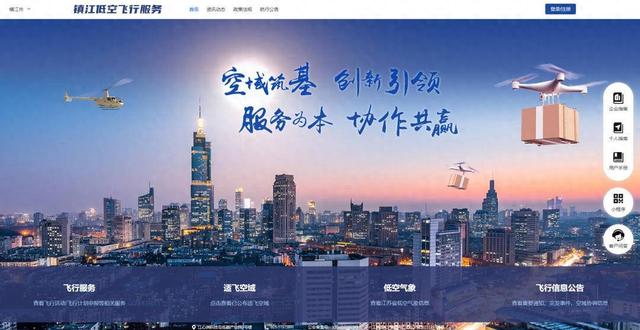
镇江低空经济发展迈出关键步 首批3条低空物流航线、8个空域获批
Xin Lang Cai Jing· 2026-01-24 14:29
Core Viewpoint - The city of Zhenjiang is advancing its low-altitude economy by establishing low-altitude flight service guarantees, with the approval of three low-altitude logistics routes and eight airspaces, marking a significant step in building an efficient low-altitude flight service network [1][3] Group 1: Low-Altitude Economy Development - Zhenjiang's transportation authorities are focusing on the development needs of the low-altitude economy and have successfully obtained approvals for the first batch of low-altitude logistics routes and airspaces [1] - The city is adhering to the provincial "four ones" principle, which includes "one standard, one platform, one regulation, and one network," to ensure the standardized development of the low-altitude economy [3] Group 2: Low-Altitude Flight Service Platform - The Jiangsu low-altitude flight service platform is being utilized to provide support for low-altitude flight activities, including airspace queries, weather information sharing, flight status monitoring, and warning information [3] - The Zhenjiang Comprehensive Transportation Development Center is focused on providing precise services such as airspace and route applications, flight plan declarations, and operational monitoring to ensure safe, efficient, and convenient low-altitude flight activities [3] Group 3: Compliance and Regulation - There is a call for all relevant enterprises and institutions in Zhenjiang to strictly adhere to laws, regulations, and flight management rules to promote compliant flight activities [3] - The development of the low-altitude economy is expected to gain momentum with the full launch of the "14th Five-Year Plan" [3]

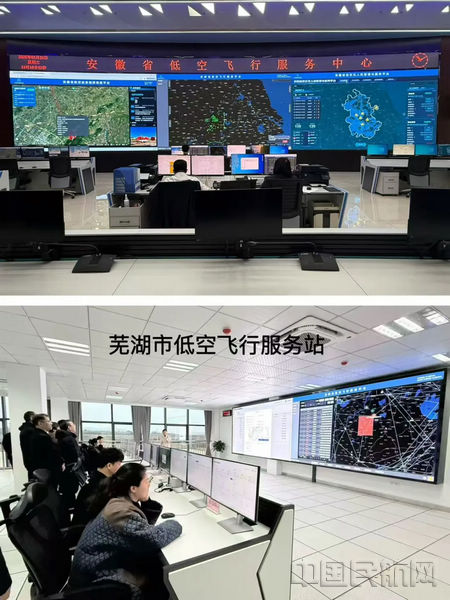
我省在全国率先实现 省市低空飞服平台一体化运营
Xin Lang Cai Jing· 2026-01-15 16:20
Core Viewpoint - The establishment of the integrated operation model for low-altitude flight service platforms in Anhui Province marks a significant innovation in the development of a unified and efficient low-altitude flight service system, positioning Anhui at the forefront of general aviation and low-altitude economic development in China [1][2] Group 1: Operational Developments - The Anhui Low Altitude Flight Service Center has officially completed the management operation of the Wuhu Low Altitude Flight Service Center, representing the first integrated operation model at both provincial and municipal levels in the country [1] - The center is responsible for core functions such as airspace designation, route planning, flight plan application, and dynamic reporting, which are crucial for the safe and healthy development of Anhui's low-altitude economy [1] - As of now, all 22 key reform tasks have been completed, achieving significant phased results [1] Group 2: Future Projections - By 2025, the center is projected to support a total of 81,200 low-altitude flights and 17,300 flight hours, representing increases of 115.5% and 91.5% respectively compared to 2024 [1] - The center aims to enhance the collaborative mechanism and transition low-altitude services from "passive management" to "refined services" and "value empowerment," thereby unlocking the potential of low-altitude airspace [2] - The focus will be on better serving emerging industries such as drone logistics, urban air traffic, and emergency rescue, laying a solid foundation for Anhui to accelerate the construction of a national low-altitude economic demonstration zone [2]
安徽省低空飞行服务中心实现省市飞服平台一体化运营
Zhong Guo Min Hang Wang· 2026-01-14 06:37
Core Viewpoint - The establishment of a unified low-altitude flight service platform in Anhui Province marks a significant innovation in the development of the low-altitude economy and general aviation, positioning the province as a leader in this sector nationally [1][4]. Group 1: Low-altitude Flight Service Center - Anhui Province has officially completed the management and operation of the Wuhu Low-altitude Flight Service Center, representing the successful implementation of a dual-level low-altitude flight service platform [1]. - The provincial low-altitude flight service center is responsible for core functions such as airspace designation, route planning, and flight plan reporting, which are crucial for the safe and healthy development of Anhui's low-altitude economy [4]. - As of now, all 22 key reform tasks have been completed, achieving significant progress in the low-altitude airspace management reform [4]. Group 2: Operational Mechanism - The low-altitude flight service center has established a new operational mechanism characterized by "provincial coordination and municipal execution," enhancing the efficiency of low-altitude service supply [5]. - The provincial platform focuses on dynamic airspace allocation and resource coordination, while the municipal platform concentrates on route execution and emergency response, significantly improving airspace utilization and flight safety [5]. Group 3: Future Developments - The low-altitude flight service center aims to transition from "passive management" to "refined service" and "value empowerment," enhancing management efficiency and better supporting emerging sectors such as drone logistics and urban air traffic [6]. - The center is committed to building a solid foundation for Anhui to become a national low-altitude economic demonstration zone and to promote high-quality development in the low-altitude economy [6].
低空经济:“空中丝绸之路”建设最后1000米
Feng Huang Wang Cai Jing· 2025-12-02 08:50
Core Viewpoint - The seventh Silk Road International Cooperation Summit highlighted the importance of low-altitude economy in enhancing regional economic development and addressing challenges in infrastructure, airspace coordination, and capital introduction [1][3]. Group 1: Low-altitude Economy Development - The low-altitude economy is increasingly recognized as a key driver for regional economic growth, particularly in county-level areas, which are seen as vital for the "Silk Road in the Sky" initiative [1]. - Experts discussed the integration of low-altitude economy with county-level economic development, emphasizing the need for policy opportunities, technological support, and international pathways [1][3]. Group 2: Infrastructure and Policy Challenges - Common challenges faced by counties in developing low-altitude economies include difficulties in infrastructure implementation, airspace coordination, and capital attraction [1]. - The construction of a suitable low-altitude operation management system is essential to overcome existing bottlenecks, rather than solely focusing on airspace restrictions [4]. Group 3: Industry Practices and Innovations - Companies are actively exploring low-altitude applications, with one firm developing a comprehensive service system to lead in intelligent networking and platform services [3]. - The rapid growth of drone training institutions, nearing 4,000 nationwide, raises concerns about quality and safety, necessitating a focus on regulatory compliance and sustainable development [5]. Group 4: Internationalization and Collaboration - There is potential for China’s low-altitude economy to serve as a model for neighboring regions, with successful county-level practices being exportable to Southeast Asia and Central Asia [5]. - The summit initiated a "Hundred Counties, Hundred Stations, Hundred Scenarios" action plan to promote high-quality development of low-altitude economies through collaboration among government, enterprises, and educational institutions [7].

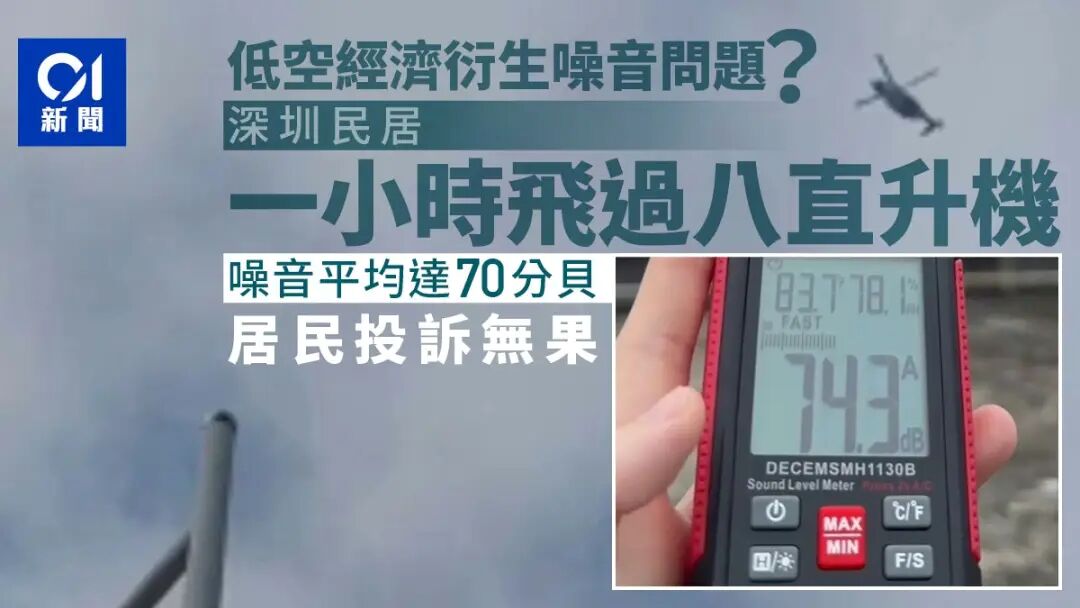
无人机不会敲门,但噪音会:低空经济的第一场舆论压力测试
3 6 Ke· 2025-11-25 11:18
Core Viewpoint - The low-altitude economy, driven by technology and capital, is increasingly becoming a reality, leading to significant noise complaints from residents, highlighting the tension between urban governance and public space rights [1][2][4]. Group 1: Noise Complaints and Public Response - In recent years, Shenzhen has seen a rise in noise complaints related to low-altitude flights, with over 700 complaints recorded from August to October 2023 [4]. - Noise levels from low-flying aircraft have reached nearly 70 dB, significantly impacting residents' quality of life, particularly affecting children and family routines [2][4]. - The unpredictable nature of low-altitude noise has been shown to cause anxiety among residents, as it disrupts their sense of control over their environment [4][5]. Group 2: Infrastructure Expansion and Governance Challenges - Shenzhen plans to construct over 1,200 low-altitude takeoff and landing points by 2026, with over 1,000 commercial flight routes expected to be operational [5]. - Despite ambitious infrastructure plans, noise governance measures are lagging, with existing regulations failing to address the specific challenges posed by low-altitude noise [5][6]. - The lack of a comprehensive regulatory framework for airborne noise pollution has led to difficulties in enforcing noise complaints, leaving residents feeling their right to peace is overlooked [6][10]. Group 3: Technological Solutions and Limitations - Companies involved in low-altitude flight are promoting noise reduction technologies as a key selling point, claiming significant noise reduction through design optimizations [7][8]. - However, real-world conditions often negate these claims, as cumulative noise from multiple aircraft can overwhelm individual noise reduction efforts [8][9]. - Effective noise management requires not only technological solutions but also strategic planning regarding flight schedules and operational practices [9][10]. Group 4: Public Participation and Decision-Making - Residents have limited opportunities to participate in decision-making processes regarding low-altitude flight planning, often feeling excluded from discussions that directly affect their lives [9][10]. - The absence of formal channels for community feedback exacerbates tensions, as residents are informed of decisions rather than involved in them [10][11]. - A more inclusive governance model is needed, where community input is actively sought and considered in planning processes [11][12]. Group 5: Societal Implications and Future Directions - The low-altitude economy presents a conflict between economic development narratives and residents' quality of life concerns, leading to potential social unrest if not addressed [15][16]. - Establishing noise thresholds based on population density and ensuring community involvement in planning could help mitigate conflicts [12][13]. - A collaborative approach involving multiple stakeholders is essential to balance the interests of low-altitude economic development with residents' rights to a peaceful living environment [13][14].
长春市绿园区举办航空·低空产业供需对接会
Jing Ji Guan Cha Bao· 2025-09-23 01:45
Core Insights - The event themed "Gathering Strength for Blue Sky Economy, Building Low Altitude Future" was held in Changchun's Green Park District, focusing on the aviation and low-altitude industry [1] - Numerous enterprises, research institutions, financial organizations, and industry experts gathered to explore new opportunities for industrial development and promote deep integration of technology, capital, and market [1] Industry Developments - Key enterprises in the Green Park District showcased their advantages and achievements in core components for rail transit, general parts for automobiles and drones, new materials, and drone training [1] - Representatives from external enterprises shared cutting-edge trends and collaboration opportunities in the aerospace industry and low-altitude economy, highlighting advancements in drone R&D and innovative low-altitude flight service models [1] Collaborative Efforts - During the supply-demand matching and interactive communication session, enterprises from both inside and outside the region engaged in in-depth discussions on market connectivity, complementary advantages, and industrial interconnection [1] - Consensus was reached on future development layouts, industrial support, talent cultivation, and cooperation between industry, academia, and research [1]
关于低空经济无人机产业相关公司的架构搭建与发展模式探索(仅供参考)
Sou Hu Cai Jing· 2025-08-07 04:44
Company Structure - The board of directors is the highest decision-making body responsible for strategic planning, major investment decisions, and appointing senior management, comprising industry experts, seasoned entrepreneurs, and investor representatives to ensure scientific and forward-looking decisions [3] - The management team, consisting of a general manager and deputy general managers, is responsible for daily operations, executing board decisions, and coordinating departmental work [3] - Functional departments include: - General Affairs Department: Manages administrative tasks, human resources, and logistics support [4] - Finance Department: Handles financial management, risk control, budgeting, and financial reporting [4][9] - Marketing Department: Conducts market research, develops marketing strategies, and enhances brand awareness [4][9] - Technology R&D Department: Focuses on research and innovation in low-altitude economy technologies [4][9] - Operations Department: Manages specific business operations, including drone leasing and low-altitude flight services [4][9] - Safety Management Department: Ensures safety in low-altitude flight activities through safety checks and training [5] - Legal Department: Manages legal affairs, including contract review and intellectual property protection [6] Development Model - Business areas include: - Drone R&D and manufacturing, focusing on high-performance drones for various industries [11] - Low-altitude flight services, offering drone leasing and customized flight solutions [11] - Low-altitude infrastructure construction, collaborating with local governments for hardware support [11][12] - Low-altitude data services, utilizing drone-collected data for analysis and commercial applications [11] - Cooperation models involve: - Industry-academia-research collaboration to enhance technology and talent development [12] - Industry alliance cooperation to share resources and enhance competitiveness [12] - Government-enterprise cooperation to align with local low-altitude economic development plans [12] Market Expansion - Regional expansion focuses on establishing business bases in economically developed areas with favorable low-altitude policies, such as the Pearl River Delta and Yangtze River Delta [13] - Industry expansion targets high-demand sectors like logistics and agriculture, leveraging successful case studies for broader market penetration [13] Profit Model - Revenue generation through product sales of self-developed drones and related equipment [15] - Service fees from drone leasing, flight training, and data services [15] - Government subsidies and rewards for low-altitude economy enterprises [15] - Revenue sharing from collaborative projects based on partnership agreements [15]
无锡苏州促低空经济法规获批
Xin Hua Ri Bao· 2025-08-04 21:59
Core Viewpoint - The recent approval of low-altitude economy regulations in Wuxi and Suzhou aims to enhance service and prioritize safety, providing a legal framework for the development of the low-altitude economy in these cities [1][2]. Group 1: Legislative Focus - The regulations emphasize "promoting development" and aim to resolve existing challenges in the low-altitude economy, facilitating the pursuit of pilot projects in this sector [1][2]. - Both cities are establishing a unified low-altitude flight service platform to enhance operational efficiency and connectivity with higher-level service platforms [2]. Group 2: Safety and Infrastructure - Safety is a primary concern in the regulations, with a focus on establishing mechanisms for cross-departmental coordination in handling low-altitude flight violations and ensuring safety assessments [2]. - The structure of the regulations is similar, covering infrastructure, flight services, application promotion, industrial development, and safety measures, but with different emphases in Wuxi and Suzhou [3]. Group 3: Economic Impact - Suzhou's low-altitude economy is rapidly growing, with over 500 related enterprises and a production value exceeding 40 billion, indicating a robust industrial chain [3]. - The provincial low-altitude economy promotion regulations are in preparatory stages, with plans to submit for review next year, indicating ongoing legislative support for the sector [3].
城市24小时 | 动真格了?江苏“十三妹”想赢
Mei Ri Jing Ji Xin Wen· 2025-06-30 15:01
Group 1: Core Insights - Changzhou is focusing on the high-quality development of football through a three-year action plan from 2025 to 2027, emphasizing youth football, campus promotion, and integration with cultural tourism [1] - Despite a poor performance in the "Super League," Changzhou has gained attention through creative marketing strategies and community engagement, positioning itself as a potential winner in the football scene [1] - The city aims to recover its football reputation and improve its youth training systems, learning from the successful models of neighboring cities like Nantong [2][4] Group 2: Historical Context and Plans - Changzhou's interest in football development is not new; the "14th Five-Year Plan for Sports Development" initiated in 2021 already highlighted the importance of promoting football in schools and increasing funding for the sport [2] - The 2023 action plan further emphasizes the need for a structured approach to football development, including the establishment of training bases and attracting high-profile events [2] - Challenges such as the lack of professional clubs and a weak youth training system have been acknowledged, indicating a need for significant improvements [2] Group 3: Comparative Analysis - Nantong has established a successful model for youth football development, integrating schools, training camps, and professional teams, which has resulted in a strong talent pipeline for its football clubs [3] - The success of Nantong's football teams is attributed to its robust youth training system, contrasting with Changzhou's current struggles [3] Group 4: Broader Implications - The developments in Changzhou's football strategy may have implications for the local economy and community engagement, as sports can drive tourism and local business growth [1][2] - The integration of sports with cultural tourism is seen as a strategic move to enhance the city's appeal and economic prospects [1]

江苏省低空飞行服务中心开放服务
Xin Hua Ri Bao· 2025-06-29 23:22
Core Points - The Jiangsu Low Altitude Flight Service Center has officially opened to the public, marking the implementation of a collaborative management model for low-altitude airspace in Jiangsu [1] - The center is a provincial-level low-altitude flight service agency authorized by the provincial government, integrated into the national air traffic control system, and operates under the guidance of the provincial transportation department [1] - The center has established the first provincial platform in the country for integrated management of manned and unmanned aerial vehicles, utilizing digital airspace management and intelligent traffic management technologies [1][2] Summary by Categories Management Model - The center forms a new management model of "one airspace, multiple parties," providing a "Jiangsu solution" for low-altitude airspace reform through deep integration of digital airspace management technology and the civil aviation control system [2] Service Offerings - The center offers various services for low-altitude flight users, including flight declaration, route planning, and meteorological information, while ensuring effective support for all parties involved in low-altitude airspace management [1] Future Development Plans - The center aims to advance the low-altitude flight service system in stages: by 2025, it plans to achieve monitoring and early warning for cooperative flight activities; by the end of 2027, it will enhance hardware and software capabilities for manned and unmanned aircraft collaboration; and by 2030, it seeks to establish a comprehensive, efficient, and multi-faceted intelligent low-altitude flight service guarantee system [2]