
借碳

Search documents
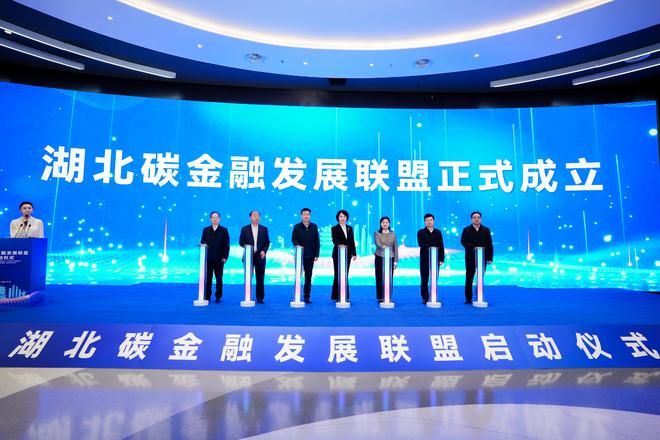
湖北成立全国首个碳金融联盟,探索碳金融创新
Di Yi Cai Jing Zi Xun· 2025-12-26 09:41
Core Viewpoint - The establishment of the Hubei Carbon Financial Development Alliance marks the first carbon market alliance in China focused on carbon finance innovation, aiming to create a comprehensive carbon service ecosystem [1] Group 1: Alliance Formation and Objectives - The Hubei Carbon Financial Development Alliance consists of 85 member units from key enterprises, financial institutions, universities, and industry associations [1] - The alliance aims to explore carbon finance innovation and develop a full-chain carbon service ecosystem [1] - Zhang Shimin, General Manager of Hubei Hongtai Group, emphasizes a four-pronged strategy to enhance the carbon market and finance, focusing on market activation, financial optimization, industry strengthening, and practical carbon inclusivity [3] Group 2: Financial Products and Achievements - Hubei has developed diverse carbon financial products, including carbon pledge, carbon repurchase, carbon insurance, and carbon bonds, with a total of 68 carbon financial transactions amounting to 1.309 billion yuan, accounting for over 50% of the financing scale in the pilot carbon market [3] - The province has also expanded its green finance scale, with the "E-Green Pass" platform registering 848 green projects and completing financing of 151.8 billion yuan [3] Group 3: Market Expansion and Future Directions - The national carbon market has successfully expanded, becoming the largest carbon market globally, with over 1.138 billion yuan in financial clearing [4] - Experts suggest that Hubei should leverage its pilot carbon market advantages to explore innovations in carbon futures, options, insurance, and credit products [4] - Recommendations include developing green low-carbon financial tools to support the commercialization of green research outcomes and promoting carbon-linked loan developments [4] Group 4: Collaborative Initiatives - The Hubei Electric Power Design Institute launched the "Electric Carbon Time Loan" in collaboration with several financial and energy institutions [5] - Insurance products like "Carbon Reduction Insurance" were introduced, with partnerships established among various financial entities [5] - China Minsheng Bank signed a cooperation agreement to promote carbon-inclusive financial city alliances [5]

市场扩容迎新机 金融赋能促发展
Jin Rong Shi Bao· 2025-07-14 03:14
Core Insights - The national carbon market in China is approaching its fourth anniversary, with significant progress in emissions reduction and market stability, achieving a cumulative transaction value exceeding 46.2 billion RMB and an average price of over 74 RMB per ton [1] - The market is evolving towards maturity, with ongoing improvements in regulatory frameworks and mechanisms to facilitate carbon pricing and trading [1][2] Market Expansion - The national carbon market has completed three compliance cycles and is expanding to include steel, cement, and electrolytic aluminum industries, which are significant contributors to emissions [2] - This expansion is designed to be gradual, allowing new sectors to adapt to the rules and enhance their participation in carbon trading [2] Financial Mechanisms - Carbon markets offer unique advantages over traditional financing methods, such as shorter financing cycles and better mobilization of private capital, particularly beneficial for developing countries [3] - The development of carbon financial products, including futures and derivatives, is expected to enhance market liquidity, risk management, and pricing mechanisms [6][7] Data Utilization - There is a need for improved carbon accounting and disclosure mechanisms, as many companies lack robust carbon data, which is crucial for financial institutions [4] - Financial institutions are increasingly engaging in carbon accounting and climate risk stress testing, with 535 institutions conducting carbon accounting and 134 performing climate risk assessments in 2022 [4] Regulatory Developments - The People's Bank of China is revising guidelines for environmental information disclosure to encourage innovation in sustainable reporting among financial institutions [5] - The introduction of sustainable development reporting guidelines by major exchanges aims to enhance the quality of corporate sustainability disclosures [5] Future Directions - Experts emphasize the importance of developing a diverse range of carbon financial products to support small and medium enterprises in their carbon reduction efforts [7] - Initiatives like carbon accounts and rating systems are being piloted to link corporate emissions reductions with financing costs, fostering a sustainable reduction mechanism [7]
我国各省市应做大做强碳金融生态圈
Guo Ji Jin Rong Bao· 2025-05-06 09:21
Core Viewpoint - The ESG (Environmental, Social, and Governance) concept is becoming a key force in promoting sustainable development amid global climate crises and social inequality, with a focus on leveraging regional financial advantages and industrial clusters to enhance sustainable information disclosure and achieve high-quality economic development [1] Group 1: Policy and Standards - Regions in China should actively explore the establishment of sustainable information disclosure policies and standards that align with international norms and domestic needs, drawing from global standards like GRI and TCFD [2] - Local financial institutions should integrate these policies into their business processes, ensuring compliance in project approvals and risk assessments to provide scientific decision-making support [2] - The development of policies should consider the characteristics and needs of financial institutions, encouraging their participation in the policy-making process to ensure feasibility and effectiveness [2] Group 2: Information Disclosure Mechanism - Establishing a unified ESG information disclosure standard is essential to enhance the normativity and mandatory nature of disclosures across industries [3] - Financial institutions should incorporate ESG factors into due diligence and risk assessment processes, ensuring that information disclosure is closely integrated with business operations [3] - Collaboration with local governments and regulatory bodies is crucial for building an effective information disclosure mechanism, utilizing fintech to optimize disclosure processes [3] Group 3: Financial Market and Industrial Cluster Advantages - Financial markets in China should leverage their comprehensive elements to direct more capital towards low-carbon emission sectors, strengthening the carbon finance ecosystem [4] - Financial institutions are encouraged to develop green credit businesses and explore green bonds and carbon finance, linking financial services with local industrial upgrades [4] - Collaboration among financial institutions is vital to develop green financial products and services, enhancing credit support for low-carbon sectors [4] Group 4: Innovation in Green Financial Products and Services - Continuous innovation in green financial products and services is necessary, promoting various carbon-related financial instruments to support the green transformation of the economy [5][6] - Financial institutions must ensure comprehensive and accurate disclosure of environmental benefits and risks associated with new products, enhancing transparency for investors [6] - The development of unique green financial products should consider market demands and regional characteristics, improving their attractiveness and credibility [6] Group 5: Talent Development and International Cooperation - Green finance talent should be included in the list of scarce talents, with efforts to attract and cultivate professionals with international perspectives [7] - Strengthening exchanges with international financial centers can introduce advanced concepts and practices, enhancing local financial institutions' capabilities in sustainable information disclosure [7] - Financial institutions should focus on building a skilled workforce knowledgeable in both finance and ESG principles, participating in international exchanges to improve competitiveness [7]