儿童金融

Search documents
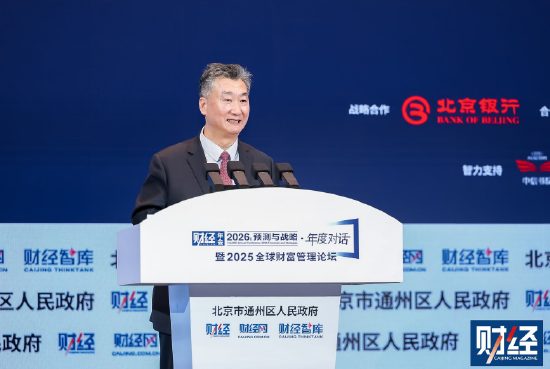
北京银行霍学文谈儿童金融:培养会理财的小朋友,或许会出现很多巴菲特
Xin Lang Cai Jing· 2025-12-18 02:21
Core Viewpoint - The 2026 Financial Annual Conference and 2025 Global Wealth Management Forum will be held in Beijing from December 18-20, 2025, focusing on children's financial education and the importance of nurturing financial literacy among the younger generation [1][4]. Group 1: Children's Financial Education - Beijing Bank has established the first child-friendly bank in China, emphasizing financial literacy, traditional cultural education, and social education for children [1][4]. - The bank has served 2.6 million children and helped them manage over 20 billion yuan in their New Year's money [1][4]. Group 2: Addressing Illegal Fundraising - The chairman of Beijing Bank highlighted the challenge of persuading elderly individuals against investing in illegal fundraising schemes, noting that advice from grandchildren is more effective than that from their children [1][4]. - The cultivation of financial awareness in the next generation is seen as a crucial strategy for managing public finances and combating illegal fundraising [1][4]. Group 3: Long-term Development - The bank aims to nurture a generation of financially savvy children who can manage money, invest, and potentially produce future financial leaders like Warren Buffett, which is essential for the country's long-term development [1][4].


新程扬帆正当时 砥砺奋进谱新篇 北京银行擘画高质量发展新蓝图
Bei Jing Ri Bao Ke Hu Duan· 2025-09-21 23:48
Core Viewpoint - Beijing Bank is entering a critical five-year period for high-quality development, focusing on five key enhancement goals: party building, digitalization, operational efficiency, risk management, and management effectiveness [1][8]. Group 1: Strengthening Party Leadership - The third party committee of Beijing Bank will enhance political construction, improve leadership systems, and strengthen talent development to integrate high-quality party building with business challenges [2][3]. - Continuous improvement of the party's political construction will ensure the implementation of the Central Committee's decisions within Beijing Bank [2]. Group 2: Digital Transformation - The third party committee aims to establish an "AI-driven commercial bank" by advancing comprehensive digital operations and accelerating the application of artificial intelligence [4]. - A focus on building an intelligent risk control system will enhance risk resilience, making digital risk management a core competitive advantage [5]. Group 3: Business Optimization - The third party committee will enhance operational quality by focusing on business structure, customer management, regional collaboration, and management mechanisms [6]. - Plans include deepening the development of five specialized banks and expanding services in children's finance, technology finance, and talent finance [6]. Group 4: Regional Collaboration - The committee will align with national strategic deployments to create a new regional development pattern, focusing on the Beijing-Tianjin-Hebei region and the Yangtze River Delta [7]. - Internal collaboration among non-banking, agricultural finance, and investment sectors will be emphasized to support rural and small enterprises [7]. Group 5: Future Outlook - The successful convening of the third party representative congress marks a new journey for Beijing Bank, with a commitment to transforming the established action plan into tangible results [8]. - The bank aims to contribute significantly to the modernization of China through high-quality development and a strong commitment to its mission [8].
四大直辖市城商行PK:北京、上海、重庆、天津的掉队与变阵
3 6 Ke· 2025-04-28 03:25
Core Insights - The four municipalities in China—Beijing, Shanghai, Tianjin, and Chongqing—play a crucial role in the country's economic development and face various challenges amid economic restructuring and competitive pressures [1][19][20] - Beijing Bank, once a leader among city commercial banks, is experiencing stagnation in profit growth and increased competition from peers like Jiangsu Bank and Ningbo Bank [2][3][19] - Shanghai Bank is struggling with declining net interest income and has seen its ranking drop among city commercial banks, despite a notable increase in non-interest income [7][8][19] - Chongqing Bank shows potential for growth with a significant increase in total assets, but it faces challenges related to its business structure, heavily weighted towards corporate loans [12][19] - Tianjin Bank's performance is inconsistent, with significant fluctuations in profits and a declining personal loan portfolio, raising concerns about its future stability [15][19][20] Summary by Company Beijing Bank - As of December 2024, Beijing Bank's total assets reached 42,215.42 billion yuan, a 12.61% increase year-on-year, but net profit growth has slowed to 0.81% [2][19] - The bank's net interest margin has decreased from 1.95% in 2019 to 1.47% in 2024, indicating challenges in profitability [3][19] - The bank is exploring diversification into children's financial services, with over 2 million child financial clients [4][19] Shanghai Bank - Shanghai Bank reported total assets of 32,266.56 billion yuan as of December 2024, with a 4.6% year-on-year increase [7][19] - The bank's net interest income fell by 7.62% in 2024, leading to a net interest margin of only 1.17%, below the industry average [8][19] - Non-interest income grew significantly, with investment income increasing by 94.42% in 2024, highlighting the bank's adaptability in financial markets [9][19] Chongqing Bank - Chongqing Bank's total assets reached 8,566.42 billion yuan, a 12.73% increase year-on-year, marking the highest growth rate since 2018 [12][19] - The bank's loan structure is heavily skewed towards corporate loans, with retail loan growth lagging at only 2.81% [12][19] - The bank's net interest margin was reported at 1.35%, indicating a need for improvement in profitability [13][19] Tianjin Bank - Tianjin Bank's total assets were 9,259.94 billion yuan as of December 2024, a 10.1% increase, but its net profit growth was only 1.1% [15][19] - The bank's personal consumption loan portfolio has declined significantly over the past five years, raising concerns about asset quality [17][19] - The bank's capital adequacy ratios have also decreased, indicating potential challenges in maintaining financial stability [18][19]