
光热发电技术

Search documents
光热发电产业亮出绿色中国名片
Ke Ji Ri Bao· 2026-01-14 08:13
Industry Overview - The solar thermal power generation industry in China is growing at a rate twice the global average, with an annual compound growth rate of 11.7%, compared to the global rate of 4.24% [1] - As of September 2023, China has built 21 solar thermal power plants with a total installed capacity of 1.57 million kilowatts, ranking third globally, and has 30 projects under construction with a capacity of 3.1 million kilowatts [1] Technological Advancements - Technological innovation is the core engine driving the development of the solar thermal power industry in China, with the country mastering key technologies such as tower, trough, and Fresnel solar thermal power generation [2] - The domestic production rate of key materials and equipment exceeds 95%, indicating a strong capability for self-sufficiency [2] - Significant breakthroughs have been made in key technologies, such as high-concentration molten salt collection and efficiency improvements in tower collection systems [2] Cost Reduction and Market Competitiveness - The cost of solar thermal power generation has decreased significantly, with the on-grid electricity price dropping from 1.15 yuan per kilowatt-hour for initial demonstration projects to around 0.6 yuan per kilowatt-hour [3] - Predictions indicate that the cost of solar thermal power stations will continue to decline during the 14th Five-Year Plan period, enhancing industry competitiveness [3] Successful Projects and International Expansion - Benchmark projects like the 50 MW trough solar thermal demonstration project in Delingha have provided valuable experience for large-scale development, operating continuously for 230 days from 2021 to 2022 [4] - China's solar thermal technology has successfully entered international markets, with projects in Morocco, South Africa, and Dubai showcasing China's contributions to global green development [4] - Forecasts suggest that by 2030, the global installed capacity of solar thermal power will reach 22.4 million kilowatts, with approximately 10% of global electricity supply coming from solar thermal power by 2050 [4]
“十五五”我国能源转型有望迎来“光热时刻”
Xin Lang Cai Jing· 2026-01-06 19:29
Core Viewpoint - The article discusses the promotion of concentrated solar power (CSP) development in China, highlighting its role in stabilizing renewable energy output and supporting the transition to a green energy system. The National Development and Reform Commission and the National Energy Administration have set clear goals for CSP, aiming for a total installed capacity of approximately 15 million kilowatts by 2030, with costs comparable to coal power [3][6]. Group 1: Advantages of CSP - CSP has dual functions of peak regulation and long-term energy storage, effectively mitigating the volatility of wind and solar power generation [3]. - CSP provides a stable and flexible energy supply, capable of continuous power generation for 24 hours, thus enhancing the reliability of electricity supply [4]. - CSP can support the grid by providing necessary inertia and reactive power, which is lacking in wind and solar power systems, thereby maintaining stability in high-renewable energy systems [5]. Group 2: Challenges and Opportunities - Despite advancements, CSP faces challenges such as high initial investment, weak market competitiveness, and underutilization of its system support value [6]. - The development of CSP must be tailored to local conditions, with a focus on optimizing project scales based on regional resource availability and power system structures [6]. - CSP technology can be applied in various scenarios, including enhancing the regulation capacity of large renewable energy bases and supporting multi-energy complementary systems [6]. Group 3: Cost Reduction and Policy Support - The average unit cost of CSP projects has been decreasing, with the cost for projects over 100 megawatts expected to be around 16,000 yuan per kilowatt by 2024, although it remains significantly higher than that of photovoltaic projects [7]. - Policies are being established to support cost reduction, such as a fixed grid price of 0.55 yuan per kilowatt-hour for demonstration projects in Qinghai, which is expected to stimulate industry growth [7]. - Recommendations include strengthening policy support, enhancing market mechanisms, and leveraging scale effects and technological innovation to reduce costs further [8][9]. Group 4: Sustainable Development - The industry should avoid "involutionary" cost-cutting and focus on rational competition to ensure quality and innovation, which are essential for sustainable development [9]. - It is crucial to ensure reasonable profits for investors and technology providers to drive the industry towards a quality and innovation-centric growth path [9].

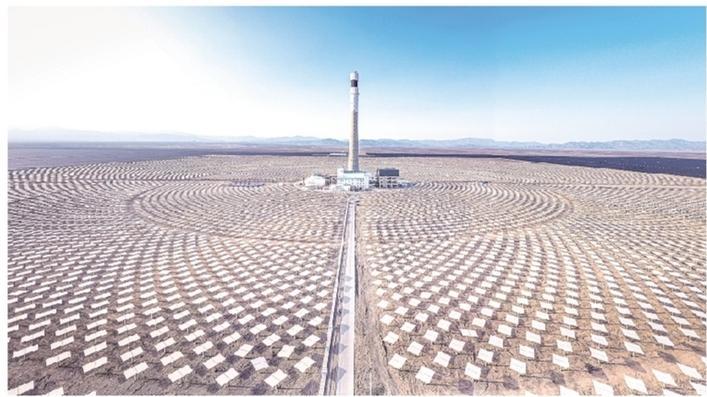
我国光热产业增速超全球两倍,技术装备国产化率超95%
Zhong Guo Jin Rong Xin Xi Wang· 2025-11-18 09:28
Core Insights - China's solar thermal power industry is experiencing rapid growth, with an annual compound growth rate of 11.7%, significantly higher than the global rate of 4.24% [2][6] - The establishment of the Solar Thermal Subcommittee marks a new phase in the industry's development, aiming to enhance collaboration and innovation among stakeholders [7] Industry Growth - From 2020 to 2024, China's solar thermal power capacity is expected to grow at a compound annual growth rate of 11.7%, while the global rate is only 4.24% [2] - As of September 2025, China has built 21 solar thermal power plants with a total installed capacity of 1.57 million kilowatts, ranking third globally [2] - There are 30 ongoing projects with a combined capacity of 3.1 million kilowatts, making China the leading contributor to new installations in the global solar thermal market [2] Cost Reduction and Competitiveness - The cost of solar thermal power projects in China has decreased significantly, with the grid-connected electricity price dropping from 1.15 yuan per kilowatt-hour to around 0.6 yuan per kilowatt-hour [2] - Further cost reductions are anticipated during the 14th Five-Year Plan period, enhancing the industry's competitiveness [2] Technological Advancements - China's solar thermal power industry has achieved over 95% localization in technology and equipment, with key materials and devices being self-sufficient [3] - Significant breakthroughs have been made in key technologies, such as molten salt and tower-type solar thermal systems, which have effectively reduced project costs and improved system efficiency [5] International Expansion - Successful domestic projects, such as the 50 MW solar thermal demonstration project in Delingha, have provided valuable experience for scaling up future projects [6] - Chinese solar thermal technology has been successfully implemented in international projects, including those in Morocco, South Africa, and Dubai, showcasing China's role in global green development [6] Future Outlook - The solar thermal power industry is poised for unprecedented opportunities under the dual carbon goals, with global installed capacity expected to reach 22.4 million kilowatts by 2030 [7] - By 2050, approximately 10% of global electricity supply is projected to come from solar thermal power [7]
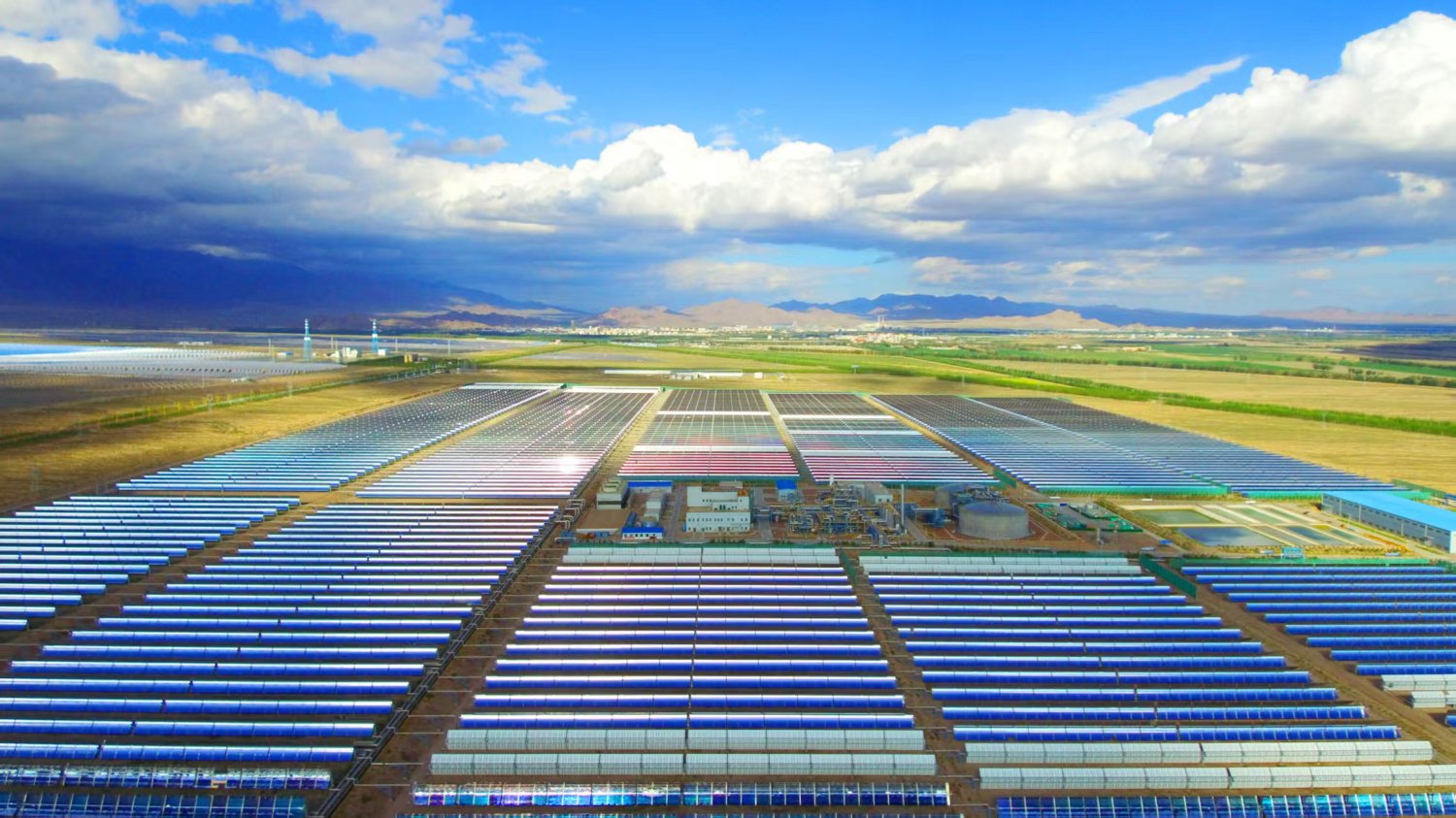
2025光热与新型储能高质量发展交流会共议技术突破与挑战
Bei Ke Cai Jing· 2025-07-21 06:11
Core Insights - The conference focused on the development of solar thermal and new energy storage technologies, emphasizing the strategic positioning of Hami as a benchmark for clean energy innovation [1][2]. Group 1: Solar Thermal Energy Development - Hami has established and is constructing solar thermal capacity of 700 MW, with plans to reach 1,000 MW by 2027 and 4,000 MW by 2030, ultimately aiming for 10,000 MW by 2035 [2]. - The integration of solar thermal power with photovoltaic systems is highlighted as a significant step towards achieving large-scale clean energy solutions [1]. Group 2: Energy Storage Technologies - Hami has a current and under-construction independent energy storage capacity of 1,590 MW, with plans to expand to 5,000 MW by 2027, 10,000 MW by 2030, and 18,000 MW by 2035 [2]. - The importance of developing various types of energy storage, including hybrid and coupled storage systems, is emphasized to enhance system flexibility and support the transition to a new power system [1][3]. Group 3: Challenges and Future Directions - Key challenges for solar thermal technology include material costs, long-term stability under sunlight, and system integration issues [2]. - Future developments are expected to focus on AI-optimized material design and sustainable, biodegradable thermal materials [2].