
光热发电规模化发展

Search documents
“十五五”我国能源转型有望迎来“光热时刻”
Xin Lang Cai Jing· 2026-01-06 19:29
Core Viewpoint - The article discusses the promotion of concentrated solar power (CSP) development in China, highlighting its role in stabilizing renewable energy output and supporting the transition to a green energy system. The National Development and Reform Commission and the National Energy Administration have set clear goals for CSP, aiming for a total installed capacity of approximately 15 million kilowatts by 2030, with costs comparable to coal power [3][6]. Group 1: Advantages of CSP - CSP has dual functions of peak regulation and long-term energy storage, effectively mitigating the volatility of wind and solar power generation [3]. - CSP provides a stable and flexible energy supply, capable of continuous power generation for 24 hours, thus enhancing the reliability of electricity supply [4]. - CSP can support the grid by providing necessary inertia and reactive power, which is lacking in wind and solar power systems, thereby maintaining stability in high-renewable energy systems [5]. Group 2: Challenges and Opportunities - Despite advancements, CSP faces challenges such as high initial investment, weak market competitiveness, and underutilization of its system support value [6]. - The development of CSP must be tailored to local conditions, with a focus on optimizing project scales based on regional resource availability and power system structures [6]. - CSP technology can be applied in various scenarios, including enhancing the regulation capacity of large renewable energy bases and supporting multi-energy complementary systems [6]. Group 3: Cost Reduction and Policy Support - The average unit cost of CSP projects has been decreasing, with the cost for projects over 100 megawatts expected to be around 16,000 yuan per kilowatt by 2024, although it remains significantly higher than that of photovoltaic projects [7]. - Policies are being established to support cost reduction, such as a fixed grid price of 0.55 yuan per kilowatt-hour for demonstration projects in Qinghai, which is expected to stimulate industry growth [7]. - Recommendations include strengthening policy support, enhancing market mechanisms, and leveraging scale effects and technological innovation to reduce costs further [8][9]. Group 4: Sustainable Development - The industry should avoid "involutionary" cost-cutting and focus on rational competition to ensure quality and innovation, which are essential for sustainable development [9]. - It is crucial to ensure reasonable profits for investors and technology providers to drive the industry towards a quality and innovation-centric growth path [9].

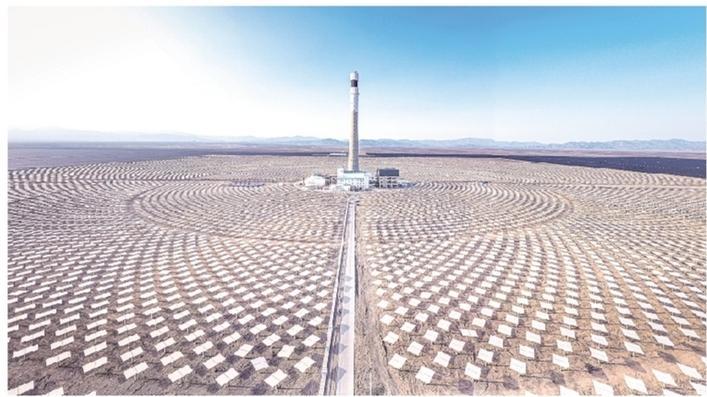
到2030年,光热发电总装机力争达1500万千瓦左右
Zhong Guo Chan Ye Jing Ji Xin Xi Wang· 2026-01-04 00:42
Core Viewpoint - The article discusses the promotion of large-scale development of solar thermal power generation in China, aiming for a total installed capacity of approximately 15 million kilowatts by 2030, with costs comparable to coal power and leading international technology [1][2]. Group 1: Development Goals and Current Status - By 2030, China's solar thermal power generation aims to reach a total installed capacity of around 15 million kilowatts, with electricity costs on par with coal power [1]. - The country has successfully mastered mainstream solar thermal technologies, including tower, trough, and Fresnel systems, and has built a leading global solar thermal power industry chain [1]. - The construction cost per kilowatt has decreased from approximately 30,000 yuan a decade ago to 15,000 yuan, with the cost of electricity dropping to around 0.6 yuan [1]. Group 2: Policy Measures for Development - A comprehensive set of policy measures has been proposed to address the bottlenecks in solar thermal power development, including resource surveys and top-level design for development layout [2]. - The policies support the construction of solar thermal power projects in large energy bases and the establishment of integrated systems combining source, grid, load, and storage [2]. Group 3: Cost Reduction Strategies - The article outlines strategies to reduce investment and generation costs, including leveraging scale effects to drive rapid cost reductions through the establishment of large energy bases [3]. - The promotion of high-parameter, large-capacity technology and the construction of large solar thermal power stations are key to enhancing efficiency and reducing costs [3]. Group 4: Revenue Enhancement and Policy Support - The article emphasizes the importance of enhancing the revenue potential of solar thermal projects through various financial instruments and policy support [4]. - It encourages local governments to develop detailed rules for integrating solar thermal power into the electricity market and to provide compensation for reliable capacity [4].
经济日报丨能源转型迎来“光热时刻”
国家能源局· 2026-01-02 06:53
Core Viewpoint - The article emphasizes the importance of solar thermal power as a key technology in China's energy transition, aiming for a total installed capacity of approximately 15 million kilowatts by 2030, with electricity costs comparable to coal power [2][3]. Group 1: Importance of Solar Thermal Power - Solar thermal power acts as a stabilizer and regulator for the power grid, providing continuous and stable electricity even during nighttime or cloudy days, which is crucial as wind and solar power installations increase [3]. - The development of solar thermal power is expected to drive advancements in high-end manufacturing sectors, including precision machinery and high-temperature materials, enhancing China's competitiveness in the global renewable energy supply chain [3]. Group 2: Current Status and Challenges - China has successfully mastered mainstream solar thermal technologies, with the cost of power generation dropping to around 0.6 yuan per kilowatt-hour and construction costs decreasing from approximately 30,000 yuan per kilowatt to 15,000 yuan over the past decade [3][4]. - Despite its potential, solar thermal power faces challenges such as high initial investment and reliance on imported technology, which contribute to elevated project costs [4]. Group 3: Policy Measures and Solutions - Policies aim to reduce costs through large-scale deployment and the establishment of solar thermal power as a primary source in new energy stations, potentially increasing annual installed capacity by nearly 3 million kilowatts [4]. - The government encourages the localization of key equipment and optimization of performance to reduce import dependency and enhance operational efficiency [4]. Group 4: Future Trends - By 2030, solar thermal power is expected to integrate with other energy sources, such as photovoltaic and wind power, to provide stable energy solutions [5]. - The industry will diversify its technology routes and focus on efficiency improvements, moving from merely increasing installed capacity to enhancing power generation efficiency and reducing costs [6]. - Solar thermal power companies will evolve into comprehensive energy service providers, offering not just electricity but also peak regulation and backup services, becoming essential components of the new energy system [6].
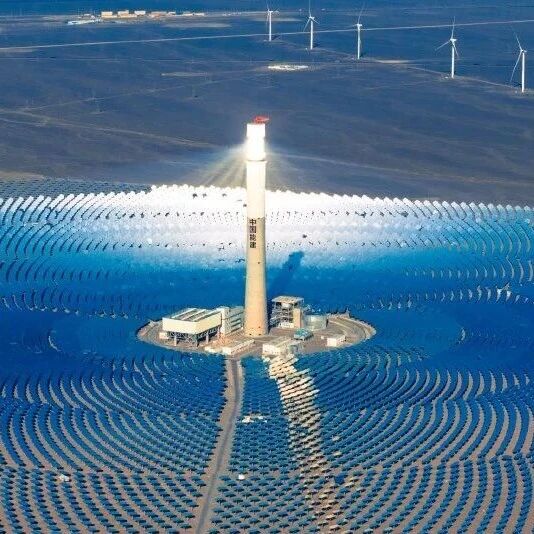
剑指1500万千瓦装机目标 光热发电要与煤电度电成本看齐
2 1 Shi Ji Jing Ji Bao Dao· 2025-12-29 23:06
Core Viewpoint - The National Development and Reform Commission and the National Energy Administration have issued guidelines aiming for a significant expansion of solar thermal power capacity in China, targeting 15 million kilowatts by 2030, with costs comparable to coal power [1][2]. Group 1: Development Goals and Challenges - The overall goal for solar thermal power is to reach a total installed capacity of approximately 15 million kilowatts by 2030, with electricity costs on par with coal power [1][2]. - Current challenges include high initial investment, weak market competitiveness, underutilization of system support value, and the need for technological advancements [2][5]. - The cost of electricity from solar thermal power has decreased significantly, with construction costs dropping from approximately 300,000 yuan per kilowatt to 150,000 yuan, and electricity costs around 0.6 yuan per kilowatt-hour [5][6]. Group 2: Policy Measures and Support - Five policy measures have been proposed to address the bottlenecks in solar thermal power development: strengthening planning guidance, enhancing market cultivation, supporting system regulation, encouraging technological innovation, and improving policy guarantees [2][6]. - The government aims to create a fair and orderly market environment to convert the system value of solar thermal power into economic benefits [11]. Group 3: Technological and Industrial Development - The focus will be on advancing technology through the construction of larger solar thermal power plants, enhancing efficiency, and reducing costs through economies of scale [6][7]. - The establishment of solar thermal industrial parks or clusters is encouraged to promote deep cooperation between upstream and downstream sectors, achieving cost reduction and efficiency [7][8]. Group 4: Integration into the Energy System - Solar thermal power is recognized for its dual role as a peak-shaving power source and long-duration energy storage, which can stabilize the output fluctuations of wind and solar energy [1][9]. - The guidelines suggest three application scenarios for solar thermal power: construction in large energy bases, support for load centers, and the development of integrated systems that enhance supply security [9][10].
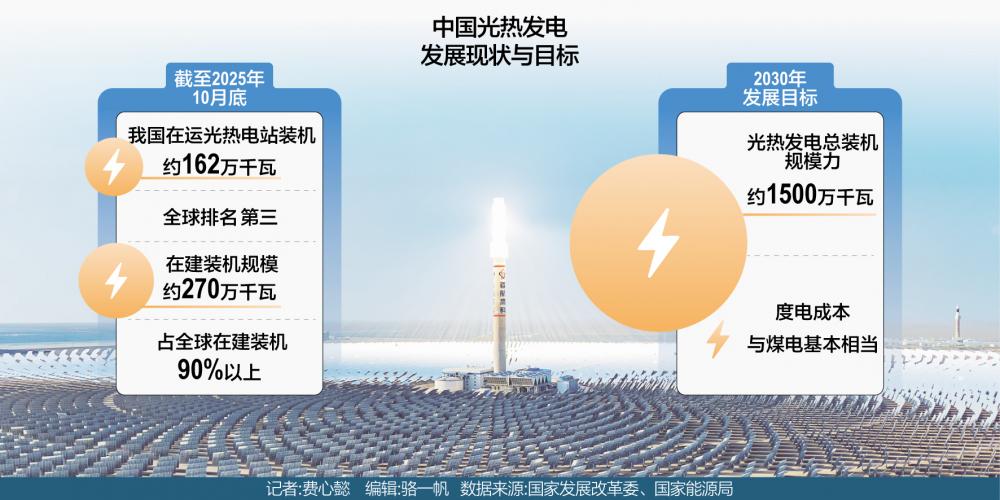
《关于促进光热发电规模化发展的若干意见》解读之三︱光热发电规模化发展的“布局”与“破局”
国家能源局· 2025-12-26 06:45
Core Viewpoint - The article discusses the significant potential for the large-scale development of solar thermal power generation in China, emphasizing the supportive policies and strategic direction provided by the recent government document titled "Several Opinions on Promoting the Large-Scale Development of Solar Thermal Power Generation" [2][5]. Group 1: Foundation for Large-Scale Development - Solar thermal power generation has established a solid foundation for large-scale development, with significant advancements made during the "Eleventh Five-Year" and "Twelfth Five-Year" periods, leading to a rapid increase in installed capacity and the establishment of a complete industrial chain with independent intellectual property rights [4]. - As of the "Fourteenth Five-Year" period, the installed capacity of solar thermal power generation reached approximately 1.62 million kilowatts, ranking third globally, with about 2.7 million kilowatts of projects under construction [4]. Group 2: Support for New Power Systems - The operation of the first batch of solar thermal demonstration projects has validated its unique advantages in stable and reliable power output, making it comparable to coal-fired power plants, with peak shaving rates reaching 10% per minute and continuous operation for up to 230 days [6][7]. - The "Several Opinions" document emphasizes optimizing the operation of solar thermal power plants to enhance their peak shaving capabilities and support the green and low-carbon energy supply [7]. Group 3: Economic Viability and Policy Support - Despite a 52% reduction in grid connection prices since the first demonstration projects in 2016, solar thermal power generation still does not achieve grid parity, necessitating further technological and economic advancements [8]. - The document proposes improving policy support mechanisms, including compensation for reliable capacity and encouraging provinces to develop assessment methods for solar thermal power plants [9]. Group 4: Growth Potential in the Renewable Energy Sector - The solar thermal power generation industry is expected to become a new growth point in China's renewable energy sector, with a target of reaching 15 million kilowatts of total installed capacity by 2030, potentially driving direct investments of approximately 170 billion yuan [10]. - The anticipated new projects could create around 132,000 to 142,000 jobs during the "Fifteenth Five-Year" period, highlighting significant social benefits [10]. Group 5: Technological Innovation and International Cooperation - The document calls for accelerating technological innovation in solar thermal power generation, including the construction of large-capacity power plants and the exploration of carbon reduction technologies in conjunction with coal power [11]. - It also encourages international collaboration and participation in setting global standards, aiming to establish flagship projects under the Belt and Road Initiative [11].

促进光热发电规模化发展
Ren Min Ri Bao· 2025-12-25 23:01
Core Viewpoint - The recent policy document issued by the National Development and Reform Commission and the National Energy Administration aims to promote the large-scale development of solar thermal power in China, targeting a total installed capacity of approximately 15 million kilowatts by 2030, with costs comparable to coal power and achieving international leadership in technology [1] Group 1: Current Status and Challenges - China has successfully mastered mainstream solar thermal power technologies such as tower, trough, and Fresnel systems, establishing a leading global solar thermal power industry chain [1] - The construction cost of solar thermal power plants has decreased from approximately 300,000 yuan per kilowatt ten years ago to 150,000 yuan, with the cost per kilowatt-hour dropping to around 0.6 yuan [1] - Despite progress, challenges remain, including high initial investment, weak market competitiveness, insufficient reflection of system support and adjustment value, and the need for improved industry technology levels [1] Group 2: Policy Measures for Development - The policy document proposes a comprehensive set of measures to address the bottlenecks in solar thermal power development, including resource surveys and top-level design for development layout and industrial collaboration [2] - It emphasizes the need to actively cultivate the solar thermal power application market and reasonably allocate solar thermal power scale in conjunction with large energy base construction [2] Group 3: Cost Reduction Strategies - The document outlines strategies to reduce investment and generation costs, including leveraging scale effects to drive rapid cost reductions through the construction of solar thermal power plants in large energy bases [3] - It aims to promote high-parameter, large-capacity technology and the steady advancement of large solar thermal power plants, enhancing core technology autonomy and domestic equipment levels [3] Group 4: Revenue Enhancement and Policy Support - The policy encourages eligible solar thermal power projects to utilize financial instruments like real estate investment trusts and asset-backed securities to revitalize existing assets [4] - It also supports the development of local regulations to facilitate solar thermal power participation in the electricity market, ensuring compensation for reliable capacity and enhancing green revenue through various means [4]
东兴证券晨报-20251224
Dongxing Securities· 2025-12-24 12:14
Economic News - The State-owned Assets Supervision and Administration Commission emphasized the need for central enterprises to enhance budget management and cost control across all aspects of operations [2] - The National Development and Reform Commission and the National Energy Administration aim for a total installed capacity of 15 million kilowatts for solar thermal power by 2030, with costs comparable to coal power [2] - The Ministry of Housing and Urban-Rural Development proposed measures to promote the sale of existing homes and optimize affordable housing supply [2] - The General Administration of Customs conducted research on cutting-edge technology development and technology transfer [2] - The Hainan Free Trade Port has begun exporting self-produced goods with a value of 32,000 yuan, benefiting from over 12% cost savings [2] - The Shanghai Municipal Finance Bureau announced a subsidy for pig income insurance, with the municipal government covering 50% of the premium [2] - The U.S. economy showed a revised annualized GDP growth of 4.3% in Q3, exceeding expectations [2] - Japan reported a leak of radioactive water from a new reactor, with ongoing investigations into external radiation exposure [2] - Brazil confirmed anti-dumping duties on automotive glass from China, with specific rates for Malaysian producers [2] - South Korea's BC Card completed a pilot project for stablecoin payments, allowing foreign users to pay local merchants [2] Company Insights - Haibo Technology plans to invest 2 billion yuan in a smart green energy storage factory, expected to be completed by December 2028 [6] - Zhenyu Technology's subsidiary signed a strategic cooperation agreement to invest at least 1 billion yuan in projects related to new energy vehicle components and humanoid robots [6] - Huaxin Cement's major shareholder plans to increase its stake in the company by 200 million to 400 million yuan within six months [6] - Biological Shares' major shareholder intends to increase its stake by 50 million to 100 million yuan over the next year [6] Industry Strategy Agriculture Sector - The report suggests focusing on three main investment lines for the agriculture sector in 2026, with an emphasis on pig farming, feed, and pet food [7][9][10] - The pig farming industry is expected to see a gradual improvement in supply-demand dynamics, with a focus on cost management as a key factor for long-term growth [7] - The report highlights the potential for leading companies like Muyuan Foods to benefit from improved valuations and market conditions [8] Feed and Veterinary Medicine - The veterinary medicine sector is shifting towards innovation, with companies that prioritize R&D expected to thrive [9] - The feed industry is anticipated to see stable demand supported by high livestock inventory, with leading companies likely to gain market share [9] Pet Food Market - The domestic pet food market is projected to grow, with local brands gaining market share despite tariff disruptions [10][11]






到2030年我国光热发电度电成本与煤电基本相当
Xin Lang Cai Jing· 2025-12-24 10:39
Core Viewpoint - The National Development and Reform Commission and the National Energy Administration have issued opinions to promote the large-scale development of solar thermal power, aiming for a total installed capacity of approximately 15 million kilowatts by 2030, with electricity costs comparable to coal power [1] Group 1 - The target for solar thermal power installed capacity is set at around 15 million kilowatts by 2030 [1] - The cost of electricity generated from solar thermal power is expected to be on par with that of coal power [1] - China has established a globally leading solar thermal power industry chain after years of development [1]
《关于促进光热发电规模化发展的若干意见》解读之一︱加快构筑新型电力系统重要支撑 开启我国光热发电规模化发展新征程
国家能源局· 2025-12-24 10:03
Core Viewpoint - The article discusses the importance of promoting the large-scale development of solar thermal power in China as part of the country's efforts to transition to a green economy and achieve carbon neutrality goals. The issuance of the "Opinions on Promoting the Large-Scale Development of Solar Thermal Power" is a significant step in this direction [3][4]. Group 1: Development Background - Solar thermal power has undergone 20 years of development in China, starting from the "863 Program" initiated by the Ministry of Science and Technology in 2006. Despite advancements, the cost remains high compared to wind and solar power, and supportive policies are still lacking [4]. - The "Opinions" aim to clarify the scale, application scenarios, implementation paths, and support policies for solar thermal power, which is crucial for promoting green energy transition and enhancing the stability of the power system [4]. Group 2: Strategic Layout and Design - China has significant solar thermal resources primarily located in regions like Inner Mongolia, Qinghai, Gansu, Xinjiang, and Tibet. The "Opinions" set a target of approximately 15 million kilowatts of installed capacity, which will enhance system regulation capabilities and support the integration of wind and solar power [5]. - The document encourages local planning for solar thermal power projects, ensuring that they align with regional industrial development needs and support the construction of energy parks with high proportions of renewable energy [5]. Group 3: Application Market - Solar thermal power is a green and grid-friendly energy source that can provide heating and steam, with applications spanning power generation and heating. The market can be categorized into three main areas: optimizing solar thermal power in renewable energy bases, constructing large-capacity solar thermal power plants in regional power systems, and integrating source-network-load-storage systems [6][7]. Group 4: Support and Regulation Capabilities - The initial demonstration projects have validated the technical feasibility of solar thermal power, leading to a gradual increase in installed capacity and a decrease in costs. However, further exploration of its capabilities in frequency regulation, voltage regulation, and peak shaving is necessary [9]. - As of now, approximately 1.62 million kilowatts of solar thermal power projects are operational, with about 2.7 million kilowatts under construction. The "Opinions" emphasize the need to enhance the response capabilities of solar thermal power systems [9]. Group 5: Technological and Industrial Innovation - Continuous innovation in technology and industry is essential for reducing costs in solar thermal power. Key areas include high-parameter large-capacity systems, breakthroughs in critical technologies, and collaboration across the industry chain to enhance competitiveness [10]. - The "Opinions" advocate for supporting technological innovation, encouraging disruptive technologies, and establishing a standardized system for the solar thermal industry [10]. Group 6: Policy and Market Coordination - The initial investment and costs of solar thermal power remain high, making it challenging to achieve grid parity under current market conditions. Therefore, policy support is crucial for creating a favorable environment for large-scale development [11]. - The "Opinions" propose increasing policy support, facilitating fair market participation, and establishing incentive mechanisms to enhance the economic viability of solar thermal projects [11].

两部门印发《意见》促进光热发电规模化发展
Xin Hua Wang· 2025-12-24 03:10
Core Viewpoint - The National Development and Reform Commission and the National Energy Administration have issued guidelines to promote the large-scale development of solar thermal power, aiming for a total installed capacity of approximately 15 million kilowatts by 2030, with electricity costs comparable to coal power [1][2] Group 1: Development Goals - By 2030, China aims to achieve a total installed capacity of around 15 million kilowatts for solar thermal power [1] - The cost of electricity generated from solar thermal power is targeted to be on par with that of coal power [1] Group 2: Technological Advancements - China has successfully mastered mainstream solar thermal power technologies, including tower, trough, and Fresnel systems [1] - The construction cost per kilowatt has decreased from approximately 30,000 yuan ten years ago to 15,000 yuan, while the cost of electricity has dropped to around 0.6 yuan [1] Group 3: Challenges and Solutions - Despite advancements, the industry faces challenges such as weak market competitiveness and the need for improved technological levels [1] - The guidelines propose measures to enhance planning, market cultivation, technological innovation, and policy support to facilitate large-scale development [1] Group 4: Industry Impact - The guidelines are expected to create a stable long-term outlook for the solar thermal power sector, encouraging efficient resource allocation and boosting industry confidence [2] - Accelerating the development of solar thermal power will enhance the resilience and controllability of China's power system, supporting the establishment of a new energy system and achieving carbon neutrality goals [2]