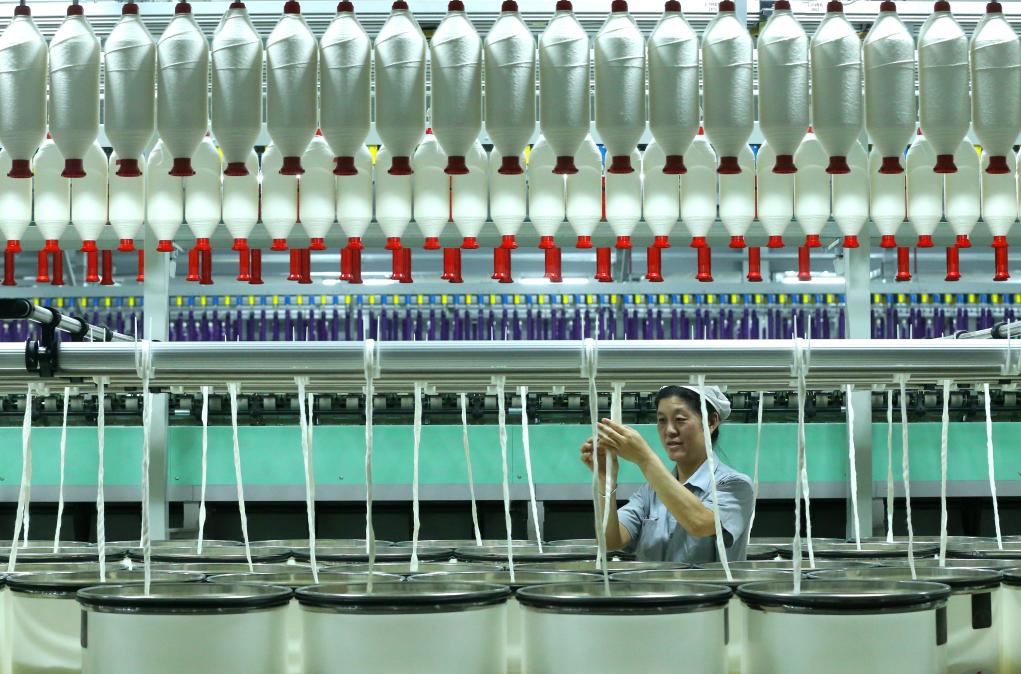
全棉功能性纳米纤维复合纱线

Search documents
从“一根丝”的突破, 看民营企业创新活力
Xin Lang Cai Jing· 2025-12-25 17:23
Core Viewpoint - The transformation of the textile industry, represented by the evolution of a single thread, showcases the acceleration of enterprise upgrades and continuous innovation, with private enterprises becoming a vital force in developing new productive capacities [2][6]. Group 1: Industry Transformation - The textile industry's innovation is not limited to factories but extends to collaborations with research institutions, leading to the development of functional materials such as temperature-regulating cotton fibers [3]. - The Erdos Cashmere Group has transitioned from manual operations to managing 16 fully automated machines, emphasizing that the future of traditional textiles lies in technological empowerment and value reconstruction [2]. Group 2: Technological Advancements - Changfei Fiber Optic Cable Co., Ltd. has achieved significant breakthroughs in optical fiber technology, moving from reliance on imports to mastering all key technologies in the field, positioning itself as a leader in standard-setting [4]. - The company has established joint laboratories to tackle fundamental technologies and facilitate the industrialization of core materials, demonstrating a collaborative approach to innovation [4]. Group 3: Material Performance Breakthroughs - Ningbo Bowei Alloy Precision Wire Co., Ltd. has achieved unprecedented precision in cutting wires, essential for manufacturing high-precision components, pushing diameter limits from 0.33mm to 0.015mm [5]. - Ounait Cable Group has developed cables that maintain flexibility at -40°C and resist harsh environmental conditions, showcasing a commitment to innovation in specialized cable products [5]. Group 4: Contribution of Private Enterprises - Private enterprises contribute 70% of the nation's technological innovations and encompass 80% of specialized "little giant" companies and 90% of high-tech enterprises [6]. - The implementation of the Private Economy Promotion Law is seen as a stabilizing force for private enterprises, enhancing their role in national technological projects and fostering innovation [6].
市场最前沿|从“一根丝”的突破,看民营企业创新活力
Sou Hu Cai Jing· 2025-12-24 14:14
Group 1 - The core viewpoint emphasizes the transformation and innovation within the textile industry, highlighting the role of private enterprises in driving high-quality development through technology and system upgrades [1] - The Erdos Cashmere Group has transitioned from manual operations to automated production, showcasing the integration of 5G technology in smart production lines [1] - The focus of the Chinese cashmere industry is shifting towards the high end of the global value chain, with innovation and technological empowerment being key to this transition [1] Group 2 - The Longfly Fiber Optic Company has achieved significant technological breakthroughs, becoming a leader in the global fiber optic industry by mastering all key technologies from preform to fiber and cable [5] - Longfly's collaborative approach in establishing joint laboratories has facilitated the industrialization of core materials, emphasizing the importance of application-oriented research and development [5] - The company has moved from relying on imports to becoming a standard-setting leader in the fiber optic sector, demonstrating a successful model of innovation through "introduction, digestion, absorption, innovation, and re-export" [5] Group 3 - Ningbo Bowei Alloy Precision Wire Co., Ltd. has achieved remarkable precision in cutting wire, essential for manufacturing high-precision components [8] - The Ounait Cable Group has developed cables that maintain flexibility in extreme temperatures and harsh environmental conditions, showcasing the importance of innovation in specialized cable production [8] - Private enterprises contribute significantly to technological innovation in China, accounting for 70% of the nation's technological advancements and a majority of specialized and high-tech enterprises [8] Group 4 - The implementation of the Private Economy Promotion Law is seen as a stabilizing force for private enterprises, enhancing their role in national technological projects and fostering innovation [9] - This law is expected to boost the internal motivation and innovative capabilities of private enterprises, allowing them to take on more significant technological challenges [9]


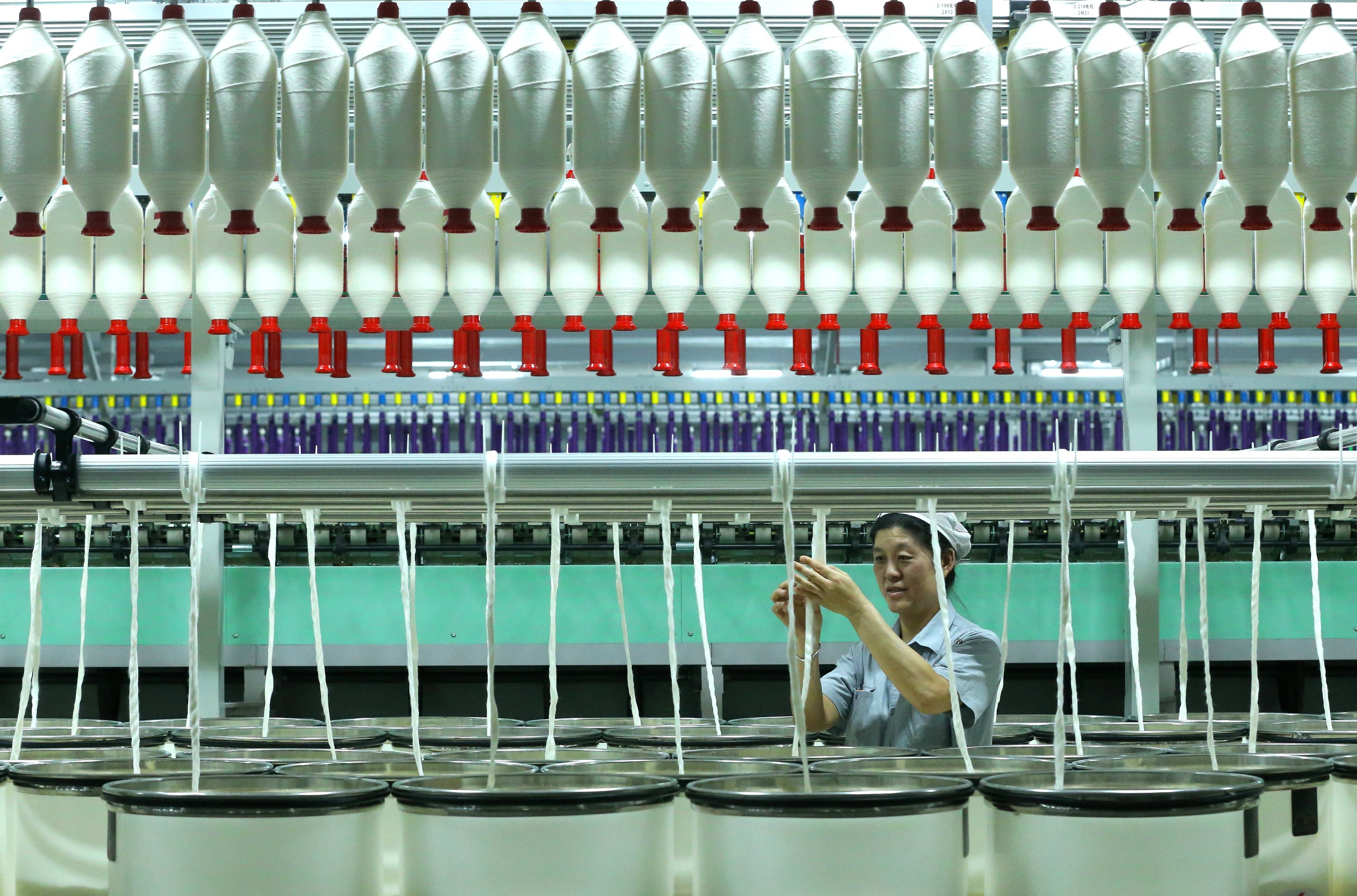
从“一根丝”的突破,看民营企业创新活力
Xin Lang Cai Jing· 2025-12-24 12:41
Core Insights - The transformation of the textile industry, particularly through innovation and technology integration, is crucial for achieving high-quality development and enhancing competitiveness in the global value chain [2][4]. Group 1: Industry Transformation - The textile industry is witnessing a shift from traditional manual operations to automated processes, exemplified by the Erdos Cashmere Group, which has scaled up production of seamless and complex fashion items using advanced technology [2]. - The focus of the textile industry is moving from mere scale expansion to technological empowerment and value reconstruction, emphasizing the need for innovation and systematic upgrades [2]. - Collaboration between private enterprises and academic institutions is fostering the development of advanced materials, such as temperature-regulating cotton fibers, showcasing the innovative capabilities within the textile sector [2]. Group 2: Technological Advancements - Changfei Fiber Optic Cable Co., Ltd. has achieved significant breakthroughs in fiber optic technology, positioning itself among the global leaders in the next-generation fiber optic field [3]. - The company has transitioned from relying on imports to mastering all key technologies related to fiber optics, including preform rods and cables, through a long-term strategy of "introduction, digestion, absorption, innovation, and re-export" [3]. - The establishment of joint laboratories for collaborative research and development has enabled the company to address industry challenges effectively, ensuring that innovation is closely aligned with production needs [3]. Group 3: Material Innovation - Ningbo Bowei Alloy Precision Wire Co., Ltd. has achieved remarkable precision in cutting wire, essential for manufacturing high-precision components, continuously pushing the limits of diameter reduction [4]. - Ournet Cable Group has developed cables that maintain flexibility in extreme cold and resist harsh environmental conditions, demonstrating the importance of specialized product development in niche markets [4]. - The commitment to innovation and overcoming technical challenges has led to significant contributions from private enterprises, which account for 70% of the country's technological innovations and a majority of specialized and high-tech companies [4]. Group 4: Policy Support - The implementation of the Private Economy Promotion Law in May aims to support private enterprises in participating in national technology projects, fostering innovation, and enhancing intellectual property protection [5]. - This law is viewed as a stabilizing force for private enterprises and a catalyst for innovation, encouraging them to take on significant technological challenges and boosting their internal motivation and creative potential [5].

市场最前沿 | 从“一根丝”的突破,看民营企业创新活力
Xin Hua She· 2025-12-24 11:42
Group 1: Industry Transformation and Innovation - The textile industry is undergoing a transformation, with private enterprises focusing on innovation and technology to enhance productivity and competitiveness [1][2] - Erdos Cashmere Group has achieved large-scale production of seamless knitted products and complex fashion items by integrating 5G technology into its production lines [1] - The core of China's cashmere industry development is to achieve high-quality growth through innovation and systematic upgrades, rather than mere scale expansion [1] Group 2: Technological Advancements - Weiqiao Group has collaborated with research institutions to develop all-cotton functional nano-fiber composite yarns, which provide temperature-regulating capabilities [2] - Changfei Fiber Optic Cable Co., Ltd. has made significant advancements in optical fiber technology, becoming a leader in the global market by mastering all key technologies related to optical fibers and cables [3] - The company has established joint laboratories to tackle fundamental technology challenges and promote collaborative innovation between research and industry [3] Group 3: Material Performance Breakthroughs - Ningbo Bowei Precision Alloy Wire Co., Ltd. has achieved unprecedented precision in cutting wire, essential for manufacturing high-precision components [4] - Ounait Cable Group has developed cables that maintain flexibility at extremely low temperatures and resist harsh environmental conditions, showcasing the importance of innovation in specialized products [4] - The focus on deep specialization and continuous innovation has led to significant contributions from private enterprises, accounting for 70% of the country's technological innovations [4] Group 4: Supportive Policies for Private Enterprises - The implementation of the Private Economy Promotion Law in May aims to support private enterprises in participating in national technology projects and encourages innovation [5] - This law is seen as a stabilizing force for private enterprises and a catalyst for innovation, enhancing their role in national technological advancements [5]
市场最前沿|从“一根丝”的突破,看民营企业创新活力
Xin Hua She· 2025-12-24 11:35
Group 1 - The textile industry is undergoing a transformation, with private enterprises innovating in niche areas to enhance productivity and competitiveness, exemplified by the Erdos Cashmere Group's shift to automated production and integration of 5G technology [1] - The core of China's cashmere industry is to elevate its position in the global value chain through innovation and systematic upgrades, focusing on technology empowerment and value reconstruction rather than mere scale expansion [1] - Collaborations between private enterprises and research institutions are driving innovation, such as the development of functional cotton nano-fiber composite yarns by Shandong Weiqiao Group, which offers temperature-regulating fabric [1] Group 2 - Changfei Fiber Optic Cable Co., Ltd. has emerged as a leader in the next-generation fiber optic sector, showcasing its advancements at the "China Optics Valley" International Optoelectronic Expo, and has mastered all key technologies from preform to fiber and cable [3] - The company has established joint laboratories to tackle fundamental technologies and facilitate the industrialization of core materials, emphasizing a collaborative approach to innovation that directly addresses production challenges [3] - The focus on application-oriented research and development has allowed Changfei to become a standard-setting leader in the industry, demonstrating the importance of aligning scientific inquiry with market needs [3] Group 3 - Ningbo Bowei Alloy Precision Fine Wire Co., Ltd. has achieved remarkable precision in cutting wire, essential for manufacturing high-precision components, continuously pushing the limits of diameter reduction from 0.33mm to 0.015mm over the past decade [5] - Ounait Cable Group has developed cables that maintain flexibility in extreme cold and resist harsh environmental conditions, showcasing the importance of innovation in creating specialized products for specific market needs [5] - Private enterprises contribute significantly to technological innovation in China, accounting for 70% of the nation's technological advancements and encompassing a large portion of specialized and high-tech enterprises [5]
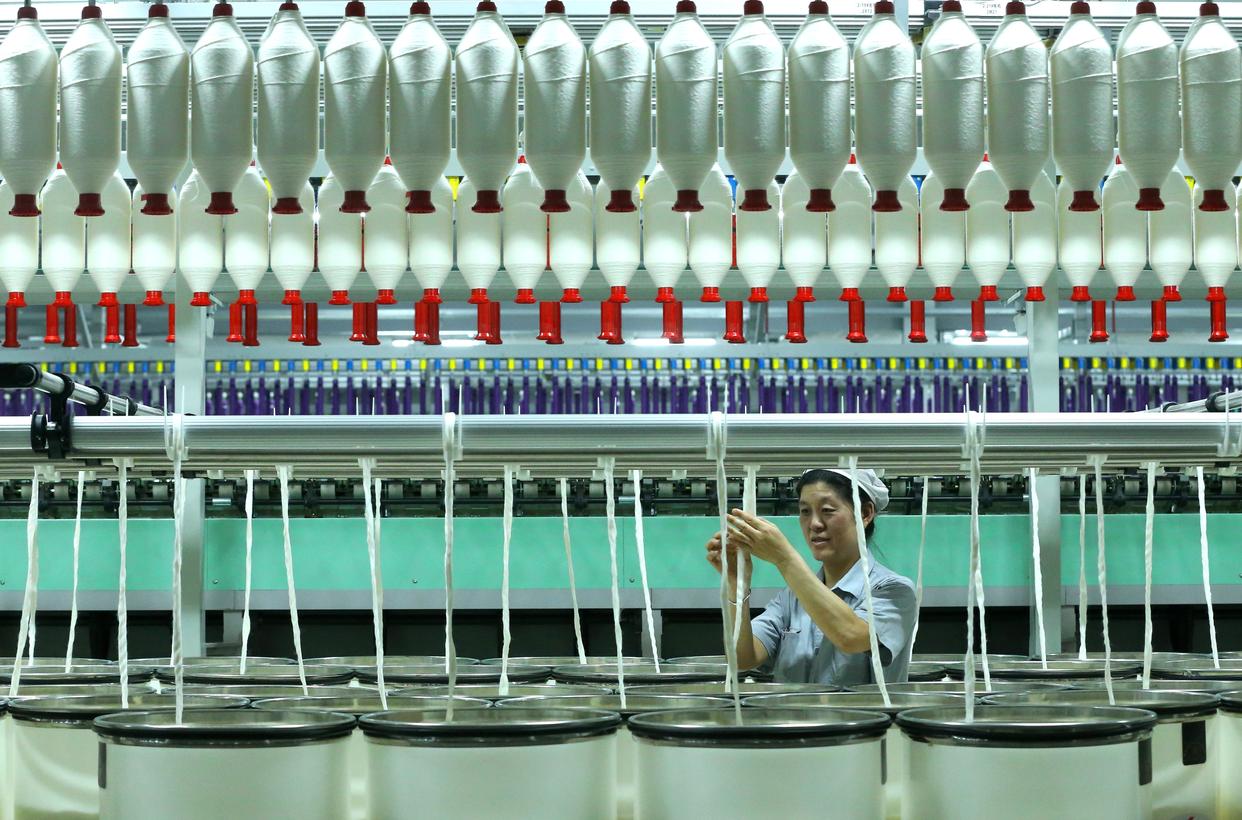
市场最前沿丨从“一根丝”的突破,看民营企业创新活力
Xin Hua Wang· 2025-12-24 11:30
Core Viewpoint - The textile industry is undergoing significant transformation through innovation and technology, with private enterprises playing a crucial role in enhancing productivity and competitiveness in both traditional and emerging sectors [2][8]. Group 1: Industry Transformation - The evolution of the textile industry is exemplified by companies like Erdos Cashmere Group, which has transitioned from manual operations to managing 16 fully automated machines, integrating 5G technology into smart production lines [2]. - The focus of the Chinese cashmere industry is shifting towards high-end global value chains, emphasizing innovation and systematic upgrades for high-quality development [2]. - The transformation is not solely confined to production facilities; it also involves collaborations between private enterprises and academic institutions to develop advanced materials, such as functional cotton nano-fiber composite yarns [3]. Group 2: Technological Advancements - Changfei Fiber Optic Cable Co., Ltd. has made significant strides in the optical fiber sector, showcasing cutting-edge technology at international exhibitions and establishing itself as a leader in the field [5]. - The company has developed a comprehensive understanding of key technologies, moving from reliance on imports to mastering the entire production process of optical fibers and cables [5]. - The collaborative approach in research and development, where enterprises and research teams work together to address industry challenges, has been highlighted as a key driver of innovation [5]. Group 3: Material Innovation - Companies like Ningbo Bowei Alloy Precision Fine Wire Co., Ltd. have achieved remarkable precision in manufacturing cutting wires, pushing the limits of diameter from 0.33mm to 0.015mm [7]. - Ounait Cable Group has developed cables that maintain flexibility in extreme temperatures and harsh environmental conditions, showcasing the importance of tailored solutions for specific industry needs [7]. - The commitment to innovation and overcoming challenges has led to significant contributions from private enterprises, which account for 70% of national technological innovations and a majority of specialized small giant enterprises [7]. Group 4: Policy Support - The implementation of the Private Economy Promotion Law in May aims to bolster private enterprises' participation in national technology projects and enhance innovation capabilities [8]. - This law is viewed as a stabilizing force for private enterprises and a catalyst for innovation, encouraging them to take on significant technological challenges [8].