全自动血细胞分析仪流水线

Search documents
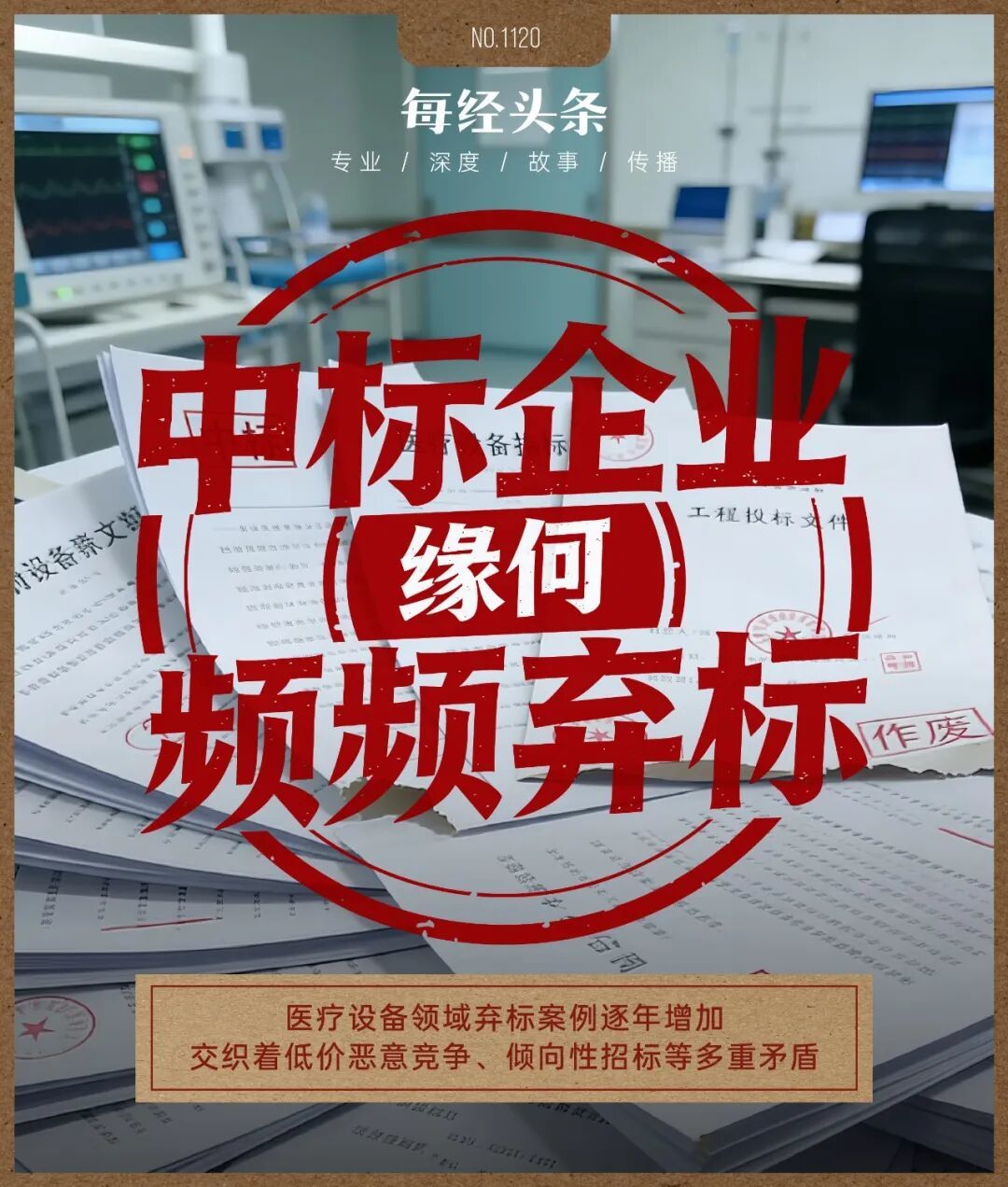
中标企业频频弃标,大型医疗设备采购有何难言之隐?
Mei Ri Jing Ji Xin Wen· 2025-12-15 12:07
Core Viewpoint - The article discusses the increasing trend of companies voluntarily abandoning bids for medical equipment procurement projects in China, highlighting the complexities and challenges within the industry, including price competition and regulatory issues [2][12]. Group 1: Bid Abandonment Cases - In 2025, there has been a noticeable increase in cases of companies voluntarily abandoning bids in the medical equipment sector, with notable examples including GE Healthcare abandoning a bid just three days after winning [2][9]. - The case of WanDong Medical, which won a bid for a 1.5T MRI system at a price of 4 million yuan, is particularly striking as the company later chose to abandon the bid after a lengthy and complicated procurement process [4][12]. - The article notes that this year marks the fifth case of a medical equipment manufacturer abandoning a bid, indicating a troubling trend in the industry [9][12]. Group 2: Reasons for Bid Abandonment - Common reasons for voluntary bid abandonment include underestimating production capacity before bidding and discovering that the actual profit margins do not meet expectations after winning the bid [13][14]. - The practice of aggressive price competition, where companies submit low bids to win contracts, often leads to situations where the awarded price is unsustainable for project operation, prompting companies to abandon the bid [13][14]. - High-priced bids may also be abandoned if hospitals express concerns about the pricing, potentially leading to discussions that result in the company voluntarily withdrawing [13][14]. Group 3: Industry Dynamics and Challenges - The medical equipment procurement landscape has shifted towards centralized purchasing, which has significantly reduced costs but has also intensified price competition among manufacturers [20][21]. - The article highlights that the current environment is characterized by high inventory levels and a price war among manufacturers, which has led to declining revenues and profits for leading medical device companies [20][21]. - Regulatory bodies are taking action to address issues of price competition, with recent announcements aimed at maintaining fair market practices and preventing below-cost bidding [21].


顶风“作案”!仪器采购2度废标后仍0.01元中标,咱就拿异常低价没办法?
仪器信息网· 2025-11-20 04:31
Core Viewpoint - The article discusses the rampant issue of low-price procurement in the medical equipment sector, highlighting a recent case where a medical device was awarded a contract for only 0.01 yuan, raising concerns about the integrity of the procurement process and the underlying causes of such anomalies [2][7][11]. Group 1: Procurement Anomalies - A recent procurement case for an automatic biochemical immunoassay line resulted in a winning bid of only 0.01 yuan, despite previous attempts to award the contract being canceled due to irregularities [4][7]. - Another case involved a project with a budget of 3 million yuan, which was awarded for just 1,000 yuan, prompting investigations into the procurement process [9][11]. - The article notes that the normal market price for such medical equipment typically ranges from 500,000 to 2 million yuan, indicating significant discrepancies in the awarded prices [11]. Group 2: Government Response - The Ministry of Finance has proposed measures to address the issue of abnormally low bids, including strengthening procurement demand management, enhancing low-price review mechanisms, and enforcing strict compliance and accountability [12][20]. - The article emphasizes the need for improved legal frameworks and regulatory oversight to prevent such procurement irregularities from continuing [15][20]. Group 3: Underlying Causes - The article identifies that the low-price procurement phenomenon is often a reflection of a commercial bribery chain, where suppliers offer equipment at extremely low prices in exchange for exclusive contracts for consumables [13][14]. - It also highlights the role of outdated regulations and ineffective enforcement mechanisms that fail to address the root causes of these procurement issues [15][17]. - Internal governance issues within medical institutions, such as concentrated decision-making power and inadequate oversight, contribute to the prevalence of these procurement anomalies [18][19]. Group 4: Recommendations for Improvement - The article suggests that long-term solutions should include enhancing legal regulations, improving comprehensive oversight, and reforming internal systems within hospitals to mitigate risks associated with procurement [20][21].