公共数据产品和服务

Search documents
河北系统推进数据要素市场化配置改革
Xin Lang Cai Jing· 2026-02-23 16:33
Core Viewpoint - Hebei Province aims to enhance data collection, streamline data flow channels, and solidify its digital foundation by 2026, focusing on market-oriented reforms in data elements and expanding high-quality public data supply to convert vast data advantages into competitive development advantages [1] Group 1: Goals and Objectives - By the end of 2026, Hebei Province plans to develop high-quality public data products and services targeting key areas, nurture data businesses and third-party service institutions, and cultivate competitive data industry clusters, with a projected 20% growth in the data labeling industry scale and significant increases in data transaction volume [1] - The province will implement the "Efficient Completion of One Thing" initiative as mandated by the State Council, ensuring all key tasks are executed in Hebei and upgraded to "first-class matters" [1] Group 2: Specific Measures - Establish a data collection system and compile a public data "one table" to guide data supply based on key scenarios, while expanding the data registration scope and ensuring quality control [2] - Extend the "Beijing-Tianjin-Hebei data labeling industry uplift belt" to attract upstream and downstream enterprises in regions like Zhangjiakou and Tangshan, creating a comprehensive mechanism for collecting, reviewing, publishing, and trading high-quality data sets [2] Group 3: Operational Strategies - Fully implement public data authorized operations, formulating scene review and revenue distribution systems to support the development of easily deployable data products [3] - Build a provincial data property registration platform to explore the application of registration certificates in circulation and inclusion in records [4] - Launch a "Data Empowerment 'Artificial Intelligence+'" initiative to promote small-scale project implementations, establishing a "government + enterprise + innovation + investment" nurturing mechanism to strengthen and expand the digital economy [4]
四部门联手发文,加快推进数据要素价值化
Xuan Gu Bao· 2026-02-08 14:51
Group 1 - The National Data Bureau, Ministry of Industry and Information Technology, Ministry of Public Security, and China Securities Regulatory Commission issued an opinion on February 7 to clarify the functions of data circulation service institutions and enhance the efficiency of data circulation transactions [1] - The opinion encourages public data products and services to be traded through data exchanges, emphasizing the need for better management and optimization of data exchanges while controlling their number [1] - Dongwu Securities predicts that 2026 will be the "Year of Data Factor Value Release," with expectations for improvements in foundational systems regarding data property rights and circulation, leading to further exploration of the value of public and industrial data [1] Group 2 - Zhejiang Data Culture has initiated the Zhejiang Data Business Alliance and is responsible for the secretariat functions of the alliance through its subsidiary, Zhejiang Big Data Exchange Co., Ltd [2] - Guangdian Yuntong holds shares in Guangzhou Data Exchange Co., Ltd and leverages its subsidiary Guangdian Data Investment to promote and replicate digital government construction experiences across regions, empowering digital innovation ecosystems for governments and enterprises [2]


国家数据局:引导数据交易所(中心)强化综合服务功能
Xin Lang Cai Jing· 2025-12-26 15:55
Core Viewpoint - The National Bureau of Statistics is soliciting public opinions on the draft opinion regarding the cultivation of data circulation service institutions and the acceleration of the marketization and valuation of data elements, emphasizing the need for data exchanges to enhance their comprehensive service functions [1] Group 1 - The draft encourages data exchanges (centers) to strengthen their comprehensive service functions [1] - It promotes the role of data exchanges (centers) in leading and driving the exploration of improved data circulation trading rules and standards [1] - The document highlights the importance of compliance assurance, supply-demand matching, and other foundational functions to enhance the efficiency of data product and service circulation [1] Group 2 - The draft aims to build a full-chain data circulation trading service system to improve the trading efficiency of high-quality data sets and various data products [1] - It encourages the trading of public data products and services through data exchanges (centers) [1]
多地发布新政发力挖掘公共数据价值
Zheng Quan Ri Bao· 2025-08-29 16:17
Core Viewpoint - The development and utilization of public data resources is a crucial initiative for promoting the digital economy, with various regions in China implementing new policies to explore and maximize the value of public data [1][2][3]. Group 1: Policy Initiatives - Multiple regions, including Beijing, Shanghai, Shanxi, Zhejiang, and Xinjiang, have introduced new policies regarding public data resources since the third quarter [1]. - For instance, Xinjiang's Digital Development Bureau released the "Implementation Rules for Public Data Resource Registration (Trial)" on August 21 [1]. - The initiatives aim to standardize public data resource registration, enhance data quality, and create unified data infrastructure [1]. Group 2: Expert Insights - Experts believe that the development and utilization of public data resources is a systematic project involving institutional construction, pricing formation, and revenue distribution [1]. - The need for significant investment in public data resource development is emphasized, along with the importance of clarifying application scenarios to improve resource allocation efficiency [1][2]. Group 3: Authorization and Operational Models - The authorization and operation of public data resources are key components in advancing their development [3]. - The central government has provided clear guidelines for authorization models, including overall authorization, sector-specific authorization, and scenario-based authorization [3][4]. - Each model has distinct advantages and should be selected based on local conditions to better support industrial upgrades and economic development [4]. Group 4: Future Directions - There is a call for further optimization of public data products and service quality, as well as the exploration of effective revenue distribution mechanisms [4]. - The application of authorized public data resources has already shown benefits in areas such as precision medicine, low-altitude inspection, and smart agricultural construction [4].
关于加快北京市公共数据资源开发利用的实施意见
Bei Jing Ri Bao Ke Hu Duan· 2025-08-10 22:16
Group 1 - The article emphasizes the importance of developing and utilizing public data resources to enhance data quality, efficiency, and application in the city [1] - It outlines a unified management system for public data directories, ensuring dynamic updates and comprehensive data sharing across various sectors [2][3] - The article highlights the need for improving public data quality through source governance and establishing a feedback mechanism for data issues [2] Group 2 - It discusses the efficient sharing of government data, advocating for a centralized data sharing platform to enhance service delivery [4] - The article encourages the orderly opening of public data while ensuring national security and personal information protection [5] - It mentions the establishment of a pricing mechanism for public data services, allowing for conditional free use in public welfare and charging for industry development [7] Group 3 - The article stresses the importance of supervision and management of public data operations, including transparency in data usage and compliance with regulations [8] - It outlines the development of new data infrastructure to support innovative applications and enhance data service capabilities [9] - The article promotes the creation of diverse data application scenarios to meet public service needs and encourages collaboration among enterprises [10] Group 4 - It highlights the significance of central-local collaboration and regional cooperation in data resource development and utilization [11] - The article discusses the promotion of public data product circulation and trading, particularly in high-demand sectors like finance and healthcare [11] - It emphasizes the need for a supportive ecosystem for data industry development, encouraging innovation and the establishment of high-level data enterprises [11] Group 5 - The article outlines the necessity of balancing development and security in public data management, including risk assessment and emergency response mechanisms [13] - It encourages pilot programs to explore innovative data management practices while ensuring accountability and preventing misuse [14] - The article calls for strengthened organizational leadership and funding support for data infrastructure and service development [15] Group 6 - It emphasizes the importance of evaluation and supervision in public data resource development, advocating for third-party assessments and recognition of exemplary practices [16]
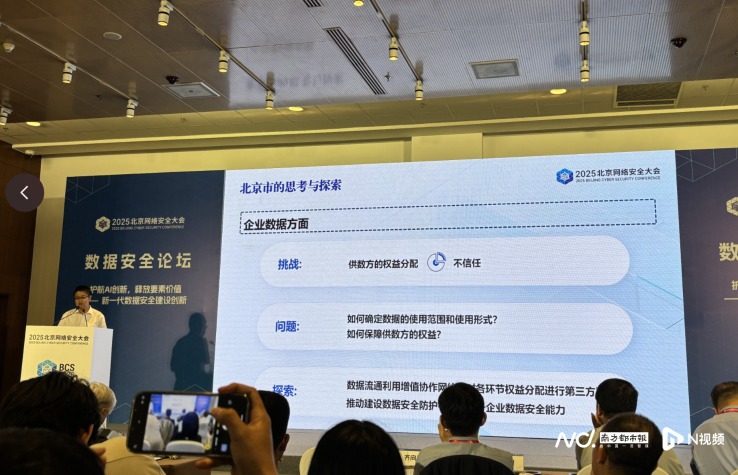
从一张胸片说起,北京为释放数据价值和安全治理有何尝试?
Nan Fang Du Shi Bao· 2025-06-05 09:41
Core Insights - The Beijing government is exploring data security governance for personal, enterprise, and public data to enhance service delivery and convenience [3][4] Group 1: Personal Data - The core issue with personal data is the lack of unified anonymization standards, which creates concerns for data circulation among enterprises [3] - Beijing is collaborating with hospitals to create public datasets from chest X-ray imaging data, aiming to balance patient safety and research needs [3] Group 2: Public Data - Balancing public interest and commercial utilization of public data is a key challenge, with no unified regulations on authorization and pricing [3][4] - The Beijing government has adopted a decentralized authorization approach for public data, particularly in the financial sector, and is considering whether to expand this or shift to centralized authorization [3] Group 3: Enterprise Data - Trust is crucial for enterprise data circulation, and external factors significantly influence its value [5] - Beijing is utilizing blockchain technology to establish a value-added collaboration network to enhance trust among enterprises, particularly in the steel industry where strong interconnections exist [5]