再生建材

Search documents
武汉“无废”答卷书写超大城市绿色嬗变
Zhong Guo Huan Jing Bao· 2025-12-18 02:00
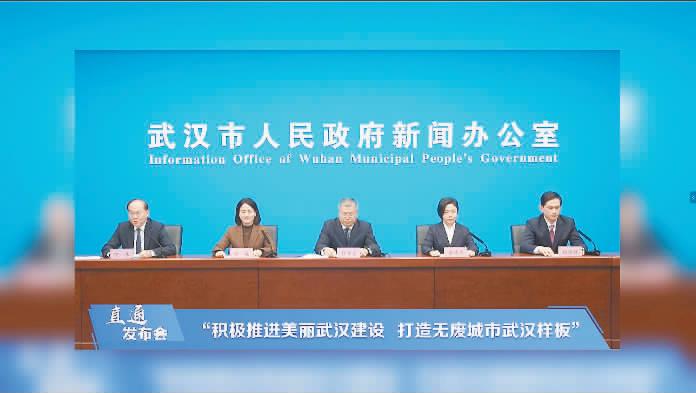
Core Viewpoint - Wuhan is advancing its "waste-free city" initiative, integrating solid waste management with ecological protection and urban development, contributing a replicable model for solid waste governance in large cities since its inclusion in the national "waste-free city" list in April 2022 [1] Group 1: Strategic Framework - Solid waste management is identified as a critical bottleneck for sustainable urban development and a key test of governance capabilities in mega cities [2] - Wuhan has established a comprehensive regulatory framework, including the "Implementation Plan for Waste-Free City Construction" and the "Environmental Protection Measures for Solid Waste Pollution," to support its waste management efforts [2] - The city has developed a robust legal and policy system covering five major solid waste areas, ensuring that waste management is legally compliant and systematically organized [2] Group 2: Organizational Support - A leadership group for the "waste-free city" initiative has been formed, led by the city's main government officials, to ensure coordinated efforts across 16 districts and 28 departments [3] - The city has implemented a multi-faceted governance model that includes government leadership, departmental collaboration, and community participation [3] - Wuhan has established the largest circular economy benchmark in Central China, the Qianzi Mountain Circular Economy Industrial Park, with an investment of approximately 5.6 billion yuan, capable of processing 2 million tons of solid waste annually [3] Group 3: Technological and Regulatory Advancements - The city is enhancing its digital regulatory capabilities by creating a comprehensive information management platform for solid waste, ensuring traceability and accountability in waste generation and disposal [4] - A closed-loop management model for hazardous waste has been developed, incorporating early warning systems and lifecycle risk management [4] Group 4: Sector-Specific Initiatives - In the industrial sector, Wuhan has established 204 municipal "waste-free factories" and 82 national-level green factories, reducing industrial solid waste generation intensity from 0.31 tons per 10,000 yuan in 2020 to 0.27 tons per 10,000 yuan by 2024 [5] - The agricultural sector has achieved a comprehensive utilization rate of 95.9% for crop straw, with a resource utilization system that includes over 40 resource utilization entities [6] - The city has built a recycling network for waste resources, achieving a recycling rate of 86.12% through a system of community recycling stations and sorting centers [7] - For construction waste, Wuhan has developed a comprehensive disposal system with a resource utilization rate projected to reach 70% by 2024 [8] - Hazardous waste management has been strengthened, with a 100% safe disposal rate and an increase in comprehensive utilization from 36% in 2020 to 60.24% by 2024 [9] Group 5: Community Engagement and Awareness - Wuhan has created 1,640 "waste-free cells" across various community settings, promoting the "waste-free" concept in daily life [10] - The city encourages the development of unique local brands for waste management, enhancing the effectiveness of the "waste-free city" initiative [11] - A comprehensive public awareness campaign has been launched, utilizing various media and community engagement strategies to promote the "waste-free" philosophy [11] Group 6: Future Goals - Wuhan aims to continue its "waste-free city" construction as a key support for high-quality urban development, focusing on collaborative efforts in waste reduction, resource utilization, and harmless disposal [12]

中交泓福烟台项目建筑垃圾资源化利用一期工程开工
Zhong Guo Fa Zhan Wang· 2025-08-25 10:04
Core Viewpoint - The project initiated by China Communications First Public Bureau Group focuses on the construction of a building waste resource utilization industrial base in Yantai, Shandong Province, aligning with national environmental protection and waste utilization initiatives [1] Group 1: Project Overview - The industrial base is located in Fuxin Street, Fushan District, Yantai City, with a building height of 22.2 meters and a total construction area of 39,000 square meters [1] - The above-ground area is 35,900 square meters, while the underground area is 3,089 square meters, featuring a steel structure [1] - The above-ground factory primarily serves as a storage and operational area, with the underground section designated for equipment foundations [1] Group 2: Environmental Impact - The project utilizes technology to convert construction waste, including crushed bricks and concrete blocks, into recycled building materials, effectively reducing carbon dioxide emissions [1] - The initiative aims to lower the levels of inhalable particulate matter, contributing to improved air quality [1] Group 3: Economic and Urban Development - Upon completion, the project is expected to significantly enhance the region's capacity for waste resource utilization and disposal [1] - It will provide "green building materials" for urban construction, establishing a circular economy industrial chain of "construction waste - recycled materials - green building materials" [1]


研判2025!中国废弃资源综合利用行业政策汇总、产业链图谱、营业收入、利润总额及未来前景展望:格林美营业收入瑶瑶领先[图]
Chan Ye Xin Xi Wang· 2025-07-10 01:45
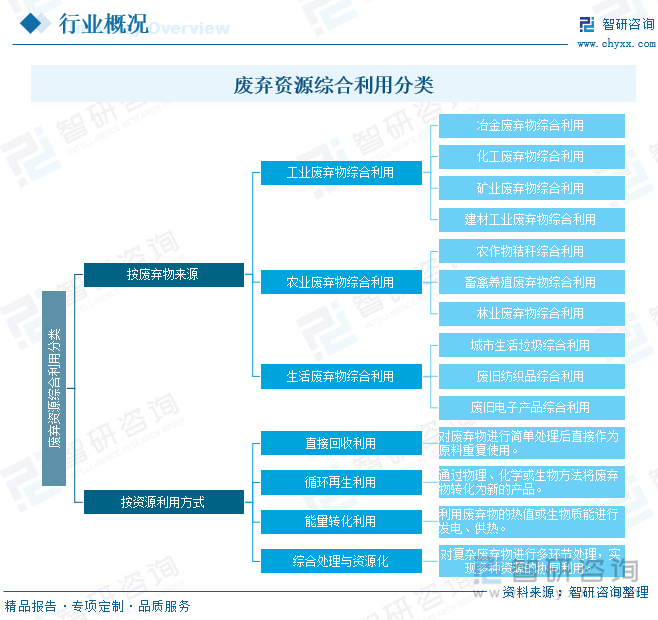
Core Viewpoint - The comprehensive utilization of waste resources in China is becoming increasingly important for sustainable urban development, driven by rising waste generation and the need for resource recycling under the "carbon peak and carbon neutrality" framework [1][12]. Market Overview - The waste resource comprehensive utilization industry in China is projected to achieve an operating income of 1,204.3 billion yuan in 2024, with a year-on-year growth of 2.70%, and a total profit of 22.82 billion yuan, also reflecting a growth of 2.61% [1][12]. - In the first four months of 2025, the industry has already completed an operating income of 377.67 billion yuan, generating a profit of 4.1 billion yuan [1]. Market Policies - A series of supportive policies have been issued to encourage the development of the waste resource comprehensive utilization industry, including guidelines for recycling systems and promoting green manufacturing [4][6]. Industry Chain - The upstream of the waste resource comprehensive utilization industry includes various sources of waste, such as residential, industrial, commercial, and agricultural waste, with collection channels including individual recyclers, community recycling stations, and direct collection by enterprises [7]. - The midstream involves the production of recycled products, utilizing recycled materials in various sectors, such as metals, plastics, paper, and construction materials [8]. Competitive Landscape - The industry is characterized by a large number of participants and a fragmented market structure, with 3,841 scale enterprises reported in 2024, marking an increase of 11.43% [16]. - Major companies in the industry include GreenMe, ShouChuang Environmental Protection, Camel Group, and others, with GreenMe leading in revenue at 33.2 billion yuan in 2024 [17][18]. Company Analysis - GreenMe has positioned itself as a leader in the waste recycling industry, achieving an operating income of 33.2 billion yuan, with 7.44 billion yuan from waste resource utilization, accounting for 22.4% of total revenue [20]. - Yiqiu Resources focuses on recycling aluminum, generating 6.999 billion yuan in total revenue, with 6.981 billion yuan from waste resource utilization, representing 99.74% of its total income [22]. Development Trends - Future trends indicate a collaborative approach among waste resource utilization enterprises and their upstream and downstream partners to enhance resource efficiency and economic benefits [24]. - There is an anticipated expansion into overseas markets, particularly in Southeast Asia and Africa, leveraging technological advantages to increase resource acquisition and market share [24].