
再生润滑油基础油

Search documents
十九城产业新坐标·河南经济新方位丨信阳:驭风化电 绿能澎湃 信阳加速隆起新能源产业集群
He Nan Ri Bao· 2026-01-23 01:12
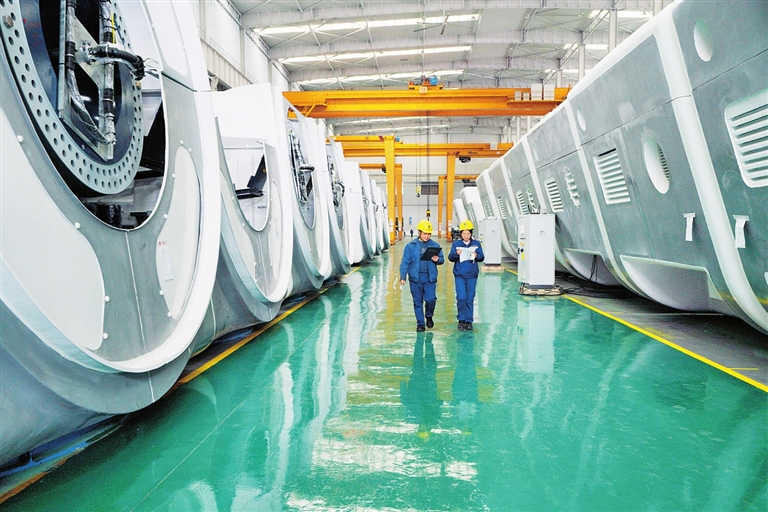
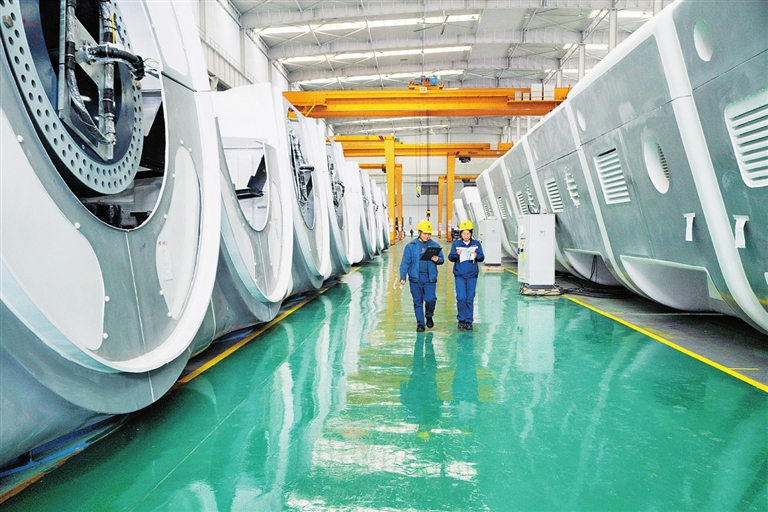
Group 1 - The core viewpoint of the articles highlights the significant growth and development of Henan Mingyang Smart Energy Co., which is producing the world's longest onshore wind turbine blades and is experiencing a surge in orders and production capacity [1][2] - The company has an annual production capacity of 520 units of wind turbine blades, with a projected output of 150 units and a revenue of 2 billion yuan in the first quarter [1] - Mingyang Group is expanding its production capabilities with a new 45,000 square meter facility set to begin operations in the second half of the year, alongside a 400 million yuan investment in a logistics company to drive further growth [1][2] Group 2 - Mingyang Group is establishing a comprehensive strategic partnership with Xinyang, focusing on the development of a smart renewable energy industry system that includes wind, solar, storage, and hydrogen [2] - The company is also leading the recycling of waste lubricating oils through its subsidiary Huayang Changqing, which holds over 90% market share in high-end recycled lubricating oils in China [4] - The ongoing construction of a 200,000-ton green hydrogen and ammonia project aims to utilize local green energy and achieve zero carbon emissions across the production chain [4][5] Group 3 - Xinyang is becoming a leading manufacturing base for onshore wind power equipment in China, with over 2.4 million kilowatts of wind power projects established [5] - The city has also seen significant investments in hydropower and lithium-ion battery production, with a projected annual output value of 12 billion yuan from a new battery production line [5] - Xinyang has been selected for a provincial-level cultivation list for the renewable energy equipment manufacturing industry chain, aiming to enhance its competitiveness and support the region's economic revitalization [5]


十九城产业新坐标·河南经济新方位丨信阳 驭风化电 绿能澎湃 信阳加速隆起新能源产业集群
He Nan Ri Bao· 2026-01-23 00:02
Group 1 - The core viewpoint of the articles highlights the significant growth and strategic developments of Henan Mingyang Smart Energy Co., which is expanding its production capacity and contributing to the green energy transition in China [1][2][4] - Henan Mingyang produces the world's longest onshore wind turbine blades at 108 meters, with an annual production capacity of 520 units, and expects to achieve a production value of 2 billion yuan in the first quarter [1] - The company is also expanding its production base, with a new facility set to begin operations in the second half of the year, and has invested 400 million yuan in a logistics company to create new growth points [1][2] Group 2 - Mingyang Group is establishing a comprehensive strategic partnership with Xinyang, focusing on the development of a smart renewable energy industry system that includes wind, solar, storage, and hydrogen [2][3] - The company’s subsidiary, Huayang Changqing, has become a leader in the recycling of waste lubricating oil, holding over 90% market share in the high-end recycled lubricating oil sector in China [3] - The ongoing construction of a 200,000-ton green hydrogen and ammonia project aims to utilize local green energy and achieve zero carbon emissions across the production chain [3][4] Group 3 - Xinyang is becoming a major manufacturing hub for onshore wind power equipment, with over 2.4 million kilowatts of wind power projects established in the region [4] - The city has also seen significant investments in renewable energy, including a nearly 10 billion yuan investment in advanced lithium-ion battery production lines, which could generate an annual output value of 12 billion yuan [4] - Xinyang has been selected for the provincial cultivation list of the green equipment manufacturing industry chain, aiming to enhance its competitiveness and support the energy structure transition in Henan [4]

2025年中国废润滑油再生工艺、市场政策、产业链图谱、产能、供需现状、市场规模、竞争格局及发展趋势研判:产能利用率较低[图]
Chan Ye Xin Xi Wang· 2025-12-23 01:29
Core Insights - Waste lubricating oil is a valuable recyclable resource, with its regenerated base oil capable of replacing a portion of crude oil refining base oil, enhancing both economic value and strategic resource substitution significance in a volatile international oil price market [1][8] - The regeneration technology for waste lubricating oil in China has seen continuous upgrades, leading to significant improvements in oil quality, with some products meeting high-end lubricating oil standards, thus expanding application possibilities in high-end fields such as automotive and aerospace [1][8] Production and Market Data - In 2024, China's waste lubricating oil regeneration output is projected to reach 813,000 tons, a year-on-year increase of 8.8%, while the demand is expected to hit 779,000 tons, growing by 9.0%. The market size is anticipated to reach 6.433 billion yuan, reflecting a 2.7% increase [1][8] - The total production of waste lubricating oil in China is expected to reach 6.015 million tons in 2024, with a year-on-year growth of 2.9%, and the recovery volume is projected to be 4.93 million tons, increasing by 3.5% [7] Industry Policies - The Chinese government has been increasing support for the waste lubricating oil regeneration industry through various policies aimed at promoting green innovation and high-quality development, creating a favorable policy environment for the industry [4][5] Industry Chain Structure - The waste lubricating oil regeneration industry in China features a clear hierarchical structure comprising upstream collection, midstream regeneration processing, and downstream application, forming a complete value transfer system from raw materials to finished products [5][6] Competitive Landscape - As of 2024, there are approximately 2,000 licensed enterprises in China's waste mineral oil industry, with only 523 holding the HW08 waste mineral oil processing qualification, indicating a nominal processing capacity of about 10.7 million tons per year. However, actual production in the waste lubricating oil regeneration sector is only 813,000 tons, highlighting significant idle capacity [9] - The industry is characterized by a "leading enterprises dominate + small workshops disperse" structure, with only a few large companies utilizing advanced technologies able to operate stably, while many small enterprises rely on traditional, less efficient methods [9][10] Future Development Trends - Future environmental inspections will become routine, increasing the crackdown on illegal collection, transportation, and disposal of waste oil, thereby squeezing the survival space for illegal channels and small workshops, while compliant enterprises will gain more raw materials and market opportunities [13][14] - The low-carbon attributes of regenerated lubricating oil will be fully explored under the "dual carbon" policy context, with the maturation of the carbon trading market allowing for the gradual emergence of a "green premium" for regenerated oil products [13][14]


