风电设备制造

Search documents
巨型风电设备启航墨西哥 张家港口岸出口“开门红”
Su Zhou Ri Bao· 2026-02-12 22:47
Core Viewpoint - The successful departure of the "Chang'an City" vessel from Zhangjiagang, carrying domestic wind power equipment to Mexico, marks a strong start for wind power equipment exports from the port this year [1] Group 1: Export Activities - The shipment includes large wind turbine components such as complete wind turbine units, lifting equipment, blades, cabins, and motors, which present significant logistical challenges due to their size and complexity [1] - Zhangjiagang port has implemented tailored customs clearance solutions, including a "one ship, one policy" approach, to ensure efficient operations and minimize delays [1] Group 2: Economic Impact - In January, Zhangjiagang port's foreign trade import and export volume reached 6.508 million tons, reflecting a year-on-year increase of 11.4%, indicating sustained vitality in foreign trade [1] - The border inspection station at Zhangjiagang is committed to enhancing service efficiency and supporting high-quality economic development at the port [1]
十九城产业新坐标·河南经济新方位丨信阳 驭风化电 绿能澎湃 信阳加速隆起新能源产业集群
He Nan Ri Bao· 2026-01-23 00:02
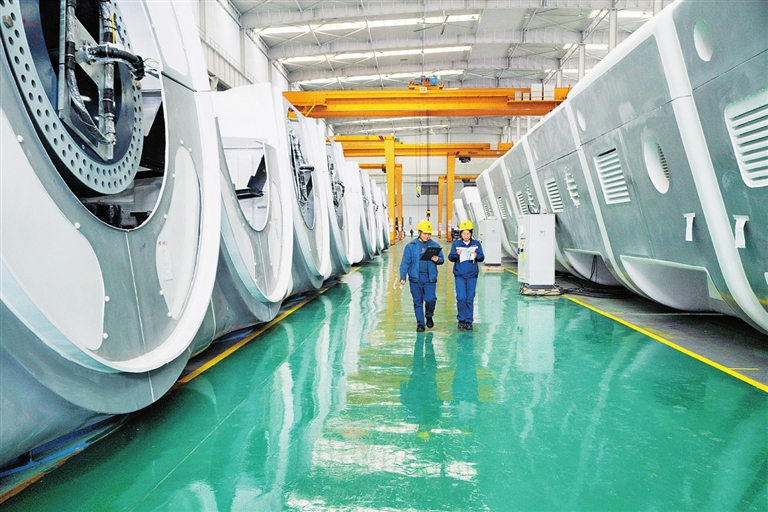
Group 1 - The core viewpoint of the articles highlights the significant growth and strategic developments of Henan Mingyang Smart Energy Co., which is expanding its production capacity and contributing to the green energy transition in China [1][2][4] - Henan Mingyang produces the world's longest onshore wind turbine blades at 108 meters, with an annual production capacity of 520 units, and expects to achieve a production value of 2 billion yuan in the first quarter [1] - The company is also expanding its production base, with a new facility set to begin operations in the second half of the year, and has invested 400 million yuan in a logistics company to create new growth points [1][2] Group 2 - Mingyang Group is establishing a comprehensive strategic partnership with Xinyang, focusing on the development of a smart renewable energy industry system that includes wind, solar, storage, and hydrogen [2][3] - The company’s subsidiary, Huayang Changqing, has become a leader in the recycling of waste lubricating oil, holding over 90% market share in the high-end recycled lubricating oil sector in China [3] - The ongoing construction of a 200,000-ton green hydrogen and ammonia project aims to utilize local green energy and achieve zero carbon emissions across the production chain [3][4] Group 3 - Xinyang is becoming a major manufacturing hub for onshore wind power equipment, with over 2.4 million kilowatts of wind power projects established in the region [4] - The city has also seen significant investments in renewable energy, including a nearly 10 billion yuan investment in advanced lithium-ion battery production lines, which could generate an annual output value of 12 billion yuan [4] - Xinyang has been selected for the provincial cultivation list of the green equipment manufacturing industry chain, aiming to enhance its competitiveness and support the energy structure transition in Henan [4]


大抓产业:“焕新”与“育新”并重
Xin Lang Cai Jing· 2026-01-22 22:13
Group 1: New Energy and Technology Development - Zunyi Navi Intelligent Manufacturing Co., Ltd. is one of the three global companies mastering bio-carbon-based solid-state battery technology, establishing a production line that will generate an annual output value of 4.4 billion yuan after phase one completion [1] - The project covers an area of 233 acres and aims to attract upstream and downstream enterprises in the new energy sector to Zunyi [1] Group 2: Traditional Industry Upgrading - Guizhou Hangtian Tianma Electromechanical Technology Co., Ltd. has successfully transitioned from a traditional electromechanical manufacturer to a new materials solution provider, winning a project for polyimide insulation materials [2] - The company’s self-developed polyimide foam material has broken the dominance of foreign companies in high-end markets, with applications in critical fields such as ship cabin insulation and aerospace thermal protection [2] Group 3: Resource Utilization and Industrial Integration - Zhenjin County is focusing on the integration of phosphorus, coal, water, and gas resources to attract investments in the new energy battery materials industry [5] - The county is developing a chemical park with supporting infrastructure to create a systematic industrial ecosystem, enhancing the internal circulation of materials and energy [5] Group 4: Logistics and Export Growth - Guizhou's international logistics system has improved significantly, with the Guizhou International Land Port handling 4.46 million tons of goods and achieving a container throughput of 185,000 TEUs since its operation [6] - The Guizhou International Collection and Distribution Center, which began operations in September 2025, has already achieved over 300 million yuan in bonded import and export value within two months [6] Group 5: Local Industry Export Success - Eleven local liquor companies successfully exported through the Zunyi Comprehensive Bonded Zone, achieving an export value of over 24 million yuan, a 200% increase year-on-year [7] - The zone provides comprehensive support services to local enterprises, facilitating their entry into international markets [7]
中经评论:10万亿千瓦时的信心与动力
Jing Ji Ri Bao· 2026-01-22 00:10
Group 1 - The core point of the article highlights that in 2025, China's total electricity consumption will exceed 10 trillion kilowatt-hours for the first time, reaching 10.4 trillion kilowatt-hours, marking a 5% year-on-year increase, and solidifying China's position as the world's largest electricity consumer [1][2][3] - This electricity consumption level is approximately double that of China's total consumption in 2015 and more than double that of the United States, surpassing the combined annual consumption of the EU, Russia, India, and Japan [1][2] - The growth in electricity demand reflects the robust vitality and quality of China's economy, driven by industrial activities and residential needs, with a significant contribution from high-end manufacturing and emerging technologies [2][3] Group 2 - The increase in electricity consumption is achieved alongside a continuous decline in energy consumption per unit of GDP, indicating more efficient production and higher quality development outcomes [2] - The optimization of industrial structure is evident, with high-end manufacturing sectors such as new energy vehicles and wind power equipment experiencing growth rates exceeding 20% and 30%, respectively [2] - The rapid development of the digital economy and new technologies has led to a surge in electricity demand, particularly in sectors like internet services and charging infrastructure, with year-on-year growth rates exceeding 30% and nearly 50% respectively [2][3] Group 3 - The article emphasizes that the growth in electricity demand does not exacerbate reliance on fossil fuels, as non-fossil energy sources account for over 60% of installed capacity, with wind and solar power leading globally [3] - The trend of decoupling electricity consumption growth from carbon emissions is becoming apparent, with one-third of electricity consumption being green energy [3] - The construction of a new power system is addressing challenges related to the integration of renewable energy sources, supporting China's commitment to carbon neutrality [3] Group 4 - The substantial electricity demand poses challenges for the planning, construction, scheduling, and supply capabilities of the power system, necessitating a robust national energy production and transmission network [4] - Despite the progress, disparities in per capita electricity consumption and regional differences remain, indicating ongoing challenges in achieving balanced development [4] - The article stresses the importance of technological empowerment in addressing these challenges, including advancements in clean energy technologies, energy storage, and smart grid innovations [4]
10万亿千瓦时的信心与动力
Xin Lang Cai Jing· 2026-01-21 22:38
Core Insights - In 2025, China's total electricity consumption is projected to exceed 10 trillion kilowatt-hours for the first time, reaching 10.4 trillion kilowatt-hours, marking a 5% year-on-year increase, solidifying China's position as the world's largest electricity consumer [2][3] - This significant electricity demand reflects the robust growth of China's economy, industrial activities, and the increasing energy needs of its population, showcasing the country's manufacturing strength and market potential [3][4] Electricity Demand and Economic Growth - The electricity consumption growth is achieved alongside a decline in energy consumption per unit of GDP, indicating more efficient production and higher quality development outcomes [3] - The optimization of industrial structure is evident, with high-end manufacturing sectors such as new energy vehicles and wind power equipment experiencing growth rates exceeding 20% and 30% respectively [3] - The rapid development of the digital economy and emerging technologies has led to a surge in electricity demand, particularly in new infrastructure like charging stations and 5G base stations, with related sectors seeing over 30% growth in electricity consumption [3] Green Energy Transition - Concerns about increased fossil fuel dependency due to rising electricity demand have been addressed, as non-fossil energy sources now account for over 60% of installed capacity, with wind and solar power leading globally [4] - One-third of the total electricity consumed is now green energy, indicating a decoupling trend between electricity consumption growth and carbon emissions [4] Social and Economic Implications - Urban and rural residential electricity consumption is projected to grow by 6.3%, with the tertiary sector and residential use contributing to 50% of the overall electricity consumption increase [4] - Continuous upgrades to rural power grids and the proliferation of household appliances are enhancing the quality of life, while new electricity demands from electric vehicles and smart homes are emerging [4] Challenges and Technological Empowerment - The substantial electricity demand poses challenges for the planning, construction, scheduling, and supply capabilities of the electricity system [5] - A national energy production and transmission network has been established to ensure stable and reliable electricity supply, which is crucial for optimizing the business environment and supporting industrial supply chains [5] - Addressing the imbalances in electricity consumption across regions and ensuring the electricity system meets the dual carbon goals while maintaining supply and economic efficiency remains a long-term challenge [5] - Technological advancements in clean energy, energy storage, smart grids, and energy pricing mechanisms are essential for optimizing energy resource allocation nationwide [5]
全社会用电量首破10万亿千瓦时说明什么?
Bei Jing Qing Nian Bao· 2026-01-19 05:57
Group 1 - In 2025, China's total electricity consumption is projected to exceed 10 trillion kilowatt-hours for the first time, reaching 10.4 trillion kilowatt-hours, marking a 5% year-on-year increase, which is unprecedented for a single country globally [1][2] - The growth in electricity consumption reflects the active state of economic activities, with significant contributions from high-tech industries, digital economy, and green energy sectors, indicating a profound transformation in the structure of electricity consumption [2][3] - The electricity consumption in the manufacturing sector continues to rise, demonstrating the resilience and expansion of China's manufacturing capabilities, while the electricity demand from computing centers is expected to outpace overall electricity consumption growth [3] Group 2 - By the end of October 2025, China's renewable energy capacity is expected to reach 2.22 billion kilowatts, accounting for 59.2% of the total power generation capacity, with hydropower, wind, and solar power leading globally [4] - The increasing electricity consumption is supported by the rapid growth of high-tech and equipment manufacturing, as well as the deepening of green development concepts, showcasing China's commitment to economic transformation and sustainable growth [4]
2025年全社会用电量首超10万亿千瓦时:彰显中国经济发展韧性与活力
Ren Min Ri Bao Hai Wai Ban· 2026-01-19 02:46
Core Insights - China's total electricity consumption is projected to reach 10,368.2 billion kilowatt-hours by 2025, marking the first time a single country surpasses the 10 trillion kilowatt-hour threshold globally [1][2] - The growth in electricity consumption is driven by the tertiary sector and urban-rural residential electricity use, contributing to 50% of the overall increase [1] Industry Analysis - The first industry electricity consumption is expected to be 149.4 billion kilowatt-hours, with a year-on-year growth of 9.9% [1] - The second industry will consume 6,636.6 billion kilowatt-hours, showing a year-on-year growth of 3.7% [1] - The third industry is projected to consume 1,994.2 billion kilowatt-hours, with a year-on-year growth of 8.2% [1] - Urban and rural residential electricity consumption is anticipated to reach 158.8 billion kilowatt-hours, growing by 6.3% year-on-year [1] Growth Drivers - High-end manufacturing is expected to become a key growth point for electricity consumption, with electric vehicle and wind power equipment manufacturing sectors seeing growth rates exceeding 20% and 30%, respectively [2] - The rapid development of the digital economy and emerging technologies is driving a significant increase in electricity demand, with new infrastructure such as charging stations and 5G base stations contributing to over 30% growth in internet and related services electricity consumption [2] - The charging and swapping service industry is projected to see nearly 50% year-on-year growth in electricity consumption [2]
天能重工1月16日获融资买入2179.60万元,融资余额2.79亿元
Xin Lang Cai Jing· 2026-01-19 01:23
Group 1 - The core viewpoint of the news highlights the financial performance and trading activity of Tianeng Heavy Industry, indicating a significant increase in revenue and net profit, alongside notable trading volumes in the stock market [1][2][3] Group 2 - As of January 16, Tianeng Heavy Industry's stock price increased by 1.99%, with a trading volume of 211 million yuan. The financing buy-in amount for the day was 21.80 million yuan, while the net financing buy was 1.71 million yuan [1] - The total financing and securities balance for Tianeng Heavy Industry reached 280 million yuan, with the financing balance accounting for 4.45% of the circulating market value, indicating a high level compared to the past year [1] - The company reported a revenue of 2.51 billion yuan for the period from January to September 2025, representing a year-on-year growth of 37.54%, and a net profit of 84.06 million yuan, reflecting a substantial increase of 1359.03% [2] - Tianeng Heavy Industry has distributed a total of 581 million yuan in dividends since its A-share listing, with 154 million yuan distributed over the past three years [3] - As of September 30, 2025, the number of shareholders for Tianeng Heavy Industry increased to 46,900, marking a 14.52% rise, while the average circulating shares per person decreased by 12.68% to 21,749 shares [2][3]

我国用电量首次突破10万亿千瓦时
Sou Hu Cai Jing· 2026-01-19 01:13
Core Insights - China's total electricity consumption is projected to exceed 10 trillion kilowatt-hours by 2025, reaching 10.4 trillion kilowatt-hours, representing a year-on-year growth of 5% [1][5] - This milestone is unprecedented for a single country, equating to more than double the annual electricity consumption of the United States and surpassing the combined annual consumption of the EU, Russia, India, and Japan [6] Group 1: Factors Driving Electricity Consumption Growth - The growth in electricity consumption is driven by a stable macroeconomic environment and increased demand for residential electricity due to high temperatures and enhanced electrification [2][7] - Notably, it took China just over a decade to increase its annual electricity consumption from 5 trillion to 10 trillion kilowatt-hours, a growth rate unmatched by other major economies [2][7] Group 2: Sectoral Contributions to Electricity Demand - High-end manufacturing is becoming a key driver of electricity consumption growth, with electricity usage in the new energy vehicle and wind power equipment manufacturing sectors expected to grow by over 20% and 30%, respectively [3][8] - The rapid development of the digital economy and emerging technologies is creating new electricity demand points, with internet services and related sectors seeing over 30% growth, and the charging and swapping industry approaching a 50% increase in electricity consumption [3][8] Group 3: Electricity Supply and Infrastructure - A robust electricity supply system has been established, focusing on collaboration between power generation, grid management, and demand-side management [3][8] - On the generation side, coal, hydro, nuclear, and thermal power are working together to ensure a stable supply, while renewable energy sources are being rapidly deployed to manage fluctuations [3][8] - The construction of a unified national electricity market is accelerating, with policies like time-of-use pricing being implemented to align electricity demand with supply [3][8] Group 4: Trends in High Energy-Consuming Industries - While electricity consumption in emerging industries is rising, the overall growth rate in high energy-consuming sectors is declining, with specific industries like black metal smelting and non-metal mineral products experiencing decreases [4][9] - The shift towards energy efficiency and the exit of outdated production capacities are contributing to a continuous decline in energy consumption per unit of GDP, indicating a greener economic trajectory [4][9]
5.0%、2倍、64%!从跳跃数字感知103682亿千瓦时背后经济发展向新、向智、向绿
Yang Shi Wang· 2026-01-18 08:39
Core Insights - In 2025, China's total electricity consumption is projected to exceed 10 trillion kilowatt-hours, maintaining its position as the world's largest electricity consumer [1][4] - The annual electricity consumption is expected to reach 10,368.2 billion kilowatt-hours, representing a year-on-year growth of 5.0% [4] - China's electricity consumption in a year is more than double that of the United States and surpasses the combined total of the EU, Russia, India, and Japan for 2024 [4] Industry Developments - The second industry remains the primary electricity consumer, accounting for 64% of total consumption, with high-end manufacturing emerging as a new growth point [9] - The electricity consumption for new energy vehicles and wind power equipment manufacturing has seen year-on-year growth rates exceeding 20% and 30%, respectively, indicating a positive trend in industrial upgrading and green development [9] - The third industry and urban-rural residential electricity consumption are rapidly increasing, contributing to 50% of the growth in total electricity consumption [12] Energy Supply and Infrastructure - The achievement of over 10 trillion kilowatt-hours in electricity consumption is supported by a clean and efficient energy supply system, with non-fossil energy installations exceeding 60% of total capacity [15] - In 2025, China will enhance its ultra-high voltage project construction, completing four ultra-high voltage transmission lines, with cross-regional and cross-provincial transmission capacity reaching 370 million kilowatts [17] - The national energy transmission network, characterized by "West-to-East Power Transmission" and "North-to-South Power Supply," is becoming increasingly integrated [17]