农耕文化体验

Search documents
守正与创新的辩证实践
Xin Lang Cai Jing· 2026-01-12 23:09
Core Insights - The article emphasizes the importance of balancing tradition and innovation in rural revitalization, highlighting that it is not merely a choice between the two but a dialectical practice that requires both elements to coexist [1][2][3] Group 1: Tradition and Authenticity - The essence of rural charm lies in preserving the soul of the village, as illustrated by the desire of visitors to experience local produce and scenery, rather than a sanitized tourist attraction [1] - New Cang Village chose to retain its authentic character, allowing local residents to remain, which fosters a genuine connection and inspires creativity among artists and visitors [1][2] Group 2: Innovation and Empowerment - The "two-eight model" implemented in New Cang Village effectively returns development and profit rights to the villagers, leading to grassroots innovation such as local restaurants and cafes [2] - The village has also introduced cultural elements like art galleries and educational bases, aiming to provide unique cultural value and deep experiences rather than just superficial visits [2] Group 3: Human-Centric Development - The driving force behind both tradition and innovation is the people, including village leaders and residents, whose beliefs and actions ultimately shape the village's future [2] - A genuine sense of belonging among the residents is crucial for sustaining the village's vitality and ensuring its continuous development [2][3]
“龙舟+”、诗画民俗……“热气腾腾”的端午假期助力各地节日消费亮点纷呈
Yang Shi Wang· 2025-06-02 02:29
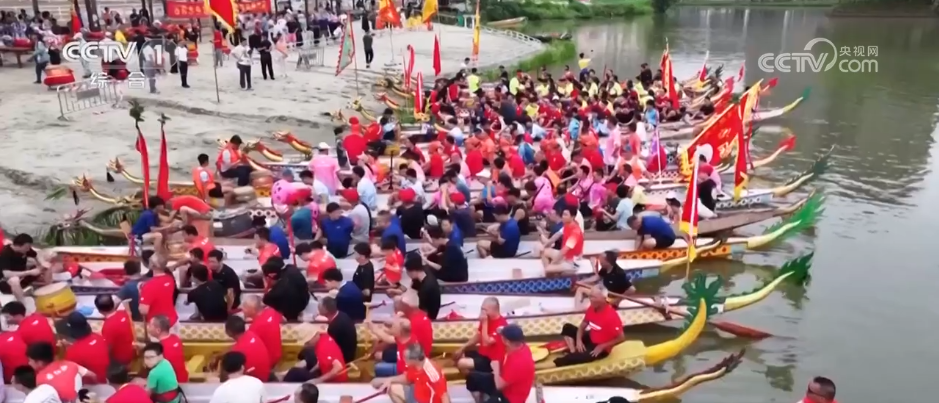
Core Viewpoint - The Dragon Boat Festival is celebrated with various dragon boat races across China, showcasing traditional customs and local culture, while also promoting tourism and community engagement [1][8][14]. Group 1: Dragon Boat Races - The Dragon Boat Festival features numerous competitions, with teams from different regions, including 20 teams from the Greater Bay Area participating in the lotus flower dragon boat festival in Jiangmen, Guangdong [3][9]. - In Guizhou, a traditional dragon boat race took place on the Wu River, with 44 traditional boats competing in a challenging 500-meter upstream race, highlighting the spirit of teamwork and competition [6][4]. - In Guangxi, 21 teams from both domestic and international locations, including participants from Singapore and Vietnam, gathered for a dragon boat race, alongside local cultural activities such as dragon dances and traditional games [8][9]. Group 2: Cultural Integration and Tourism - The festival not only emphasizes sports but also integrates local cultural heritage, as seen in Tibet where traditional cowhide boats and cultural performances were featured, merging sports with tourism [13]. - Various regions, such as Zhejiang and Xinjiang, offered immersive experiences in local agricultural practices and scenic tourism, enhancing the overall travel experience during the holiday [16][22]. - The festival has spurred a rise in domestic tourism, with many people opting for travel experiences that blend traditional customs with modern attractions, thereby boosting local economies [14][18].