利用与封存(CCUS)项目

Search documents
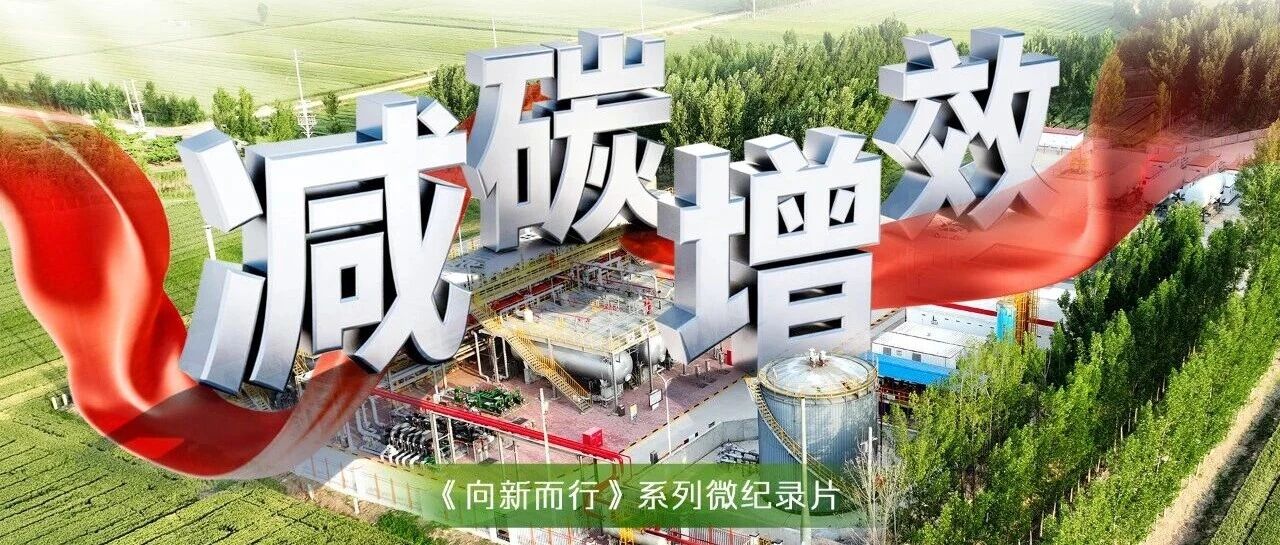
向新而行︱减碳增效 从温室气体到“绿色功臣”,二氧化碳的“逆袭”之路?
国家能源局· 2026-03-16 07:45
Core Viewpoint - The article emphasizes the importance of energy transformation as a strategic precursor to productivity advancement, highlighting the role of carbon capture, utilization, and storage (CCUS) technology in reshaping the relationship between humanity and carbon [2][4][15]. Group 1: CCUS Project Overview - A significant CCUS project in Shandong, known as the Qilu Petrochemical - Shengli Oilfield million-ton-level demonstration project, was launched in March 2022, focusing on environmental monitoring [6]. - This project is capable of reducing carbon dioxide emissions by 1 million tons annually, equivalent to planting nearly 9 million trees or removing about 60,000 economy-class cars from the road for a year, while also contributing to an increase of nearly 3 million tons of crude oil production over the next 15 years [7]. Group 2: Technology and Process - The CCUS facility operates like a large "industrial lung," capturing carbon emissions from petrochemical production processes that would otherwise be released into the atmosphere [8]. - The captured high-concentration exhaust undergoes a series of complex processes, resulting in liquid carbon dioxide with a purity of 99.9% and a temperature of -20 degrees Celsius, which is then stored in large "carbon banks" and transported safely to oilfields [8]. Group 3: Enhanced Oil Recovery - Injecting carbon dioxide underground into oil reservoirs, particularly those deeper than 3,000 meters, helps to mobilize previously stagnant crude oil, significantly improving oil recovery rates [11]. - This method transforms the state of crude oil from "standing" to "running," facilitating better flow within the geological formations [11]. Group 4: Industry Benchmark and Future Prospects - The Qilu Petrochemical - Shengli Oilfield CCUS project has established a comprehensive safety monitoring and early warning system, with over 27,000 monitoring points for air, soil, and groundwater [13]. - As a benchmark for carbon circular economy in China's petrochemical industry, this project has achieved commercial operation ahead of many global CCUS initiatives still in experimental phases, showcasing China's commitment to energy transition and climate governance [14][15][16].

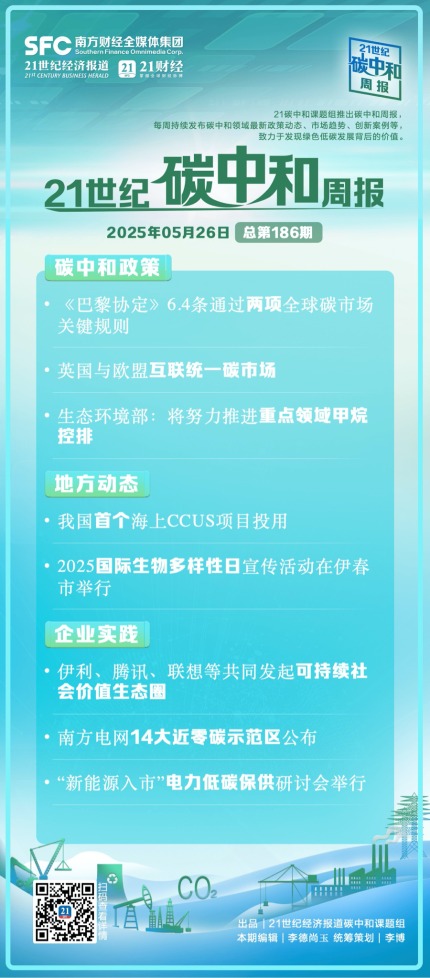
碳中和周报(第186期)丨全球碳市场两项关键规则通过;英国与欧盟互联统一碳市场
2 1 Shi Ji Jing Ji Bao Dao· 2025-05-26 16:45
Core Insights - The report focuses on the latest developments in the "dual carbon" field, including carbon neutrality policies, local dynamics, and corporate practices [1] Carbon Market Developments - The UN has approved two key rules under Article 6.4 of the Paris Agreement to guide greenhouse gas reduction projects, establishing a clearer and more executable global carbon market framework [3] - The EU and the UK have committed to connecting their carbon emissions trading systems (ETS) to promote net-zero emissions and prevent carbon leakage, allowing mutual recognition of emission allowances [4] Methane Emission Control - The Ministry of Ecology and Environment in China aims to advance methane emission control in key sectors, emphasizing the importance of managing methane as a potent greenhouse gas [5] - Strategies include implementing standards for coalbed methane emissions, enhancing infrastructure for methane monitoring, and increasing public awareness of methane control [5] Local Initiatives - China's first offshore carbon capture, utilization, and storage (CCUS) project has been launched, marking a significant step in marine carbon storage and utilization [6] - The project captures CO2 from oil field development and injects it underground, creating a new model for marine energy recycling [7] Biodiversity and Sustainability Efforts - An event for International Biodiversity Day was held in Yichun, China, focusing on biodiversity protection and sustainable use, highlighting the importance of biodiversity for human well-being [8] Corporate Practices - A sustainable social value ecosystem was initiated by companies including Yili, Tencent, and Lenovo, promoting sustainable development principles and social responsibility [9] - The Southern Power Grid has published 14 near-zero carbon demonstration zones, providing models for energy sector low-carbon development [10] - A seminar on low-carbon power supply discussed the marketization of electricity prices for renewable energy, emphasizing the need for market adaptability among renewable enterprises [11][12]