
北溪2号管道

Search documents
破案了!北溪真相大白,凶手是乌克兰人,泽连斯基再难有翻身之日
Sou Hu Cai Jing· 2025-12-22 03:52
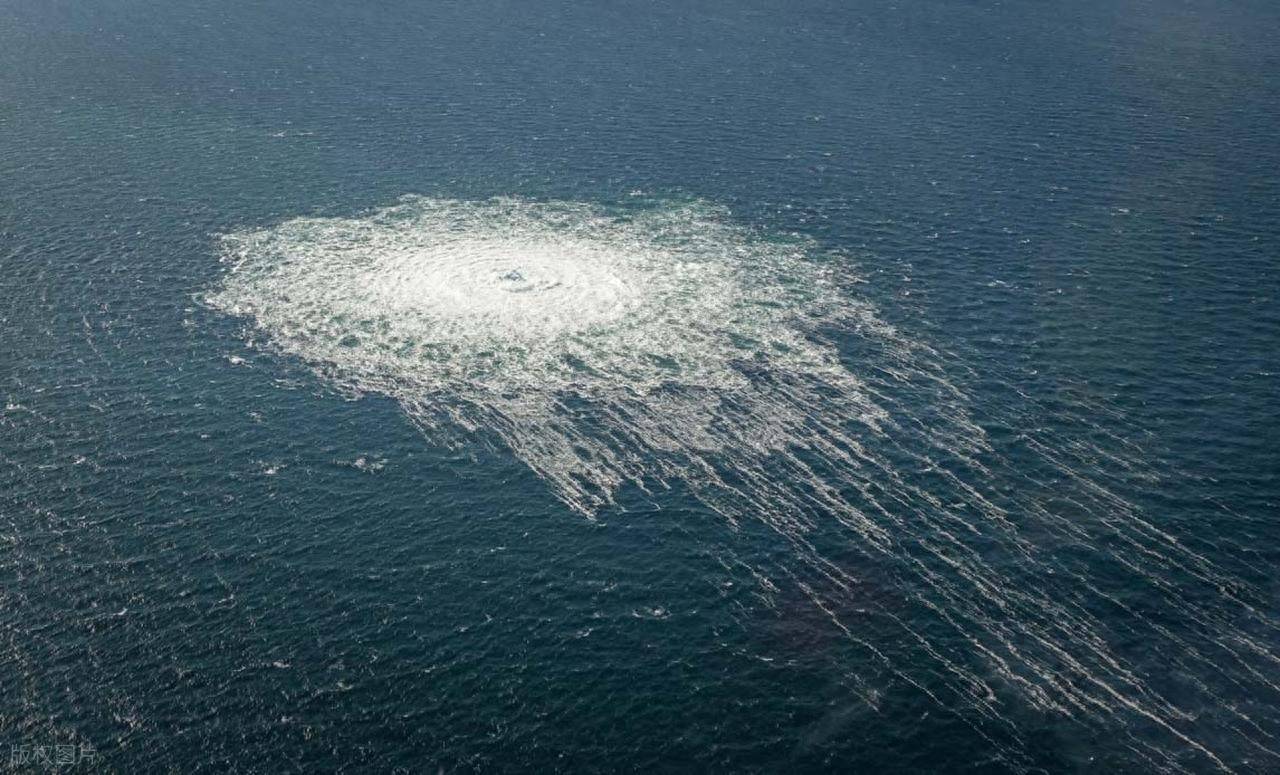
Core Insights - The Nord Stream pipeline incident, a significant event in European energy security, was revealed to be a military sabotage operation orchestrated by the Ukrainian military, leading to heightened tensions in Europe and political ramifications for Ukrainian President Zelensky [1][3]. Group 1: Incident Overview - The Nord Stream pipeline is a crucial conduit for Russian natural gas to Europe, with Germany heavily reliant on its stable energy supply [4]. - The underwater operation to sabotage the pipeline was complex, involving military-grade equipment and explosives placed at depths of 70 to 80 meters, executed by a specialized team from Ukraine [6]. Group 2: Investigation and Legal Proceedings - Following the explosion, investigations by Germany, Sweden, and Denmark were initiated, but major findings remain undisclosed, leading to the termination of investigations due to lack of evidence [9]. - An individual linked to the Ukrainian military was arrested in Italy, marking the first significant legal action related to the incident, with Germany seeking extradition for trial [10]. Group 3: Political and Public Reactions - Initial denials from the Ukrainian government shifted to acknowledgment of the operation being state-sanctioned, causing political backlash in Germany, where public opinion turned against continued military support for Ukraine [12][14]. - A significant portion of the German population, over 60%, expressed opposition to ongoing military aid to Ukraine, reflecting a shift in public sentiment amid rising domestic economic pressures [14]. Group 4: Broader Implications - The incident has led to a reevaluation of U.S. support for Ukraine, with reports suggesting a decrease in military aid and a shift in diplomatic engagement [16]. - As the war situation evolves, Ukraine's role has become increasingly uncertain, with President Zelensky facing challenges in balancing the demands of war and peace negotiations [18].

北溪引渡遭拒,波兰硬刚德国,欧洲盟国裂痕难弥合
Sou Hu Cai Jing· 2025-11-12 08:39
Core Viewpoint - The arrest of Ukrainian diver Vladimir Zhuraфlev in Poland, accused of involvement in the Nord Stream pipeline explosion, has sparked significant controversy in Europe, particularly after Poland's unexpected refusal to extradite him to Germany [1][3]. Group 1: Background of the Nord Stream Pipeline - The Nord Stream 2 project, initiated in 2015, aimed to enhance Europe's energy supply by connecting Russia and Germany, but faced strong opposition from Eastern European countries like Poland, fearing increased energy dependence on Russia [1][3]. - Former German Chancellor Gerhard Schröder was a staunch supporter of the project, while many German elites viewed it as a significant policy error regarding Russia [1][3]. Group 2: The Explosion Incident - In September 2022, shortly after the completion of Nord Stream 2, a mysterious underwater explosion occurred, crippling the pipeline and cutting off a vital gas source for Europe [3]. - Initial suspicions pointed to Russia, but investigations later suggested involvement from a small group of Ukrainian officers, allegedly funded by Ukrainian business figures, with President Zelensky initially approving the operation [3][4]. Group 3: Legal and Political Implications - The Polish court's refusal to extradite Zhuraфlev was based on the argument that military actions against enemy infrastructure during wartime should not be classified as criminal acts, raising legal debates about the definition of "wartime actions" versus "civilian infrastructure" [4][5]. - The ruling has been interpreted as a political statement by Poland, reflecting domestic political considerations and historical grievances with Germany and Russia [5][8]. Group 4: Impact on European Energy Landscape - The explosion has led to a significant loss of a natural gas source for Europe, prompting a rapid shift towards energy transition and increased imports of liquefied natural gas from countries like the U.S. and Qatar [6]. - Eastern European countries are advocating for diversified energy supplies and supporting alternative projects to reduce Russian influence in the European energy market, although rising energy costs have created economic pressures and inflation in some nations [6][10]. Group 5: Broader European Dynamics - The incident highlights the divergent priorities among European nations regarding judicial fairness, defense needs, and domestic political factors, potentially deepening trust fractures among allies [8][10]. - The Nord Stream explosion and subsequent extradition controversy serve as a microcosm of the broader divisions within Europe, emphasizing the challenges of balancing judicial integrity, national sovereignty, and the stability of the anti-Russian alliance [10].
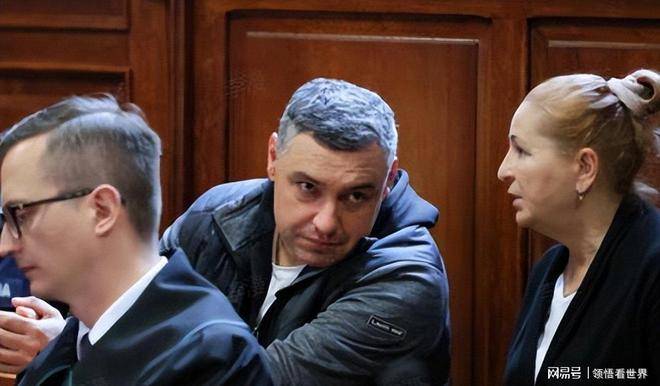
波兰安全局搜查“北溪”爆炸案嫌疑人华沙住所
Yang Shi Xin Wen· 2025-10-09 16:08
Core Viewpoint - The Polish security agency conducted a search at the residence of Vladimir, a suspect in the Nord Stream pipeline explosion, following accusations from Germany regarding his involvement in the incident [2] Group 1: Investigation Details - The search was authorized by the prosecutor's office, and several items were seized, described by Vladimir's defense attorney as "personal belongings" [2] - Vladimir has expressed willingness to cooperate with Polish law enforcement and is awaiting potential charges to prove his innocence [2] Group 2: Related Arrests - On September 30, a Ukrainian citizen was arrested for allegedly damaging the constitution, property, and the Nord Stream 2 pipeline, and is currently held in a pre-trial detention center in Warsaw [2] - The Warsaw district court extended the detention of the Ukrainian citizen until November 9, with the presiding judge expected to set a trial date soon [2] Group 3: Legal Proceedings - The court will also decide on the potential extradition of Vladimir to Germany [2]
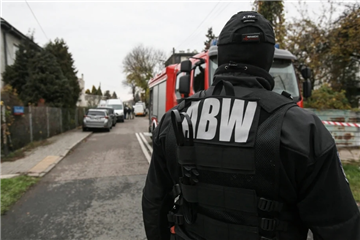
拜登政府操盘北溪爆炸?揭秘西摩·赫什“报告”,欧洲格局巨变
Sou Hu Cai Jing· 2025-09-25 05:25
Core Insights - The Nord Stream pipeline explosion in September 2022 has become a focal point of global attention, revealing complex geopolitical tensions, particularly involving the U.S. and Norway as potential orchestrators of the incident [1][3][10] Group 1: Geopolitical Context - The Nord Stream 2 pipeline, crucial for Russian-European energy cooperation, has been viewed as a strategic threat by the U.S., leading to significant political maneuvers in Germany following the change in leadership from Angela Merkel to Olaf Scholz [3] - The U.S. Congress has been divided over the Nord Stream 2 project, with some members questioning whether the U.S. is infringing on Europe's energy autonomy, while European nations face a dilemma of relying on Russian energy amidst the Ukraine conflict [3][10] Group 2: Execution of the Operation - The explosion was executed with high-tech precision, involving U.S. Navy divers, CIA operatives, and Norwegian military forces, who chose a location in the Baltic Sea that was deep and away from surveillance [4][6] - During NATO's "Baltic Sea Operation" in June 2022, U.S. divers installed explosives on the pipeline under the guise of military exercises, employing advanced triggering mechanisms to ensure control over the detonation [4][6] Group 3: Immediate Impact - The explosion resulted in a significant drop in pressure in the Nord Stream 2 pipeline, with seismic monitoring stations recording a 2.3 magnitude tremor, followed by multiple leaks in the Nord Stream 1 pipeline [6][8] - The incident has forced European countries to accelerate their efforts to reduce dependence on Russian energy, although official investigations have not publicly implicated the U.S., reflecting a complex geopolitical stance [8][10] Group 4: Long-term Implications - The explosion has severely undermined European energy security and may reshape the trust dynamics between Europe and the U.S., potentially leading to a reconfiguration of international alliances [8][10] - Seymour Hersh's investigation serves as a reminder that while powerful entities may obscure the truth temporarily, historical narratives will eventually reveal the underlying realities of such geopolitical conflicts [10]

德国总理默茨:我们将尽一切努力,确保北溪2号管道未来不再被使用。
news flash· 2025-05-28 11:50
Group 1 - The core message is that German Chancellor Merz emphasizes efforts to ensure that the Nord Stream 2 pipeline will not be used in the future [1]