
北辰

Search documents
宁德时代“全域增量”战略落子船舶,三年内或实现远洋纯电航行
Tai Mei Ti A P P· 2025-12-31 09:20
Core Insights - The shipping industry is undergoing a transformation driven by new technologies such as AI, 5G, IoT, big data, and autonomous driving, leading to the development of autonomous, energy-efficient vessels [2] - The electric shipping market in China is projected to reach a scale of 36.75 billion yuan by 2026, indicating significant growth potential [2] - CATL's "ship-shore-cloud" integrated solution aims to address key industry concerns regarding energy replenishment, cost efficiency, and safety [3] Group 1: Industry Trends - Electric vessels are at a pivotal point, transitioning from policy-driven to market-driven growth, with challenges similar to those faced by early electric vehicles [3] - The demand for decarbonization in global shipping is driving the electric vessel sector, with the International Maritime Organization (IMO) targeting net-zero greenhouse gas emissions by around 2050 [4] - By the end of 2024, the number of pure electric battery-powered vessels in China is expected to reach 485, more than tripling since 2021 [4] Group 2: Company Developments - CATL has developed a ship battery pack with an energy density exceeding 140Wh/kg and a design life of 15 years, contributing to lower total cost of ownership (TCO) compared to traditional fuel vessels [3][4] - The "ship-shore-cloud" solution can reduce TCO for tugboats by over 50% and for cargo ships by 33% [4] - CATL's expansion into the shipping sector is part of its "full-domain incremental" strategy, which aims to leverage its core capabilities in battery technology across various transportation modes [5]


全球首创!宁德时代重磅发布“船-岸-云”一体化解决方案
Xin Lang Cai Jing· 2025-12-05 12:56
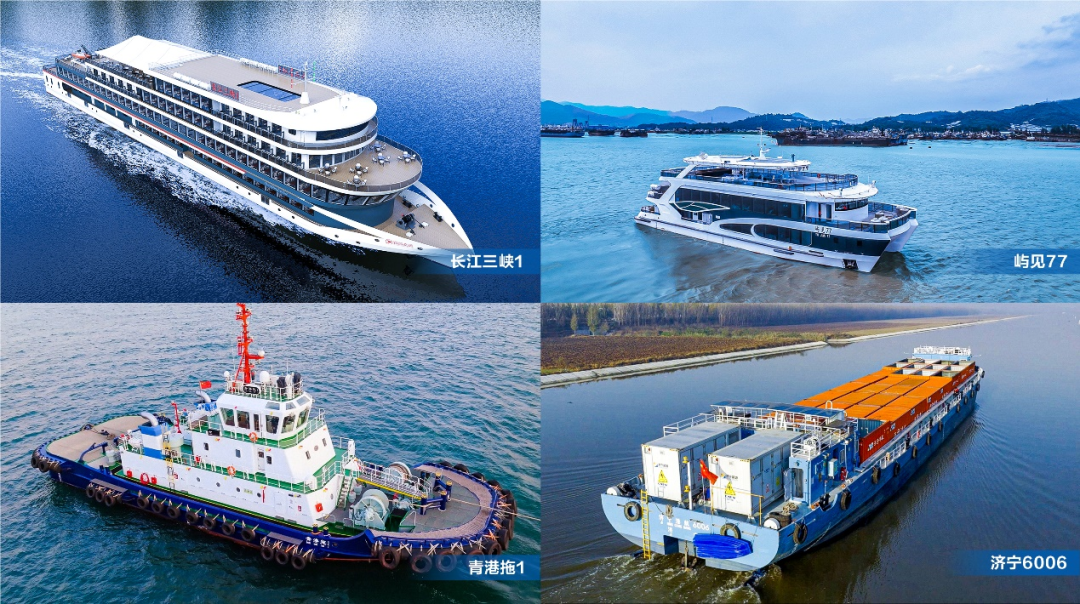
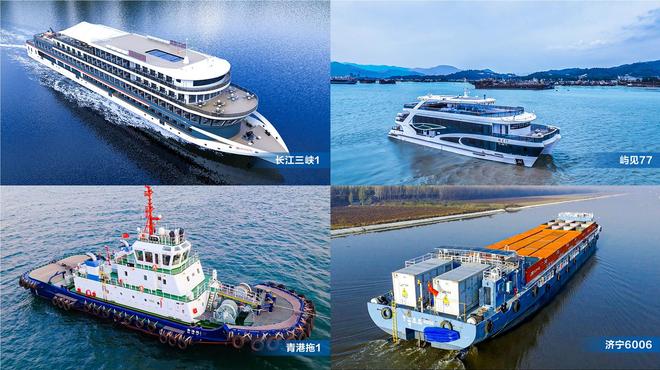
Core Viewpoint - The launch of the "Ship-Shore-Cloud" integrated solution by CATL's subsidiary marks a significant advancement in the global shipping industry, promoting a green, intelligent, and sustainable pathway for electrification in maritime operations [1][5]. Group 1: Challenges in Traditional Shipping Operations - Traditional shipping operations face challenges such as unclear responsibilities among multiple suppliers, high initial acquisition costs, insufficient charging infrastructure, range anxiety, and non-standardized technology, which hinder the scaling of zero-carbon shipping [3][7]. - These issues have led shipowners to experience operational difficulties characterized by the inability to afford ships, charge them, and manage costs effectively [3][7]. Group 2: Features of the "Ship-Shore-Cloud" Solution - The integrated solution combines onboard power systems, shore-based charging networks, and cloud-based intelligent management to enhance operational efficiency and reduce costs for electric vessels [3][7]. - The solution includes onboard integration of battery, power, and intelligent navigation systems to ensure safe and stable navigation, while the shore side employs a charging and battery-swapping network to address charging challenges and cost pressures [5][9]. - The cloud component utilizes the intelligent management platform "Yunfan" and the intelligent navigation system "Beichen" for remote monitoring, scheduling, and operational optimization of vessels [5][9]. Group 3: Market Position and Future Outlook - CATL has established a leading position in the electric shipping sector, claiming a market-first advantage in technology, market presence, and ecological collaboration, driving the industry towards zero-carbon shipping [10]. - Since entering the shipping sector in 2017, CATL has safely delivered nearly 900 electric vessels, maintaining its position as the top supplier of batteries for electric ships globally, and has developed industry benchmarks such as the largest electric inland passenger ship "Yangtze River Three Gorges No. 1" and the first pure electric offshore passenger ship "Yujian 77" certified by CCS [10].
宁德时代“船-岸-云”一体化是什么?
高工锂电· 2025-12-05 07:28
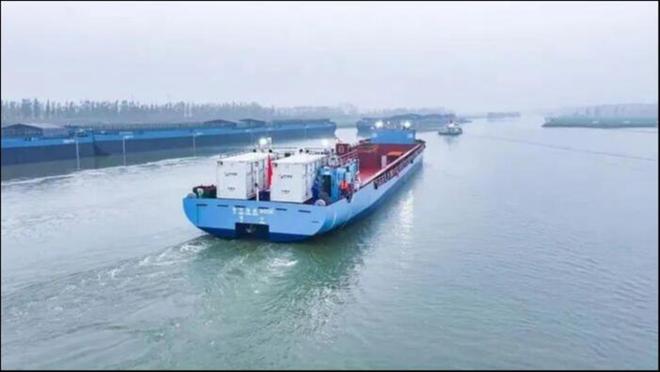
Core Viewpoint - The article discusses the launch of CATL's "Ship-Shore-Cloud" zero-carbon shipping and smart port integrated solution, marking a significant step in the company's efforts to extend electrification from land to water, thereby promoting a green, intelligent, and sustainable path for global shipping [3][12]. Group 1: Challenges in Shipping Industry - The shipping industry faces three core anxieties: initial purchase cost and investment return concerns, insufficient refueling infrastructure leading to mileage anxiety, and safety reliability issues in complex water environments [5][6]. - The operational difficulties of "unable to afford ships, unable to charge, and unable to calculate costs" are identified as the main bottlenecks hindering the large-scale development of zero-carbon shipping [6]. Group 2: Integrated Solution Overview - CATL's "Ship-Shore-Cloud" integrated solution aims to address these challenges through a combination of commercial and technological innovations [7]. - The solution includes offerings such as batteries, power systems, and intelligent navigation systems on the ship side; self-developed megawatt-level supercharging equipment and containerized battery swap networks on the shore side; and real-time monitoring and intelligent scheduling through the "Cloud Sail" management platform and "Beichen" navigation system on the cloud side [8]. Group 3: Cost Reduction and Efficiency - The integrated system aims to reduce the total lifecycle operating costs (TCO) of cargo ships by over 33% and tugboats by over 50%, achieving "extreme economic efficiency" [8]. - The "Jining 6006" pure electric multipurpose cargo ship project is highlighted as a landmark achievement, being the first globally to achieve "full-stack and full-scenario delivery" [9][10]. Group 4: Safety and Innovation - To address safety concerns, CATL has enhanced safety design standards, including increasing the salt spray protection test standard for battery packs to 1000 hours, exceeding the industry standard of 670 hours [11]. - The company has established the first domestic land-based joint debugging laboratory capable of simulating real ship electromagnetic and vibration environments, significantly reducing the traditional system debugging cycle from 45 days to 15 days [11]. Group 5: Future Directions - CATL's current focus is on inland and coastal operations, with plans to expand into offshore projects within the next three years, aiming for near-sea pure electric solutions [11]. - For deep-sea navigation, the company is exploring hybrid power solutions that integrate "investment, generation, distribution, and storage" or connect with other green energy sources [11]. Group 6: Industry Leadership - Since entering the shipping sector in 2017, CATL has delivered nearly 900 electric ships, maintaining a leading position in the global electric ship battery market [12]. - The company has achieved numerous industry firsts, including the largest pure electric inland passenger ship and the first mixed-power tugboat in China, showcasing its technological and market leadership [12][13].

宁德时代发布全球唯一“船-岸-云”零碳航运及智慧港航一体化解决方案
Xin Lang Cai Jing· 2025-12-05 03:56
Core Insights - CATL's subsidiary, CATL Marine Technology Co., Ltd., launched the world's only "Ship-Shore-Cloud" zero-carbon shipping and smart port integrated solution during the Shanghai Maritime Exhibition, showcasing its achievements and future plans since entering the maritime sector in 2017 [1][2] Group 1: Integrated Solution Overview - The "Ship-Shore-Cloud" solution provides a "customized" service for ship operations, integrating onboard power systems, shore-based charging networks, and cloud-based intelligent management, addressing the pain points of traditional multi-supplier collaboration [1][2] - This innovative model resolves various challenges throughout a 30-year operational cycle [1][2] Group 2: Technical Components - Onboard, the solution includes integrated battery systems, power systems, and intelligent navigation systems to ensure stable ship operations [1][2] - Onshore, it utilizes a charging and battery-swapping network along with a "ship-electric separation" model to alleviate energy supply and cost concerns [1][2] - In the cloud, the intelligent management platform "Cloud Sail" and the intelligent navigation system "Beichen" enable remote monitoring, scheduling, and optimization of vessels [1][2] Group 3: Company Achievements - Since entering the maritime sector in 2017, CATL has delivered nearly 900 electric vessels, maintaining its position as the leading supplier of electric ship batteries globally [1][2]
宁德时代全球首发“船岸云”方案,领航零碳航运新赛道
Guan Cha Zhe Wang· 2025-12-05 02:32
Core Viewpoint - CATL has officially launched a "ship-shore-cloud" zero-carbon shipping and smart port integration solution, showcasing its achievements and future plans in the shipping sector since its entry in 2017 [1] Group 1: Company Developments - CATL began its foray into the shipping industry in 2017 and launched its first electric vessel in 2019, providing power solutions for nearly 900 electric ships to date [1] - The company holds approximately 40% market share in the electric vessel sector and is the leading supplier of batteries for electric ships globally [1] Group 2: Integrated Solution Features - The "ship-shore-cloud" solution integrates onboard power systems, shore-based charging networks, and cloud-based intelligent management to address operational challenges in shipping [3] - The onboard system includes battery systems, power systems, and intelligent navigation systems, while the shore side focuses on charging networks to alleviate cost concerns [3][4] - The cloud component features a smart management platform for remote monitoring and optimization of vessel operations [3] Group 3: Technical Innovations - CATL has designed battery systems specifically for the harsh marine environment, addressing challenges such as high humidity, salt mist, and long operational hours [3][4] - The company employs high-strength structures and protective coatings in critical components to ensure reliability during long voyages [4] - A complete charging and discharging verification platform allows for simulation of complex operational conditions before deployment [4] Group 4: Strategic Vision - The shipping division is a key part of CATL's "full-domain incremental" strategy, which aims to extend its core capabilities in power batteries across all transportation modes [4] - The "ship-shore-cloud" solution is positioned to facilitate the transition to green, intelligent, and sustainable shipping practices globally [4] Group 5: Market Outlook - The maritime industry accounts for 3% of global greenhouse gas emissions, with a target set by the International Maritime Organization to achieve net-zero emissions by 2050 [5] - The electric vessel market in China is projected to grow to 36.75 billion yuan by 2026, with lithium battery demand expected to rise significantly [5] - Despite the promising outlook, the widespread adoption of CATL's integrated solution faces challenges related to long-distance operational capabilities, cost control, infrastructure development, and regulatory standards [5]
不止于车,宁德时代盯上了电动船舶
第一财经· 2025-12-04 15:47
Core Viewpoint - CATL's subsidiary, Times Electric Ship Technology Co., Ltd., launched a "ship-shore-cloud" zero-carbon shipping and smart port integration solution, marking a key step in CATL's "full-domain incremental" strategy aimed at expanding its core battery capabilities across all transportation scenarios, including maritime [3][4]. Group 1: Industry Insights - The global electric ship battery shipment is expected to reach 268.5 GWh by 2029, with a compound annual growth rate (CAGR) of approximately 125.7% from 2025 to 2029 [4]. - In China, electric ship battery shipments are projected to hit 3.6 GWh in 2025 and 104.7 GWh by 2029, with a CAGR of 131.9% during the same period [5]. - The electric ship sector is still in the exploratory phase, with significant growth potential compared to the more mature electric vehicle market [4][5]. Group 2: Challenges and Solutions - Electric ships face challenges such as high humidity, salt mist, long operating hours, and high power requirements, which complicate their development compared to electric vehicles [5]. - The industry has historically struggled with coordination among different suppliers for power, refueling, and maintenance, leading to inefficiencies and operational issues over a ship's 30-year lifespan [5]. - CATL's new solution addresses these pain points by integrating battery systems, power systems, and smart navigation systems on the ship, while establishing charging networks and a "ship-electric separation" model onshore, and utilizing a smart management platform for remote monitoring and optimization [5]. Group 3: Market Dynamics - The market for marine lithium batteries is highly concentrated, with CATL, EVE Energy, and Guoxuan High-Tech collectively holding nearly 80% of the market share, despite 30 companies having CCS certification for marine lithium battery cells [5].

不止于车,宁德时代盯上了电动船舶
Di Yi Cai Jing· 2025-12-04 15:00
Group 1 - The core viewpoint of the news is that CATL's subsidiary, Times Electric Ship Technology Co., has launched a comprehensive "ship-shore-cloud" zero-carbon shipping and smart port integration solution, which integrates the entire chain from onboard power systems to shore-based energy replenishment networks and cloud-based intelligent management [1] - The "All-domain Increment" strategy proposed by CATL aims to expand its core capabilities in the power battery sector to all transportation scenarios, including land, sea, and air, with a current global market share of nearly 40% in power battery installations [1] - The electric ship sector is seen as a critical component of CATL's growth strategy, with significant potential for expansion as the market for decarbonizing shipping is projected to be a trillion-dollar opportunity [1] Group 2 - According to a recent report by Aijian Securities, the electric ship battery market is still in the exploratory phase, with substantial growth potential; global electric ship battery shipments are expected to reach 268.5 GWh by 2029, with a compound annual growth rate (CAGR) of approximately 125.7% from 2025 to 2029 [2] - The Chinese market for electric ship batteries is projected to reach 3.6 GWh in 2025 and 104.7 GWh by 2029, with a CAGR of 131.9% during the same period [2] - The electric ship industry faces challenges such as harsh operating environments and high initial costs, which CATL aims to address with its integrated solutions that include battery systems, power systems, and intelligent navigation systems [2] Group 3 - The market for lithium batteries in the electric ship industry is highly concentrated, with CATL, EVE Energy, and Guoxuan High-Tech together holding nearly 80% of the market share, despite 30 companies having CCS certification for marine lithium batteries [3]