
医疗器械ETF

Search documents
目前还有哪些低估值板块值得布局?
雪球· 2026-02-07 04:10
Group 1: Consumer Sector - The consumer sector is currently undervalued, with the China Securities Consumer Index's price-to-earnings (P/E) ratio around 20 times, placing it in the 14th percentile historically over the past five years, indicating a very low valuation [4] - The low valuation in the consumer sector is primarily driven by the high weight of liquor stocks, which has negatively impacted overall valuations [5] - Excluding liquor, the optional consumer sector has a valuation of approximately 19 times, which is around the 40th percentile historically over the past decade, also indicating a low valuation [6] - The consumer sector presents a good investment opportunity due to its attractive price-performance ratio, especially for those looking to avoid high-flying sectors [7] - There has been significant interest in consumer investments, with consumer ETFs seeing a rapid increase in shares, adding over 15 billion in the last six months and net inflows exceeding 10 billion [8] - Current policies are promoting consumption, making it a favorable time for investment in the consumer sector [10] Group 2: Pharmaceutical Sector - The pharmaceutical sector has been largely absent from the recent bull market, with the China Securities Pharmaceutical Index only increasing by 25% since September 2024, significantly lagging behind the broader market [12][13] - The valuation in the pharmaceutical sector is very low, with a price-to-book (P/B) ratio of around 3 times, placing it in the 20th percentile historically over the past decade [14] - The current valuation levels in the pharmaceutical sector are comparable to the lows seen during the bear market in 2018, indicating a severe absence from the recent bull market [15] - Within the pharmaceutical sector, medical devices and traditional Chinese medicine are notable sub-sectors, with medical devices having an even lower valuation, with a P/B ratio around 3 times, marking it as one of the cheapest periods historically [16] - The medical device sector has several positive narratives, including international expansion, domestic substitution, and product innovation, supported by government incentives for hospitals to upgrade equipment, which could improve industry performance [17] - Despite the potential, short-term upward movement in medical devices may be challenging, requiring catalysts or actual performance improvements to drive growth [19]


两家游资集体出逃海兰信,多路资金激烈博弈红宝丽!
摩尔投研精选· 2026-02-04 10:27
Core Viewpoint - The article provides an overview of the trading activities in the Shanghai and Shenzhen stock markets, highlighting significant stock transactions, sector performances, and ETF trading volumes, indicating potential investment opportunities and market trends. Group 1: Stock Trading Overview - The total trading volume of the Shanghai and Shenzhen Stock Connect reached 322.9 billion, with Kweichow Moutai and Zhongji Xuchuang leading in transaction amounts for the Shanghai and Shenzhen markets respectively [1] - The top ten stocks by trading volume in the Shanghai market included Kweichow Moutai at 4.741 billion, followed by Cambricon Technologies at 2.160 billion [2] - In the Shenzhen market, Zhongji Xuchuang topped the list with 5.845 billion, followed by CATL at 5.719 billion [4] Group 2: Sector Performance - The electric equipment sector saw the highest net inflow of funds at 7.326 billion, indicating strong investor interest [6] - Other sectors with notable inflows included the new energy sector at 5.573 billion and coal mining at 3.041 billion [6] - Conversely, the electronic sector experienced the largest net outflow of funds at 21.727 billion, reflecting a shift in investor sentiment [7] Group 3: ETF Trading Activity - The coal ETF (515220) experienced a remarkable trading volume increase of 335% compared to the previous trading day, indicating heightened investor interest [14] - The top ETF by trading volume was the Gold ETF (518880) with a transaction amount of 15.4129 billion, despite a decrease of 28.69% from the previous day [13] - Other ETFs with significant trading volumes included the A500 ETF Fund (512050) at 14.2358 billion and the A500 ETF Huatai Baichuan at 11.8353 billion [13] Group 4: Institutional and Retail Investor Activity - Institutional investors showed varied activity, with notable purchases in stocks like Zhongji Group and JinkoSolar, while significant sell-offs were observed in stocks like Liou Co. and Shennong Agricultural [16][17] - Retail investors, particularly from major brokerage firms, were active in trading stocks such as Zhongji Group and Hongbaoli, indicating a competitive trading environment [19] - Quantitative funds displayed high activity levels, particularly in stocks like JinkoSolar, with significant buy and sell transactions [20]




早参|国家医保局印发手术辅助操作价格立项指南!手术机器人+AI赋能智能化手术迎新机遇
Mei Ri Jing Ji Xin Wen· 2026-01-21 01:32
Group 1 - The A-share market experienced a collective decline on January 20, with the medical device ETF falling by 1.30%. However, certain companies like Hualan Biological and Aotai Bio saw increases of 5.51% and 2.59% respectively, with Hualan reaching a historical high [1] - On January 20, the National Healthcare Security Administration issued guidelines for auxiliary operation projects, standardizing pricing for 37 items and 5 additional charges related to medical technology innovations such as 3D printing and robotic surgery [1] - CITIC Securities anticipates that from 2025 onwards, there will be a significant release of policy dividends in the medical device sector, with innovations like brain-computer interfaces and artificial hearts being included in medical service pricing, potentially expanding the application of surgical robots [1] Group 2 - The medical device industry is experiencing robust growth, with the medical device ETF tracking the CSI All-Share Medical Device Index, which has a 23.8% allocation to brain-computer interfaces, the highest among listed ETFs [2] - The medical device sector constitutes 89.2% of the ETF, indicating a high concentration that effectively captures growth opportunities in niche markets [2] - Investors can also consider alternative options such as the Huaxia CSI All-Share Medical Device ETF Initiated Link A and C for convenient investment in the sector [2]

中信证券:当前建议关注宽基产品中的创业板50、创业板指、双创50、中证1000等ETF
Jin Rong Jie· 2026-01-20 00:40
Core Insights - The ETF market has recently experienced record outflows, with broad-based ETFs seeing over 200 billion yuan in outflows in a single week, while sector and thematic ETFs in technology and cyclical sectors continue to attract inflows [1] Group 1: Market Trends - The outflow of funds from broad-based ETFs indicates a significant market adjustment, which may help temper market sentiment and promote rationality in capital markets [1] - Small-cap stocks have been less impacted by the outflows, while sectors such as banking, food and beverage, coal, and non-bank financials have faced greater challenges [1] Group 2: Investment Recommendations - The report suggests focusing on broad-based products like the ChiNext 50, ChiNext Index, Double Innovation 50, and CSI 1000 ETFs, as well as thematic products in new energy, non-ferrous metals, agriculture, pharmaceuticals, and medical devices [1]

开年火爆的脑机接口怎么“跟”?这些ETF或能锁定板块行情
Xin Lang Cai Jing· 2026-01-12 08:55
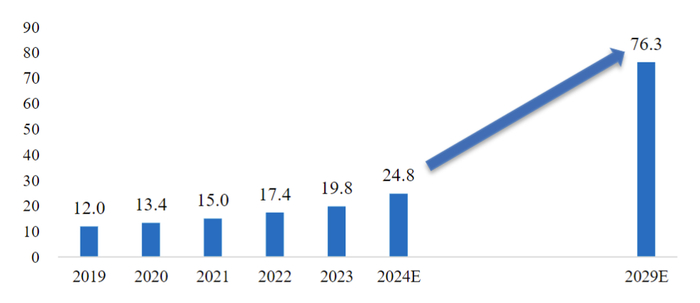
Core Insights - The brain-computer interface (BCI) market is gaining significant attention following Elon Musk's announcement of large-scale production plans for his company Neuralink starting in 2026, shifting perceptions from skepticism to optimism about commercialization [1] - Current applications of BCI technology are still in clinical trial phases, facing ethical and social acceptance challenges, leading to varied growth forecasts from different institutions [1] - Grand View Research reports that the BCI market size grew from $1.2 billion in 2019 to nearly $2 billion in 2023, with a compound annual growth rate (CAGR) exceeding 13%, and is expected to reach $7.63 billion by 2029 with a CAGR of 25.2% from 2024 to 2029 [1] Market Overview - The domestic BCI industry in China has advanced from a "follower" to a "co-runner and partial leader" position globally, with the market size increasing from approximately 1 billion RMB in 2020 to about 1.73 billion RMB in 2023, capturing 12.5% of the global market [3][5] - The CAGR for China's BCI market is reported at 20%, significantly higher than the global average of 14% [3] Drivers of Growth - Policy support includes the inclusion of brain science in China's 14th Five-Year Plan and local subsidies reaching up to 30 million RMB, alongside the development of national standards for BCI expected by 2025 [5] - Capital investment in the domestic BCI sector exceeded 6.5 billion RMB from 2021 to 2023, accounting for 28% of global financing, with notable single-round financing records [5] - Technological advancements include breakthroughs in electrode channel counts by Chinese universities and significant reductions in power consumption and costs for non-invasive BCI technologies [6] Application and Market Segmentation - Medical rehabilitation remains the largest segment, accounting for approximately 65% of the current market, with the average price of domestic "brain-controlled robotic arms" decreasing from 1.2 million RMB in 2019 to 450,000 RMB in 2023 [6] - Consumer applications in education, entertainment, and industrial safety are emerging, with the consumer segment's market share increasing to 18% in 2023 and expected to exceed 30% by 2026 [6] Future Projections - The Chinese BCI market is projected to reach approximately 5 billion RMB by 2026 and aim for 20 billion RMB by 2030, potentially capturing 25% of the global market [7] - China is expected to not only expand its market but also to set standards and solutions, positioning itself as a "second pole" in the global BCI industry [7] Investment Opportunities - The BCI sector's complexity suggests that investing in ETFs could be a strategic approach to capture the full spectrum of opportunities across the value chain, including software algorithms and medical technology [8] - The software segment, which translates neural signals into machine language, is critical for BCI commercialization, with 15% of the CSI Software Service Index now associated with BCI [8] - The medical technology segment is highlighted as the most immediate commercial application for BCI, with significant representation in the CSI Medical Device Index, which includes leading companies in the field [11]
ETF主力榜 | 医疗器械ETF(159883)主力资金净流入2282.60万元,居可比基金首位-20260107
Xin Lang Cai Jing· 2026-01-07 09:00
Group 1 - The medical device ETF (159883.SZ) experienced a decline of 0.58% on January 7, 2026, with a net inflow of main funds (transactions over 1 million yuan) amounting to 22.826 million yuan, ranking first among comparable funds [1] - Over the past three days, the fund has seen a continuous inflow of main funds totaling 178 million yuan, also ranking first among comparable funds [1] - The latest trading volume for the fund reached 742 million shares, with a total transaction amount of 385 million yuan, again ranking first among comparable funds [1]
大A开年大涨!哪些资金在持续抄底了?
Sou Hu Cai Jing· 2026-01-06 07:23
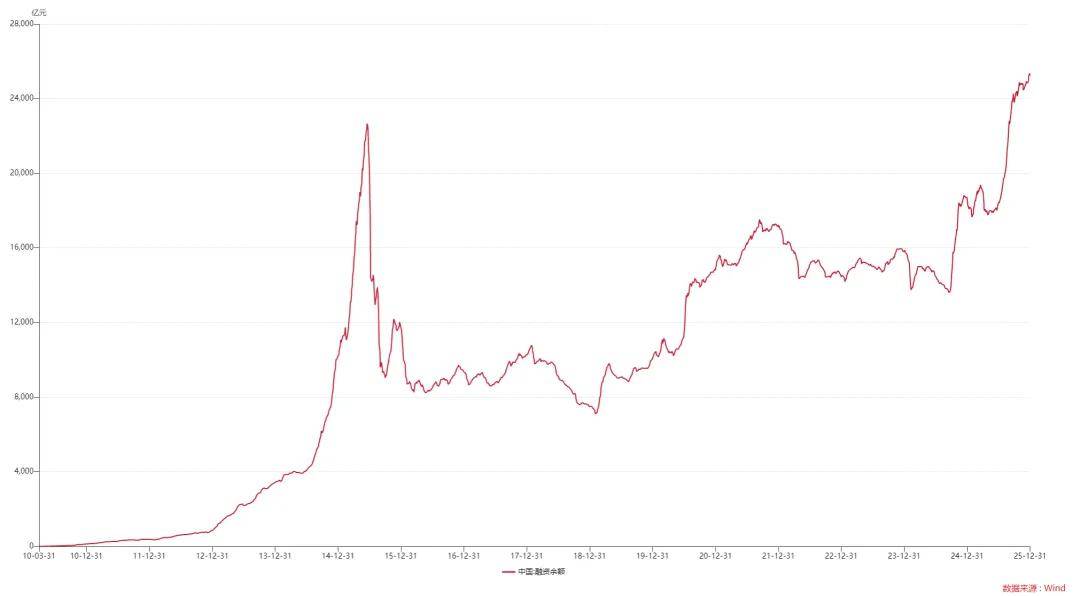
Market Overview - The Shanghai Composite Index has experienced a continuous rise, achieving a 12-day winning streak and surpassing the 4000-point mark on the first trading day of 2026, with trading volume exceeding 2.5 trillion yuan [1] - Margin financing in the Shanghai and Shenzhen markets has also reached a historical high, exceeding 2.5 trillion yuan, indicating increased investor participation [1] Insurance Sector Performance - Insurance companies have reported a significant increase in new individual policies, with growth rates between 50% and 60%, exceeding expectations. Major insurers like Ping An, Taikang, China Life, and Xinhua have all achieved over 60% growth [3] - The shift in insurance products from traditional whole life policies to dividend insurance has attracted low-risk preference funds seeking asset preservation and appreciation in a low-interest-rate environment [3][4] Investment Trends - There is a notable trend of bank deposits being redirected towards dividend insurance, which in turn is being used to increase stock holdings. This indirect investment strategy allows individuals to participate in the stock market without directly investing [5] - The market is witnessing a surge in interest in brain-computer interface technology, with Neuralink planning large-scale production by 2026, indicating a potential new investment frontier in the intersection of technology and healthcare [6] Company Earnings Forecasts - Chifeng Jilong Gold Mining is projected to achieve a net profit of 3 billion to 3.2 billion yuan in 2025, reflecting a year-on-year increase of 70% to 81%, slightly below market expectations [13] - Taotao Automotive is expected to report a net profit of 800 million to 850 million yuan in 2025, representing a year-on-year growth of 85.5% to 97.1%, slightly exceeding market expectations [14] - Huayou Cobalt is forecasted to achieve a net profit of 5.85 billion to 6.45 billion yuan in 2025, with a year-on-year increase of 40.8% to 55.2%, slightly above market expectations [15]
万亿资金,涌入A股这些方向
Zhong Guo Zheng Quan Bao· 2026-01-05 23:07
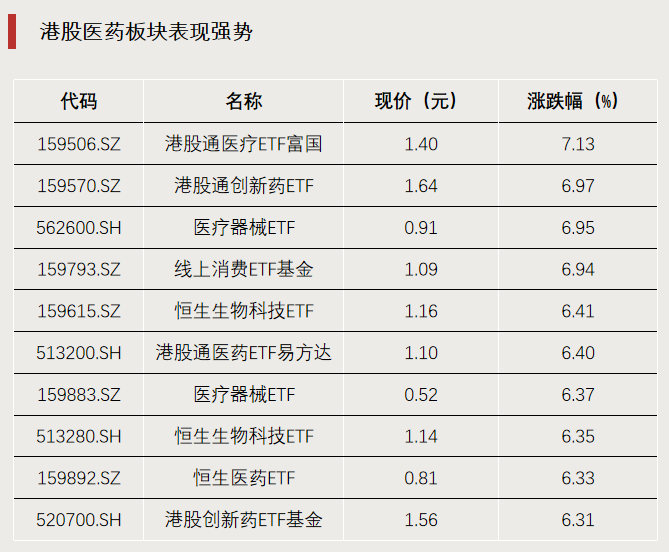
Group 1 - The A-share market shows a strong growth style, with notable performances in the pharmaceutical and semiconductor sectors, where multiple related ETFs rose over 5% in a single day [1] - The Hong Kong pharmaceutical sector is performing strongly, with several ETFs in innovative drugs and medical devices increasing by over 6%, highlighting the attractiveness of the sector post-adjustment [4][5] - The semiconductor sector is also experiencing significant gains, with multiple ETFs in this field rising over 5%, indicating a robust market for semiconductor-related investments [6][7] Group 2 - In December 2025, the A500 and Sci-Tech bonds became major directions for capital inflow, with several ETFs in these categories seeing net inflows exceeding 100 billion yuan [2][8] - The total net inflow for all ETFs in the market reached 11,785.99 billion yuan in 2025, showcasing a strong interest in ETF investments [2] - Specific ETFs such as the FuGuo CSI Hong Kong Internet ETF and the HuaAn Gold ETF saw annual net inflows exceeding 400 billion yuan, indicating strong investor confidence in these funds [10] Group 3 - The Hong Kong market is expected to see a recovery in corporate earnings, particularly benefiting sectors like non-ferrous metals and competitive industry leaders in internet and consumption [10][11] - The anticipated decline in risk-free rates in Hong Kong may lead to improved liquidity, potentially enhancing valuations in the market [11] - Key investment focuses for 2026 are expected to include AI, new consumption, pharmaceuticals, and dividend stocks, reflecting evolving market trends [11]
博拓生物等:1月5日脑机接口爆发,多ETF涨幅超5%
Sou Hu Cai Jing· 2026-01-05 07:45
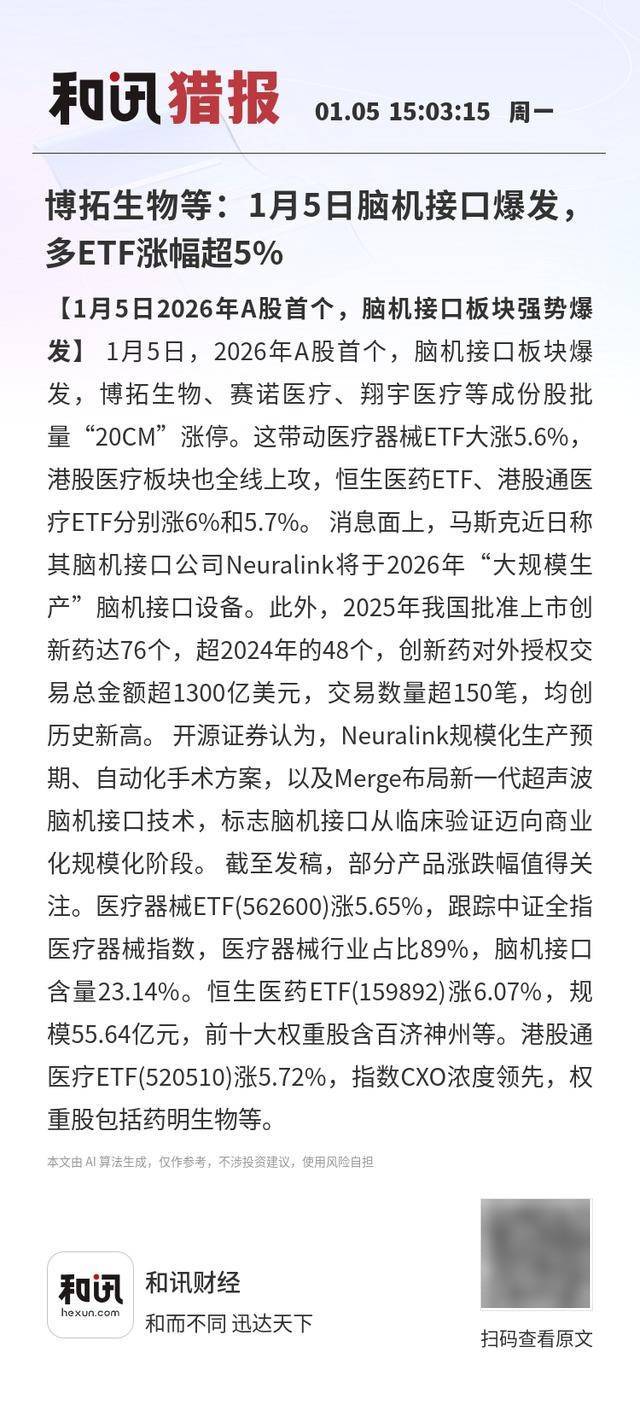
Group 1 - The brain-computer interface (BCI) sector in A-shares experienced a strong surge on January 5, 2026, with stocks like Botao Bio, Sino Medical, and Xiangyu Medical hitting the 20% daily limit up [1] - The medical device ETF rose by 5.6%, while the Hong Kong medical sector also saw gains, with the Hang Seng Pharmaceutical ETF and Hong Kong Stock Connect Medical ETF increasing by 6% and 5.7%, respectively [1] - Elon Musk's Neuralink announced plans for large-scale production of BCI devices in 2026, marking a significant shift from clinical validation to commercial-scale production [1][3] Group 2 - In 2025, China approved 76 innovative drugs for market, surpassing the 48 approved in 2024, with total transaction amounts for innovative drug licensing exceeding $130 billion and over 150 transactions, both setting historical records [1] - The medical device ETF (562600) tracks the CSI Medical Device Index, with the medical device industry comprising 89% and BCI content at 23.14% [3] - The Hang Seng Pharmaceutical ETF (159892) has a scale of 5.564 billion yuan, with top-weighted stocks including BeiGene [3]

医疗器械ETF探底翻红,机构称2026年医疗器械行业有望实现温和修复
Mei Ri Jing Ji Xin Wen· 2025-12-04 06:52
Group 1 - The A-share market indices have shown an upward trend, with the Shanghai Composite Index rising by 0.02%, the Shenzhen Component Index by 0.24%, and the ChiNext Index by 0.64% as of December 4, 2025 [1] - The Medical Device ETF (562600) increased by 0.11%, with the latest price at 0.873 yuan and an intraday turnover rate of 0.58% [1] - Among the constituent stocks, Yirui Technology led with a gain of 3.94%, while Xiangyu Medical experienced the largest decline at 2.78% [1] Group 2 - Long-term demand for medical devices is driven by the relentless pursuit of health and life, indicating that the industry lacks significant cyclicality but may experience short-term fluctuations due to external factors [2] - The medical device industry in China is projected to grow from 1.20 trillion yuan in 2024 to 2.11 trillion yuan by 2030, with an average annual growth rate of 9.85%, driven by aging populations, chronic disease prevalence, and innovations in the industry [2] - By 2026, the industry is expected to see a "moderate recovery" in fundamentals, supported by improving demand, innovation, and policy enhancements, although risks related to demand recovery and cost control policies remain [2]