
升级和创新消费品

Search documents
工信部多措并举筑牢消费供给“硬支撑”
Sou Hu Cai Jing· 2026-01-21 09:57
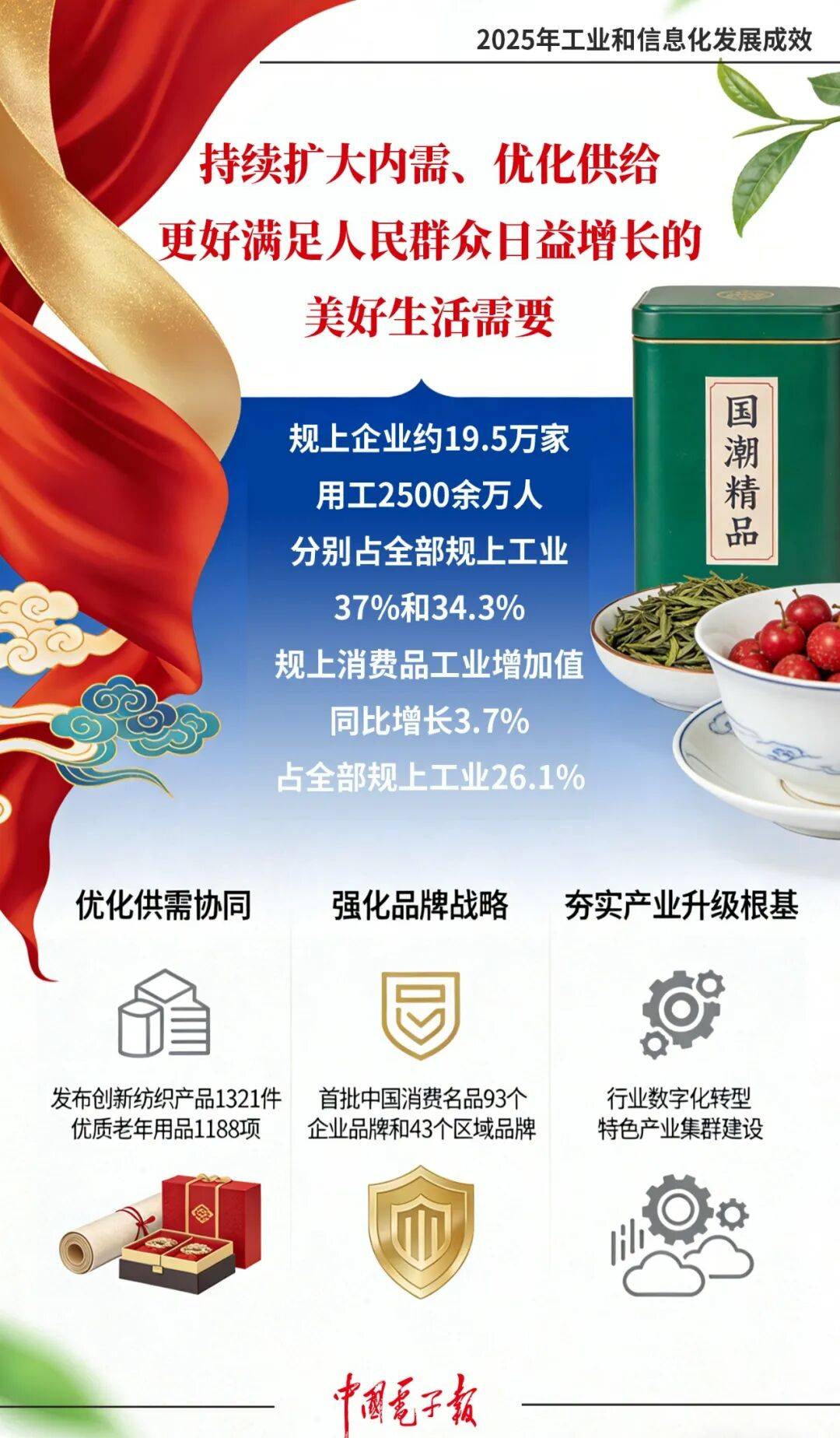
2025年工业和信息化发展成效 持续扩大内需、优化供给 更好满足人民群众日益增长的 美好生活需要 规上企业约19.5万家 用工2500余万人 分别占全部规上工业 37%和34.3% 规上消费品工业增加值 同比增长3.7% 与全部规 上工业26.1% 优化供需协同 首批中国消费名品93个 企业品牌和43个区域品牌 夯实产业升级根基 行业数字化转型 特色产业集群建设 发布创新纺织产品1321件 优质老年用品1188项 强化品牌战略 二是强化品牌战略引领,激活国货消费内生动力。深入实施消费品工业"增品种、提品质、创品牌"战略,发布首批中国消费名品93个企业品牌和43个区域 品牌,组织举办消费名品大会,健全品牌培育推广体系。着力培育历史经典产业,打造中国茶、丝绸、瓷器等"国潮精品",开拓消费新场景、新业态、新 模式,推动国货"出圈"更"出彩",成为人民群众消费的"心头好"。 三是夯实产业升级根基,筑牢优质供给坚实支撑。印发实施纺织、轻工、食品、医药等行业数字化转型方案。强化消费品工业特色产业集群建设,发布首 批39个传统优势食品产区和地方特色食品产业重点培育名单、25个"一县一策"中西部等地区纺织服装特色产业集聚区( ...

工信部:2025年规上消费品工业增加值同比增长3.7% 占全部规上工业26.1%
Xin Hua Cai Jing· 2026-01-21 05:30
Core Viewpoint - The Chinese government aims to enhance the industrial and information sectors by promoting consumption and optimizing supply to meet the growing needs of the population by 2025 [1] Group 1: Industrial Growth - In 2025, the value added of the regulated consumer goods industry is expected to grow by 3.7% year-on-year, accounting for 26.1% of the total regulated industrial output [1] - The consumer goods industry is a traditional advantage and an important livelihood sector in China, with approximately 195,000 regulated enterprises employing over 25 million people, representing 37% and 34.3% of the total regulated industrial sector respectively [1] Group 2: Supply and Demand Optimization - The government will focus on optimizing supply-demand coordination and increasing the supply of quality products through various promotional activities, including "Foodie Season" and "Elderly Care Shopping Season," resulting in the release of 35 bio-manufacturing products and over 1,300 innovative textile products [2] - A brand strategy will be implemented to stimulate domestic consumption, with the launch of 93 consumer brands and 43 regional brands, promoting traditional industries like tea and silk to create new consumption scenarios [2] Group 3: Industry Upgrading - The government will support the digital transformation of industries such as textiles, light industry, food, and pharmaceuticals, and will establish key cultivation lists for traditional food production areas and textile clusters in central and western regions [2]