印刷OLED显示解决方案

Search documents
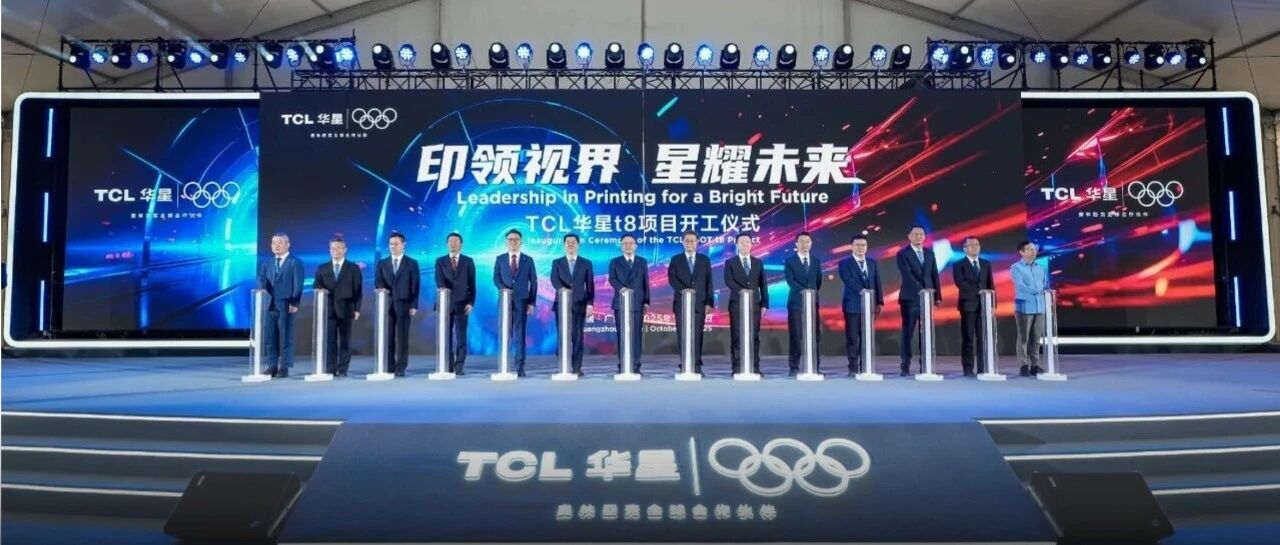
TCL华星t8项目开工 OLED显示产业有望迎来新突破
Zhong Guo Jing Ji Wang· 2025-10-23 05:15
Core Insights - The T8 project by TCL Huaxing, in collaboration with the Guangzhou government, marks the establishment of the world's first mass production G8.6 generation printed OLED production line, with a total investment of approximately 29.5 billion yuan [1] - The project aims to enhance the domestic supply chain for printed OLED technology, transitioning from a follower to a leader in the high-generation AMOLED sector [1][2] - The T8 project is expected to significantly contribute to the development of a complete and independent industrial chain, with multiple suppliers already expressing cooperation intentions [1] Investment and Production Capacity - The T8 project is designed to process approximately 22,500 glass substrates per month, with dimensions of 2290mm x 2620mm, targeting applications in displays, laptops, and tablets [1] - The project builds on TCL Huaxing's 12 years of investment in printed OLED technology, leveraging experience from the Wuhan G5.5 generation production line, which achieved mass production in November 2024 [1] Technological Advancements - The T8 project will incorporate advanced technologies such as industrial robots, AI models, and new materials to drive high-quality development in the display industry [2] - AI applications are expected to enhance product development efficiency and yield rates, with defect detection and repair processes largely automated, achieving over 95% stability [2] Environmental Impact - The printed OLED technology utilized in the T8 project is designed to have lower production energy consumption and higher material utilization rates, potentially reducing energy consumption by approximately 300 to 400 million kilowatt-hours annually [2]

总投资295亿元 TCL华星t8项目正式开工
Zhong Guo Jing Ji Wang· 2025-10-22 07:46
Core Viewpoint - The T8 project by TCL Huaxing marks the establishment of the world's first mass production G8.6 generation printed OLED production line, representing a significant technological breakthrough for Chinese display companies in the high-generation AMOLED field [2][4]. Group 1: Project Overview - The T8 project officially commenced construction in Guangzhou on October 21, with a total investment of approximately RMB 29.5 billion and a construction period of 24 months, aiming for mass production in the second half of 2027 [1]. - The project is designed to process about 22,500 glass substrates (2290mm×2620mm) per month, primarily targeting the mid-size market for displays, laptops, and tablets [1]. Group 2: Technological Advancements - The T8 project is expected to achieve a 50% localization rate for equipment in its first phase, with further increases anticipated in subsequent phases [2]. - The project aims to overcome bottlenecks in key materials and core equipment through collaboration with upstream and downstream enterprises, universities, and research institutions [2][3]. Group 3: Industry Impact - The T8 project will enhance the synergy between TCL Huaxing's existing production lines in Guangzhou, Shenzhen, and Huizhou, creating a robust ecosystem for printed OLED technology [3]. - The project is positioned to accelerate the establishment of a complete industrial chain ecosystem covering materials, equipment, panels, and terminals [3]. Group 4: Cost and Performance Benefits - The T8 project is expected to reduce overall costs by over 15% upon mass production, with significant improvements in material utilization and equipment costs [4]. - The printed OLED technology offers advantages such as high display performance, with the ability to cover applications from 5-inch mobile devices to 65-inch televisions, targeting high-value scenarios like medical and professional monitors [4]. Group 5: Investment Returns - The investment payback period for the T8 project is anticipated to be shorter than the typical 5-7 years for high-generation displays, due to the competitive edge of printed OLED technology [5].
TCL华星t8项目正式开工 加速构建印刷OLED生态
Zheng Quan Shi Bao· 2025-10-21 17:37
Core Insights - TCL Huaxing's T8 project marks the commencement of the world's first mass production G8.6 generation printed OLED production line, representing a significant technological leap for Chinese display companies from "catching up" to "leading" in the high-generation AMOLED sector [2][3] - The project has a total investment of approximately 29.5 billion yuan, co-funded by TCL Huaxing, the Guangzhou Municipal Government, and the Guangzhou Economic and Technological Development Zone Management Committee [2] - The T8 project aims to enhance the entire printed OLED ecosystem, facilitating the establishment of a comprehensive industrial chain covering materials, equipment, panels, and terminals [2] Company Developments - TCL Huaxing has invested 12 years in technological innovation in printed OLED, achieving mass production with the G5.5 generation production line (T12) starting in November 2024, which provides reliable experience for the T8 project [3] - The T8 project is designed to process approximately 22,500 glass substrates per month, accelerating the global market penetration of printed OLED technology in mid-to-high-end applications [3] - The project will prioritize applications in displays, laptops, and tablets, with plans to expand into more high-value display scenarios in the future [3] Industry Impact - The Guangdong-Hong Kong-Macao Greater Bay Area is recognized as a key region for innovation in the electronic information industry, with a complete industrial chain and deep integration of production, education, research, and application [2] - The collaboration with leading global material and equipment suppliers will enhance the construction of the printed OLED supporting system, further solidifying TCL Huaxing's position in the industry [2] - The T8 project is expected to provide competitive display solutions for companies like Lenovo, contributing to China's advancement in global display technology [3]

295亿!TCL华星广州G8.6代印刷OLED产线正式开工
WitsView睿智显示· 2025-10-21 07:44
Core Viewpoint - The T8 project by TCL Huaxing marks a significant advancement in China's display technology, aiming to establish a leading position in the global OLED market through innovative production techniques and strategic partnerships [4][5][6]. Group 1: Project Overview - The T8 project officially commenced on October 21, with a total investment of approximately RMB 29.5 billion, co-funded by TCL Huaxing and the Guangzhou government [2]. - The T8 project is the world's first mass production G8.6 generation printed OLED production line, representing a critical breakthrough for Chinese display companies in the high-generation AMOLED sector [4]. Group 2: Technological Advancements - The project will leverage advanced technologies such as industrial robots, AI models, and new materials to enhance production quality and efficiency, contributing to the development of a new productive force in the display industry [4]. - TCL Huaxing has invested 12 years in the R&D of printed OLED technology, achieving mass production capabilities with the G5.5 generation line, which supports the T8 project [6]. Group 3: Industry Ecosystem - The Guangdong-Hong Kong-Macao Greater Bay Area is recognized as a hub for electronic information innovation, providing a comprehensive industrial chain that integrates production, education, research, and application [5]. - The T8 project will accelerate the establishment of a complete ecosystem for printed OLED, covering materials, equipment, panels, and end products, with several leading global suppliers already committed to collaboration [5]. Group 4: Market Applications - Printed OLED products will initially target mid-sized applications such as monitors, laptops, and tablets, with plans to expand into high-value display scenarios in the future [8]. - The project is expected to enhance Lenovo's competitive display solutions and contribute to China's transition from a follower to a leader in global display technology [9]. Group 5: Future Prospects - The T8 project aims to meet the growing demand for a full range of printed OLED products, offering solutions characterized by low blue light, stable wide color gamut, and uniformity across multiple screens [13].