原油宝

Search documents
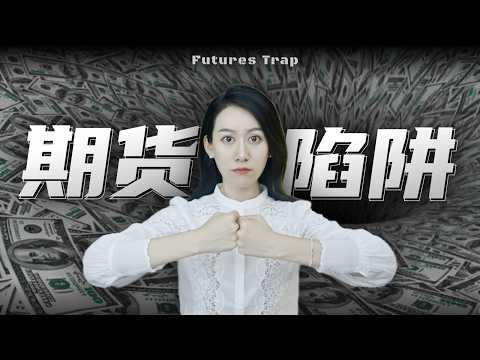
期货,为什么总是拉爆债市、股市、油价? 资本世界的多空大战有多凶残...
小Lin说· 2025-08-19 13:01
Market Events & Key Players - The "327 Incident" in China's financial market involved a significant battle over a 327 treasury bond futures contract, leading to market turmoil and a temporary halt of treasury bond futures trading for 18 years [1] - 万国证券 (Wanguo Securities), as a major player in the "327 Incident", faced substantial losses due to misjudging保值贴补 (value-guaranteed subsidies) and aggressively shorting the 327 treasury bond futures [1] - 青山控股 (Tsingshan Holding Group), a global stainless steel and nickel producer, encountered difficulties in 2022 due to its large short positions in nickel futures amid the Russia-Ukraine war and related sanctions [2] - 伦敦金属交易所 (LME) intervened in the nickel market crisis by halting trading and nullifying certain transactions, a move that sparked controversy and lawsuits from hedge funds like Elliott, AQR, and Jane Street [3] Financial & Trading Aspects - 万国证券's short positions in the 327 treasury bond futures reached 140万口 (140 million contracts), exposing the company to significant losses as the futures price increased [1] - In the "327 Incident", 万国证券's actions in the final 8 minutes of trading involved selling an estimated 2,000万口 (20 million contracts), with over 1,000万口 (10 million contracts) transacted, equivalent to a face value of 2,000亿元 (200 billion yuan) [2] - The 伦敦金属交易所's (LME) decision to nullify 9,000 futures transactions on March 8 resulted in 万国证券 turning a profit into a 14亿元 (14 billion yuan) loss [2] - 青山控股 faced potential losses of up to 100亿美元 (100 billion USD) due to the surge in nickel prices, prompting a search for financial assistance to cover margin calls [3] 期货逼仓 (Futures Squeezes) & Market Dynamics - 期货逼仓 (Futures squeezes) can occur when the quantity of futures contracts exceeds the available physical supply, potentially leading to extreme price volatility and losses for short-sellers [2] - The negative oil price event in 2020 was driven by a combination of factors, including a collapse in demand due to the COVID-19 pandemic, storage limitations, and the behavior of retail investors in "纸原油 (paper oil)" products [4] - 中国银行's (Bank of China) "原油宝 (Crude Oil Treasure)" product, designed for retail investors, suffered significant losses during the negative oil price event, with some investors experiencing negative settlement prices [4]

捍卫国家经济利益,利率与衍生交易体系遏制资源价格飙升
Sou Hu Cai Jing· 2025-08-14 09:55
Group 1 - The article discusses the impact of monetary policy and interest rates on inflation and resource prices, highlighting the contrasting approaches of the US and China in response to economic pressures [1][19]. - It emphasizes the complexity of the virtual trading system and financial derivatives, which have significantly altered the relationship between prices and interest rates, leading to a new understanding of market dynamics [5][19]. - The author argues that the current financial system allows for the manipulation of resource prices through virtual trading, which can outpace the influence of physical market transactions [5][10]. Group 2 - The article presents a historical perspective on resource pricing, noting that despite the increase in resource prices, the dominance of financial markets has shifted, reducing the power of resource-rich nations [3][19]. - It highlights the divergence in price trends between gold and oil, predicting that gold prices will rise significantly while oil prices may lag behind, indicating a complex interplay of supply and demand dynamics [4][19]. - The discussion includes the role of central banks in controlling liquidity and interest rates, which directly influences the pricing mechanisms in both virtual and physical markets [15][19]. Group 3 - The author points out that the expansion of virtual trading has led to an increase in the nominal supply of commodities, which can absorb more currency and potentially mitigate inflationary pressures [10][19]. - The article also addresses the implications of short-selling mechanisms in the virtual market, suggesting that they can lead to price volatility and affect the overall market stability [11][19]. - It concludes that the current financial landscape is characterized by a significant reliance on monetary policy to manage resource prices, challenging traditional economic theories about market self-regulation [18][19].