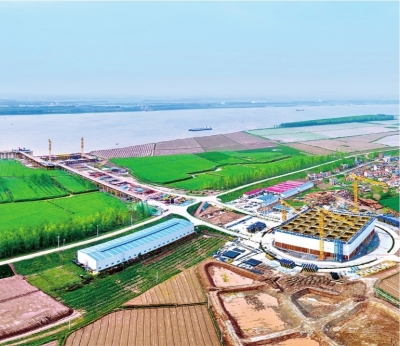
双柳长江大桥

Search documents
为飞鸟戴“降噪耳机” 护江豚避开水中施工——一座长江大桥 绿色故事动人
Ren Min Ri Bao· 2026-02-03 06:42
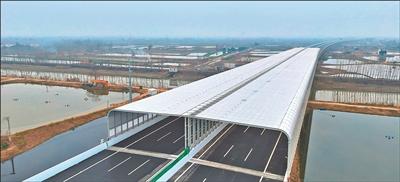
Core Viewpoint - The Shuangliu Yangtze River Bridge in Wuhan has successfully passed acceptance inspection, emphasizing ecological protection and biodiversity during its construction [1] Group 1: Bridge Design and Construction - The bridge spans 35.043 kilometers and connects Wuhan and Ezhou, while crossing the Zhangdu Lake Wetland Nature Reserve [1] - The design includes a unique sound barrier for bird protection, marking a first in Yangtze River bridge construction [2] - The construction team modified the design multiple times to minimize ecological impact, resulting in increased costs [2] Group 2: Environmental Protection Measures - A sound barrier was installed to reduce noise pollution for migrating birds, achieving daytime noise levels of 50-55 decibels and nighttime levels of 40-45 decibels [2] - The bridge's design avoids underwater construction to protect the habitat of the Yangtze River dolphin, using a single-span steel box girder suspension bridge [3] - Construction methods included using a closed tower construction machine to minimize noise and dust, and a closed concrete mixing station to further reduce environmental impact [4] Group 3: Wildlife Conservation - The population of Yangtze River dolphins in the area has increased from approximately 5-6 individuals to about 20 during the construction period [5] - The construction team has actively engaged in wildlife protection, with visual reminders of dolphin conservation throughout the site [5] Group 4: Pollution Control Systems - The bridge features a drainage collection system that automatically identifies and manages pollutants, with 25 such systems installed in sensitive areas [6] - This system addresses the challenges of wastewater management and hazardous material incidents effectively [6] Group 5: Economic Impact - Once operational, the bridge will reduce travel time between Wuhan and Ezhou from 90 minutes to 5 minutes, supporting the integration of the Yangtze River middle reaches urban agglomeration and the high-quality development of the Wuhan metropolitan area [6] - The project aims to balance ecological protection with economic development, striving for a win-win situation [6]
一座长江大桥 绿色故事动人(美丽中国)
Ren Min Ri Bao· 2026-01-30 02:29
Core Viewpoint - The Shuangliu Yangtze River Bridge in Wuhan, Hubei, has successfully passed acceptance inspection, emphasizing ecological protection and biodiversity during its construction [4][9]. Group 1: Bridge Design and Construction - The bridge spans 35.043 kilometers and connects Wuhan and Ezhou, crossing the Changdu Lake Wetland Nature Reserve [4]. - The design team modified the bridge plans multiple times to minimize ecological impact, including adding a bend to the bridge alignment, which increased construction costs [5]. - A full-enclosed sound barrier, measuring 400 meters long, 6.38 meters high, and 34 meters wide, was constructed to protect migratory birds, marking a first in Yangtze River bridge construction [5][6]. Group 2: Environmental Protection Measures - The bridge's design avoids underwater construction to protect the habitat of the Yangtze River dolphin, using a single-span steel box girder suspension bridge design [6]. - Construction activities were timed to avoid peak periods of dolphin activity, and all steel box girders were prefabricated and assembled on-site to minimize disruption [6][7]. - A closed environmental concrete mixing station was established to reduce noise and dust during construction, and measures were taken to prevent oil spills from contaminating the river [7][8]. Group 3: Pollution Control Systems - The bridge features drainage systems that automatically identify and manage pollutants, with 25 such systems installed in sensitive areas [9]. - The bridge's completion will significantly reduce travel time between Wuhan and Ezhou from 90 minutes to 5 minutes, supporting regional integration and high-quality development [9].

武汉都市圈环线高速迎来密集节点
Chang Jiang Ri Bao· 2026-01-27 00:47
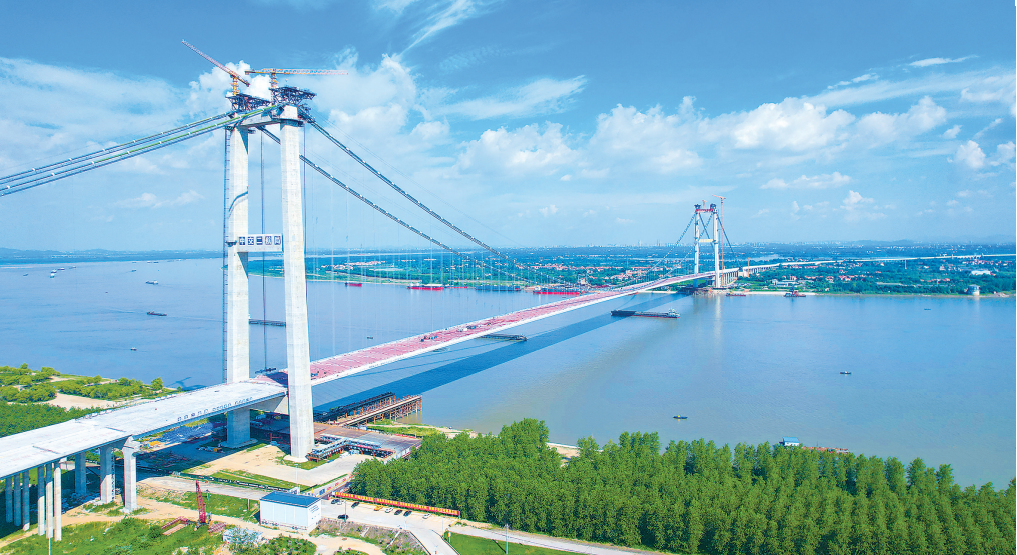
Core Viewpoint - The construction of the Wuhan Urban Circle Ring Expressway is progressing rapidly, with key projects like the Shuangliu Yangtze River Bridge and the Xieshui River Bridge nearing completion, which will enhance regional integration and create a "one-hour commuting circle" around Wuhan [1][4]. Group 1: Key Projects - The Shuangliu Yangtze River Bridge, defined as the "world's first smart suspension bridge," has a total length of 35.043 kilometers and a total investment of 15.978 billion yuan, with a main span of 1,430 meters [2][3]. - The Xieshui River Bridge, an important node in the Wuhan Urban Circle Ring Expressway, spans 1,052 meters and connects key areas in the region [5][6]. - The Hannan Yangtze River Bridge, designed with a main span of 1,600 meters, will further optimize the regional highway network and is expected to be completed by July 2027 [6][7]. Group 2: Technological Innovations - The Shuangliu Yangtze River Bridge features a "smart main cable" system that utilizes fiber optic technology for real-time monitoring of internal conditions, enhancing durability and safety [3]. - The bridge's intelligent main beam is equipped with a high-density sensor network to monitor traffic conditions and structural integrity, providing data for traffic management and maintenance [3]. Group 3: Regional Impact - The completion of the Shuangliu Yangtze River Bridge will reduce travel time from Wuhan Xinzhou to Ezhou Huarong from 90 minutes to just 5 minutes, significantly improving logistics and connectivity [4]. - The Wuhan Urban Circle Ring Expressway will fill coverage gaps in the urban highway network, facilitating better integration among cities like Wuhan, Xiangyin, and Ezhou [7].
百余辆重载卡车试压,双柳长江大桥荷载试验完成冲刺明年通车
Chang Jiang Ri Bao· 2025-12-24 08:44
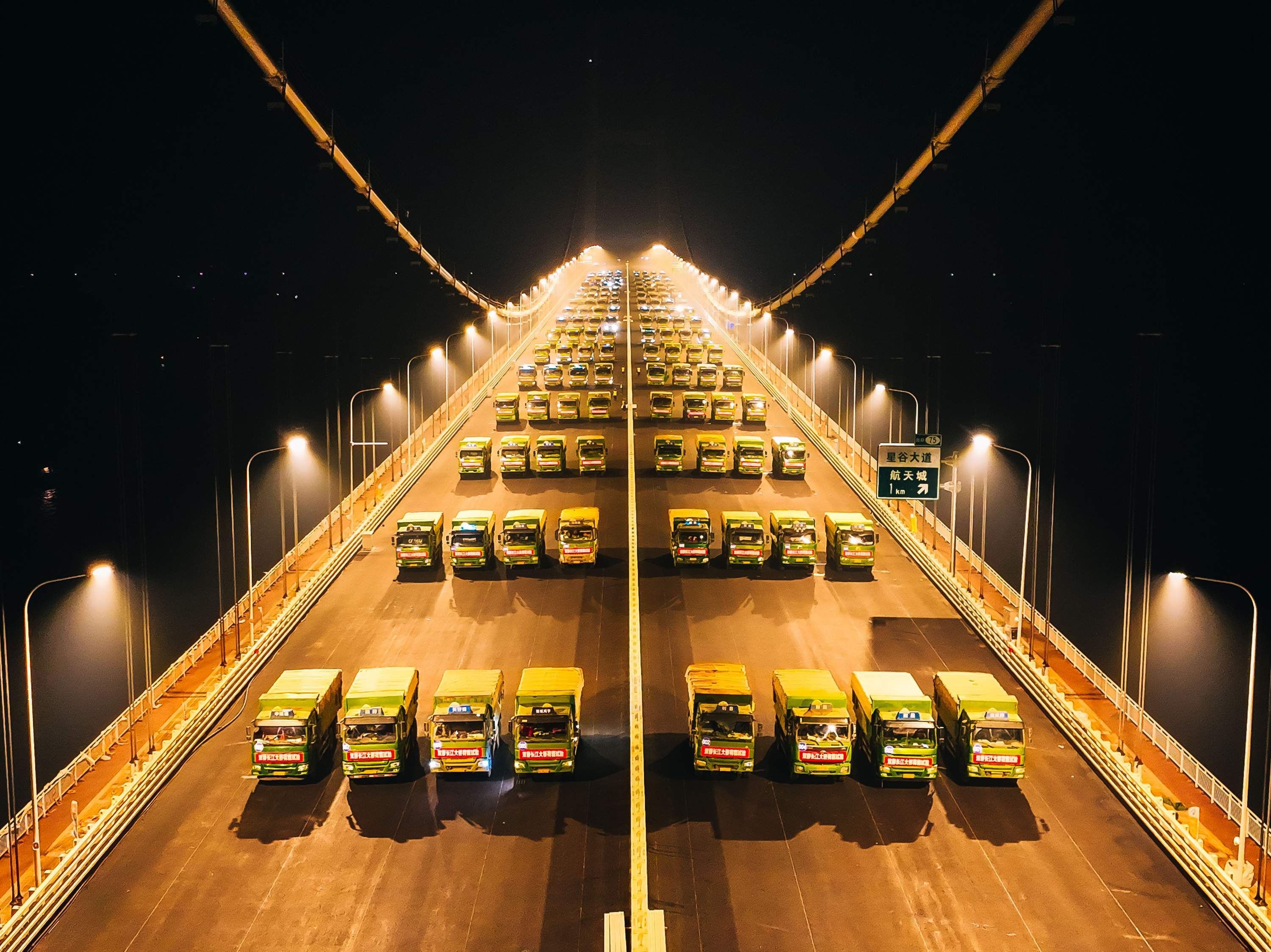
Core Viewpoint - The Shuangliu Yangtze River Bridge project has successfully completed critical load tests, validating its structural capacity and performance, which is essential for its upcoming acceptance and operational trials [1][7]. Group 1: Load Testing Details - The load testing for the bridge began on the evening of December 18 and lasted for four days, involving both static and dynamic load tests to assess key structural indicators [1]. - A specialized team of 74 professionals from China Railway Bridge Science Research Institute designed a comprehensive testing plan, utilizing 128 heavy trucks to simulate actual traffic loads, with a maximum single load of 4,480 tons, equivalent to the weight of 3,000 small cars [1][4]. Group 2: Testing Methodology - The team conducted 15 types of static load tests focusing on stress, shape, tower displacement, cable tension, and anchor cable tension, using 35-ton heavy vehicles strategically placed on the bridge [4]. - Nine types of dynamic load tests were performed to evaluate the bridge's self-vibration frequency, damping ratio, vibration mode, and impact coefficient, simulating real traffic conditions through vehicle movement and braking [4]. Group 3: Technological Innovations - The project incorporated advanced technologies such as automatic measurement robots and drone point cloud technology to enhance the load testing process [7]. - The load tests provided a thorough assessment of the bridge's design and construction quality, establishing a "fingerprint" archive for future reference [7]. Group 4: Project Timeline and Impact - The Shuangliu Yangtze River Bridge is expected to be substantially completed by the end of this year and aims to commence trial operations by the end of March 2026 [7]. - The bridge will significantly reduce travel time from Xinzhou District in Wuhan to Ezhou from one and a half hours to just five minutes, enhancing transportation connectivity in the eastern region of Wuhan and contributing to regional economic development [7].
都市圈环线高速公路加速“画圆”
Chang Jiang Ri Bao· 2025-09-10 09:33
Core Points - The construction of the Wuhan Urban Circle Ring Expressway has made significant progress, with the Huangpi to Xinzhou section achieving the completion of two key bridges, which lays a solid foundation for the timely opening of the northern section of the expressway [2][4] - The expressway, spanning approximately 360 kilometers, is crucial for forming a "one-hour commuting circle" in the Wuhan urban area, promoting urban integration and optimizing the road network structure [4][10] Summary by Sections Construction Progress - The Huangpi to Xinzhou section of the expressway has completed the dual-span connection of the Mulan Avenue Overpass (944 meters) and the Phoenix Mountain Bridge (847 meters), marking a new phase in construction with rapid progress in bridge deck construction and roadbed excavation [4][5] - The project, undertaken by China State Construction Engineering Corporation, has implemented advanced geological exploration and pile foundation techniques, significantly enhancing construction efficiency [5] Project Specifications - The Huangpi to Xinzhou section is 66.12 kilometers long, designed as a dual six-lane expressway with a speed limit of 120 km/h, featuring eight interchanges [5] - Upon completion, travel time from northern to eastern Wuhan will be reduced from 1.5 hours to 40 minutes, with intercity commuting times cut by over 30% [5] Future Developments - The Shuangliu Yangtze River Bridge, a key component of the expressway, is expected to open by March 2026, significantly reducing travel time between Wuhan and Ezhou from 90 minutes to 5 minutes [6][7] - The expressway will enhance logistics capabilities and support the integration of various economic zones, facilitating a more efficient transportation network [10] Strategic Importance - The Wuhan Urban Circle Ring Expressway is a vital infrastructure project that supports the "convenience, collaboration, and urban integration" development strategy, connecting key urban areas and industrial nodes [10] - It aims to create a robust transportation framework that enhances regional economic integration and optimizes spatial development [10]
世界公路工程第一大沉井正抓紧施工 汉南长江大桥建成后将打通都市圈环线高速
Chang Jiang Ri Bao· 2025-06-05 01:02
Core Viewpoint - The construction of the Han Nan Yangtze River Bridge is progressing rapidly, with significant advancements in the sinking of the anchor caissons and the foundation work for the main tower, aiming for completion by the end of 2027 to enhance connectivity in the Wuhan metropolitan area [1][2]. Group 1: Construction Progress - Over 80 workers are engaged in the sinking operation of the anchor caisson, which weighs hundreds of tons, utilizing a giant crane for precise placement into a caisson that reaches a depth of 43 meters [1]. - The anchor caisson is described as the "cornerstone" of the bridge, consisting of a caisson and anchor body that bear the immense tension of the bridge cables, with a structure resembling a square honeycomb [1]. - The first anchor caisson has sunk to a depth of 5 meters, with the southern anchor caisson already reaching 15.8 meters, and the project is on track for completion by the end of the year [1]. Group 2: Project Specifications - The Han Nan Yangtze River Bridge is the 13th bridge over the Yangtze River in Wuhan, designed as a double-tower single-span steel box girder suspension bridge with a main span of 1600 meters, built to accommodate a dual eight-lane highway with a design speed of 120 km/h [2]. - The bridge and its connecting roads are expected to be completed and open to traffic by 2027, facilitating a one-hour commuting circle among cities such as Wuhan, Xiaogan, Xianning, Ezhou, and Huanggang [2]. - The ongoing construction of the 12th Yangtze River bridge, the Shuangliu Yangtze River Bridge, has seen both main towers capped and is transitioning to steel box girder installation, with an expected completion date in March 2026 [2].