一体化智能筑塔机

Search documents
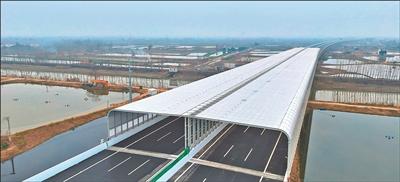
为飞鸟戴“降噪耳机” 护江豚避开水中施工——一座长江大桥 绿色故事动人
Ren Min Ri Bao· 2026-02-03 06:42
Core Viewpoint - The Shuangliu Yangtze River Bridge in Wuhan has successfully passed acceptance inspection, emphasizing ecological protection and biodiversity during its construction [1] Group 1: Bridge Design and Construction - The bridge spans 35.043 kilometers and connects Wuhan and Ezhou, while crossing the Zhangdu Lake Wetland Nature Reserve [1] - The design includes a unique sound barrier for bird protection, marking a first in Yangtze River bridge construction [2] - The construction team modified the design multiple times to minimize ecological impact, resulting in increased costs [2] Group 2: Environmental Protection Measures - A sound barrier was installed to reduce noise pollution for migrating birds, achieving daytime noise levels of 50-55 decibels and nighttime levels of 40-45 decibels [2] - The bridge's design avoids underwater construction to protect the habitat of the Yangtze River dolphin, using a single-span steel box girder suspension bridge [3] - Construction methods included using a closed tower construction machine to minimize noise and dust, and a closed concrete mixing station to further reduce environmental impact [4] Group 3: Wildlife Conservation - The population of Yangtze River dolphins in the area has increased from approximately 5-6 individuals to about 20 during the construction period [5] - The construction team has actively engaged in wildlife protection, with visual reminders of dolphin conservation throughout the site [5] Group 4: Pollution Control Systems - The bridge features a drainage collection system that automatically identifies and manages pollutants, with 25 such systems installed in sensitive areas [6] - This system addresses the challenges of wastewater management and hazardous material incidents effectively [6] Group 5: Economic Impact - Once operational, the bridge will reduce travel time between Wuhan and Ezhou from 90 minutes to 5 minutes, supporting the integration of the Yangtze River middle reaches urban agglomeration and the high-quality development of the Wuhan metropolitan area [6] - The project aims to balance ecological protection with economic development, striving for a win-win situation [6]
一座长江大桥 绿色故事动人(美丽中国)
Ren Min Ri Bao· 2026-01-30 02:29
Core Viewpoint - The Shuangliu Yangtze River Bridge in Wuhan, Hubei, has successfully passed acceptance inspection, emphasizing ecological protection and biodiversity during its construction [4][9]. Group 1: Bridge Design and Construction - The bridge spans 35.043 kilometers and connects Wuhan and Ezhou, crossing the Changdu Lake Wetland Nature Reserve [4]. - The design team modified the bridge plans multiple times to minimize ecological impact, including adding a bend to the bridge alignment, which increased construction costs [5]. - A full-enclosed sound barrier, measuring 400 meters long, 6.38 meters high, and 34 meters wide, was constructed to protect migratory birds, marking a first in Yangtze River bridge construction [5][6]. Group 2: Environmental Protection Measures - The bridge's design avoids underwater construction to protect the habitat of the Yangtze River dolphin, using a single-span steel box girder suspension bridge design [6]. - Construction activities were timed to avoid peak periods of dolphin activity, and all steel box girders were prefabricated and assembled on-site to minimize disruption [6][7]. - A closed environmental concrete mixing station was established to reduce noise and dust during construction, and measures were taken to prevent oil spills from contaminating the river [7][8]. Group 3: Pollution Control Systems - The bridge features drainage systems that automatically identify and manage pollutants, with 25 such systems installed in sensitive areas [9]. - The bridge's completion will significantly reduce travel time between Wuhan and Ezhou from 90 minutes to 5 minutes, supporting regional integration and high-quality development [9].

穿山越江又跨海!中国桥“上新”了哪些黑科技→
Xin Lang Cai Jing· 2025-12-20 00:32
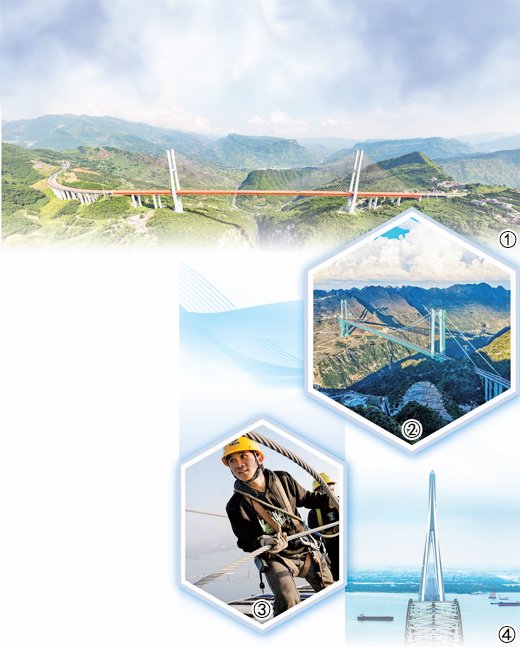
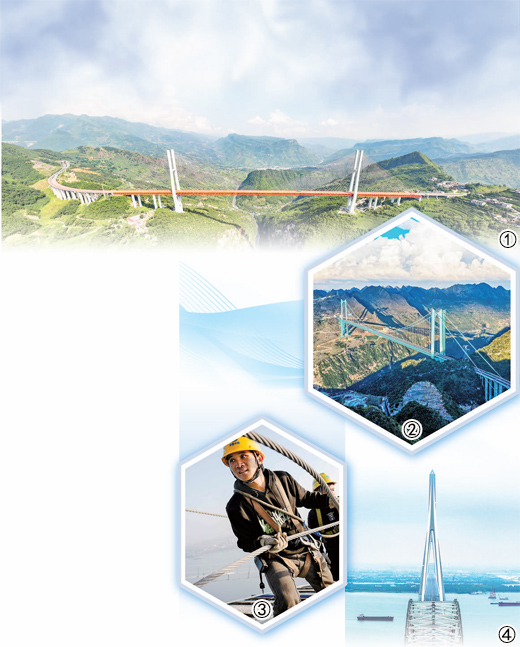
Core Viewpoint - China's bridge construction technology has achieved world-leading standards, with recent projects continuously setting new records in terms of scale and innovation [3][5]. Group 1: Structural Innovation - The Hubei Yanjing Yangtze River Bridge employs a unique "four main cable system" to address challenges related to large spans and aviation height restrictions, showcasing advancements in bridge design [5]. - New breakthroughs in bridge structures focus on enhancing span, adapting to complex environments, and optimizing performance, with innovations in beam and arch bridge designs [5][6]. - The Jiangsu Changtai Yangtze River Bridge, set to open in September 2025, features a hybrid "steel-concrete" structure that sets a new world record for cable-stayed bridge spans [6]. Group 2: Material Innovation - Innovations in materials include lightweight saddle designs that improve performance by over 30%, high-strength cables that are corrosion-resistant, and green concrete that reduces costs by approximately 30 yuan per cubic meter [7]. - The use of high-performance composite materials and environmentally friendly materials is becoming essential to meet the demands of large-span and long-lifespan bridges [7][8]. - The Guizhou Huajiang Gorge Bridge incorporates advanced materials to enhance safety and durability, including basalt fiber for fire resistance [8]. Group 3: Equipment Innovation - The construction of modern bridges is increasingly reliant on advanced equipment, which drives industrialization, intelligence, and green transformation in bridge building [9][10]. - Innovations in construction equipment, such as integrated intelligent tower machines and modular bridge assembly systems, have significantly improved construction efficiency [10][11]. - Future trends in bridge equipment include the development of next-generation super equipment for extreme environments, deeper integration of AI and IoT technologies, and modular design for rapid assembly [11].
穿山越江又跨海,大桥“上新”黑科技(瞰前沿)
Ren Min Ri Bao· 2025-12-19 22:10
Core Viewpoint - China's bridge construction capabilities are rapidly advancing, with recent projects setting world records and showcasing innovative technologies that enhance structural performance and efficiency [2]. Group 1: Structural Innovation - The Hubei Yanjing Yangtze River Bridge employs a unique "different sag four main cable system" to address challenges related to large spans and aviation height restrictions, demonstrating significant structural innovation [4]. - New breakthroughs in bridge structures focus on enhancing span, adapting to complex environments, and optimizing load performance, with advancements in beam and arch bridge designs [4]. - The Jiangsu Changtai Yangtze River Bridge, set to open in September 2025, features a hybrid "steel-concrete" structure that sets a new world record for cable-stayed bridge spans [5]. Group 2: Material Innovation - Innovations in materials include lightweight saddle designs that improve performance by over 30%, high-strength cables that are corrosion-resistant, and green concrete that reduces costs by approximately 30 yuan per cubic meter [6]. - The use of high-performance composite materials and environmentally friendly materials is becoming essential for meeting the mechanical and durability requirements of large-span bridges [6]. - The Guizhou Huajiang Gorge Bridge incorporates advanced materials to achieve both lightweight and high strength, significantly enhancing its structural capabilities [6][7]. Group 3: Equipment Innovation - Modern bridge construction is increasingly reliant on advanced equipment, with innovations leading to industrialization, automation, and environmentally friendly practices [9]. - The use of integrated intelligent construction machines has doubled construction efficiency, while modular designs allow for rapid assembly and adaptability to various construction scenarios [10]. - Future trends in bridge equipment include the development of next-generation super equipment capable of withstanding extreme environmental conditions and the integration of AI and IoT technologies for automated control and real-time monitoring [10].
中国桥梁工程规模和技术水平持续提升 穿山越江又跨海,大桥“上新”黑科技(瞰前沿)
Ren Min Ri Bao· 2025-12-19 22:02
Core Viewpoint - China's bridge construction capabilities are advancing rapidly, utilizing innovative technologies and materials to achieve world-leading standards in engineering and design [1][3]. Structural Innovation - The Hubei Yanjing Yangtze River Bridge features a unique "four-cable system" that overcomes challenges related to large spans and aviation height restrictions, showcasing advancements in bridge structure design [3]. - New breakthroughs in bridge structures focus on enhancing span, adapting to complex environments, and optimizing load performance, with innovations in beam and arch bridge designs [3][4]. - The Jiangsu Changtai Yangtze River Bridge employs a hybrid "steel-concrete" structure to set a new world record for cable-stayed bridge spans [4]. Material Innovation - Innovations in materials include lightweight saddle designs that improve performance by over 30%, high-strength cables that are corrosion-resistant, and green concrete that reduces costs by approximately 30 yuan per cubic meter [5][6]. - The use of high-performance rock powder as a concrete additive can replace 20% of cement, significantly reducing carbon emissions during construction [6]. Equipment Innovation - The construction of major bridges is supported by advanced equipment, such as customized shield machines and heavy-lift cranes, which enhance construction efficiency and precision [7][8]. - The shift towards industrialized, intelligent, and green construction methods is transforming traditional construction sites into efficient production lines, improving construction speed and reducing land use [8][9]. - Future trends in bridge equipment innovation include developing next-generation super equipment for extreme environments, integrating AI and IoT for automated control, and creating modular solutions for rapid assembly [9].
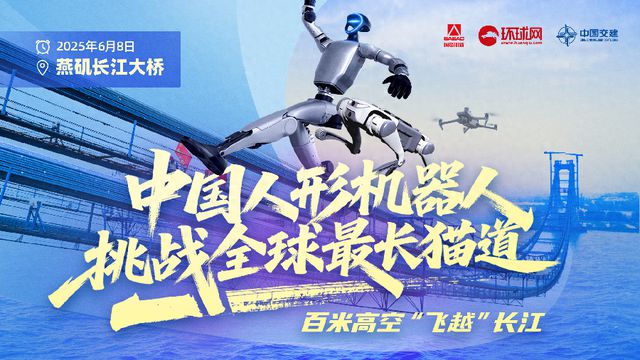
挑战世界最长猫道!全球网友见证中国人形机器人与大国基建梦幻联动
Huan Qiu Wang Zi Xun· 2025-06-09 06:30
Core Viewpoint - The live broadcast of the Yanji Yangtze River Bridge showcased China's advanced robotics and infrastructure capabilities, highlighting a significant engineering achievement with the world's longest catwalk and the integration of humanoid robots and robotic dogs in a challenging environment [2][4][15]. Group 1: Event Overview - The event titled "Chinese Humanoid Robot Challenges the World's Longest Catwalk!" was organized by Huanqiu.com in collaboration with China Communications Construction Company and China Communications Second Navigation Engineering Bureau, marking the first-ever challenge involving humanoid robots on a catwalk [4][9]. - The live broadcast attracted over 30 million viewers domestically, with more than 1 million people watching simultaneously across platforms [5][6]. Group 2: Engineering Highlights - The Yanji Yangtze River Bridge is recognized as the world's largest four-main-cable suspension bridge, with a main span of 1860 meters and a total cable tension of 280,000 tons, equivalent to lifting six medium-sized aircraft carriers [7][9]. - The catwalk spans 12 kilometers and reaches a height of approximately 195 meters above the river, setting a record for the longest catwalk globally [7][9]. Group 3: Technological Innovations - The broadcast featured interactive segments that educated viewers on technological innovations in bridge construction, such as an integrated intelligent tower-building machine and a smart cable control system [9][11]. - The performance of the domestic robots demonstrated their capabilities in balance, environmental perception, and motion control, with the robotic dog completing the entire course successfully, while the humanoid robot showcased its potential despite not finishing due to weather conditions [13][15]. Group 4: International Reception - The event received positive feedback from international audiences, with viewers from countries like Colombia and the Philippines expressing admiration for China's engineering expertise and the advanced technology of the robots [15][6]. - The live broadcast reached nearly 4.96 million people overseas, with over 141,000 viewers watching in real-time, particularly on platforms like X (formerly Twitter) [6][15].