叙府蓝标大曲

Search documents
川酒集团瞄准口粮酒等千亿市场
Nan Fang Du Shi Bao· 2025-11-20 23:12
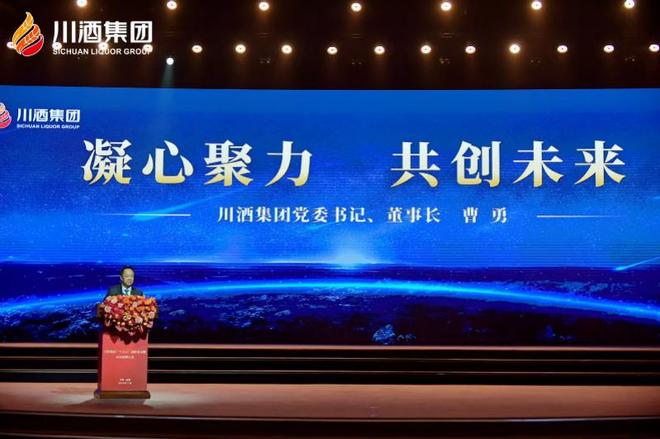
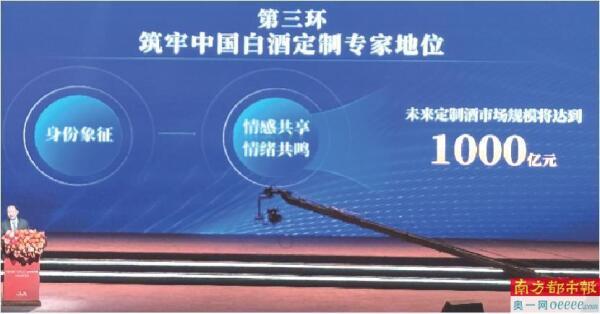
Core Insights - Sichuan Liquor Group held its "14th Five-Year" strategy release and 2025 brand conference, aiming to achieve significant revenue and profit growth by 2030 [4] - The group has integrated over 260 original liquor enterprises and established a production capacity of 600,000 tons and storage capacity of 1,000,000 tons [4] Group Performance - The group has achieved nearly 200 billion yuan in cumulative revenue over the past eight years, with a revenue of 350.2 billion yuan in 2023, reflecting an 8.3% year-on-year growth [4] - The profit for 2023 was reported at 609 million yuan [4] Strategic Goals - The group aims to reach a revenue of 45 billion yuan and a tax profit of 3 billion yuan by 2030, positioning itself among the top players in China's liquor industry [4] - For 2024, the group anticipates a revenue of 38 billion yuan [4] Strategic Focus - The strategy "Strengthening Fundamentals and Increasing Efficiency" will focus on the core liquor industry, reallocating resources, funds, and talent [5] - The "Five Rings" strategy includes original liquor, staple liquor, customized liquor, bulk liquor, and quality technology [5] Market Opportunities - The staple liquor market is expected to exceed 150 billion yuan in revenue by 2024, with over 70% of sales coming from moving products in the first half of 2025 [5] - The customized liquor market is projected to reach 100 billion yuan, with the group developing a "Sichuan Liquor Customization" program to facilitate low-barrier, quick delivery services [5][6] Consumer Trends - There is a shift towards personalized, youthful, and customized consumption in the liquor market, moving from brand identity to emotional connection [6] - The bulk liquor market is expected to surpass 80 billion yuan in 2024 and exceed 100 billion yuan in 2025, with a compound annual growth rate of over 15% [6] Trust and Quality Assurance - The traditional bulk liquor market faces trust issues due to quality concerns, necessitating a reconstruction of trust through transparency, standardization, and digitization [6] - Sichuan Liquor Group aims to become the leading supplier of bulk liquor by leveraging its full industry chain advantages and quality assurance [6]

川酒集团瞄准口粮酒等千亿市场,2030年冲刺450亿营收
Nan Fang Du Shi Bao· 2025-11-19 12:01
Core Insights - Sichuan Liquor Group aims to achieve a revenue of 45 billion yuan and a profit tax of 3 billion yuan by 2030, positioning itself among the top players in China's liquor industry [3] - The company reported a revenue of 35.02 billion yuan in 2023, marking an 8.3% year-on-year increase, with a total profit of 609 million yuan [3] Group 1: Strategic Goals - The company has set a target of 38 billion yuan in revenue for 2024 [3] - The strategic focus is on "strengthening fundamentals and increasing efficiency" with a five-ring approach covering raw liquor, staple liquor, customized liquor, bulk liquor, and quality technology [3][5] Group 2: Market Opportunities - The staple liquor market is projected to exceed 150 billion yuan in revenue by 2024, with over 70% of sales coming from this category in the first half of 2025 [5] - The customized liquor market is expected to reach 100 billion yuan, supported by a new "Sichuan Liquor Customization" program that offers low barriers to entry and quick delivery [5][7] Group 3: Consumer Trends - There is a shift towards personalized, youthful, and customized consumption in the liquor market, moving from brand-centric to emotional and shared experiences [7] - The bulk liquor market is anticipated to surpass 80 billion yuan in 2024 and exceed 100 billion yuan in 2025, with a compound annual growth rate of over 15% [7] Group 4: Trust and Quality Assurance - Sichuan Liquor Group aims to become the leading supplier of bulk liquor in China by leveraging its full industry chain advantages and government quality endorsements [8] - The company plans to rebuild consumer trust in bulk liquor through transparency, standardization, and digitalization, ensuring quality and traceability [8]