年轻化

Search documents
白酒行业点评报告:白酒底部特征明显,茅五热议度高
ZHESHANG SECURITIES· 2026-03-30 08:49
Investment Rating - The industry investment rating is "Positive" (maintained) [6] Core Insights - The white liquor industry is showing clear signs of bottoming out, with high discussion around Moutai and Wuliangye. The second half of 2026 is expected to see marginal improvements as consumption gradually recovers, with performance adjustments starting from Q3 2025 due to policy impacts [1][2] - There is a strategic divergence in pricing and volume among liquor companies, with Moutai and Wuliangye opting for price adjustments to boost sales, while others like Guojiao 1573 maintain pricing strategies to uphold brand strength. Both strategies are deemed correct based on individual company circumstances [1][2] - The market is expected to see polarized growth between first-tier brands and regional brands, while mid-tier brands face pressure. The price range of 50-300 RMB is expanding significantly, indicating a growth in mass consumption [1][2] - The trend towards consumer-centric approaches is evident, with companies focusing on direct sales and deep market engagement. Moutai is leading the industry in embracing consumer demands and expanding its customer base [2] - New product launches are aligning with emerging trends, including high cost-performance, low-alcohol options, and products targeting younger and female consumers. The low-alcohol market is projected to exceed 74 billion RMB by 2025, with a compound annual growth rate of 25% [2][3] - The potential drinking population aged 18-30 in China is approximately 490 million, contributing over 400 billion RMB to the market, with new drinking options being favored by this demographic [3] Summary by Sections - **Market Dynamics**: The industry is preparing for an adjustment period, with expectations of performance recovery in the second half of 2026. The strategic choices of liquor companies vary, with some focusing on volume growth through pricing adjustments while others maintain price stability to protect brand equity [1][2] - **Consumer Trends**: There is a notable shift towards consumer-centric strategies, with a focus on direct sales and market engagement. The rise of low-alcohol products and the targeting of younger and female consumers are key trends shaping the market [2][3] - **Investment Recommendations**: The report suggests continuing to favor Moutai, while also monitoring Wuliangye, Luzhou Laojiao, and other brands with strong market attributes [4]


2026春季糖酒会总结专题:春糖反馈理性,把握结构性机会
GUOTAI HAITONG SECURITIES· 2026-03-29 08:52
Group 1 - The report indicates that the 2026 Spring Sugar and Wine Fair feedback was moderate, with a focus on rational investment from wineries, channels, and capital markets, emphasizing the importance of To C channels, product innovation, and structural improvement opportunities under trends of health and dining recovery [2][10] - The report highlights that the white wine industry is in a pragmatic phase, with a shift towards C-end operations, and that major brands like Moutai and Wuliangye have reduced their presence at hotel exhibitions, reflecting a cautious approach to investment and a focus on practical issues such as inventory and sales [10][26] - The report notes that the beverage sector is experiencing a surge in product innovation, with a clear direction towards health and functionality, as evidenced by the introduction of various new products in categories like electrolyte water and 100% pure fruit juice [44][46] Group 2 - The investment recommendations suggest a clear focus on white wine, with a preference for brands with price elasticity such as Moutai, Wuliangye, and Luzhou Laojiao, while also identifying opportunities in condiments, beer, and beverages that show resilience [50] - The report emphasizes the structural upgrade trend in the condiment sector, driven by a recovery in dining demand, with notable growth in compound sauces and a shift towards healthier options [32][33] - The report identifies the snack sector as maintaining a high level of richness in product variety, with a focus on channel expansion and the popularity of konjac products, indicating a dynamic market environment [49]



保乐力加2026财年半年业绩营收、利润双降;贵州茅台在毕节成立销售公司丨酒业早参
Mei Ri Jing Ji Xin Wen· 2026-02-25 01:12
Group 1 - The core viewpoint of the news is that Pernod Ricard reported a decline in both revenue and profit for the first half of the 2026 fiscal year, with a significant drop in sales in the Chinese market [1] - The group's revenue for the first half of the fiscal year was €5.26 billion, representing a year-on-year decrease of 14.9% [1] - Organic profit for the second half of 2025 fell by 7.5%, and sales in the first quarter of 2026 decreased by 7.6% [1] - The decline in sales was particularly pronounced in high-end products like Martell Cognac and Havana Club rum, which experienced double-digit declines [1] - The Chinese market saw an organic sales drop of 28%, primarily due to macroeconomic adjustments and inventory corrections in high-end cognac channels [1] Group 2 - The news highlights that health-oriented liquor, particularly wellness liquor, emerged as a significant growth area in the market during the 2026 Spring Festival, with online sales increasing year-on-year [2] - The new generation of wellness liquor has successfully moved away from medicinal flavors, with popular flavors like plum, rose, and goji berry appealing to younger consumers [2] - Leading brands such as Jinjiu and Coconut Island Deer Turtle Wine launched limited edition small bottles for family gatherings, enhancing health marketing to drive sales [2] - The wellness liquor segment is identified as a new growth driver for the industry, indicating a clear long-term growth potential [2] Group 3 - Guizhou Moutai established a new sales company in Bijie with a registered capital of 30 million yuan, fully owned by Guizhou Moutai Sales Co., Ltd [3] - This move is part of the company's strategy to deepen channel reforms and enhance direct sales systems [3] - The establishment of the sales company is expected to strengthen regional market control, improve terminal sales, and stabilize prices, thereby enhancing the direct link from manufacturer to consumer [3]
从“历史经典产业”到“传统优势民生产业”,新五年酿酒产业提质发展
Soochow Securities· 2026-02-24 00:45
Investment Rating - The report maintains an "Accumulate" rating for the beverage industry, indicating a positive outlook for investment in this sector [1]. Core Insights - The report emphasizes the transition of the brewing industry from a "historical classic industry" to a "traditional advantageous livelihood industry," highlighting its importance in cultural heritage and economic development [4][9]. - The "14th Five-Year Plan" outlines specific goals for the brewing industry, including the establishment of over three trillion-level traditional advantageous wine production areas and more than ten hundred-billion-level specialty brewing industrial parks by 2028 [10][12]. - The report identifies a shift in the industry towards digitalization, green practices, and internationalization, with leading companies actively pursuing these transformations [18][20]. Summary by Sections 1. Development of the Brewing Industry - The brewing industry is recognized as a traditional advantageous industry, playing a crucial role in cultural transmission and regional economic development [9]. - The "Guidance on Quality Improvement and Upgrading of the Brewing Industry (2026-2030)" outlines a clear path for high-quality development, focusing on adapting to market changes [9][10]. - The report details a comprehensive plan with 21 key tasks across seven dimensions, including enhancing raw material supply, promoting technological innovation, and transforming business models [17][18]. 2. Investment Recommendations - The report suggests that while traditional beverages like baijiu, beer, and yellow wine are well-established, emerging categories such as fruit wines and craft beers present new opportunities [21]. - It recommends focusing on companies like Kweichow Moutai, which is expected to stabilize and recover in valuation, along with other notable brands such as Gujing Gongjiu and Luzhou Laojiao [22].


食品饮料行业跟踪周报从“历史经典产业”到“传统优势民生产业”新五年酿酒产业提质发展
Soochow Securities· 2026-02-23 00:30
Investment Rating - The report maintains an "Add" rating for the food and beverage industry, indicating a positive outlook for the sector [1]. Core Insights - The report emphasizes the transition of the brewing industry from a "historical classic industry" to a "traditional advantageous livelihood industry," highlighting its importance in cultural heritage and economic development [4][9]. - The "14th Five-Year Plan" outlines clear goals for the brewing industry, aiming for high-quality development and the establishment of over three trillion-level traditional advantageous wine-producing areas and more than ten hundred-billion-level specialty brewing industrial parks by 2028 [10][12]. - The report identifies a shift in the industry towards digitalization, green practices, and internationalization, with leading companies actively pursuing transformation strategies [18][20]. Summary by Sections 1. Development of the Brewing Industry - The brewing industry is recognized as a traditional advantageous industry, playing a crucial role in cultural transmission and regional economic development [9]. - The "Guidance on Quality Improvement and Upgrading of the Brewing Industry (2026-2030)" sets a roadmap for adapting to market changes and achieving high-quality growth [9][10]. - The report outlines a two-phase goal structure for the industry, focusing on enhancing raw material supply, technological innovation, and brand empowerment [12][17]. 2. Investment Recommendations - The report suggests that while traditional sectors like white wine, beer, and yellow wine are mature, emerging segments such as fruit wine and craft beer present new opportunities [21]. - It recommends focusing on companies like Guizhou Moutai, which is expected to stabilize and recover in valuation, along with other notable brands [22].
隐身幕后三年 史玉柱这次真的要放权“90后”了 2026年能否再造一个“新巨人”?
Mei Ri Jing Ji Xin Wen· 2026-02-08 21:54
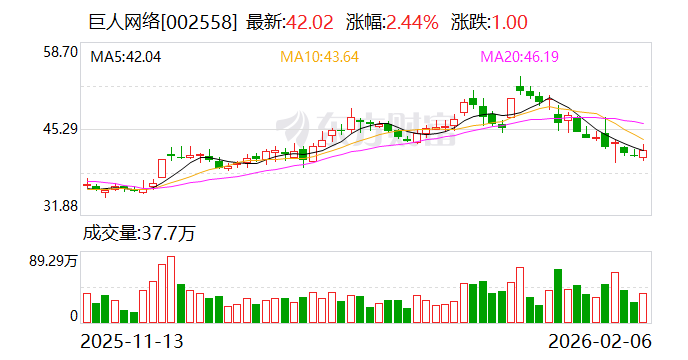
Core Viewpoint - Giant Network is shifting its core strategy towards youth and emerging IPs, marking a significant change in leadership and direction under Chairman Shi Yuzhu [2][4]. Group 1: Leadership Changes - Shi Yuzhu appointed young executives Wang Xinyu and Zhao Jianfeng to lead key IP sectors, indicating a focus on innovation and youth [2]. - CEO Liu Wei highlighted the success of a young team that created a game with over 100 billion online views and daily active users exceeding 10 million, showcasing a new direction for the company [4]. Group 2: Market Position and Challenges - As of early February 2023, Giant Network's market value reached approximately 81.3 billion yuan, recovering from a significant decline of nearly 90% from 2018 to 2022 [4]. - The gaming industry is entering a phase of intense competition characterized by "stock game + innovation breakthrough," with major players like Tencent and NetEase dominating the market [5]. Group 3: Product Development and Strategy - The success of the game "Supernatural Action Group," set to launch in 2025, is attributed to a return to core gaming principles and organizational restructuring under Shi Yuzhu [6][7]. - The company aims to enhance game quality by focusing on player experience rather than data metrics, a shift from previous practices that led to mediocrity [7]. Group 4: Financial Performance - "Supernatural Action Group" has achieved significant milestones, including a consistent presence in the iOS top 20 and a daily active user count exceeding 1 million [8]. - The revenue for 2023 and 2024 is projected to stabilize around 2.9 billion yuan, with a notable increase in net profit for the first three quarters of 2025 [10]. Group 5: Future Outlook and Challenges - The company is attempting to "de-Shi Yuzhu" by empowering younger teams while maintaining a focus on game quality and innovation [11][12]. - The integration of AI technology into game development is seen as crucial, with ongoing efforts to create AI-driven gaming experiences [12]. - The future success of Giant Network hinges on its ability to produce more hit products and maintain a competitive edge in a rapidly evolving market [14].

4541.8亿美妆护肤全景扫描:从规模竞争到技术竞争
FBeauty未来迹· 2026-02-07 10:54
Core Viewpoint - The beauty and skincare industry is undergoing a transformation where consumers are redefining what is worth spending on, shifting from impulsive buying to more rational decision-making focused on efficacy and long-term value [3][4]. Market Overview - By 2025, the beauty and skincare market is projected to reach a sales volume of 454.18 billion yuan, with a year-on-year growth of 9.7%, driven by both volume and price increases [5]. - The market growth is characterized by structural price changes, with a notable increase in the average transaction price due to a rise in the share of functional and mid-to-high-end products [8]. Consumer Behavior - Consumers are increasingly focused on efficacy, experience, and certainty of value, leading to a multi-tiered market with diverse price segments and consumer needs [4][8]. - The low-price segment (0-300 yuan) accounts for 74.1% of the beauty market, while the skincare market sees 56.3% in the same range, with the sub-100 yuan segment experiencing the fastest growth at 20.6% year-on-year [8]. Brand Dynamics - Leading brands are shifting from scale expansion to product innovation, with high-end anti-aging products becoming a significant growth driver, resulting in increased market concentration and share [11][12]. - Mid-tier brands face pressure but can achieve growth through targeted strategies, such as focusing on specific consumer needs like sensitive skin repair or anti-aging for younger demographics [14]. Anti-Aging Market Insights - The anti-aging market is entering a new phase driven by precise technology and widespread demand, with sales expected to reach 129.83 billion yuan in 2025, reflecting a year-on-year growth of 26.3% [15][17]. - Facial anti-aging products dominate the market, with facial care sets and serums leading in sales, emphasizing the importance of ingredient efficacy [19]. Product Trends - The demand for anti-aging products is increasingly focused on core functions such as hydration, wrinkle reduction, and skin repair, indicating a blend of basic skincare and anti-aging needs [24]. - New product innovations in the anti-aging segment are centered around collagen enhancement and multi-functional benefits, with brands like L'Oréal and Estée Lauder leading the way [28][29]. Makeup Market Trends - The makeup market is seeing a shift towards natural beauty and health-focused aesthetics, with sales growth of 15.8% year-on-year, reflecting changing consumer preferences [30]. - The demand for lightweight, hydrating makeup products is rising, with cushion foundations experiencing significant growth, indicating a balance between efficiency and effectiveness [35]. Marketing and Consumer Engagement - Social media platforms are becoming crucial for trend amplification, with discussions around natural beauty and individual expression reshaping consumer decision-making [43][44]. - The beauty and skincare industry is moving towards a competitive landscape focused on technology credibility, efficacy perception, and user understanding, indicating a shift from price-based competition to value-driven strategies [44].

古越龙山:公司高度关注并已系统评估了青花醉系列因与黄仁勋先生关联引发热销所带来的品牌价值提升
Zheng Quan Ri Bao Wang· 2026-02-06 12:41
Core Viewpoint - The company has recognized the significant brand value enhancement resulting from the popularity of the Qinghua Zui series, linked to Mr. Huang Renxun, which has successfully penetrated the high-end consumer market of technology elites [1] Group 1: Brand Strategy - The event has greatly increased the recognition and reputation of the Qinghua Zui series and the company's brand among high-net-worth individuals and younger consumers [1] - This situation validates the effectiveness of the company's high-end and youth-oriented strategy [1] Group 2: Cultural Integration - The interaction between Huangjiu culture and the technology sector has created a new connotation for the brand, promoting effective cross-border communication [1] - The company aims to leverage this brand momentum to deepen collaboration with Shaoxing Cultural Tourism, progressing steadily if conditions allow [1] Group 3: Future Plans - The company will continue to focus on high-end and youth-oriented development, utilizing diverse scenarios to promote Huangjiu culture to a broader audience [1] - There is an emphasis on enhancing brand influence through various collaborative efforts [1]

“火爆”品牌开启数字新纪元:数字人IP引领白酒行业创新变革
Zhong Guo Shi Pin Wang· 2026-02-03 10:49
Core Insights - The "Fire Explosion" brand is entering a new phase of digital and IP transformation, significantly impacting the liquor industry and the broader consumer market [1] Group 1: Brand and Cultural Integration - The "Fire Explosion" brand leverages trendy beverage culture to express lifestyle and individuality, creating a brand ecosystem that integrates technology, culture, and interaction through digital IP characters [2] - The brand aims to deepen emotional connections with consumers by merging traditional liquor culture with modern technological experiences, thus broadening its consumer base and promoting the integration of traditional culture with contemporary consumption [2] Group 2: Transformation from Product to IP - The brand's exploration represents a new path for the liquor industry, transitioning from product-driven to IP-driven strategies, enhancing brand value through cultural output and emotional resonance [3] - The "Fire Explosion IP National Dealer Store Interactive Tour" will engage consumers in brand storytelling and social media sharing, creating a strong user-generated content effect and providing a model for experiential marketing in the liquor sector [3] Group 3: Industry Ecosystem Upgrade - The brand plans to use digital IP as a lever for ongoing strategic development, including city tours, cross-industry collaborations, and content co-creation to build a comprehensive brand ecosystem [4] - By opening up the IP cooperation ecosystem, the brand aims to shift the industry from product competition to ecological competition, injecting new energy into the sector through digitalization, IP development, and youth engagement [4]

千亿之后,史玉柱又行了
商业洞察· 2026-01-31 09:22
Core Viewpoint - Giant Network has successfully returned to the "billion-dollar club" with a market value exceeding 100 billion yuan, driven by the strong performance of its new game "Supernatural Action Group" and the return of founder Shi Yuzhu [2][3][4]. Group 1: Company Performance - Giant Network's revenue in Q3 2022 reached 1.706 billion yuan, a year-on-year increase of 115.63%, with a net profit of 640 million yuan, up 81.19% [3]. - The company's stock price has fluctuated significantly, with a peak of over 40 yuan in September 2022, reflecting high investor expectations [2]. - In 2023 and 2024, the company achieved revenues of 2.924 billion yuan and 2.923 billion yuan, respectively, with net profits of 1.086 billion yuan and 1.425 billion yuan [11]. Group 2: Game Development Strategy - The game "Supernatural Action Group" has gained popularity, reaching over 1 million concurrent users and ranking in the top 20 on various app stores [3][4]. - The game focuses on "gameplay" rather than traditional data-driven strategies, emphasizing user engagement and iterative development [4][5]. - Shi Yuzhu's return has reinvigorated the company's focus on game quality, with a shift towards player experience over revenue metrics [9][11]. Group 3: Organizational Changes - The company has undergone significant restructuring, reducing management layers and promoting a culture of innovation and responsiveness to player feedback [14][15]. - Young talent has been prioritized in leadership roles, with a focus on creating a more dynamic and responsive organizational structure [16][17]. - Shi Yuzhu has emphasized the importance of a "youthful" approach to game development, encouraging younger team members to take on leadership responsibilities [17]. Group 4: AI Integration - AI has been identified as a critical area for future growth, with plans to integrate AI tools into game development and operations [19][22]. - The company has begun building an AI tool platform to enhance product development, including models for dialogue, art generation, and voice synthesis [23]. - AI is being utilized to create more dynamic and engaging gameplay experiences, such as real-time NPC interactions that mimic human behavior [23].