口袋公园建设

Search documents
财经聚焦·地方两会经济“拼”图|拼出高质量!2026年各地推进城市更新有何新举措?
Xin Hua Wang· 2026-02-04 08:16
Core Viewpoint - The article emphasizes the importance of high-quality urban renewal initiatives being implemented across various regions in China, highlighting specific projects and strategies aimed at improving living conditions and enhancing urban environments [1][2]. Group 1: Urban Renewal Initiatives - Local governments are prioritizing urban renewal in their work reports, with a focus on innovative and tailored approaches to meet local needs [1]. - In 2025, 27,100 old urban residential areas are expected to undergo renovation, with 14,000 elevators added, benefiting over 4.7 million residents [1]. - The construction of over 4,700 "pocket parks" and 5,800 kilometers of urban greenways is planned to enhance urban living conditions [1]. Group 2: Community and Infrastructure Improvements - The construction of complete communities is emerging as a new trend, with projects incorporating essential services like community kitchens and elder care [3]. - Efforts to address the challenges of old residential areas include the installation of charging stations and the establishment of property management committees to improve public services [3]. Group 3: Cultural and Historical Preservation - Many regions are focusing on preserving historical and cultural elements as part of urban renewal, with initiatives aimed at revitalizing old streets while maintaining their historical integrity [4]. Group 4: Environmental Enhancements - Plans to add 100 new "pocket parks" in Hubei and initiatives in Hainan to create "cool cities" through green corridors are part of the broader strategy to enhance urban green spaces [6]. - The need for improved underground infrastructure and drainage systems is highlighted, with specific measures being taken in various provinces [6]. Group 5: Financial Support for Urban Renewal - Regions are exploring diverse funding sources for urban renewal projects, including policy-based financial tools and public REITs, to support these initiatives [6]. - The involvement of both state-owned and private enterprises is being encouraged to create a more diversified financing model for urban renewal [6].
老工业城市探索内涵式发展新路(大数据观察·点读“十四五”)
Ren Min Ri Bao· 2026-01-07 05:15
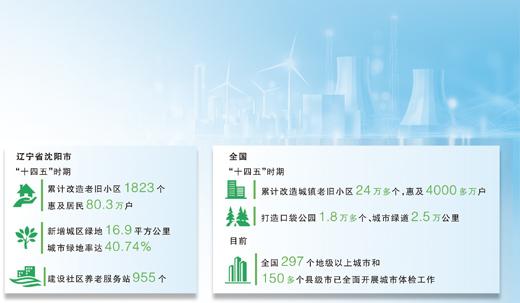
Core Viewpoint - The city of Shenyang is actively promoting urban renewal to enhance the functionality of old neighborhoods, factories, and urban villages, aiming to create a modern, livable, and resilient city that prioritizes the well-being of its residents [1][2]. Group 1: Urban Renewal Initiatives - Shenyang has installed over 1,600 elevators in old residential buildings, benefiting more than 110,000 residents during the "14th Five-Year Plan" period [2]. - The city has completed the renovation of 1,823 old residential communities, which constitute over half of the 6,500 residential complexes in the city [3]. - A total of 252 kilometers of gas pipelines have been laid since September 2024, with 20,000 households no longer needing to use liquefied gas for cooking [5]. Group 2: Community Services and Infrastructure - Since 2021, Shenyang has established 955 community elderly care service stations and 193 community health service centers to enhance community services for the elderly and children [4]. - The city has upgraded 1,933 kilometers of water supply pipelines, 393 kilometers of drainage pipelines, and 844 kilometers of heating pipelines, significantly improving urban safety and resilience [5]. Group 3: Environmental Improvements - Shenyang has added 16.9 square kilometers of urban green space, achieving a city green space rate of 40.74% during the "14th Five-Year Plan" period [7]. - The city has implemented systematic treatments for its water systems, including the removal of 28,400 cubic meters of sludge and the restoration of over 40,000 square meters of greenery [6]. Group 4: Cultural Heritage and Industrial Transformation - The city has transformed historical and cultural districts, preserving 359 building facades and introducing 54 brand flagship stores, increasing experiential cultural tourism from 3% to 46% [9][10]. - Shenyang has designated 700,000 square meters of industrial heritage protection zones, repurposing old factories into cultural and creative spaces [10].