古籍

Search documents
漫游东城|丙午新春,为什么一定要去一趟隆福寺?
Xin Lang Cai Jing· 2026-02-19 03:31
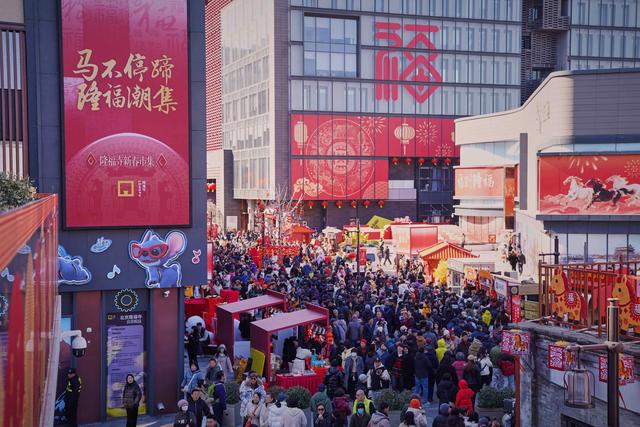
Group 1 - The 隆福寺商圈 has become a popular destination for the Spring Festival, blending traditional and modern experiences [1][33] - Over thirty time-honored brands showcased their offerings at the Spring Market, featuring local delicacies and unique handicrafts [7][33] - The atmosphere is lively, with interactive performances and a variety of food options, attracting large crowds [13][19] Group 2 - The area includes notable shops like 北京稻香村 and 丰年灌肠, which have long queues, indicating high consumer interest [19] - The newly renovated 中国书店隆福寺店 features an exhibition on ancient texts, providing a cultural experience alongside the festive activities [29][33] - The 隆福寺商圈 offers a mix of traditional flavors and contemporary trends, appealing to diverse consumer preferences during the holiday season [33]

中国书店隆福寺店焕新重张了
Xin Lang Cai Jing· 2026-02-14 05:06
Core Insights - The China Bookstore Longfu Temple store has reopened after 13 years, presenting itself as a "city cultural study" with a new look [1] - The store features a significant exhibition titled "The Art of Ancient Books," showcasing over 20 precious ancient books from the Ming and Qing dynasties, highlighting traditional binding craftsmanship [1] - During the Spring Festival, the bookstore will host a "New Year Cultural Market" on its second floor, inviting the public to engage with cultural activities [1] Company Overview - The China Bookstore Longfu Temple store is a historic establishment in Beijing, reflecting a century of old book industry heritage [1] - The reopening marks a strategic move to revitalize the cultural space and attract visitors through curated exhibitions and events [1] Industry Context - The reopening of the bookstore aligns with a broader trend of revitalizing cultural spaces in urban areas, aiming to enhance community engagement and cultural appreciation [1] - The focus on ancient books and traditional craftsmanship indicates a growing interest in cultural heritage and the arts within the retail sector [1]
乐氏家族18件(套)海外珍藏入藏贵州省博物馆
Zhong Guo Xin Wen Wang· 2025-11-12 01:13
Core Points - The Le family has donated 18 pieces of cultural relics, including seals, porcelain, paintings, ancient books, and manuscripts, to the Guizhou Provincial Museum, which were previously kept in the United States [1][2] - A particularly valuable set of seals with inscriptions such as "Jiaquan" and "Xiyuan" perfectly matches the museum's collection of a Song Dynasty manuscript, providing unique evidence for the study of Guizhou's cultural history [1] - The donation transforms private collections into public cultural heritage, filling gaps in the museum's collection and offering valuable primary materials for researching social changes and cultural transmission in the central Guizhou region [2] Summary by Sections Donation Details - The donation includes 18 pieces of family relics, which were previously overseas, now returned to Guizhou for preservation and public display [1][2] - The family believes that the museum's professional environment will ensure the best protection and allow for systematic research and exhibition of the cultural values embedded in these items [2] Cultural Significance - The donation is seen as a significant contribution to the understanding of social changes and cultural heritage in central Guizhou, providing first-hand materials for research [2] - The Guizhou Provincial Museum plans to develop a systematic approach to explore and study local cultural contributions, aiming to create a display and research system that is perceivable, inheritable, and communicable [2] Exhibition - A special commemorative exhibition titled "Treasures Reappear - Commemorative Exhibition of the Le Family Cultural Relics Donation" has been launched, allowing the public to better understand the spiritual lineage of cultural families [3] - The exhibition will be open until December 10, providing an opportunity for visitors to engage with the cultural narrative of Guizhou [3]
(文化中国行)从“活下来”到“活起来” 新疆解码“古籍智慧”
Zhong Guo Xin Wen Wang· 2025-10-11 06:41
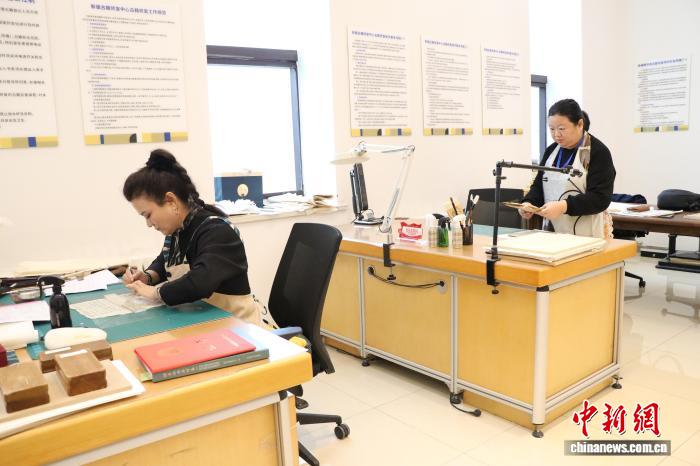
Core Viewpoint - The article discusses the efforts in Xinjiang to preserve and revitalize ancient texts, highlighting the importance of ancient book restoration and its cultural significance [1][5]. Group 1: Ancient Book Restoration Efforts - The Xinjiang Ancient Book Restoration Center aims to guide and enhance the restoration work of ancient texts across various institutions in Xinjiang, focusing on training talents in multi-lingual ancient book restoration [4][5]. - In 2023, the center's key project involves the restoration of the Ming Dynasty ancient book "Selected Poems of Famous Figures," which is over 700 years old and has been included in the second batch of the National Precious Ancient Books Directory [1][4]. - Since its establishment, the center has completed the restoration of 48 ancient texts, totaling over 6,000 leaves [4]. Group 2: Cultural Significance and Community Engagement - The Xinjiang Library houses over 124,000 ancient texts in various languages, including many rare items, reflecting the social life and historical interactions of diverse ethnic groups in the region [4][5]. - Recent initiatives include organizing ancient book protection courses in schools and community activities to raise public awareness and appreciation of ancient texts [5]. - The establishment of a national-level ancient book restoration training center in Xinjiang in 2024 will provide a new platform for cultivating restoration talents [5].
文学山房——老巷深处的古籍守护者
Su Zhou Ri Bao· 2025-06-12 00:26
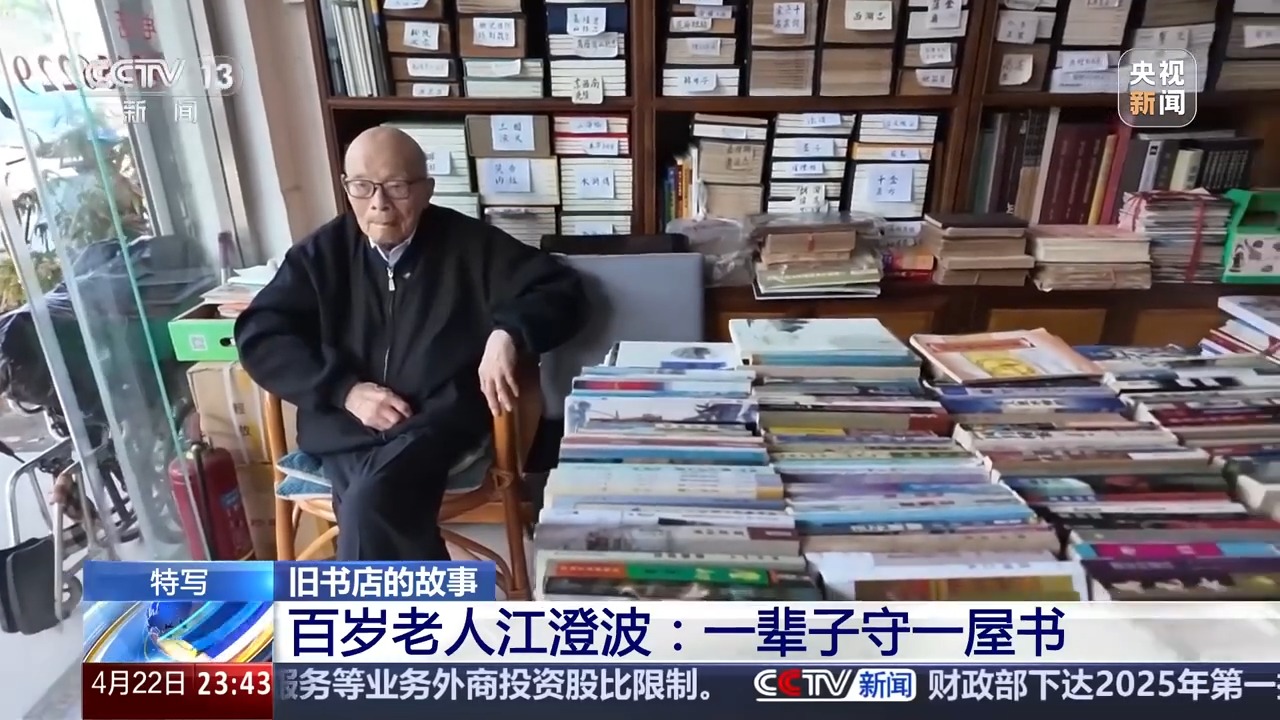
Core Insights - Jiang Chengbo, born in 1926, dedicated his life to the preservation and restoration of ancient books, significantly contributing to the field of ancient book restoration and appraisal [1][2] - He has authored several works documenting his experiences, including "Ancient Book Copying and Appraisal," "Jiangsu Movable Type Printing," and "Discussions on Book Trading in Wumen" [2] Group 1: Background and Career - Jiang Chengbo's family has a long history in the book industry, with his grandfather starting a second-hand bookstore named "Literature Mountain House" in 1899 [1] - He began working at the bookstore at the age of 16, learning the skills of book restoration and appraisal from his family [1] - After retirement, he opened a new second-hand bookstore named "Wen Yu Mountain House," which was later renamed back to "Literature Mountain House" in 2012 [1] Group 2: Contributions and Achievements - Over his 80-year career, Jiang Chengbo has rescued numerous ancient texts from waste disposal sites and has acquired many rare editions, donating ten precious Song dynasty books to public libraries [1] - He played a crucial role in acquiring three-quarters of the Guo Yun Lou collection for the Nanjing Library in the early 1990s, with the remaining quarter auctioned in 2005 and 2021 [1] - Jiang Chengbo is recognized as a "treasure of Suzhou" and a "living dictionary" in the book industry, reflecting his significant impact on the field [2] Group 3: Personal Philosophy and Work Ethic - Jiang Chengbo maintains a strict work routine, only taking two days off each year, emphasizing the importance of books in his life [2] - He likens bookstores to the eyebrows of a person, suggesting that while they may seem unimportant, their absence makes everything else less appealing [2] - At the age of 100, he expresses a desire to continue his work in rescuing ancient books until the end of his life [2]
初心依“旧”!百岁的他用一辈子守护这一屋古籍
Yang Shi Xin Wen Ke Hu Duan· 2025-04-23 01:07
Core Viewpoint - The article highlights the significance of old bookstores, particularly focusing on the "Literary Mountain House" in Suzhou, which has been selling used books for over 130 years, emphasizing the cultural and historical value they represent [2][5]. Group 1: Historical Background - The "Literary Mountain House" was founded in 1899 by Jiang Xingxi, the grandfather of the current owner, Jiang Chengbo, who has dedicated his life to the preservation and sale of ancient books [5]. - Jiang Chengbo began working in the bookstore at the age of 16 and learned the skills of book restoration and identification through practical experience [5][7]. Group 2: Personal Commitment - Jiang Chengbo, now nearly 100 years old, continues to work in the bookstore, demonstrating a lifelong commitment to books and culture [4][9]. - He has contributed significantly to local libraries and museums by rescuing numerous valuable ancient texts throughout his career [7][9]. Group 3: Cultural Significance - The bookstore serves as a cultural hub, attracting book lovers from afar who wish to meet the legendary figure of Jiang Chengbo, who views books as both a livelihood and a lifelong passion [9]. - Jiang Chengbo believes that the book industry is a noble pursuit, emphasizing the cultural aspect over mere profit [7].