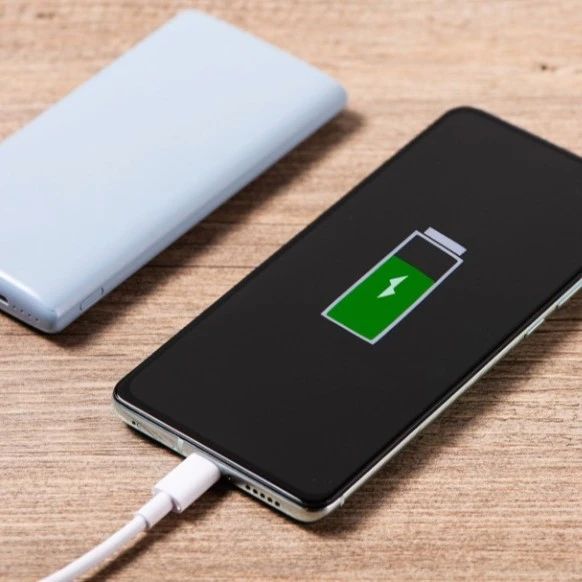
可充电锂离子电池

Search documents
329家陕企享惠超3.46亿元
Shan Xi Ri Bao· 2026-02-14 23:22
Core Viewpoint - The implementation of the RCEP (Regional Comprehensive Economic Partnership) has significantly benefited companies in Shaanxi, particularly in enhancing their export competitiveness and reducing costs through tariff exemptions and streamlined processes [2][5]. Group 1: Company Benefits - Xi'an Sefo Energy Technology Co., Ltd. has utilized RCEP policies to expand its lithium-ion battery exports to Vietnam, resulting in a tax exemption of 11,000 yuan on a shipment valued at 210,000 yuan [1]. - The company received 25 RCEP certificates for its lithium-ion battery exports in 2025, with a total value of nearly 6 million yuan, leading to over 300,000 yuan in tariff reductions [1]. - Shaanxi Tongli Heavy Industry Co., Ltd. has seen significant growth in exports of non-road mining vehicles to RCEP markets, benefiting from zero tariffs after obtaining RCEP certificates [3][4]. Group 2: Trade Growth and Economic Impact - Over four years, the West Xi'an Customs has issued 5,699 RCEP certificates, valued at 6.52 billion yuan, providing over 34.6 million yuan in tariff reductions for exporting companies [2]. - In 2025, the total import and export volume between Shaanxi and RCEP member countries reached 206.29 billion yuan, accounting for 38.3% of the province's total trade, with a year-on-year growth of 10.4% [2]. - The export of intermediate goods from Shaanxi has increased significantly, with integrated circuits and photovoltaic products seeing growth rates of 42% and 220%, respectively, compared to four years ago [2]. Group 3: Customs Support and Services - West Xi'an Customs has implemented various measures to support companies in leveraging RCEP benefits, including online and offline policy interpretations that have reached over 3,000 enterprises [5]. - The introduction of intelligent certificate review processes has allowed over 70% of certificates to be processed instantly, facilitating easier access for small and medium-sized enterprises [5]. - The number of enterprises benefiting from RCEP policies in Shaanxi has increased from 119 to 329, indicating a growing awareness and utilization of these trade agreements [5].
行业聚焦:全球植入式设备用电池行业头部生产商市场份额及排名调查(附核心企业名单)
QYResearch· 2026-01-29 03:47
Core Insights - The report focuses on batteries used in implantable medical devices, highlighting lithium-ion batteries as a crucial type for devices like pacemakers and neurostimulators [2] - The global sales volume of these batteries is projected to reach approximately 108.04 MWh by 2025, with a unit price of about $3.26 per Wh [2] - The industry average gross margin is around 41%, benefiting from high certification barriers and long supply cycles [2] Market Overview - The global market for implantable device batteries is expected to reach $590 million by 2031 [3] - In 2025, the top ten manufacturers are estimated to hold about 71.4% of the market share [6] - The primary product type, Vanadium Oxide (Li/CFₓ–SVO), accounts for approximately 53.8% of the market share [8] - Minimally invasive/subcutaneous devices represent the largest application segment, capturing about 33.6% of the market [10] Industry Drivers and Challenges - Key drivers include the growing demand for chronic disease management and precision medicine, expanding applications in cardiac management and neurostimulation [14] - Challenges include high regulatory barriers, long clinical validation cycles, and the need for long-term biocompatibility and low failure rates [14] Development Opportunities - Opportunities exist in the parallel evolution of high energy density primary and rechargeable battery systems, as well as advancements in wireless charging and energy harvesting technologies [15] - The aging population and increased penetration of home healthcare are expected to create a broader development space for battery companies with material innovation capabilities [15] Leading Companies - Major manufacturers in the global implantable device battery market include EnerSys, Abbott Labs, Boston Scientific, Medtronic, Panasonic, and others [5] - EnerSys has a long history and has evolved into a global industrial technology company, providing energy storage solutions across various sectors [16]


罗马仕、安克相继召回问题充电宝,无锡市监局:正调查背后供应商
新浪财经· 2025-07-01 01:02
Core Viewpoint - The article discusses a significant safety crisis in the power bank industry triggered by the recall of defective battery cells, highlighting the role of specific suppliers and the implications for various brands in the market [1][2]. Group 1: Recall and Supplier Issues - The recall of power banks is primarily due to defective battery cells, with companies like Romoss and Anker citing "material issues" from suppliers [1]. - Anker's production partner, Anker Innovations, confirmed that certain batches of industry-standard battery cells had unauthorized material changes [1]. - The specific supplier linked to the recalled Anker A1681 power bank is identified as Amperes (Wuxi) Co., Ltd., which has faced regulatory scrutiny and has had multiple certifications suspended due to factory inspection failures [1][2]. Group 2: Industry Context and Competition - The power bank industry is characterized by intense competition and a prevalent OEM (Original Equipment Manufacturer) model, leading to low profit margins for manufacturers [3]. - Battery cells account for 40%-50% of the total cost of a power bank, making them a critical component where cost-cutting measures may compromise quality [3]. - The production of battery cells requires significant technical expertise and investment, indicating that issues with battery cells can have widespread repercussions across multiple brands [3]. Group 3: Company Background - Amperes (Wuxi) Co., Ltd. is a prominent soft-pack battery cell manufacturer in China, established in 2014 with a total investment of $200 million [4]. - As of 2023, Amperes has produced over 100 million lithium batteries and supplies battery cells to various brands, including Anker, Romoss, Xiaomi, and others [4]. - The recalls involve significant quantities, with Romoss recalling 490,000 units and Anker recalling 710,000 units [4].