RCEP

Search documents
半两财经丨国家统计局:2025年货物进出口顺差85094亿元
Sou Hu Cai Jing· 2026-02-28 02:41
2月28日,国家统计局发布《中华人民共和国2025年国民经济和社会发展统计公报》。《公报》显示, 全年货物进出口总额454685亿元,比上年增长3.8%。其中,出口269890亿元,增长6.1%;进口184795 亿元,增长0.5%。货物进出口顺差85094亿元。 对共建"一带一路"国家进出口额236018亿元,比上年增长6.3%,占进出口总额比重为51.9%。其中,出 口136851亿元,增长11.2%;进口99167亿元,增长0.1%。对《区域全面经济伙伴关系协定》(RCEP) 其他成员国进出口额138503亿元,比上年增长5.3%。民营企业进出口额260403亿元,比上年增长 7.1%,占进出口总额比重为57.3%;其中出口176592亿元,增长7.2%。 编辑/周超 全年新设立外商投资企业70392家,比上年增长19.1%。实际使用外资金额7477亿元,下降9.5%。其 中,共建"一带一路"国家(含通过部分自由港对华投资)对华新设立外商投资企业19756家,增长 14.7%;对华直接投资1168亿元,增长1.9%。高技术产业实际使用外资2418亿元,下降15.6%。 全年对外非金融类直接投资额1040 ...
今年首月柬埔寨与RCEP成员国贸易额实现大幅增长
Zhong Guo Xin Wen Wang· 2026-02-21 01:04
Group 1 - The total trade volume between Cambodia and RCEP member countries exceeded $3.7 billion in January, with exports amounting to $927 million, a year-on-year increase of 19.34%, and imports reaching $2.83 billion, up 13.32% [1] - Cambodia's major trading partners within RCEP include China, Vietnam, Japan, and South Korea, highlighting the importance of these relationships for the country's trade dynamics [1] - The Royal Academy of Cambodia's economist emphasized that RCEP is crucial for diversifying and expanding Cambodia's export markets, especially amid uncertain global political and economic conditions [1] Group 2 - The Garment, Footwear, and Travel Goods (GFT) sector in Cambodia achieved an export revenue of approximately $1.398 billion in January, reflecting a year-on-year growth of 7.2% [2] - Within the GFT sector, garment exports totaled $1.014 billion, increasing by 6.7%, while footwear exports reached $196 million, up 16.8%, and travel goods exports amounted to $188 million, growing by 1.1% [2] - The GFT sector is the largest source of foreign exchange for Cambodia, accounting for 46.5% of the country's total exports, with primary markets including the United States, European Union, Canada, and Japan [2]
16万浙江人的新“赶海记”
Xin Hua Wang· 2026-02-19 04:42
Core Viewpoint - The Hainan Free Trade Port has been operational for two months, with significant developments in trade and investment opportunities, particularly for Zhejiang businesses, as the new policies facilitate easier access to both domestic and international markets [1][2][5]. Group 1: Trade and Investment Opportunities - The first batch of duty-free goods processed under the new Hainan Free Trade Port policy was completed shortly after the full closure, indicating a smooth transition to the new system [1]. - Zhejiang businesses have a long-standing presence in Hainan, with approximately 160,000 Zhejiang entrepreneurs and over 17,000 Zhejiang enterprises operating in the region [2]. - The new policy allows for a 30% processing value-added exemption from tariffs, significantly reducing costs for companies like Meishan Wang, which estimates annual savings of around 6 million yuan due to the elimination of import duties [2][3]. Group 2: Local Manufacturing and Industry Development - Hainan's local manufacturing base is relatively weak, but initiatives like the Zhejiang-Qiong Cooperation Industrial Park aim to enhance industrial chain connectivity and attract investment in high-tech sectors [4]. - The park has already attracted over 200 companies with planned investments exceeding 30 billion yuan, focusing on areas such as artificial intelligence, digital finance, and low-carbon processing [4]. Group 3: Global Economic Cooperation - The Hainan Free Trade Port is positioned as a key hub for global economic cooperation, with increasing interest from international businesses, particularly in high-end manufacturing and cross-border e-commerce [6][7]. - The unique policy framework of Hainan, characterized by a mix of liberalization and regulation, is seen as a strategic advantage for companies looking to expand their operations internationally [7]. Group 4: Challenges and Adaptations - Despite the opportunities, challenges remain regarding the implementation of new policies and the need for businesses to adapt to the evolving regulatory environment [8]. - The establishment of the "Zhejiang Business International Economic and Trade Cooperation Alliance" aims to facilitate deeper economic ties and collaboration under frameworks like RCEP [8][9]. Group 5: Economic Performance Indicators - Recent data shows a significant increase in duty-free shopping in Hainan, with sales reaching 1.106 billion yuan and a 26% increase in the number of shoppers during the first week of February [10].
中国的顶级阳谋起作用了!美国官员质问:特朗普为何替中国效力?
Sou Hu Cai Jing· 2026-02-16 11:56
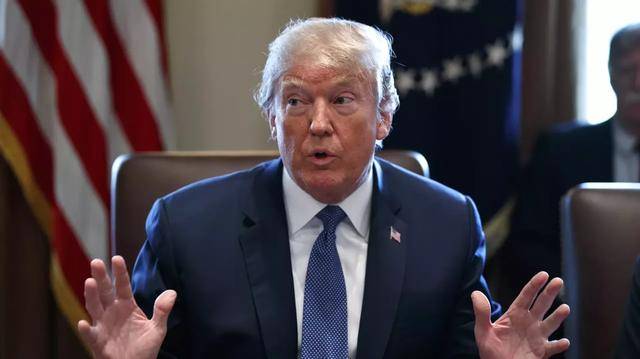
Group 1 - The core viewpoint of the article highlights the contradictory nature of Trump's China policy, which oscillates between hardline and conciliatory approaches, creating confusion and uncertainty [1][3][5] - Trump's administration has shown significant volatility in its trade policy towards China, starting with a 10% tariff on all Chinese goods, later increasing it to 125%, and then granting a 90-day suspension [3][5] - Political analysts attribute this inconsistency to Trump's business mindset and electoral considerations, leading to a lack of long-term coherence in U.S.-China relations [5][13] Group 2 - In response to the U.S. policy swings, China has demonstrated strategic resilience, maintaining a firm stance while also seeking cooperation with other nations [7][11] - China has employed a "flexible yet firm" strategy, leveraging its manufacturing capabilities and deepening ties with Russia and the EU to counter U.S. tariffs [7][15] - The article notes that China's approach contrasts with U.S. unilateralism, as it emphasizes mutual respect and win-win cooperation in international relations [13][19] Group 3 - The article discusses how Trump's tariffs on traditional allies have inadvertently provided China with opportunities to reshape international relations and expand its influence [11][21] - China's strategy includes increasing imports from the EU and enhancing economic cooperation, particularly in areas of mutual interest like climate change [11][21] - The article concludes that as the U.S. faces internal political and economic pressures, China is focused on high-quality development and expanding its global partnerships [19][21]

329家陕企享惠超3.46亿元
Shan Xi Ri Bao· 2026-02-14 23:22
Core Viewpoint - The implementation of the RCEP (Regional Comprehensive Economic Partnership) has significantly benefited companies in Shaanxi, particularly in enhancing their export competitiveness and reducing costs through tariff exemptions and streamlined processes [2][5]. Group 1: Company Benefits - Xi'an Sefo Energy Technology Co., Ltd. has utilized RCEP policies to expand its lithium-ion battery exports to Vietnam, resulting in a tax exemption of 11,000 yuan on a shipment valued at 210,000 yuan [1]. - The company received 25 RCEP certificates for its lithium-ion battery exports in 2025, with a total value of nearly 6 million yuan, leading to over 300,000 yuan in tariff reductions [1]. - Shaanxi Tongli Heavy Industry Co., Ltd. has seen significant growth in exports of non-road mining vehicles to RCEP markets, benefiting from zero tariffs after obtaining RCEP certificates [3][4]. Group 2: Trade Growth and Economic Impact - Over four years, the West Xi'an Customs has issued 5,699 RCEP certificates, valued at 6.52 billion yuan, providing over 34.6 million yuan in tariff reductions for exporting companies [2]. - In 2025, the total import and export volume between Shaanxi and RCEP member countries reached 206.29 billion yuan, accounting for 38.3% of the province's total trade, with a year-on-year growth of 10.4% [2]. - The export of intermediate goods from Shaanxi has increased significantly, with integrated circuits and photovoltaic products seeing growth rates of 42% and 220%, respectively, compared to four years ago [2]. Group 3: Customs Support and Services - West Xi'an Customs has implemented various measures to support companies in leveraging RCEP benefits, including online and offline policy interpretations that have reached over 3,000 enterprises [5]. - The introduction of intelligent certificate review processes has allowed over 70% of certificates to be processed instantly, facilitating easier access for small and medium-sized enterprises [5]. - The number of enterprises benefiting from RCEP policies in Shaanxi has increased from 119 to 329, indicating a growing awareness and utilization of these trade agreements [5].
一亩田创始人邓锦宏:以数字农业为犁,深耕万亿乡村市场|2026商业新愿景
Jing Ji Guan Cha Wang· 2026-02-14 00:35
Core Insights - The company aims to become the first stock in China's agricultural full industry chain by 2025, emphasizing the importance of digital technology in serving rural areas and addressing farmers' challenges in selling products [2] - The transformation of agriculture through digitalization is not just a slogan but a reality, with the company focusing on ensuring farmers can sell their products at better prices and with stability [2][3] Digital Transformation - The company is implementing digital transformation across the agricultural full industry chain through two main business modules: Wo Zhong Tian and Wo Lai Cai, actively participating in farming operations and utilizing data systems for better crop selection [3] - Wo Lai Cai is establishing a chain network in rural areas to address the initial selling difficulties, emphasizing trust as the core competitive advantage [3] International Expansion - The year 2025 is projected to be a "digital year" for China's agricultural imports and exports, with the company experiencing rapid growth in international business, assisting domestic products in reaching global markets [4] - Plans are in place to expand planting bases in Southeast Asia, the Middle East, and Africa, focusing on tropical economic crops to meet global consumer demands [4] AI Integration - The company has introduced an AI dialogue robot, "Xiao Tian," to assist farmers with market information and sales connections, enhancing decision-making processes [5] - A comprehensive AI integration of the company's app is planned for 2026, aiming to automate the generation of standard SKUs and improve buyer connections [5] Future Development Goals - The company aims to deepen its presence in major production areas and become a nationwide chain of agricultural brokers, while also enhancing seed and agricultural supply services through partnerships with top research institutions [6] - The focus is on achieving high-quality development across the entire industry chain, ensuring sustainable practices and efficient food safety measures [6]
嘉欣丝绸子公司获担保,股价上涨资金流入
Jing Ji Guan Cha Wang· 2026-02-11 08:21
Core Viewpoint - Jiaxin Silk (002404) has provided a guarantee of 10 million yuan for its wholly-owned subsidiary, which accounts for 11.62% of its net assets. The company's stock price has recently increased, with net capital inflow observed [1][2]. Recent Events - On February 9, 2026, Jiaxin Silk announced a joint liability guarantee of 10 million yuan for its wholly-owned subsidiary, Zhejiang Jiaxin Jinsanta Silk Clothing Co., Ltd. As of the announcement date, the total external guarantee balance for the company and its subsidiaries is 23.152 million yuan, representing 11.62% of the most recent audited net assets, with no overdue or litigation issues [2]. Stock Performance - On February 11, 2026, Jiaxin Silk's stock price rose by 2.14%, closing at 7.62 yuan per share, with a trading volume of 40.6261 million yuan and a net capital inflow of 462.33 thousand yuan. Year-to-date, the stock has increased by 8.70%, with respective increases of 2.56%, 9.48%, and 9.80% over the past 5, 20, and 60 days [3]. Business Performance - According to the Q3 2025 report (as of September 30, 2025), the company's total operating revenue was 3.633 billion yuan, a year-on-year increase of 0.78%, and the net profit attributable to shareholders was 152 million yuan, up 0.19%. The gross margin was 12.18%, and the net margin was 4.43%, although the operating cash flow per share decreased by 83.63% year-on-year [4]. Business Development - The company primarily focuses on silk clothing, which accounts for 52.05% of its revenue, and promotes IP co-branded products through the "Jinsanta" brand. Additionally, its subsidiary Taihe New Energy is involved in the photovoltaic accessories business. In a December 2025 institutional survey, the company reported a year-on-year increase in foreign trade orders and emphasized its commitment to maintaining a high dividend policy, with cumulative dividends of 1.452 billion yuan since its listing [5]. Institutional Holdings Analysis - As of September 30, 2025, the number of shareholders was 26,300, a decrease of 14.09% from the previous period. Dachen Zhongzheng 360 Internet + Index A has become the ninth largest circulating shareholder, holding 2.5842 million shares [6]. Financial Status - The Q3 2025 report indicates that the company's cash and cash equivalents to current liabilities ratio is 79.36%, with a debt-to-asset ratio of 26.13%. Accounts receivable accounted for 283.07% of the net profit attributable to shareholders [7].

2025年中国进口棉花数量创近五年最低
Xin Lang Cai Jing· 2026-02-11 03:21
【导语】2025年秋播大蒜种植时间受到持续降雨的影响,苗情优劣差异明显。市场普遍认为2026年产新 大蒜单产下降,看涨情绪推升25年9月下旬-10月上旬、26年1月10日-19日的涨价行情。国内商品蒜的种 植主要分布于北方蒜区,面积、产量、库存等是大蒜市场行情发展的主要驱动因素,但生长过程中苗情 发生的变化易对未来的供应量形成某种预期,因此研究气候对大蒜的生长发育情况的影响对产业发展具 有重要意义。 2025年棉花进口量创最低 热点栏目 自选股 数据中心 行情中心 资金流向 模拟交易 客户端 卓创资讯棉花市场资深分析师高飞堂 近五年,除2024年外中国进口棉花数量呈现下降趋势。棉花进口实行配额制,并受终端纺织品外贸出口 量影响。近五年,国内棉纺织品服装出口阻力重重,全球供应链稳定性失衡,中国纺织品出口结构悄然 改变,一带一路及区域全面经济伙伴关系协定(RCEP)带动新增市场需求提升,而欧美传统消费市场 需求占比下滑,制约出口企业对进口棉需求。 2024年上半年,部分中间商适逢国外棉花船货价格低位,积极确定远期进口棉订单,加之下半年部分纺 企担忧特朗普上任后进口棉花关税或提升,提前储备进口原料,促使2024年进 ...

泉州“十四五”进出口规模增长超四成
Xin Lang Cai Jing· 2026-02-11 00:11
Core Insights - During the "14th Five-Year Plan" period, Quanzhou's foreign trade demonstrated strong resilience and vitality, achieving a total import and export scale of 1,298.76 billion yuan, a growth of 43.6% compared to the "13th Five-Year Plan" [1] Group 1: Trade Performance - Exports reached 953.56 billion yuan, increasing by 52.2%, while imports totaled 345.2 billion yuan, growing by 24.3% [1] - Major trading partners included ASEAN, Saudi Arabia, the United States, and the European Union, with respective import and export values of 328.41 billion yuan, 182.8 billion yuan, 137.09 billion yuan, and 134.62 billion yuan, reflecting growth rates of 88.9%, 37.2%, 31.5%, and 34.9% [1] - Trade with Belt and Road Initiative countries amounted to 874.91 billion yuan, a growth of 57.5%, while trade with RCEP member countries reached 428.75 billion yuan, increasing by 86.7% [1] Group 2: Role of Enterprises - Private enterprises played a significant role, with import and export values of 857.42 billion yuan, a growth of 67.1%, while state-owned enterprises and foreign-invested enterprises recorded 61.87 billion yuan and 376.07 billion yuan, growing by 75.1% and 6.3% respectively [1] - By 2025, private enterprises are projected to export 136.41 billion yuan, accounting for 82.6% of total exports, which is 17.2 percentage points higher than the national average [1] Group 3: Product Structure - The export structure continued to optimize, with labor-intensive products valued at 493.25 billion yuan, growing by 25.6%. Notably, textile and apparel exports reached 269.4 billion yuan, increasing by 2.2%, while footwear exports surged to 114.04 billion yuan, a growth of 58.6% [2] - Imports were primarily composed of bulk commodities and agricultural products, with crude oil, agricultural products, and mechanical and electrical products imported at 221.25 billion yuan, 27.26 billion yuan, and 26.85 billion yuan, reflecting growth rates of 69%, 20.8%, and 16% respectively [2]
吉林汽车对RCEP成员国出口实现四年连增
Xin Lang Cai Jing· 2026-02-10 06:37
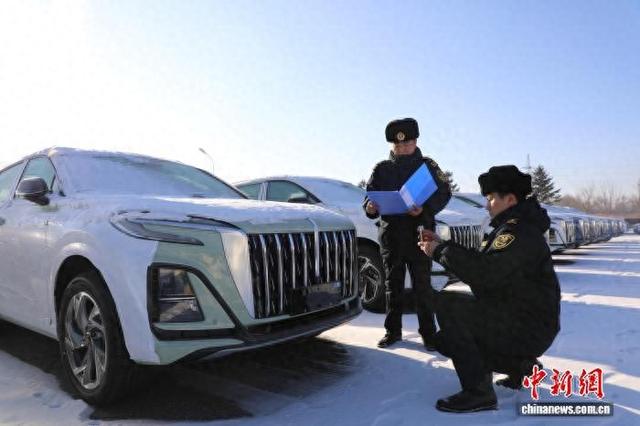
Core Insights - Jilin Province's automobile exports to RCEP member countries are projected to reach 1.48 billion yuan in 2025, marking a 24% year-on-year increase, continuing a steady growth trend since the RCEP agreement took effect in 2022 [1][2] - The automotive industry in Jilin is increasingly integrating into the Asia-Pacific supply chain, with local companies benefiting from reduced tariffs and enhanced competitiveness [2][4] Group 1: Export Growth and Economic Impact - Jilin Province's automobile-related product exports to RCEP member countries are expected to reach 1.98 billion yuan in 2025, reflecting a 25.2% year-on-year growth [4] - The region's automotive sector is leveraging RCEP to import high-quality components, thereby improving production efficiency and facilitating exports of locally manufactured vehicles [4] Group 2: Company Performance and Initiatives - China FAW Group Import and Export Co., Ltd. has imported approximately 1.6 million yuan worth of core components from RCEP countries over the past four years, benefiting from tariff reductions under the RCEP framework [2] - The customs authority in Changchun has implemented various measures to support automotive companies, including a dedicated RCEP service window and streamlined processes for certificate issuance, significantly reducing processing times [2][4]