
储能系统

Search documents
总投资48亿元!宁夏年产13万吨磷酸锰铁锂电池材料项目开工
鑫椤锂电· 2026-03-30 06:48
Group 1 - The core viewpoint of the article highlights the establishment of a new production base for lithium manganese phosphate (LMFP) with an annual capacity of 130,000 tons in Yinchuan, which is expected to enhance the local battery material industry and contribute to the electric vehicle and energy storage sectors [1][2]. - The project has a total investment of 4.8 billion yuan and aims to create a core barrier with nearly 100 patents related to LMFP and a unique "solid-liquid two-phase method" process, improving energy density by 15%-20% compared to lithium iron phosphate (LFP) [2]. - The first phase of the project will focus on building a production line with an annual capacity of 30,000 tons for power battery cathode materials, with an investment of nearly 1 billion yuan, expected to be completed by the end of this year [2]. Group 2 - Upon reaching full production, the project is anticipated to generate an annual output value of no less than 1 billion yuan and provide over a hundred high-quality job opportunities [2].

瑞达期货碳酸锂产业日报-20260312
Rui Da Qi Huo· 2026-03-12 09:30
1. Report Industry Investment Rating - Not mentioned in the provided content 2. Core Viewpoints - The main contract of lithium carbonate fluctuated weakly, closing down 1.79%. The trading volume decreased month - on - month, the spot price was at a premium to the futures, and the basis weakened compared with the previous day [2]. - Fundamentally, overseas mines on the raw material side held prices and were reluctant to sell, while smelters' inquiry sentiment increased. Due to the large fluctuations in lithium prices, both buyers and sellers remained relatively cautious. On the supply side, upstream lithium salt plants resumed work after the holiday, and the pressure on lithium carbonate prices intensified the upstream's sentiment to hold prices. In terms of imports, the volume of lithium carbonate exports from Chile has rebounded. It is expected that after the goods arrive at the port, the domestic import volume of lithium carbonate will also increase, so the supply of lithium carbonate will continue to grow. On the demand side, the resumption of work and production of downstream enterprises after the holiday and the order production situation have significantly improved. In addition, the price correction of lithium carbonate has increased the downstream's willingness to purchase and replenish inventory, and the trading in the spot market is relatively active. In terms of inventory, the overall industrial inventory is on a downward trend, traders are selling more obviously, and downstream inventory is being replenished. Overall, the fundamentals of lithium carbonate may be in a stage of increasing supply and demand, and the resumption of work in the downstream drives the continuous reduction of industrial inventory [2]. - In the options market, the put - call ratio of open interest is 90.18%, a month - on - month decrease of 2.1284%. The sentiment in the options market is bullish, and the implied volatility has slightly decreased [2]. - Technically, on the 60 - minute MACD chart, the two lines are below the 0 axis, and the green bars are converging [2]. - The report suggests short - term long positions on dips and emphasizes controlling risks in trading [2]. 3. Summary by Relevant Catalogs 3.1 Futures Market - The closing price of the main contract was 156,980 yuan/ton, up 1,940 yuan; the net position of the top 20 was - 112,699 lots, down 6,583 lots; the open interest of the main contract was 325,382 lots, down 5,054 lots; the spread between the near and far - month contracts was - 7,200 yuan/ton, down 7,560 yuan/ton; the warehouse receipts of GZFE were 36,455 lots, down 284 lots [2]. 3.2 Spot Market - The average price of battery - grade lithium carbonate was 158,000 yuan/ton, down 1,000 yuan; the average price of industrial - grade lithium carbonate was 154,500 yuan/ton, down 1,250 yuan; the basis of the Li₂CO₃ main contract was 1,020 yuan/ton, down 2,940 yuan [2]. 3.3 Upstream Situation - The average price of spodumene concentrate (6% CIF China) was 2,505 US dollars/ton, unchanged; the average price of amblygonite was 14,000 yuan/ton, down 350 yuan; the price of lithium mica (2 - 2.5%) was 6,763 yuan/ton, down 412 yuan [2]. 3.4 Industry Situation - The monthly output of lithium carbonate was 53,520 tons, down 5,950 tons; the monthly import volume was 23,988.66 tons, up 1,933.47 tons; the monthly export volume was 911.90 tons, up 152.66 tons; the monthly operating rate of lithium carbonate enterprises was 47%, down 5 percentage points; the monthly output of power batteries was 168,000 MWh, down 33,700 MWh; the price of lithium manganate was 51,000 yuan/ton, unchanged; the price of lithium hexafluorophosphate was 111,000 yuan/ton, unchanged; the price of lithium cobalt oxide was 400,500 yuan/ton, unchanged; the price of ternary material (811 type) in China was 202,000 yuan/ton, unchanged; the price of ternary material (622 power - type) in China was 181,500 yuan/ton, unchanged [2]. 3.5 Downstream and Application Situation - The price of ternary material (523 single - crystal type) in China was 196,500 yuan/ton, unchanged; the monthly operating rate of ternary cathode materials was 45%, down 5 percentage points; the price of lithium iron phosphate was 52,400 yuan/ton, unchanged; the monthly operating rate of lithium iron phosphate cathodes was 55%, up 1 percentage point; the monthly export volume of new energy vehicles was 282,000 units, down 20,000 units; the cumulative export volume of new energy vehicles and its year - on - year increase were 583,000 units, up 301,000 units [2]. 3.6 Options Situation - The total open interest of call options was 110,255 contracts, up 4,347 contracts; the total open interest of put options was 99,428 contracts, up 1,666 contracts; the put - call ratio of total open interest was 90.18%, down 2.1284 percentage points; the at - the - money implied volatility was 0.73%, down 0.0214 percentage points [2]. 3.7 Key Concerns - The monthly output of new energy vehicles was 694,000 units, down 347,000 units; the monthly sales volume was 765,000 units, down 180,000 units; the cumulative sales penetration rate of new energy vehicles was 41.18%, up 0.90 percentage points; the cumulative sales volume of new energy vehicles and its year - on - year change was 1,710,000 units, down 125,000 units; the 20 - day average volatility of the underlying was 80.97%, up 0.01 percentage points; the 40 - day average volatility of the underlying was 97.26%, down 0.24 percentage points [2]. 3.8 Industry News - In February, the production and sales of automobiles were 1.672 million and 1.805 million units respectively, a month - on - month decrease of 31.7% and 23.1%, and a year - on - year decrease of 20.5% and 15.2%. The production and sales of new energy vehicles in February were 694,000 and 765,000 units respectively, a year - on - year decrease of 21.8% and 14.2%. The sales of new energy vehicles accounted for 42.4% of the total sales of new vehicles [2]. - LG Energy Solution's CTO said that it will start mass - producing a new type of lithium iron phosphate battery in 2027, which has higher energy density and longer cycle life [2]. - A 500MW/2000MWh grid - forming independent energy storage project in Kuqa City, Aksu Prefecture, Xinjiang, officially started construction, with a total investment of 1.877 billion yuan [2].
总投资不超21亿!天赐材料拟投建年产100万吨铁源及30万吨磷酸铁项目
鑫椤锂电· 2026-03-11 07:41
Group 1 - The article discusses the market outlook for various lithium battery materials in 2025, including lithium carbonate, electrolytes, copper foil, lithium cobalt oxide, ternary materials, lithium iron phosphate, manganese lithium, ternary precursors, lithium hexafluorophosphate, iron phosphate, VC additives, sodium-ion batteries, new lithium salts (LIFSI), separators, lithium batteries, aluminum foil, and energy storage batteries [1] - A specific focus is on the lithium iron phosphate market, highlighting the strategic planning of Tianqi Materials to build a new energy materials industrial park in Yichang, Hubei, with an annual production capacity of 1 million tons of iron source and 300,000 tons of iron phosphate, with a total investment not exceeding 2.1 billion yuan [2] - The company also announced plans for a subsidiary to develop a project for producing 400,000 tons of lithium battery materials and 100,000 tons of lithium battery recycling, although construction has not yet commenced due to ongoing feasibility studies and regulatory processes [2] Group 2 - The article mentions a report on the operational trends and competitive strategies of the lithium iron phosphate battery application market in China from 2025 to 2029, indicating a growing interest in this sector [3] - A conference organized by Xinluo Information is scheduled for March 19-20, 2026, in Changzhou, Jiangsu, focusing on developments in the lithium battery industry [7]

菲律宾发布强制配储政策!
中关村储能产业技术联盟· 2026-03-06 00:02
Core Viewpoint - The Philippines Department of Energy (DOE) has mandated that all large renewable energy projects with a capacity of 10 MW or more must include energy storage systems, with a minimum configuration ratio of 20% of the total installed capacity, marking a significant shift in managing the intermittency of wind and solar power [3][4]. Group 1: Policy Changes - The new regulation aims to enhance the reliability of the power supply by reducing sudden generation losses through mandatory energy storage systems [3]. - Energy Secretary Sharon S. Garin emphasized that energy storage is not only for storing excess power but also for improving the grid's reliability and integrating more renewable energy [3]. Group 2: Infrastructure Strategy - The DOE has instructed transmission network operators and distribution companies to incorporate energy storage into their long-term infrastructure strategies, recognizing it as a vital resource for grid reinforcement and frequency control [4]. - The upcoming updates to the Philippine Energy Plan (PEP) and Transmission Development Plan (TDP) will institutionalize these requirements, signaling clearer intentions to investors and accelerating the country's clean energy goals [4]. Group 3: International Conference - The 14th Energy Storage International Conference and Expo (ESIE 2026) will be held from March 31 to April 3, 2026, in Beijing, focusing on global energy storage market trends and opportunities [6][11]. - The conference will feature discussions on policy details and market access rules from various regions, including mature markets in Europe and emerging markets in Southeast Asia and the Middle East [4].

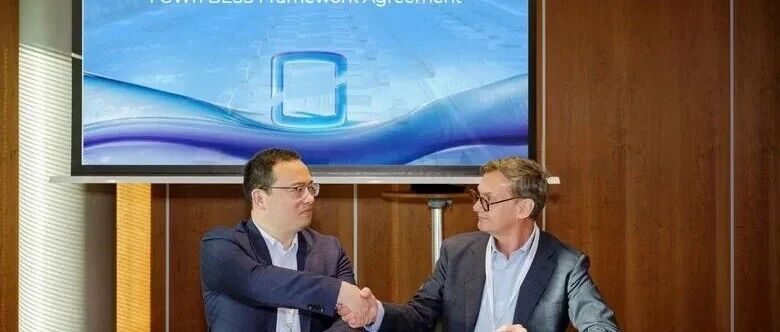
1GWh!阳光电源斩获储能新单
行家说储能· 2026-03-05 03:33
Core Viewpoint - The article discusses the strategic partnership between Delta Capacity and Sungrow Power Supply, focusing on the provision of a 1GWh energy storage system and the broader implications for the energy storage market in Europe [2][4]. Group 1: Partnership and Agreements - Delta Capacity has signed a framework agreement with Sungrow Power Supply to provide a 1GWh PowerTitan 2.0 energy storage system, which will be deployed in upcoming projects [2]. - The partnership aims to establish a high-quality battery energy storage system (BESS) asset portfolio across multiple European markets, with a target of over 6GWh of flexible assets by 2030 [4]. Group 2: Market Expansion and Orders - Sungrow Power Supply has been actively expanding its presence in Europe, Southeast Asia, and Latin America, with disclosed energy storage orders and collaborations exceeding 46GWh, of which over 4.7GWh is in Europe [4]. - The company has announced plans to build its first manufacturing facility in Poland, with an investment of €230 million (approximately 1.88 billion RMB), capable of producing 20GW of photovoltaic inverters and 12.5GWh of energy storage systems annually [5]. Group 3: Project Development - Delta Capacity is currently developing and acquiring projects across various European regions, focusing on Scandinavia, Germany, Southern Europe, and Central Europe, with nearly 800MWh of projects under construction [4]. - The company emphasizes the importance of robust design, efficiency, and reliability in its projects, aiming for large-scale delivery with partners like Sungrow Power Supply [4].

有色金属海外季报:Eramet2025Q4镍矿产量环比增长8%至1330.3万湿吨,Centenario工厂碳酸锂产量为3900吨
HUAXI Securities· 2026-02-27 08:02
Investment Rating - The report recommends a "Buy" rating for the industry, predicting that the industry index will outperform the Shanghai Composite Index by 10% or more in the next six months [26]. Core Insights - The report highlights a significant increase in nickel and lithium production, with nickel ore production reaching 13.303 million wet tons in Q4 2025, an 8% increase quarter-on-quarter, while lithium production from the Centenario plant reached 3,900 tons [1][5]. - The overall financial performance of the group showed a decline, with adjusted revenue for 2025 at €3.155 billion, down 7% from 2024, and an adjusted EBITDA of €372 million, a 54% decrease [11]. - The report anticipates continued growth in lithium demand driven by the electric vehicle market, with expected lithium production in 2026 reaching between 17,000 to 20,000 tons of lithium equivalent [15]. Summary by Sections Nickel - In Q4 2025, PT WBN's nickel ore production was 13.303 million wet tons, a quarter-on-quarter increase of 8% and a year-on-year decrease of 4%. Nickel ore sales reached 18.234 million wet tons, up 97% quarter-on-quarter and 8% year-on-year [1]. - The internal consumption of NPI at PT WBN reached 3.4 million tons in 2025 [3]. Lithium - Q4 2025 lithium production (in LCE) was 3,900 tons, significantly up from 2,080 tons in Q3 2025. The total lithium production for 2025 is projected to be 6,690 tons of lithium equivalent [5][7]. - The report notes that the Centenario plant faced technical issues earlier in the year but significantly improved production in the second half, achieving nearly 75% of rated capacity by December [5]. Manganese - Q4 2025 manganese ore and sinter production was 1.68 million tons, a 10% decrease quarter-on-quarter but a 36% increase year-on-year. Manganese ore sales reached 157.2 thousand tons, up 26% quarter-on-quarter and 11% year-on-year [8]. - Manganese alloy production in Q4 2025 was 157 thousand tons, with sales of 174 thousand tons, reflecting a 12% increase quarter-on-quarter [9]. Financial Performance - The group's adjusted revenue for 2025 was €3.155 billion, down 7% from 2024, with an adjusted EBITDA of €372 million, a 54% decrease. The net profit attributable to the group was -€370 million, including an asset impairment of €171 million from the mineral sands business [11]. - The adjusted free cash flow was -€481 million, influenced by capital expenditures for lithium plant construction [11]. 2026 Outlook - For nickel, PT WBN plans to submit an application for a production quota of 12 million tons for 2026, with expectations of increased pricing due to potential structural shortages [12][14]. - The report anticipates that lithium demand will continue to grow, with the average price for battery-grade lithium expected to rise by nearly 70% in 2026 [15]. - Manganese transportation volumes are projected to reach between 6.4 million to 6.8 million tons in 2026, supported by ongoing railway upgrades [17].
2026年中国电池液冷板行业产业链图谱、市场规模、重点企业经营情况及发展趋势分析:技术与需求共振,电池液冷板步入高质量增长通道[图]
Chan Ye Xin Xi Wang· 2026-02-26 01:23
Core Insights - The Chinese battery liquid cooling plate industry is entering a high-growth, high-competition phase driven by the booming electric vehicle (EV) market, with a projected market size of 12.433 billion yuan in 2024, representing an 8.73% year-on-year growth [1][10] - The growth is primarily fueled by downstream applications, particularly in the EV sector, which is expected to see nearly 30% year-on-year growth in production and sales by 2025 [1][8] - The energy storage system is another significant growth market, driven by the increasing installation of wind and solar power, leading to a rapid demand for standardized cooling plates [1] Industry Overview - Battery liquid cooling plates are critical components of liquid thermal management systems, designed to efficiently manage heat generated during battery charging and discharging [1] - The main types of battery liquid cooling plates include stamped, extruded, and accordion tube types, each with unique advantages and disadvantages [3] Industry Value Chain - The upstream of the battery liquid cooling plate industry includes raw materials such as aluminum alloy plates, copper materials, and production equipment [4] - The midstream involves the manufacturing of battery liquid cooling plates, while the downstream applications span across electric vehicles, energy storage systems, and data centers [4] Market Size - The market for battery liquid cooling plates is projected to reach 12.433 billion yuan in 2024, with growth driven by the EV market and energy storage systems [10] - The demand for battery liquid cooling plates is expected to surge as the EV market expands and technology becomes more widespread [1] Key Companies - Key players in the battery liquid cooling plate industry include Sanhua Intelligent Controls, Yinlun Machinery, and Nabucal, each leveraging their technological advantages to capture market share [11][12] - Sanhua has reported a revenue of 24.029 billion yuan in the first three quarters of 2025, with a year-on-year growth of 16.86% [13] - Yinlun Machinery achieved a revenue of 11.057 billion yuan in the same period, reflecting a year-on-year growth of 20.12% [15] Industry Development Trends 1. The industry is experiencing rapid technological upgrades, focusing on high integration and efficiency, with a shift towards integrated designs for battery packs [16] 2. The market is expanding beyond passenger vehicles into various applications, including energy storage systems and data centers, creating new growth opportunities [17] 3. Industry concentration is increasing, with leading companies dominating the market, while innovation in materials and processes is becoming crucial for competitive advantage [18]




未知机构:2025年年中以来储能系统大规模落地推动锂需求与价格实质性转变但在锂价翻倍-20260224
未知机构· 2026-02-24 04:50
Summary of Key Points from Conference Call Records Industry Overview - The lithium market is experiencing significant changes due to the large-scale deployment of energy storage systems since mid-2025, which has driven demand and price shifts for lithium [1][2][3] - The global energy storage system shipment volume is expected to increase by 76% year-on-year in 2025, reaching 612 GWh, with a projected further increase of 50% in 2026 [2][3] Core Insights and Arguments - Lithium carbonate prices peaked at $22,350 per ton in January 2025, marking a new high for 2023 after years of oversupply and low prices [1] - The current surge in lithium prices is deemed excessive, with Morgan Stanley predicting a drop to $15,000 per ton by the second half of 2026 due to weakened demand from the electric vehicle (EV) sector and plans by producers to restore supply [1][6] - The energy storage sector contributed 54% of the increase in lithium demand in 2025, but the growth rate is expected to return to 10% annually from 2027 to 2030 [3][4] Electric Vehicle Market Dynamics - The global EV market is showing signs of significant slowdown, with a projected growth rate drop from 28% in 2025 to 10.4% in 2026 [4] - In January 2025, EV sales in China fell by 20% year-on-year, influenced by the withdrawal of incentive policies and reduced subsidies [2][4] - The demand for lithium from the EV sector accounts for 56% of total lithium demand, indicating that weakness in this area will directly impact lithium prices [2][3] Supply Chain and Production Adjustments - Several mining companies, particularly in Australia, are evaluating the feasibility of restarting previously halted lithium projects due to rising prices [2][5] - Notable projects include the Ningde Times' Jianxiawo lithium mine, which has received environmental permits and is expected to resume production soon [5] - The global lithium supply is projected to increase by 23% in 2026, with significant contributions from China and Argentina [5] Risks and Challenges - There are potential risks in the energy storage market, including a significant divergence between shipment and installation volumes, which could lead to an oversupply of lithium by 2027 [3] - The expiration of tax incentives in the U.S. and stricter raw material sourcing requirements may lead to a contraction in the U.S. energy storage market [3] - The overall outlook for lithium remains cautious, with the possibility of a market shift from shortage to surplus if the EV market continues to weaken [6] Conclusion - Despite the ongoing growth logic in the energy storage sector, the rapid increase in lithium prices has surpassed its potential for further growth, leading to a forecasted decline in prices by late 2026 [6] - The balance of risks includes both upward pressures from potential supply delays and downward pressures from a deteriorating EV market and internal rate of return challenges in storage projects [6]

新型水基电解质显著提升锌锰电池稳定性 循环超5000次仍保持高库仑效率
Ke Ji Ri Bao· 2026-02-24 01:05
Core Insights - A new type of aqueous organic electrolyte has been developed by scientists from the University of Waterloo, the University of California, and the U.S. Army Research Laboratory, significantly enhancing the stability of zinc-manganese batteries and delaying performance degradation, paving the way for safer and more durable energy storage batteries [1][2]. Group 1: Technological Advancements - The new electrolyte replaces flammable organic solvents used in traditional lithium batteries with a water-based solution, making it inherently safer [1]. - The electrolyte is designed to lower the freezing point and reshape the behavior of water molecules within the battery, improving the solvation structure and state of cations during manganese dioxide deposition, leading to a more efficient microstructure for ion transport [1][2]. Group 2: Performance Improvements - The new electrolyte significantly raises the overpotential for oxygen evolution reactions, effectively suppressing harmful side reactions during the charging process [2]. - Experimental results indicate that batteries using the new electrolyte can efficiently generate and dissolve manganese dioxide over more than 5000 charge-discharge cycles while maintaining high coulombic efficiency without the need for additional strong acids [2]. Group 3: Future Plans and Implications - The research team plans to validate the performance of the new electrolyte in larger battery units and explore its integration in real grid environments [2]. - This breakthrough is expected to inspire more research teams to design high-performance aqueous electrolytes for other chemical systems [2].
Engie 考虑在巴西大型光伏电站引入比特币挖矿或储能系统
Xin Lang Cai Jing· 2026-02-23 19:42
Core Viewpoint - Engie is evaluating the deployment of energy storage systems or Bitcoin mining data centers at its Assu Sol solar power plant in northeastern Brazil to mitigate the impact of curtailment on project revenues [1] Group 1: Company Initiatives - Engie is considering local electricity usage strategies, including mining or storage, to enhance utilization rates amid curtailment pressures [1] - The Assu Sol solar power plant has an installed capacity of 895 MWp [1] Group 2: Industry Context - Since 2023, solar and wind projects in Brazil have faced curtailment pressures due to insufficient grid capacity, rapid growth in renewable energy installations, and the expansion of distributed solar [1] - The proposed solutions by Engie are expected to take several years to implement [1]