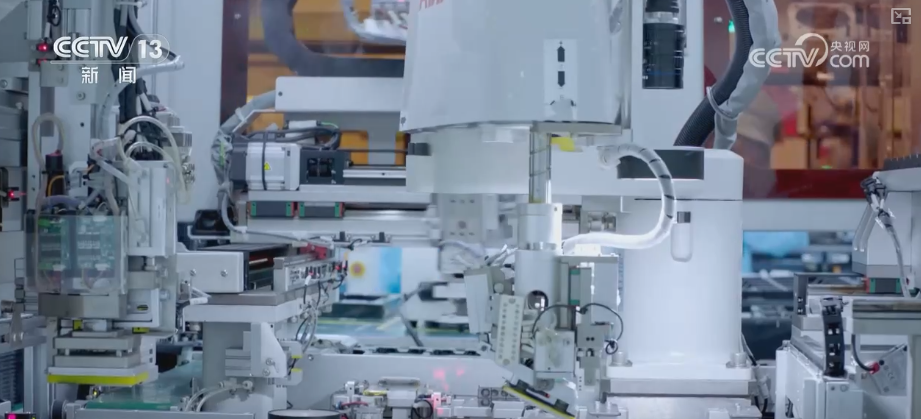
可由量产大模型驱动的灵巧手

Search documents
人形机器人应用场景遍地开花 催生消费新业态
Yang Shi Wang· 2025-11-04 23:57
Core Insights - The concept of "embodied intelligence" integrates artificial intelligence into physical entities like robots and electric vehicles, enabling them to perceive, learn, and interact with their environment like humans [1] - The first real-world application of embodied intelligence robots using reinforcement learning technology has commenced in industrial production lines [2] Group 1: Technological Advancements - The introduction of real-world reinforcement learning technology significantly reduces the training cycle for robots, allowing them to learn new skills in about ten minutes on-site, compared to weeks or months previously [3] - The new end-to-end large model acts as a "translator" between robots and industrial systems, eliminating communication barriers and reducing time costs [3] - A new dexterous hand, powered by mass-produced large models, features high-resolution tactile sensors capable of detecting forces as low as 0.05N, enabling it to perform both precision assembly and various intricate tasks [3] Group 2: Market Expansion - The application scenarios for embodied intelligence are expanding, with a focus on upgrading both software and hardware [4] - In Hefei, a new batch of home service robots is set to be commercially deployed, capable of performing tasks autonomously, such as pouring water and folding clothes [5] - The primary application areas for these robots currently include large public spaces like office buildings, airports, and supermarkets, with future plans to enter household settings as domestic assistants [6] Group 3: Industry Growth Projections - By 2025, humanoid robots are expected to proliferate across various sectors, including industry, culture, and family, leading to new consumption patterns that integrate technology with entertainment and the real economy [7] - The global robot market is projected to exceed $400 billion by 2029, with embodied intelligence robots expected to account for over 30% of this market share [8] Group 4: Government Initiatives - A recent action plan by five government departments aims to promote the integration of embodied intelligence robots into communities and households [9] - By the end of 2027, significant progress in data-driven urban economic and social development is anticipated, with over 50 fully digital transformation cities established [10]

全球首个具身智能新技术投用 机器人学新技能仅十几分钟
Yang Shi Xin Wen Ke Hu Duan· 2025-11-04 03:17
Core Insights - The article discusses the introduction of "embodied intelligence," which integrates artificial intelligence into physical entities like robots and electric vehicles, enabling them to perceive, learn, and interact with their environment like humans [1][2] Group 1: Technological Advancements - The world's first embodied intelligent robot utilizing real machine reinforcement learning technology has been officially applied in an industrial production line, significantly reducing the training cycle from weeks or months to just about ten minutes on-site [2] - The new end-to-end large model acts as a "translator" between robots and industrial systems, allowing for real-time translation of instructions and reducing time costs associated with manual coding [4] - The first mass-produced dexterous hand, powered by large models, features high-resolution tactile sensors capable of detecting forces as low as 0.05N, enabling it to perform both traditional precision assembly tasks and various intricate activities [6] Group 2: Market Applications and Trends - The application scenarios for embodied intelligence are expanding, with service robots for household tasks like cleaning and laundry set to be commercially deployed in cities like Hefei [9][11] - The demand for humanoid robots is increasing across various sectors, including industrial, cultural tourism, and household applications, leading to new consumption patterns that integrate technology with the economy [11] - Experts predict that by 2029, the global robotics market will exceed $400 billion, with embodied intelligent robots expected to account for over 30% of the market share [15] Group 3: Government Initiatives - The National Development and Reform Commission and four other departments have launched a plan to promote the application of embodied intelligent robots in communities and households, aiming for significant progress in digital transformation by 2027 [16]

撸猫、喂养、夹豆腐,不在话下!人形机器人应用场景遍地开花 催生消费新业态
Yang Shi Wang· 2025-11-04 03:00
央视网消息:"具身智能"从字面理解是"具身化的人工智能",是将人工智能融入机器人、新能源汽车等物理实体,为"大脑"赋予了"身体",使 得它们拥有像人一样感知、学习和与环境动态交互的能力。11月3日,全球首个具身智能机器人真机强化学习技术,首次在日常的工业生产线 中开始正式应用。 在上海的这家智能设备产线里,这批新来的机器人员工就搭载了全球首个真机强化学习技术。有了这项技术,机器人的训练周期得到了大幅缩 减。 以前,学习一项新技能需要到训练基地花费数周甚至数月的时间。现在,在作业现场只要十来分钟便可以轻松学会。不仅可以做到运作性能全 程不降级,还能保证稳定性实现100%任务完成率。 除了学习能力变得更强,机器人掌握的"语言"也更加多元。相较于以往机器人工作前需要人工输入各类代码才能识别工业系统指令的繁琐,现 在最新推出的端到端大模型相当于机器人和各系统之间的"翻译器",能对每个步骤进行实时翻译,打破机器人和各系统之间的沟通障碍,有效 降低时间成本。 有了软件的提升,硬件的更新也十分重要。近期,首个可由量产大模型驱动的灵巧手实现量产应用。与传统灵巧手有所不同,该款灵巧手每个 指尖都搭载了高分辨率触觉传感器,最小可 ...