
吉星高分04C星

Search documents
2025中国航天第二次发射失利,损失3颗卫星,原因已确认
3 6 Ke· 2025-11-20 11:37
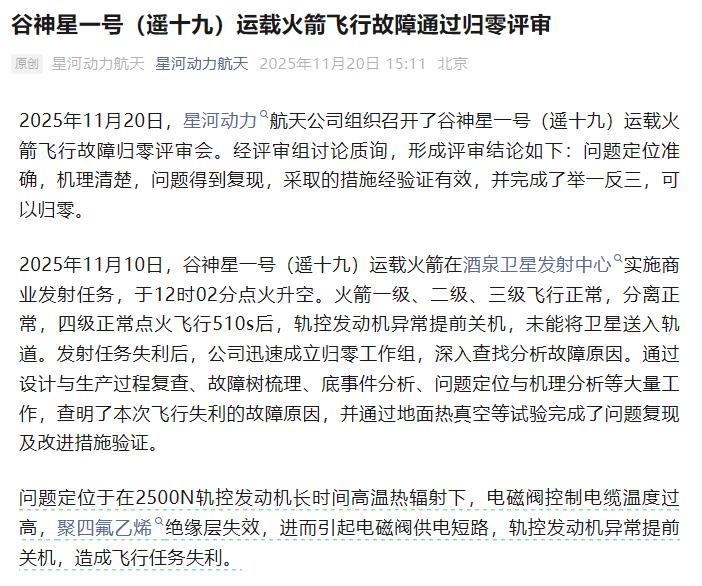
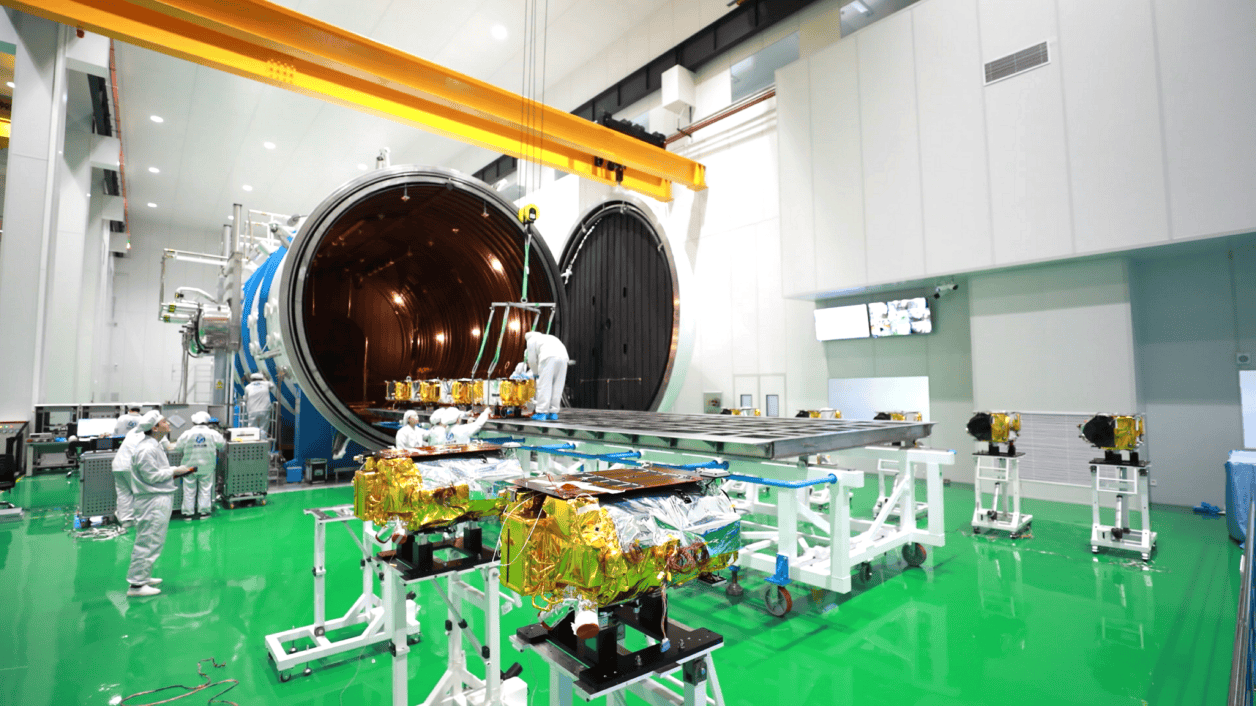
Core Viewpoint - The recent failure of the Ceres-1 rocket launch by Star River Dynamics highlights the challenges faced by private aerospace companies in China, particularly as the company approaches its IPO phase. Despite the setback, the overall growth trajectory of the private space sector remains strong, supported by government policies and a burgeoning market for satellite launches. Group 1: Launch Details - The Ceres-1 rocket was launched on November 10, 2023, from the Jiuquan Satellite Launch Center, with initial stages proceeding normally before an anomaly occurred during the fourth stage ignition [1][2] - The failure resulted in the inability to place three satellites into orbit, marking the second launch failure for the year in China's aerospace sector [2][5] - The Ceres-1 rocket is designed for low Earth orbit small satellite launches, featuring a configuration of three solid stages and one liquid stage, with a total launch capacity of 400 kg to low Earth orbit [5][8] Group 2: Investigation and Impact - An investigation revealed that the failure was caused by overheating of the electromagnetic valve control cable, leading to a short circuit and premature engine shutdown [3][10] - The financial impact of the failure is somewhat mitigated by insurance coverage, which can offset some of the economic losses incurred [9] - Star River Dynamics has previously achieved a success rate of 90.9% with 20 successful launches out of 22 attempts since its first successful launch in November 2020 [11] Group 3: Industry Context - The failure is viewed as a "growing pain" for China's private aerospace sector, which has rapidly developed since 2014 under supportive government policies [13] - The commercial space market in China is projected to exceed 300 billion yuan by 2025, with satellite launch demand accounting for 45% of this market [13] - Globally, launch failures are common in the aerospace industry, with a long-term success rate of around 90%, indicating that setbacks are part of the technological evolution and maturation of the industry [14]

长春锚定“千亿级”新赛道 前三季度光电信息产业投资超300亿
Sou Hu Cai Jing· 2025-11-19 07:45
Core Insights - The optoelectronic information industry is a strategic, foundational, and pioneering sector in China, identified as a "trillion-level" new track in Changchun, showcasing strong research capabilities and significant development potential [1][2] Group 1: Industry Overview - As of September this year, Changchun has 33 key projects in the optoelectronic information industry with a total investment of approximately 30.446 billion yuan, including 24 ongoing and 9 new projects, with 13 expected to be completed by the end of the year [1] - Changchun is recognized as the cradle of China's optoelectronic industry, having achieved numerous national firsts and being home to key research institutions like the Changchun Institute of Optics, Fine Mechanics and Physics [2] Group 2: Key Projects and Developments - In the first three quarters, Changchun focused on the construction of the Beihu Future Science City, supporting projects like Changguang Satellite's orders for low-orbit broadband communication satellites and the construction of a data center with a storage capacity of 1400P [2] - The city has established 8 national key laboratories and possesses leading core technologies in high-performance CMOS sensors and new laser technologies [2] Group 3: Notable Enterprises - Changchun has 22 national-level specialized and innovative "little giant" enterprises, accounting for 47.8% of the city's total, with four companies recognized as national manufacturing "single champion" demonstration enterprises [3] - Changguang Satellite has built the world's largest sub-meter commercial remote sensing satellite constellation, with 118 satellites in orbit, and is recognized as the first "unicorn" enterprise in Northeast China [3] Group 4: Future Prospects - By 2025, the optoelectronic information industry in Changchun is expected to achieve breakthroughs in exhibition hosting, project construction, market expansion, and leading enterprise cultivation, with the successful hosting of the 2025 Changchun International Optoelectronic Expo [5] - Changguang Satellite is set to develop the first low-cost, high-capacity shared remote sensing satellite, while other companies like Aolide Optoelectronics and Hida Electronics are also making significant progress [5]
谷神星一号发射失利,火箭公司致歉
第一财经· 2025-11-10 10:38
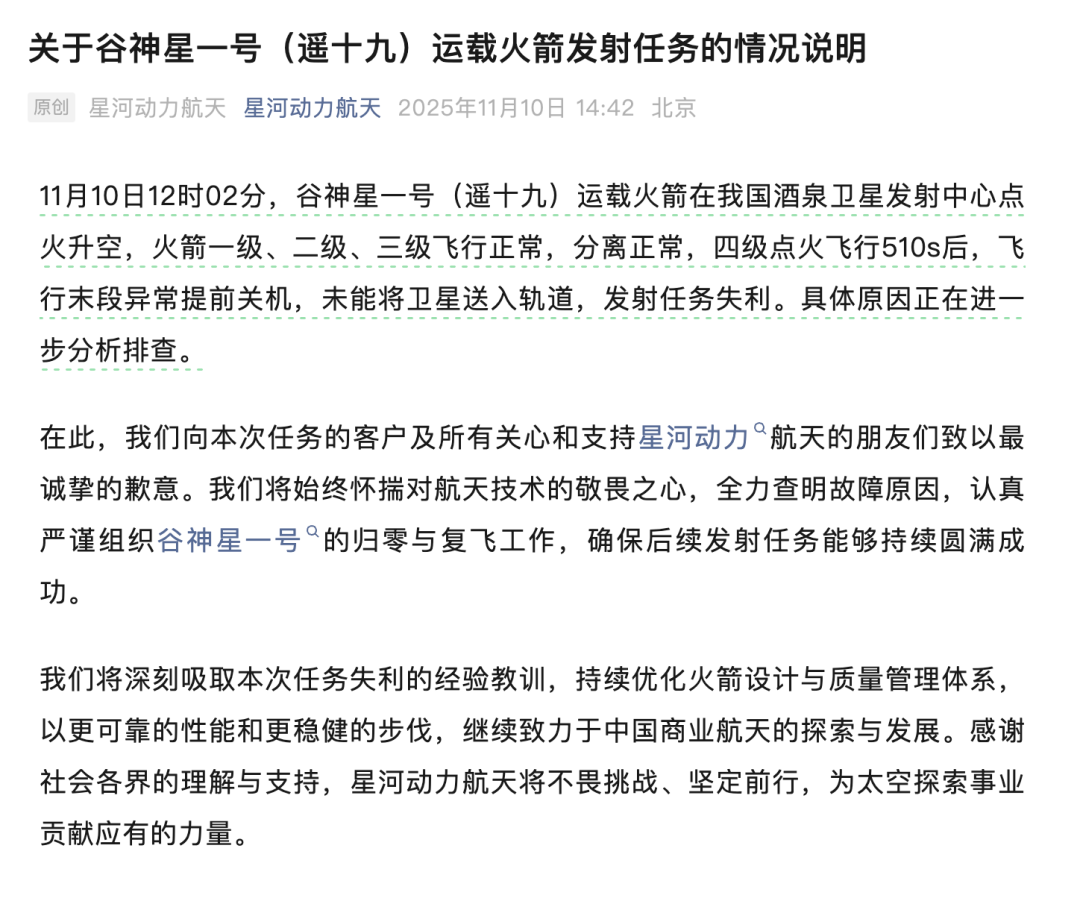
Core Viewpoint - The article reports on the failure of the launch of the Gushenxing-1 rocket, which was intended to place multiple satellites into orbit, highlighting the need for further investigation into the cause of the failure [3][4]. Group 1: Launch Details - On November 10, at 12:02 PM, the Gushenxing-1 commercial rocket was launched from the Jiuquan Satellite Launch Center, aiming to deploy the Jixing Gaofen 04C satellite along with others [3]. - The rocket's first, second, and third stages performed normally, but the fourth stage experienced an anomaly and shut down prematurely after 510 seconds of flight, resulting in the failure to place the satellites into their intended orbits [4]. Group 2: Company Response - Xinghe Power Aerospace stated that it will thoroughly investigate the cause of the failure and will organize the return to zero and re-launch of the Gushenxing-1 rocket to ensure the success of future missions [4].

谷神星一号火箭发射失利
Zhong Guo Ji Jin Bao· 2025-11-10 09:34
Core Viewpoint - The launch of the Gushenxing-1 rocket carrying multiple satellites was unsuccessful due to an anomaly during the flight, with the specific cause still under investigation [1][2]. Group 1: Launch Details - On November 10 at 12:02 PM, the Gushenxing-1 commercial rocket was launched from the Jiuquan Satellite Launch Center [1][2]. - The rocket's first, second, and third stages performed normally, and the separation was successful [2]. - The fourth stage experienced an anomaly and shut down prematurely after 510 seconds of flight, preventing the satellites from reaching their intended orbit [2]. Group 2: Company Response - Xinghe Power Aerospace stated that it will thoroughly investigate the cause of the failure and will organize the return to zero and re-launch of the Gushenxing-1 rocket with a serious and rigorous approach [2]. - The company emphasized its commitment to ensuring the success of future launch missions [2].
吉星高分04C星发射任务失利
Yang Shi Xin Wen· 2025-11-10 08:41
Core Points - The launch of the Jixing Gaofen 04C satellite, along with the Jixing Platform 02A04 satellite and the Zhongbei University No. 1 satellite, was unsuccessful due to an anomaly during the flight of the commercial rocket Ceres-1 [1] Group 1 - The launch took place at the Jiuquan Satellite Launch Center on November 10 at 12:02 PM [1] - The specific reasons for the failure are currently under further analysis and investigation [1]