
吉非替尼片

Search documents
316种国家集采药品接续采购开标,原研药中标的比例不到一成
Di Yi Cai Jing· 2026-02-12 22:50
Core Viewpoint - The recent round of national drug procurement has resulted in 4,163 products from 1,020 companies being shortlisted, covering 316 commonly used drugs across 26 therapeutic areas, with only 21 original drugs selected, representing less than 10% of the total [1][2]. Group 1: Procurement Details - The procurement aims to reduce drug prices and patient burdens while reallocating saved healthcare funds to innovative drugs [2]. - The procurement process involved 51,000 medical institutions, with a high selection rate of 93% and an average of 14 companies selected per product [2][3]. - The results of this procurement are expected to be implemented by the end of March 2026, with a procurement cycle lasting until the end of 2028 [2]. Group 2: Original Drug Participation - The selected original drugs include various formulations from companies like Bristol-Myers Squibb, Sanofi, and Bayer, with some previously shortlisted in earlier rounds [3]. - Notable original drugs that did not participate in this round include AstraZeneca's gefitinib and Sanofi's clopidogrel, which had previously been selected [4][3]. Group 3: Market Dynamics - The phenomenon known as "patent cliff" has led to significant declines in sales and profits for original drugs post-patent expiration, making it challenging for them to maintain market share without substantial price reductions [6]. - Some original drug companies have reduced or dissolved their sales teams for products affected by procurement policies, yet many still find market opportunities outside public hospital procurement [7]. - Cross-national pharmaceutical companies are increasingly focusing on innovative drug development while divesting mature product lines to local firms [8][9].


316种国家集采药品接续采购开标,原研药中标的比例不到一成
第一财经· 2026-02-12 14:56
Core Viewpoint - The recent round of national drug procurement in China has resulted in 1,020 companies winning bids for 4,163 products, covering 316 commonly used drugs across 26 therapeutic areas, with original research drugs making up less than 10% of the selected products [3][5]. Group 1: Procurement Results - The procurement process involved a high participation rate, with a selection rate of 93% and an average of 14 companies winning bids for each product [5]. - The selected original research drugs include various formulations such as oral and injectable forms, with notable companies like Merck, Sanofi, and Bayer involved [6]. - Some original research drugs that previously won bids in earlier rounds did not secure selection in this round, indicating a shift in market dynamics [6][7]. Group 2: Market Dynamics - The introduction of national drug procurement has led to significant price reductions for original research drugs, which now face competition from generics, resulting in a phenomenon known as the "patent cliff" [9]. - Despite the challenges, many original research drugs maintain a presence in the market, particularly in outpatient settings, leveraging brand strength [10]. - Some multinational pharmaceutical companies are divesting mature product lines to focus on innovative drug development, reflecting a strategic shift in response to the evolving market landscape [11][12].


深度|316种国家集采药品接续采购开标,原研药中标的比例不到一成
Di Yi Cai Jing· 2026-02-12 13:49
Core Viewpoint - The recent round of national drug procurement has resulted in 4,163 products from 1,020 companies being shortlisted, with only 21 original drugs selected, indicating a significant shift in the pharmaceutical market dynamics in China [1][2]. Group 1: Drug Procurement Overview - The new round of procurement involves 316 commonly used drugs across 26 therapeutic areas, including anti-infection, anti-tumor, and cardiovascular treatments [1]. - The procurement process has a high selection rate of 93%, with an average of 14 companies winning bids for each product [2]. - The results of this procurement are expected to be implemented by the end of March 2026, with a procurement cycle lasting until the end of 2028 [2]. Group 2: Impact on Original Drugs - Original drugs are facing challenges in maintaining high profits and market share post-patent expiration due to increased competition from generic drugs [6]. - Some original drugs, despite not being selected in the procurement, continue to find market opportunities outside public hospitals due to their brand strength [1][7]. - The absence of original drugs in the procurement does not equate to their market exit; they may still be prescribed in specific hospital settings [7]. Group 3: Market Dynamics and Strategies - The phenomenon known as "patent cliff" is causing significant declines in sales and profits for original drugs once their patents expire [6]. - Many original drug companies are reducing or dissolving their sales teams for products affected by the procurement policies [7]. - Some multinational pharmaceutical companies are divesting mature product lines to focus on innovative drug development and market entry [8][9][10].
30亿!又一全球研发总部落地上海 齐鲁制药打造全球研发新引擎
Sou Hu Cai Jing· 2025-09-22 02:58
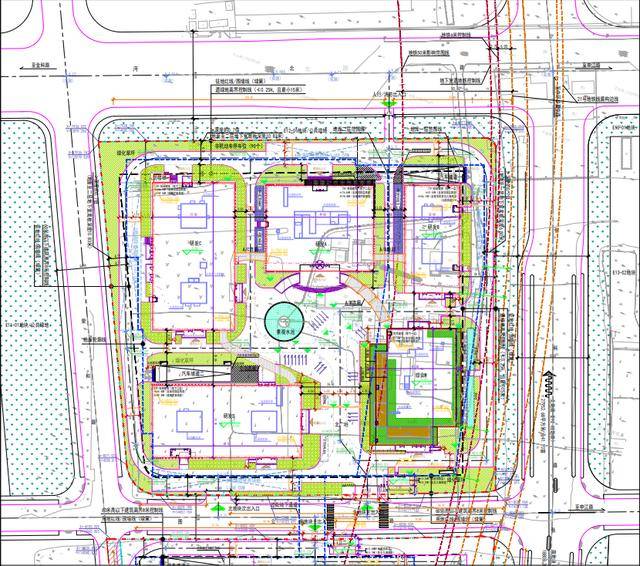
Core Insights - Qilu Pharmaceutical Group is establishing a global R&D headquarters in Zhangjiang Science City, with a total investment of approximately 3 billion yuan, focusing on innovative drug development in oncology, autoimmune diseases, metabolism, and neurological disorders [1] - The company has a rich product line with over 300 products covering multiple therapeutic areas, and it has established a strong sales network both domestically and internationally [2][4] - Qilu Pharmaceutical has been recognized as a leading player in the domestic pharmaceutical industry, ranking 3rd in the Ministry of Industry and Information Technology's list of China's top 100 pharmaceutical companies in 2023 [3] Investment and R&D - The company has consistently invested in R&D, with an expected expenditure of over 4.38 billion yuan in 2024, accounting for 12% of its sales revenue, and a cumulative investment of over 20 billion yuan during the 14th Five-Year Plan period [3] - Qilu Pharmaceutical has established a comprehensive innovation management system, focusing on both innovative and generic drugs, with annual R&D spending for generics stable at 1-1.2 billion yuan [3] Global Market Presence - Qilu Pharmaceutical's products have been certified by various international regulatory bodies, enabling its entry into global markets, with 28 of its 100 procurement-winning products sold in 33 countries and regions [2][4] - The company has established four innovation centers in the U.S. and China to enhance its global R&D footprint, with products sold in over 100 countries and regions [5][6] Strategic Location and Collaboration - The choice of Zhangjiang Science City for the new R&D headquarters is strategic, leveraging Shanghai's robust biopharmaceutical ecosystem and innovation environment [10] - The collaboration aims to strengthen resource integration and collaborative innovation, contributing to the development of the biopharmaceutical industry in Shanghai [10][11]
齐鲁制药创新药物全球研发总部落地上海,总投资约30亿元
Xin Lang Cai Jing· 2025-09-21 07:49
Core Viewpoint - Qilu Pharmaceutical Group is establishing a global R&D headquarters in Zhangjiang Science City, Shanghai, with a total investment of approximately 3 billion yuan, focusing on innovative drug development in areas such as oncology and autoimmune diseases [2][4]. Group 1: Company Overview - Qilu Pharmaceutical is a large modern pharmaceutical enterprise in China, engaged in the research, production, and sales of drugs for various diseases, including oncology and cardiovascular conditions [2][3]. - The company has over 300 products on the market, with a sales network that extends to North America, Europe, Japan, and Australia, establishing partnerships with global firms like Pfizer and Novartis [3][5]. - Qilu has been recognized as the 3rd largest pharmaceutical company in China by the Ministry of Industry and Information Technology in 2023, reflecting its leading position in the domestic pharmaceutical industry [4]. Group 2: R&D Investment and Achievements - The company has committed to a stable annual R&D investment of 4.38 billion yuan in 2024, which constitutes 12% of its sales revenue, with a projected total R&D investment exceeding 20 billion yuan during the 14th Five-Year Plan period [4][5]. - Qilu has developed numerous significant new drugs, including Erlotinib and Bevacizumab, and has received over 100 invention patents, contributing to its strong innovation capabilities [4][5]. - The company has established a comprehensive technology innovation management system, focusing on both innovative and generic drugs, creating a "dual-drive" development model [4]. Group 3: Global Market Expansion - Qilu's products are sold in over 100 countries and regions, with 31 formulations exported to the U.S. and 17 to Europe, demonstrating its competitive position in the global pharmaceutical market [6][8]. - The company has achieved significant market shares in various regions, with 38 products holding the top market position in their respective countries [6][8]. - Qilu has set up four innovation centers in the U.S. to enhance its global R&D layout, forming a complete innovation development system that covers the entire process from early discovery to commercialization [5][8]. Group 4: Strategic Development in Zhangjiang - The new global R&D headquarters in Zhangjiang Science City will cover a total area of approximately 46,000 square meters, with a focus on creating a collaborative innovation environment [7][8]. - This strategic move follows the establishment of the Shanghai R&D center in 2018 and aims to leverage Shanghai's strong biopharmaceutical ecosystem to drive high-quality industry development [8][9]. - The collaboration is expected to enhance resource integration and collaborative innovation, contributing to the development of a new highland for the biopharmaceutical industry in Shanghai [8][9].
康华生物终止一疫苗项目;基蛋生物案件进展|21健讯Daily
2 1 Shi Ji Jing Ji Bao Dao· 2025-07-08 23:48
Policy Developments - The National Medical Products Administration (NMPA) is seeking public opinions on the revised procedures for conditional approval of drug listings to improve the review and approval system [2] Drug and Device Approvals - Xuno Pharmaceutical's oral cancer drug, Abexinostat, is proposed for priority review by the NMPA, aimed at adult patients with relapsed or refractory follicular lymphoma who have received at least two prior systemic therapies [5] - LuKang Pharmaceutical has received the drug registration certificate for Gefitinib tablets, a first-generation targeted drug for non-small cell lung cancer with EGFR gene mutations [6] Capital Market Activities - Shenzhen Keximingde Medical Technology Co., Ltd. completed a multi-hundred million RMB A+ round financing, with funds allocated for brand building and R&D of soft endoscope products [8] - Buchang Pharmaceutical announced the abandonment of the preferential right to acquire shares in its subsidiary, Shaanxi Modern Innovation, resulting in an 86.50% ownership stake post-transfer [9] - Taiji Group plans to optimize its equity structure by acquiring stakes in its subsidiaries for a nominal price [10] Industry Developments - Chugai Pharmaceutical and Gero PTE have signed a $220 million collaboration agreement to integrate Gero's AI-driven platform into Chugai's R&D strategy for developing therapies for age-related diseases [12] - Kanghua Biotech has terminated its collaboration with Xiran Bochuang on the development of mRNA vaccines for tuberculosis, indicating a strategic shift towards in-house R&D capabilities [13] Shareholder Activities - Guizhou Jin Domain Medical Testing Group announced that major shareholder Guochuang Kaiyuan intends to reduce its stake by up to 1% through market transactions [16] - Haichuang Pharmaceutical reported that shareholder Yingchuang Power has cumulatively reduced its stake by 0.28% [17] - Tongrentang announced the resignation of its executive vice president, Zhang Chunyou, who will continue to serve in a managerial role at a subsidiary [18]

鲁抗医药:吉非替尼片获药品注册证书
news flash· 2025-07-08 09:15
Core Viewpoint - LuKang Pharmaceutical (600789) has received the drug registration certificate for Gefitinib tablets and the approval notice for the raw material drug from the National Medical Products Administration, indicating a significant advancement in its oncology product portfolio [1] Company Summary - Gefitinib is an epidermal growth factor receptor tyrosine kinase inhibitor (EGFR-TKI) used for the treatment of locally advanced or metastatic non-small cell lung cancer (NSCLC) patients with sensitive EGFR gene mutations [1] - The company has invested approximately 11.1491 million yuan in the research and development of Gefitinib tablets and about 9.9 million yuan in the raw material drug [1] Industry Summary - There are currently 15 existing drug registration numbers for Gefitinib tablets in China, with projected sales of 263 million yuan in 2024 [1]
