
仿制药研发

Search documents
润都股份:公司已构建完善的营销体系,配备了专业化营销团队
Zheng Quan Ri Bao Wang· 2026-02-27 13:12
Core Viewpoint - The company aims to focus on the health sector and become a well-known international enterprise with distinctive features, adhering to the principles of "standardization, professionalism, and development" [1] Group 1: Company Vision and Strategy - The company is committed to innovation and development, actively promoting the application of green and intelligent new technologies [1] - The company focuses on accelerating the research and development of generic and innovative drugs, continuously improving the "intermediate - active pharmaceutical ingredient - formulation" industry chain layout [1] Group 2: Marketing and Sales - The company has established a comprehensive marketing system with a specialized marketing team [1] - The raw material and intermediate sales team has built stable cooperative relationships with high-quality domestic and international clients, including major international original research and generic drug companies [1] - The formulation sales team has developed a refined customer management system and systematic product strategies, with a nationwide marketing service network extending to grassroots markets [1] - The company is actively expanding its new retail business to support sustainable growth and development [1]
全球药物研发进展报告-仿制药篇
药渡· 2026-02-02 23:20
Investment Rating - The report indicates a strong investment interest in the generic drug sector, particularly highlighting the potential for growth in the market for myasthenia gravis treatments and the competitive landscape for various generic drugs [9][10][11]. Core Insights - The approval of the first generic version of Bromide Pyridostigmine oral solution by Shanghai Pharmaceuticals strengthens the company's market position in the myasthenia gravis treatment sector, which is currently dominated by a few players [9][31]. - The myasthenia gravis market in China is projected to grow significantly, with sales expected to exceed 1.3 billion yuan in 2024, driven by increased awareness and diagnosis rates [29]. - The competitive landscape for phosphoinositide 3-kinase inhibitors, particularly the domestic production of phosphoinositide 3-kinase inhibitors, is intensifying with new approvals and ongoing clinical trials [11][12]. - The generic drug approval process is seeing a surge, with 8 new registrations in the latest reporting period, indicating a robust pipeline for generic drug development [19][32]. Summary by Sections Domestic Generic Drug Approval Dynamics - In the reporting period from January 3 to January 9, 2026, 8 new generic drug registrations were approved, covering 6 different products, including oral solutions and injections [19][32]. - The approval of Bromide Pyridostigmine oral solution marks a significant milestone, as it is the first of its kind in the market, enhancing treatment options for myasthenia gravis patients [9][31]. Domestic Generic Drug Application Dynamics - The report notes that there is a growing number of applications for generic drug registrations, with 15 companies having submitted applications for the same class of drugs, indicating a competitive environment [13][15]. Focus on Domestic Generic Drug R&D - The report highlights the increasing interest in the generic drug sector, particularly in the treatment of irritable bowel syndrome with the upcoming expiration of patents for Linaclotide, which is expected to lead to a surge in generic applications [14][15].
百诚医药20260125
2026-01-26 02:49
Summary of Baicheng Pharmaceutical Conference Call Company Overview - **Company**: Baicheng Pharmaceutical - **Date**: January 25, 2026 Key Points Industry and Company Developments - Baicheng Pharmaceutical is committed to innovation and has received multiple clinical approvals for first and second-class new drugs, with expectations for significant performance contributions in the next 2-3 years [2][3] - The company has established a strategic partnership with Italian company Diling to accelerate European GMP certification and overseas CMO/CDMO order acquisition, enjoying priority rights for high-value products in Greater China [2][4] - The generic drug market is expected to see a price recovery in 2026 after a low in Q1 2025, with increased approval standards leading to a concentration in sales [2][6] Financial Performance and Projections - Baicheng Pharmaceutical's sales business is recovering from a low point in Q1 2025, with both demand and pricing showing positive trends [3] - The company has received over 190 approvals for third and fourth-class generic drugs, maintaining stable core operations [3] - Saimo, a subsidiary, won bids for 12 products in the 11th batch of centralized procurement, with substantial order volumes expected to enhance capacity utilization and profitability [2][7] - Sanmu Company is projected to see significant revenue and profit growth in 2026, with overseas market expansion further increasing capacity utilization [2][8] Innovation and Clinical Progress - Baicheng Pharmaceutical's innovation drug segment focuses on CNS, autoimmune diseases, and oncology, with several projects entering clinical stages [2][10] - The 0,118 project for narcolepsy is expected to complete its Phase II trial and report in the first half of the year [2][11] - The company plans to continue investing in its pipeline, with specific projects advancing based on customer interest [11] Strategic Collaborations - The partnership with Diling includes registering high-quality products for European GMP certification and prioritizing clinical submissions in Europe for products requiring extensive clinical trials [4][5] - The financial impact of the collaboration is expected to be minimal in 2026, with commercial orders anticipated post-2027 approval of innovative oral formulations [9] Future Outlook - The chairman of Baicheng Pharmaceutical emphasizes a strong commitment to developing generic drug R&D, CRO business, and expanding Saimo's operations while increasing investment in innovative drug development [12] - The company aims to leverage collaborations with domestic and international clients to launch new products and prioritize strategic international business development, including raw material and formulation exports [12]
国家鼓励仿制药品目录增至110种,辅助生育药物缺口受关注
Di Yi Cai Jing· 2026-01-04 13:42
Core Viewpoint - The fourth batch of encouraged generic drug catalog has been released, including 21 drug varieties and 47 specifications, addressing the shortage of clinical supplies and the need for domestic drug development [1][2]. Group 1: Drug Catalog Expansion - The fourth batch of the encouraged generic drug catalog includes 21 drug varieties, bringing the total to 110 since the first three batches were released in 2019, 2021, and 2023 [1]. - The new catalog focuses on major diseases such as cancer and rare diseases, as well as chronic diseases, mental health issues, and reproductive health, reflecting the changing disease burden and clinical needs due to demographic trends [1][2]. Group 2: Selection Criteria and Clinical Needs - The selection of drugs for the fourth batch was guided by patient treatment needs, considering clinical guidelines and domestic research status, with input from various experts [2]. - New drugs with novel targets and mechanisms, such as those for chronic kidney disease-related itching, have been included, along with radioactive drugs not yet available in the domestic market [2]. Group 3: Specific Drug Examples - Suvorexant, a new drug for insomnia, has been included in the catalog to address the high prevalence of insomnia symptoms among the Chinese population, with 59% of surveyed residents reporting such issues [3]. - The catalog also includes drugs for rare diseases, such as Deflazacort for Duchenne muscular dystrophy, and aims to enhance reproductive health with low-adverse-effect products [3][4]. Group 4: Challenges in Generic Drug Development - Despite being a major player in generic drugs, China faces challenges in becoming a stronghold in this sector due to technical barriers and insufficient incentives for research and development [5][6]. - As of September last year, only 40 out of 89 drugs listed in the previous three catalogs had been approved for market entry, indicating a significant gap in the availability of generic drugs [5]. Group 5: Future Support and Policy Directions - The government aims to enhance support for the encouraged generic drug catalog through improved clinical trials, key technology research, and expedited review processes [6]. - Policies are being developed to provide market exclusivity for certain categories of drugs, including those for rare diseases and children's medications, to stimulate research and development [6].

誉衡药业(002437) - 002437誉衡药业投资者关系管理信息20251223
2025-12-23 11:59
Group 1: Company Overview - The company focuses on high-barrier generic drugs, with a leading position in the research and development pipeline, particularly in products like pre-filled methotrexate injection [2] - The product lineup includes potassium chloride sustained-release tablets and various formulations of potassium chloride, achieving a multi-formulation product combination [2] Group 2: Research and Development - The company’s project initiation standards are based on core therapeutic areas and existing production capacity, focusing on products with fewer applications and technical barriers to ensure competitive advantages [3] - R&D costs for generic drugs are generally lower than those for original drugs, influenced by the complexity of development [3] Group 3: Market and Sales - The company has one product, Luguapeptide injection, with annual revenue exceeding 5,000,000 that is not included in the medical insurance list, maintaining stable market share [3] - Sales are primarily through hospitals, with potassium chloride sustained-release tablets also sold in retail pharmacies and e-commerce platforms, although the latter accounts for a smaller share [3] Group 4: Product Expansion and Future Plans - The company is exploring further expansion in traditional Chinese medicine (TCM) products, with a dedicated business development team researching compatible products [4] - The product Pemabertan tablets are expected to be launched in the following year [4] Group 5: Financial and Shareholder Information - The company has not distributed dividends due to negative retained earnings and has implemented a share buyback plan, utilizing 8,000,000 yuan to repurchase 3,230.72 million shares, representing 1.42% of total share capital [5] - The company is currently without a controlling shareholder due to the bankruptcy of the previous major shareholder, with shares auctioned off in November 2025 [5]

昂利康:公司现有的研发团队是以仿制药研发为基础搭建的
Zheng Quan Ri Bao Wang· 2025-10-30 10:13
Core Viewpoint - The company, Anglikang (002940), announced on October 30 that its current R&D team is primarily focused on generic drug development, while it is in the process of establishing a clinical medicine team to enhance its capabilities in innovative drug development in the short term [1] Group 1 - The company is currently building its R&D team based on generic drug development [1] - A clinical medicine team is being initiated to support innovative drug development [1] - The company plans to continuously optimize its R&D team structure as investment in innovative drugs increases in the future [1]
刚刚,福建夫妇IPO敲钟了
3 6 Ke· 2025-10-20 03:56
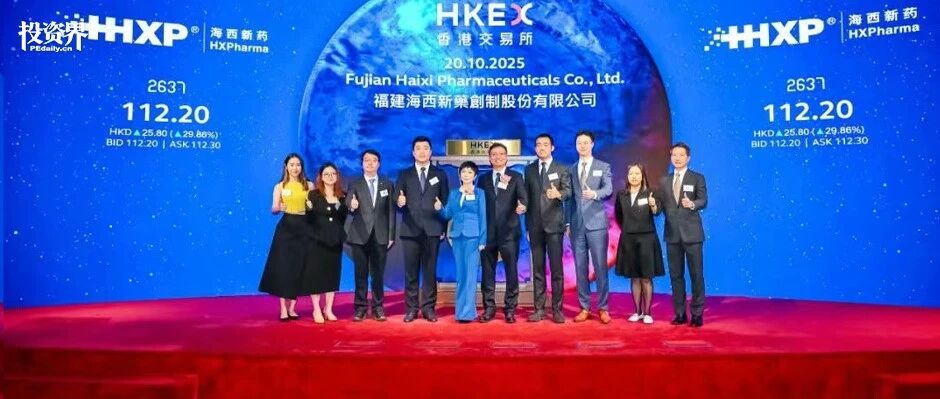
Core Viewpoint - Haixi New Drug officially listed on the Hong Kong Stock Exchange on October 20, 2023, with an issue price of HKD 86.4 per share, opening 18.06% higher on its first day, and achieving a market capitalization of HKD 8.5 billion [1][4]. Company Overview - Founded 13 years ago by a couple with strong academic backgrounds, Kang Xinshan and Feng Yan, who returned to Fujian to establish Haixi New Drug with support from local state-owned enterprises [1][2]. - The company has a dual-track business model focusing on both generic and innovative drug development, having successfully commercialized multiple products [5][4]. Financial Performance - Haixi New Drug reported revenues of RMB 212.5 million, RMB 316.6 million, RMB 466.7 million, and RMB 249.2 million for the years 2022, 2023, 2024, and the first five months of 2025, respectively [7][5]. - The company achieved profits of RMB 68.98 million, RMB 117.45 million, RMB 136.08 million, and RMB 90.21 million for the same periods [7][5]. Product Pipeline - The company has established a pipeline of four innovative drugs under development, targeting cancer, ophthalmology, and respiratory diseases, with one drug expected to be a breakthrough therapy for osteosarcoma [4][5]. Industry Context - The biopharmaceutical industry in Fujian has been strategically supported by government initiatives since 2009, aiming to cultivate a robust pharmaceutical sector [12][14]. - Fujian's biopharmaceutical industry is rapidly growing, with Xiamen and Fuzhou emerging as key hubs, and the province aims to achieve RMB 120 billion in pharmaceutical industrial revenue by 2025 [13][14].

刚刚,一对化学夫妇IPO敲钟
投资界· 2025-10-20 03:34
Core Viewpoint - Fujian Haixi New Drug Creation Co., Ltd. (Haixi New Drug) officially listed on the Hong Kong Stock Exchange on October 20, 2023, with an initial price of 86.4 HKD per share, opening 18.06% higher, and currently has a market capitalization of 8.5 billion HKD [5][10]. Company Overview - Haixi New Drug was founded 13 years ago by a couple with strong academic backgrounds, Kang Xinshan and Feng Yan, who returned to Fujian with extensive experience in the pharmaceutical industry [7][8]. - The company has received significant support from local government and venture capital, which has been crucial for its growth and development [8][14]. Business Model - The company operates on a dual-track model focusing on both generic and innovative drug development, which has allowed it to achieve profitability [12]. - As of October 2025, Haixi New Drug has 15 generic drugs approved by the National Medical Products Administration, with products targeting various disease areas including digestive, cardiovascular, endocrine, and neurological systems [8][12]. Financial Performance - Revenue figures for Haixi New Drug are as follows: 212.5 million RMB in 2022, projected to reach 3.16 billion RMB in 2023, and 4.67 billion RMB in 2024, with profits of 68.98 million RMB in 2022 and 117.45 million RMB in 2023 [12][13]. - The majority of the company's revenue comes from generic drugs, with key products contributing over 90% of total income [13]. Industry Context - The rise of Haixi New Drug reflects the broader growth of the biopharmaceutical industry in Fujian, which has been strategically supported by government initiatives since 2009 [17][18]. - Fujian aims to develop five biopharmaceutical industry clusters by 2025, with a target revenue of 120 billion RMB for the pharmaceutical industry [18].
复旦张江奥贝胆酸仿制药折戟,1.25亿研发打水漂,背后藏匿哪些风险?
Xin Lang Zheng Quan· 2025-10-17 06:37
Core Viewpoint - Fudan Zhangjiang's application for the listing of Obeticholic Acid Tablets was not approved by the National Medical Products Administration, resulting in a loss of approximately 125 million yuan in R&D investment and highlighting systemic risks in product structure, R&D strategy, and external policy environment [1] Group 1: R&D Risks - The application for Obeticholic Acid Tablets, a Class 3 chemical generic drug, faced obstacles due to the original drug's withdrawal from markets in Europe and the U.S. due to safety concerns, which disrupted the registration path for domestic generic drugs [1] - The withdrawal of the original drug by Intercept Pharmaceuticals has led to multiple rejections of generic drug applications from various companies, including Fudan Zhangjiang [1] Group 2: Revenue Structure Challenges - Fudan Zhangjiang has four commercialized products, with Revlimid and Ella contributing approximately 70% of revenue, while the anti-tumor drug Liposomal Doxorubicin accounts for about 29.04% [3] - The core product Liposomal Doxorubicin is expected to see a price reduction of at least 35% starting May 2025, potentially leading to a more than 50% year-on-year decline in sales revenue [3] - The sales revenue of Revlimid decreased by 7% year-on-year in the first half of this year, while Ella saw a slight increase of 2%, indicating weak growth overall [3] Group 3: High R&D Investment and Uncertain Returns - Despite emphasizing that the failure of the Obeticholic Acid project will not alter the overall R&D strategy, the incident underscores the high investment, long cycle, and high risk associated with pharmaceutical R&D [4] - The company is increasing its focus on the ADC (Antibody-Drug Conjugate) platform to build a differentiated advantage, but competition in this field is intensifying [4] Group 4: Regulatory Environment - The National Medical Products Administration has tightened regulations on the entire lifecycle of drugs, making it increasingly difficult for generic drugs to find reference products if the original drug is withdrawn due to safety or efficacy issues [5] - Domestic pharmaceutical companies are advised to consider global regulatory dynamics and real-world data when selecting generic drug projects, rather than solely focusing on patent expiration and unlisted drugs in the domestic market [5] Conclusion - Fudan Zhangjiang faces multiple challenges, including aging product structures, missteps in generic drug projects, and impacts from centralized procurement policies, which complicate the path to maintaining stable existing business while accelerating the development of competitive innovative drug pipelines [6][7]

复旦张江奥贝胆酸片注册申请遭拒,营收已连续三年半下滑
Bei Ke Cai Jing· 2025-10-15 10:05
Core Viewpoint - Fudan Zhangjiang Biopharmaceutical Co., Ltd. announced that its subsidiary, Taizhou Fudan Zhangjiang Pharmaceutical Co., Ltd., received a notification from the National Medical Products Administration stating that its application for the drug Ocaliva (Obeticholic Acid Tablets) for the treatment of Primary Biliary Cholangitis (PBC) was not approved due to non-compliance with drug registration requirements [1][2]. Group 1: Drug Development and Approval - The application for Ocaliva is a Class 3 generic drug, with the first target indication being PBC. Fudan Zhangjiang has made breakthroughs in patent restrictions and obtained relevant patent authorization in mainland China [2]. - The drug was included in the second batch of encouraged generic drugs in China in 2021, but no generic versions have been approved domestically yet [4]. - Other companies, including Chengdu Kanghong Pharmaceutical Group and Jiangsu Hengrui Medicine, are also involved in the development of Ocaliva [4]. Group 2: Financial Impact and R&D Investment - Fudan Zhangjiang has invested approximately 125 million yuan in the development of Ocaliva, which will not significantly impact the company's current financial status [3]. - The company has experienced a continuous decline in revenue and net profit over the past three and a half years, with revenues of 1.031 billion yuan, 851 million yuan, and 709 million yuan from 2022 to 2024, representing year-on-year declines of 9.57%, 17.5%, and 16.61% respectively [7]. - R&D expenses have been increasing, reaching 314 million yuan in 2024, accounting for 44% of revenue [8]. Group 3: Market Context and Competitors - The original drug for Ocaliva was conditionally approved in foreign markets but has faced significant safety and efficacy controversies, leading to its withdrawal from the U.S. market by Intercept Pharmaceuticals [3]. - Other companies, including Zhengda Tianqing Pharmaceutical Group, have also faced setbacks with their applications for Ocaliva [5][6].