哈尔滨

Search documents
史上最长春节假期里,藏着哪些2026文旅新趋势?
3 6 Ke· 2026-02-16 01:15
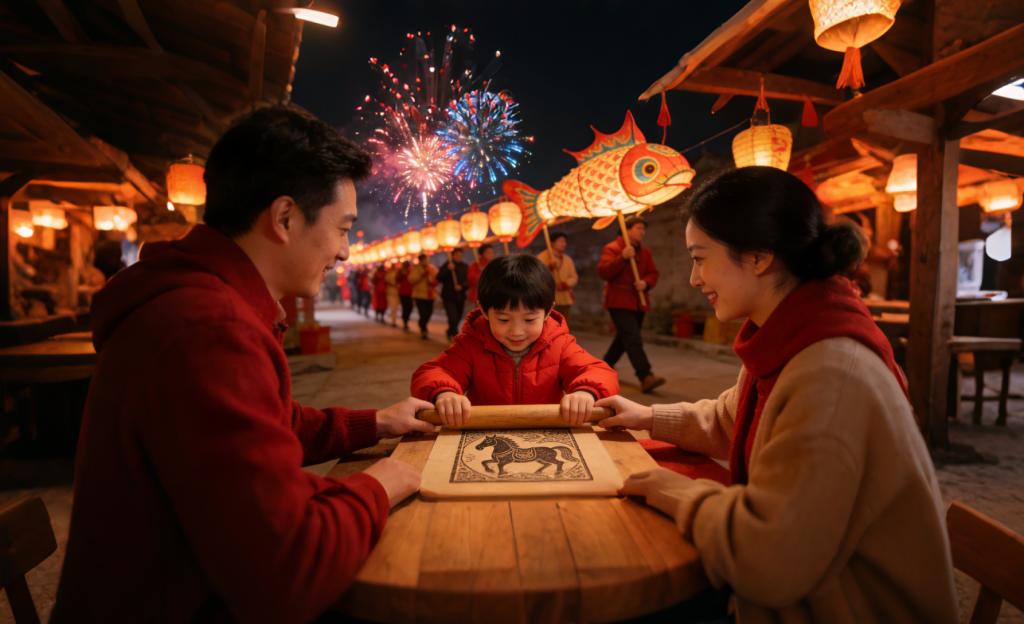
Core Insights - The 2026 Spring Festival is expected to set records in travel and tourism, with a significant increase in ticket bookings and overall travel volume, indicating a robust recovery in the sector [2][3][4] Group 1: Travel Trends - The travel market is experiencing a "north-south dual flow," with tourists heading to northern regions for winter activities and southern areas for warmer climates, creating a distinct geographical pattern [5][6] - Harbin is highlighted as a top destination for winter tourism, with a 21% increase in inquiries about northern cities and attractions [5] - Southern cities like Shantou and Jieyang are emerging as popular destinations, with Shantou leading in booking growth at 186%, showcasing the appeal of local culture and cuisine [7][8] Group 2: Experience Evolution - There is a shift from "check-in tourism" to "immersive experiences," with travelers seeking deeper cultural engagement rather than superficial visits [9][10] - The rise of "intangible cultural heritage" experiences is noted, with cities like Huangshan and Jingdezhen seeing significant increases in hotel bookings, indicating a demand for hands-on cultural activities [9][10] - Family travel is becoming increasingly popular, with over half of domestic bookings during the Spring Festival being for family trips, reflecting a trend towards more diverse and engaging experiences for children [11][12] Group 3: Market Diversification - The market is witnessing a breaking down of niche demands, with foreign tourists and niche interests like Hanfu photography gaining prominence [13][14] - There is a notable increase in foreign tourist bookings, particularly from Russia and South Korea, driven by visa policies and cultural interest [14][15] - The trend of outbound travel is also growing, with significant increases in long-haul travel bookings, indicating a broader acceptance of international travel among Chinese tourists [16][17] Group 4: Future Outlook - The tourism landscape is shifting towards personalized experiences, moving away from standardized offerings to cater to individual preferences [17][18] - The expectation for frequent travel is rising, with a significant percentage of respondents planning multiple trips within the year, indicating a transformation in travel habits [18] - Destinations that can provide unique and personalized experiences are likely to thrive in this evolving market [18]

百威集团CEO邓明潇:为上海夜间经济发展建言献策
Zheng Quan Ri Bao Wang· 2025-10-16 07:47
Core Insights - Budweiser Group's CEO Michel Doukeris participated in the 37th Shanghai International Business Leaders Advisory Council (IBLAC), emphasizing the company's commitment to contributing to Shanghai's international urban development and the night economy [1][2] Group 1: Company Strategy - Budweiser Group has introduced the "Tomorrowland" electronic music festival to Shanghai, marking its first indoor version in Asia, scheduled for November 2025 [2] - The company has established nearly 30 breweries across China since entering the market in 1984, with over 50 brands including Budweiser, Harbin, and Corona, laying a solid market foundation [2] - Budweiser Group aims to deepen its premium strategy and leverage the growth of the night economy to seize broader opportunities in the Chinese market [2] Group 2: Night Economy Development - The active development of the night economy is a key indicator of a city's modernization and vitality, with Shanghai leading in this area [1] - Doukeris highlighted the alignment of goals between Shanghai and Budweiser Group in promoting the night economy, proposing a systematic plan that combines global perspectives with local practices [1] - Budweiser Group plans to enhance its contributions to Shanghai's night economy by introducing iconic IPs and sharing international experiences [1]

百威亚太(01876.HK)非即饮破局,高端布局成效可期
Xin Lang Cai Jing· 2025-08-05 09:07
Core Viewpoint - Budweiser APAC is shifting its strategic focus towards non-drink channels, demonstrating operational resilience and long-term growth potential despite market challenges in the first half of 2025 [1] Financial Performance - In the first half of 2025, Budweiser APAC reported revenue of $3.136 billion, a decrease of 5.6% year-on-year, but achieved a 0.5% year-on-year increase in revenue per hectoliter due to diversified brand matrix and refined revenue management in the eastern region [1] - As of the end of the first half of 2025, the company had a net cash reserve of $2.4 billion, indicating a robust asset-liability structure [1] Strategic Focus - The company aims to enhance its market share in non-drink channels, leveraging its distribution network to expand the presence of high-end and super high-end products [2] - Budweiser APAC's CEO emphasized the importance of focusing on controllable factors, including continued investment in flagship brands and accelerating the expansion of non-drink channels [1][3] Market Trends - The non-drink channel is steadily increasing its share of overall sales and revenue, contributing to an improvement in EBITDA profit margins [1] - The non-drink channel currently accounts for approximately 60% of the total industry scale in the Chinese market, with significant growth potential as consumer disposable income rises [1] Regional Performance - Budweiser APAC's operations in India are experiencing strong growth, with double-digit increases in sales and revenue for high-end and super high-end product lines [3] - The company's performance in South Korea is outperforming industry averages in both drink and non-drink channels, benefiting from effective revenue management measures [3] Collaboration and Innovation - The company is actively developing new primary and secondary distributors to expand its sales network and is collaborating with distributors to invest in expanding the non-drink sales team [2] - Budweiser APAC is focusing on product innovation and packaging design to enhance consumer drinking experiences [3]