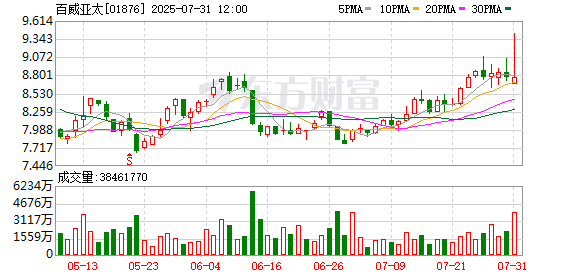
非即饮渠道拓展

Search documents
百威亚太(01876.HK)非即饮破局,高端布局成效可期
Xin Lang Cai Jing· 2025-08-05 09:07
Core Viewpoint - Budweiser APAC is shifting its strategic focus towards non-drink channels, demonstrating operational resilience and long-term growth potential despite market challenges in the first half of 2025 [1] Financial Performance - In the first half of 2025, Budweiser APAC reported revenue of $3.136 billion, a decrease of 5.6% year-on-year, but achieved a 0.5% year-on-year increase in revenue per hectoliter due to diversified brand matrix and refined revenue management in the eastern region [1] - As of the end of the first half of 2025, the company had a net cash reserve of $2.4 billion, indicating a robust asset-liability structure [1] Strategic Focus - The company aims to enhance its market share in non-drink channels, leveraging its distribution network to expand the presence of high-end and super high-end products [2] - Budweiser APAC's CEO emphasized the importance of focusing on controllable factors, including continued investment in flagship brands and accelerating the expansion of non-drink channels [1][3] Market Trends - The non-drink channel is steadily increasing its share of overall sales and revenue, contributing to an improvement in EBITDA profit margins [1] - The non-drink channel currently accounts for approximately 60% of the total industry scale in the Chinese market, with significant growth potential as consumer disposable income rises [1] Regional Performance - Budweiser APAC's operations in India are experiencing strong growth, with double-digit increases in sales and revenue for high-end and super high-end product lines [3] - The company's performance in South Korea is outperforming industry averages in both drink and non-drink channels, benefiting from effective revenue management measures [3] Collaboration and Innovation - The company is actively developing new primary and secondary distributors to expand its sales network and is collaborating with distributors to invest in expanding the non-drink sales team [2] - Budweiser APAC is focusing on product innovation and packaging design to enhance consumer drinking experiences [3]

百威亚太业绩下跌收窄 新掌门“纠偏”进行时
2 1 Shi Ji Jing Ji Bao Dao· 2025-07-31 23:30
Core Viewpoint - Budweiser APAC shows signs of stabilization under new leadership, with a slight recovery in revenue and profitability in Q2 2023 compared to Q1 2023, despite year-on-year declines in key metrics [1][2][4] Financial Performance - For H1 2023, Budweiser APAC reported revenue of $3.136 billion, normalized EBITDA of $983 million, and sales volume of 4.363 million kiloliters, all showing declines of 5.6%, 8%, and 6.1% respectively compared to the same period last year [1][15] - In Q2 2023, normalized EBITDA decline narrowed to single digits, and revenue decline showed signs of recovery, with revenue per hectoliter experiencing a year-on-year growth of 2.4% [4][10] Leadership and Strategy - Cheng Yanjun took over as CEO in April 2023, marking a strategic shift towards strengthening core brands Budweiser and Harbin Beer, and focusing on non-immediate consumption channels [2][4] - The company aims to enhance brand image and connect with younger consumers through new marketing strategies, including a refreshed branding for Budweiser and collaborations with sports events [4][5] Market Positioning - Budweiser is shifting resources from the ultra-premium segment to the "core++" market to align with current consumer trends, while Harbin Beer is targeting younger demographics with initiatives like "Harbin New Generation" [5][8] - The company is expanding its non-immediate consumption channels, including partnerships with convenience stores and online platforms, to adapt to changing consumer preferences [6][7][9] Competitive Landscape - Despite being a leader in the high-end beer market, Budweiser faces competition from brands that are gaining market share through more localized marketing and pricing strategies [14] - In H1 2023, Budweiser's revenue in China fell by 9.5% year-on-year, and sales volume decreased by 8.2%, which is still above the industry average decline of 0.3% [15] Future Outlook - The company aims to return to growth in market share in China, which is a critical KPI for the second half of the year, as investor confidence hinges on the recovery of core operating metrics [14][16] - Budweiser's headquarters remains optimistic about the Chinese beer market, anticipating gradual improvement in market conditions [16]

百威亚太下跌收窄 新掌门“纠偏”进行时
2 1 Shi Ji Jing Ji Bao Dao· 2025-07-31 05:08
Core Viewpoint - Budweiser APAC shows signs of recovery under new leadership, with a focus on brand revitalization and channel expansion in the Chinese market [1][3][4]. Financial Performance - For the first half of 2025, Budweiser APAC reported revenue of $3.136 billion, normalized EBITDA of $983 million, and sales volume of 4.363 million kiloliters, all showing declines compared to the previous year [2]. - Despite year-on-year declines of 5.6%, 8%, and 6.1% in revenue, EBITDA, and sales volume respectively, there is a noticeable improvement in the second quarter compared to the first quarter, indicating a potential stabilization [2][7]. Leadership Changes - In April, Cheng Yanjun took over as CEO, marking a strategic shift aimed at revitalizing Budweiser APAC's performance, particularly in the core Chinese market [3][8]. Market Strategy - The company is focusing on enhancing its core brands, Budweiser and Harbin Beer, and shifting towards non-immediate consumption channels to adapt to changing consumer preferences [3][11]. - Budweiser has introduced a new brand image and marketing strategies targeting younger consumers, including collaborations with sports events and social media campaigns [9][11]. Channel Expansion - Budweiser is increasing its investment in non-immediate consumption channels, such as supermarkets and e-commerce platforms, to counteract the decline in immediate consumption sales [12]. - The company has reported growth in sales and revenue from non-immediate channels, indicating a successful adjustment to market trends [12]. Competitive Landscape - Budweiser faces stiff competition in the Chinese market, where rivals are capturing market share with more localized strategies and appealing pricing [17]. - The company aims to regain market share in China, which is critical for its overall performance, as it continues to experience declines that exceed industry averages [17][18]. Future Outlook - The company’s ability to achieve positive year-on-year growth in key performance indicators in the second half of the year will be crucial for restoring investor confidence [18]. - Budweiser's headquarters remains optimistic about the Chinese market's recovery, with expectations for improved market conditions in the summer [18].
百威亚太下跌收窄 新掌门“纠偏”进行时|酒业财报观察
2 1 Shi Ji Jing Ji Bao Dao· 2025-07-31 04:49
Core Viewpoint - Budweiser APAC shows signs of stabilization under new leadership, with a focus on improving performance in the Chinese market despite ongoing declines in revenue and profit [2][5][15]. Financial Performance - For the first half of 2025, Budweiser APAC reported revenue of $3.136 billion, normalized EBITDA of $983 million, and sales volume of 4.363 million kiloliters, all showing declines compared to the same period last year [2]. - Revenue, profit, and sales volume all decreased by 5.6%, 8%, and 6.1% respectively on a year-over-year basis, but there are signs of recovery compared to the first quarter of 2025 [2][5][11]. - In Q2 2025, normalized EBITDA decline narrowed to single digits, with revenue decline also improving, and revenue per hectoliter showing a year-over-year growth of 2.4% [5][13]. Strategic Initiatives - The new CEO, Cheng Yanjun, has continued the strategy initiated at the beginning of the year, focusing on Budweiser and Harbin beer brands while enhancing consumer engagement [6][15]. - Budweiser has launched a new brand image "Budweiser Red" and engaged in marketing campaigns linked to major sports events to attract younger consumers [7][10]. - The company is shifting resources from the ultra-premium market to the "core++" market to align with current consumer trends [7][15]. Market Dynamics - Budweiser is increasing its focus on non-immediate consumption channels, which have shown growth in both sales and revenue contributions [11]. - The company has partnered with convenience stores and online platforms to promote its products, responding to the shift in consumer behavior towards more cost-effective non-immediate consumption options [8][9][10]. - Despite the challenges, Budweiser's performance in the Indian market remains strong, with double-digit growth in high-end and ultra-high-end products [12]. Future Outlook - Budweiser aims to regain market share in China, which has been a key area of concern, as the company reported a 9.5% year-over-year decline in revenue and an 8.2% decline in sales volume in the first half of 2025 [15][16]. - The company's ability to turn key performance indicators positive in the second half of the year will be crucial for restoring investor confidence [15].