
哈尔滨冰雪节

Search documents
邀约全世界!哈尔滨冰雪节又来了
Xin Hua Wang· 2026-01-05 10:54
Core Viewpoint - The 42nd Harbin International Ice and Snow Festival has commenced, showcasing Harbin as a premier destination for ice and snow tourism, with a focus on cultural exchange and international cooperation [1][2][4]. Group 1: Event Highlights - The Ice and Snow Festival features the largest ice and snow park, covering 1.2 million square meters, with new interactive areas such as the "Rose Ice Wall" and "Hot Spring Camp" [2]. - The festival includes the 37th China Harbin International Ice Sculpture Competition and the 28th China Harbin International Snow Sculpture Competition, attracting over a hundred artists from various countries [2]. - Harbin has been recognized as a "World Ice and Snow Tourism Excellence City" by the United Nations World Tourism Organization, enhancing its global appeal [1][2]. Group 2: Economic Impact - The festival is expected to drive significant tourism, with over 90 million visitors recorded in the previous season, contributing to the local economy [4]. - During the recent New Year holiday, Harbin received 4.1 million tourists, generating 5.56 billion yuan in revenue [8]. - The upcoming Harbin International Ice and Snow Economic Expo aims to establish a global hub for the ice and snow industry, showcasing the entire industry chain from equipment manufacturing to tourism [8]. Group 3: Tourism Development - Harbin is focusing on high-quality development in winter tourism, emphasizing modern governance and innovative services to enhance visitor experience [7]. - The city has introduced various themed tourism routes and upgraded attractions to cater to diverse visitor interests, particularly targeting younger demographics [5][7]. - The China Ice and Snow Tourism Development Report (2026) predicts that ice and snow tourism participation will reach 360 million people, generating an estimated 450 billion yuan in revenue during the 2025-2026 winter season [8].

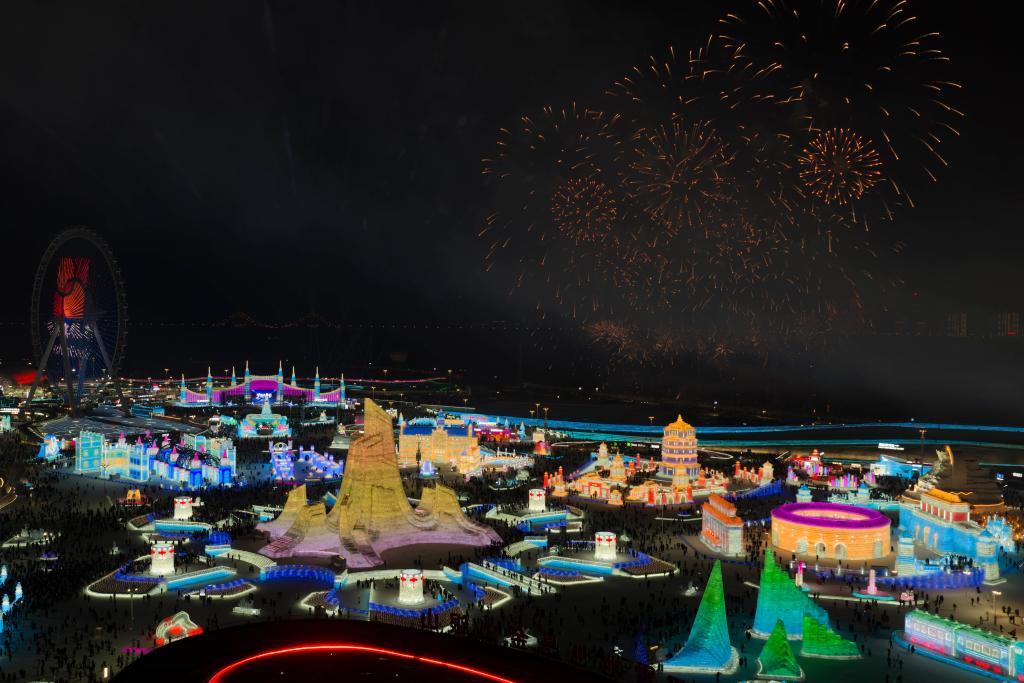
新华鲜报丨邀约全世界!哈尔滨冰雪节又来了
Xin Hua Wang· 2026-01-05 10:51
Core Viewpoint - The 42nd Harbin International Ice and Snow Festival has commenced, showcasing Harbin as a global winter tourism destination and emphasizing its cultural, sports, and economic integration [1][3]. Group 1: Event Highlights - The Ice and Snow Festival features the largest ice and snow park, covering 1.2 million square meters, with new interactive areas such as the "Rose Ice Wall" and "Hot Spring Camp" [3]. - The festival includes the 37th China Harbin International Ice Sculpture Competition and the 28th China Harbin International Snow Sculpture Competition, attracting over a hundred artists from various countries [3][5]. - The event aims to foster international friendship through artistic creation and showcase the charm of Harbin as the "Ice City" [3][6]. Group 2: Tourism Impact - Last winter season, Harbin attracted over 90 million domestic and international tourists, highlighting its popularity as a winter tourism destination [5]. - The festival is expected to enhance the local economy, with the recent New Year holiday seeing 4.1 million visitors and total spending of 5.56 billion yuan [9]. - The city is launching ten new winter tourism routes and upgrading attractions to enhance visitor experiences [6][8]. Group 3: Economic Development - The first Harbin International Ice and Snow Economic Expo is set to establish a global platform for the ice and snow industry, showcasing the entire industry chain from equipment manufacturing to tourism [9]. - The China Ice and Snow Tourism Development Report (2026) predicts that winter tourism participants will reach 360 million, generating an income of 450 billion yuan during the 2025-2026 season [9]. - Harbin's approach to winter tourism is shifting from merely attracting visitors to ensuring they have memorable experiences that encourage repeat visits [8].
许维鸿:东北振兴“连锁效应”渐显
Sou Hu Cai Jing· 2025-06-08 22:37
Economic Growth in Northeast China - The Northeast region is experiencing a significant investment growth, with a reported increase of 7.6% in fixed asset investment in the first four months of the year, compared to a national average of 4.0% [1] - Dalian is projected to become the first city in Northeast China with a GDP exceeding 1 trillion yuan by 2025, indicating a positive economic trajectory for the region [1] Strategic Importance - Northeast China plays a crucial role in China's new development pattern, which emphasizes domestic circulation and the mutual promotion of domestic and international circulation [1] - The region's economic revitalization is essential for maintaining the overall stability of China's economic development [1] Regional Cooperation and Trade - The Northeast serves as a key gateway for China's northern opening, enhancing cooperation with Northeast Asia and facilitating domestic and international trade [2] - The region benefits from increased economic ties with Russia, particularly as Russia pivots towards China amid Western sanctions, leading to a boost in local economic activity [2] Talent and Investment Attraction - The revitalization efforts in Northeast China are beginning to attract talent and capital back to the region, reversing previous trends of outmigration [2] - The historical development of cities and infrastructure in Northeast China, such as its advanced railway system, contributes to its renewed attractiveness for investment and talent [2] Cultural and Tourism Development - The cultural and tourism sectors in Northeast China are witnessing a surge, driven by increased consumer demand for unique experiences and cultural offerings [3] - Events like the Harbin Ice and Snow Festival are drawing significant tourist interest, showcasing the region's potential for cultural tourism [3] Innovation and Research - Northeast China has a strong foundation in research and development, with notable achievements in various industries such as military-civilian integration, optics, and robotics [4] - The region's universities and research institutions have historically contributed to significant innovations, which are now being better integrated into local economic development efforts [4]