
商品及衍生品

Search documents
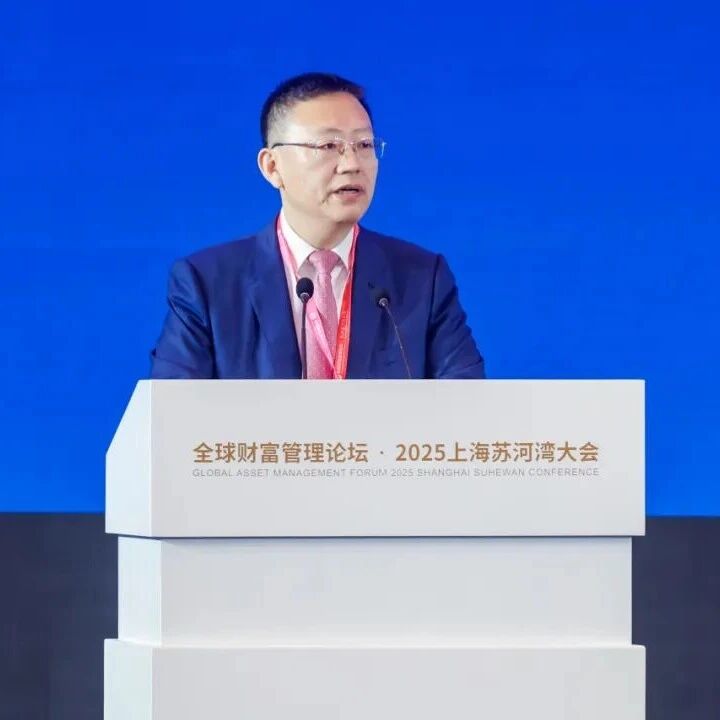
领导致辞 I 申万宏源刘健:加大投资产品供给和创新 迎接财富管理新时代
申万宏源证券上海北京西路营业部· 2025-10-21 02:52
Core Viewpoint - The global wealth management market is undergoing significant changes, with a shift towards diversified asset allocation and increased demand for innovative financial products to meet evolving investor needs [4][6][8]. Group 1: Market Trends - Major financial institutions are increasing their focus on wealth and asset management, with some international investment banks deriving over 50% of their revenue from these sectors [4]. - Chinese household wealth has seen exponential growth over the past two decades, with investable assets exceeding 300 trillion RMB, positioning China as the second-largest high-net-worth population globally [4]. - The asset allocation structure of Chinese households is transitioning from a heavy reliance on real estate to a more diversified approach, with equities and funds now representing approximately 15% of financial assets [4]. Group 2: Investment Product Supply - The current financial product offerings do not adequately meet the diverse investment needs of residents, particularly in innovative areas such as green finance, cross-border ETFs, and derivatives [6]. - There is a growing demand for stable investment products, but existing offerings primarily rely on fixed-income assets, lacking the integration of commodities, alternative assets, and quantitative strategies [6][10]. - The cross-border investment channels, while improved, still fall short in terms of convenience and coverage, with only 41 mutual funds available for public sale in mainland China as of September 2025, totaling around 240 billion RMB [6]. Group 3: Wealth Management Service Layering - There is a notable deficiency in the supply of inclusive investment products for ordinary investors, with wealth management institutions exploring offerings for high-net-worth individuals but lacking a mature tiered service system [7][12]. - The wealth management market is becoming increasingly digital and personalized, necessitating the development of innovative products that resonate with younger investors' values and preferences [12][14]. Group 4: Recommendations for Improvement - To enhance the financial market's ability to serve wealth management needs, there is a call to accelerate the diversification of directly investable assets and product types, particularly in ETFs and green financial products [9]. - Expanding product strategies to create a comprehensive product system that covers all asset classes and strategies is essential, including the development of index futures and options markets [10]. - Strengthening cross-border product offerings and mechanisms is crucial to meet the growing demand for global asset allocation among residents [11]. Group 5: Future Directions - The company aims to collaborate with various asset management institutions to enhance product interconnectivity and service quality, focusing on areas like pension finance and inclusive finance [15]. - Emphasizing a diverse product range that caters to different risk preferences and market views will be key to improving investor experience and satisfaction [15].


年轻投资者崛起,一场关乎话语权的“代际博弈”已然开启
Jing Ji Guan Cha Bao· 2025-10-19 03:36
Core Viewpoint - The Chinese wealth management market is at a historic crossroads, with a significant shift in asset allocation as traditional real estate investments decline, leading to a growing demand for diversified investment options among younger investors [2][3][10]. Group 1: Market Changes - The total investable assets of Chinese residents have surpassed 300 trillion RMB, with high-net-worth individuals ranking second globally, providing a solid foundation for the wealth management market [3]. - The proportion of real estate in household asset allocation has dropped significantly from nearly 70%, while the share of equity investments, such as stocks and funds, has steadily increased to around 15% [3][4]. - The demographic of investors is changing, with individuals under 30 now accounting for 30% of stock investors, indicating a shift towards younger, more digitally savvy investors [4][10]. Group 2: Supply Issues - The current financial product supply does not meet the increasingly diverse investment needs of residents, particularly in innovative products like green finance tools and cross-border ETFs [5][6]. - There is a lack of high-quality supply for complex investment strategies, with most stable income products relying heavily on fixed-income assets, failing to leverage the advantages of commodities, non-standard assets, and equity strategies [5]. - The accessibility and coverage of cross-border investment channels remain insufficient, with only 41 mutual funds recognized for cross-border sales, totaling approximately 240 billion RMB, which is low compared to demand [5]. Group 3: Pathways for Development - To enhance the financial market's ability to serve wealth management, five key pathways have been proposed: expanding the types of directly investable assets, enriching product strategies, enhancing cross-border investment mechanisms, advancing service stratification, and leveraging professional research capabilities [8][9]. - There is a need to develop a comprehensive product ecosystem that caters to high-net-worth, middle-class, and ordinary investors, while also focusing on innovative financial products that align with younger investors' preferences [9][10]. - The competition in the wealth management industry is shifting from scale expansion to supply quality, emphasizing the importance of professional, digital, and global approaches to effectively allocate resident wealth [10].