土工布

Search documents
我国产业用纺织品量稳质升动力足
Jing Ji Ri Bao· 2025-12-19 07:24
Core Insights - The industrial textile industry in China has made significant advancements during the 14th Five-Year Plan, achieving breakthroughs in scale, quality, and technological innovation, positioning itself as a global leader in production, consumption, and export [2][4] Group 1: Industry Achievements - By 2024, China's industrial textile fiber processing volume is expected to reach 21.384 million tons, with an average annual compound growth rate of 3.3% during the 14th Five-Year Plan [2] - The production of non-woven fabrics is projected to reach 8.561 million tons, with a compound annual growth rate of 1.4% [2] - The industry accounts for approximately 30% of global production and export value, with non-woven fabric exports hitting 1.516 million tons and export value reaching $4.04 billion in 2024, both setting historical records [2] Group 2: Technological Innovations - The industry has seen a surge in technological achievements, with 16,500 patents in non-woven fabric, including 7,931 invention patents [3] - Significant advancements in technologies such as three-dimensional weaving and flash-spinning non-woven fabrics have improved performance and efficiency in aerospace and medical packaging [3] - Smart manufacturing initiatives are underway, focusing on digital transformation and the application of advanced manufacturing technologies [3] Group 3: International Positioning - The industry has transitioned from being a "low-cost supplier" to a "global innovation partner," enhancing its international image through technological self-innovation and structural adjustments [4] - In 2024, the export value of the industrial textile industry is projected to reach $41.34 billion, marking a 6.7% increase and reversing a three-year decline in exports [4][5] Group 4: Future Outlook - The 15th Five-Year Plan aims to enhance the quality and efficiency of the industrial textile sector, focusing on technological innovation and standardization to drive growth [6][8] - The industry is expected to shift from scale expansion to quality and efficiency upgrades, with a focus on strategic positioning and technological advancements [6][7] - Key common technologies will be targeted for improvement, aiming for breakthroughs in energy efficiency and production costs while meeting high-end market demands [7]
产业用纺织品量稳质升动力足
Jing Ji Ri Bao· 2025-12-18 22:09
Core Insights - The Chinese industrial textile industry has achieved significant breakthroughs in scale, quality, and technological innovation during the 14th Five-Year Plan, establishing itself as a global leader in production, consumption, and export [2][4]. Group 1: Industry Achievements - By 2024, China's fiber processing volume in the industrial textile sector is expected to reach 21.384 million tons, with an average annual compound growth rate of 3.3% during the 14th Five-Year Plan [2]. - The production of non-woven fabrics is projected to reach 8.561 million tons in 2024, with a compound annual growth rate of 1.4% [2]. - The industry accounts for approximately 30% of global production and export value, with non-woven fabric exports hitting a record high of 1.516 million tons and export value of $4.04 billion in 2024 [2]. Group 2: Technological Innovations - The industry has seen a surge in technological achievements, with 16,500 patents in non-woven fabric technology, including 7,931 invention patents [3]. - Significant advancements have been made in key technologies such as three-dimensional weaving and electrospinning, enhancing the performance and production efficiency of aerospace composite materials [3]. - The industry has actively pursued certifications for biodegradable and dispersible products, with 35 companies achieving biodegradable certification for 60 units by August 2025 [3]. Group 3: International Positioning - The Chinese industrial textile sector has transitioned from being a "low-cost supplier" to a "global innovation partner," enhancing its international image through technological innovation and structural adjustments [4][5]. - In 2024, the export value of the industrial textile industry reached $41.34 billion, marking a 6.7% increase and reversing a three-year decline in exports [4]. Group 4: Future Outlook - The 15th Five-Year Plan aims to optimize and upgrade traditional industries, with a focus on quality and efficiency improvements in the industrial textile sector [6]. - The industry is expected to shift from scale expansion to quality and efficiency upgrades, enhancing its strategic position, technological level, and international influence [6][8]. - Key common technologies will be targeted for concentrated breakthroughs, aiming for substantial improvements in energy efficiency and production costs while meeting high-end market demands [7].
优彩资源(002998) - 002998优彩资源投资者关系活动记录表20251112
2025-11-13 00:42
Group 1: Company Labels and Environmental Commitment - The company emphasizes two key labels: circular economy and low carbon, focusing on maximizing resource value and minimizing environmental impact [2] - Circular economy involves the continuous cycle of resources from products to regeneration, significantly reducing the need for raw material extraction [2] - The company has developed physical and chemical recycling technology for waste polyester, which won a national science and technology progress award in 2018 [2] Group 2: Health and Environmental Benefits - The use of low-melting-point polyester short fibers eliminates volatile organic compounds (VOCs) from traditional adhesives, improving air quality and health [3] - The company’s practices contribute to a resource-saving society and align with national policies promoting low-carbon and green development [3] Group 3: Investment Strategy in Tibet - The investment in Tibet aligns with the national strategy for western development, aiming to reduce transportation costs and enhance regional efficiency [4] - Local production is expected to support infrastructure projects like the Yarlung Tsangpo River project, providing significant economic benefits [4] Group 4: Measures to Improve Product Profitability - The company collaborates with Donghua to innovate the "physical and chemical method," allowing the use of multi-component recycled materials, thus reducing raw material costs [5] - New materials are being developed to replace traditional ones, focusing on customization and differentiation in niche markets [5] - The production line's flexibility and ongoing improvements in automation and AI technology enhance production efficiency and competitiveness [5]
助推德州国际陆港高效运营,德州TIR业务实现零突破
Qi Lu Wan Bao Wang· 2025-10-23 12:08
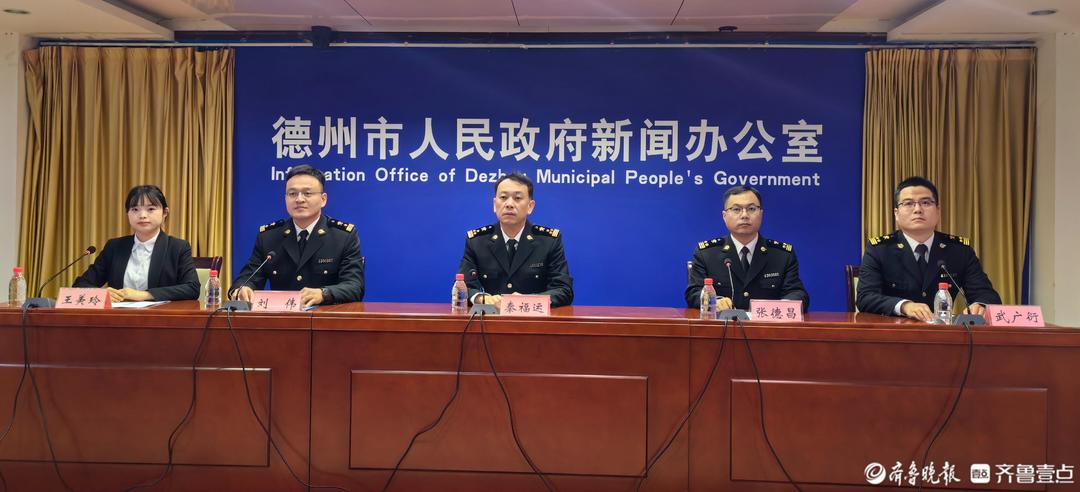
Core Insights - The press conference highlighted the foreign trade development situation in Dezhou City for the first three quarters of 2025, emphasizing the city's efforts to enhance international trade and logistics efficiency [1]. Group 1: Regulatory Enhancements - The "Quality Improvement Project" focuses on strengthening regulation by upgrading the "Iron-Sea E-Pass" system, optimizing dynamic monitoring at checkpoints, and improving operational efficiency for cargo entry and exit [3]. - The use of video surveillance combined with on-site inspections has maintained a 100% online monitoring rate, ensuring effective regulation while facilitating trade [3]. Group 2: Platform Expansion - The "Incremental Project" aims to expand platforms for trade, allowing goods to be processed through a single declaration, inspection, and release system. From January to September, the volume of regulated transshipment containers reached 214 TEUs [3]. - The establishment of the first Dezhou-Moscow international road transport (TIR) route marks a significant milestone, facilitating dual transport channels by road and rail [4]. Group 3: Convenience Initiatives - The "Navigation Assistance Project" has organized multiple meetings with enterprises to help them understand policies and save customs clearance costs between 300 to 500 yuan per container through various transport modes [5]. - A customs policy service station has been set up at the inland port to provide a "green channel" for foreign trade enterprises, ensuring priority processing within specified timeframes [5]. Group 4: Performance Metrics - In the first three quarters, Dezhou International Land Port exported 15,544 TEUs, reflecting a year-on-year increase of 13.2%. The products mainly included soybean protein and geotextiles, with key markets in Denmark, Thailand, and Germany [4].