地暖系统

Search documents
一次地暖调试扯出四家公司,新房售后责任该谁承担?
第一财经· 2026-03-15 06:08
Core Viewpoint - The article highlights the increasing complexity and ambiguity in the after-sales service and warranty responsibilities for home appliances in newly delivered fully-furnished residential properties, particularly in first- and second-tier cities in China. This complexity often leads to disputes between homeowners and developers regarding who is responsible for repairs and maintenance [3][5][8]. Group 1: Issues in After-Sales Service - The after-sales service for heating systems in newly delivered homes often involves multiple parties, including property management, developers, installation companies, and equipment brands, leading to confusion over responsibility [5][9]. - Homeowners frequently encounter difficulties when seeking repairs, as the warranty periods for major appliances like heating systems are typically short, often lasting only two heating or cooling cycles, approximately two years [7][9]. - Complaints regarding after-sales service for heating systems are common, with issues such as delayed repairs and unauthorized charges for service [5][6]. Group 2: Warranty Responsibilities - According to existing regulations, the primary responsibility for warranty issues typically lies with the developer, not the property management or subcontractors [9][10]. - Developers are required to provide warranty coverage for quality issues within the specified warranty period, which is often longer than the warranty period offered by subcontractors [11][12]. - Legal frameworks are increasingly tightening the obligations of developers as the primary responsible party for construction quality, extending their liability beyond the standard warranty period in cases of inherent defects [12].



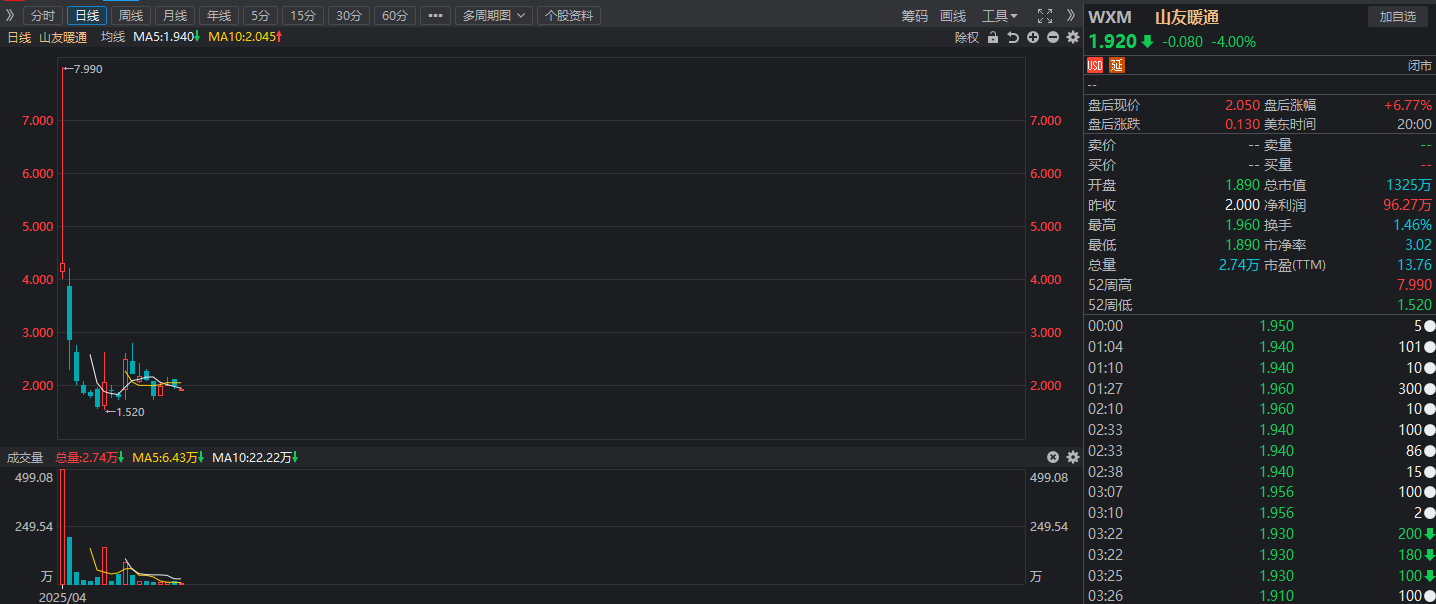
业绩与股价背离 山友暖通(WXM.US)有无成长性?
智通财经网· 2025-04-28 12:57
Core Viewpoint - The HVAC industry is significantly influenced by the real estate market, with a shift towards renovation and upgrades expected to drive over 60% of demand by 2025, necessitating HVAC manufacturers to adapt to older housing scenarios and focus on high-end residential and green buildings [1][7] Company Performance - ShanYou HVAC reported revenues of $11.318 million and $15.309 million for the fiscal years 2022 and 2023, respectively, marking a year-on-year growth of 35.3% [3][4] - The company achieved a net profit of $150.93 thousand in 2023, a turnaround from a loss of $0.42 thousand in 2022 [3][4] - The gross profit margin improved from 12.5% in 2022 to 20.2% in 2023, primarily due to a significant increase in project gross margin from 9.9% to 24.5% [4][6] Revenue Breakdown - Revenue from projects increased by 27.5% from $6.895 million in 2022 to $8.793 million in 2023 [5] - Product sales grew by 47.6%, from $4.166 million to $6.151 million, while service revenue rose by 42.3%, from $0.257 million to $0.366 million [5] - The increase in project gross margin is attributed to a higher number of smaller contracts and improved payment arrangements with clients [6] Market Outlook - The HVAC industry is expected to face challenges due to its close ties with the real estate sector, with a projected 6% decline in new residential sales area in 2025 [7] - The recovery of the real estate market is contingent on the implementation of policies aimed at revitalizing the sector, including the monetization of urban village renovations [7] - ShanYou HVAC is focusing on high-end residential projects and expanding into commercial real estate and industrial sectors to mitigate risks associated with the real estate downturn [7][8] Client Dependency - The company relies heavily on a few major clients, with the top three clients accounting for 49.2% of total revenue in 2023, down from 74.7% in 2022, indicating a significant risk if these clients were to be lost [8]