
暖通空调

Search documents
满足复杂环境需求!海尔智家发布大暖通全场景解决方案
Jin Tou Wang· 2026-03-16 09:52
Core Insights - Haier Smart Home has introduced AI Eye 2.0 technology, enhancing the capabilities of automated home management, which has been well-received by users [1] - The company has also gained industry recognition for its large-scale heating and cooling solutions, showcasing its commitment to smart energy integration [1] Group 1: Product Innovations - Haier's large-scale heating and cooling solutions integrate commercial air conditioning, household engineering, and hot water systems, achieving continuous high growth [1] - The electric water heater has maintained the number one global market share for 14 consecutive years, while the magnetic levitation central air conditioning has held the top position for 8 years [1] - The heat pump has been the leading product in the national market for 7 years [1] Group 2: Technological Advancements - The AI multi-link solution utilizes cloud-edge collaboration technology, achieving a comprehensive energy-saving rate of up to 30% [2] - The wind-water linkage solution enhances user comfort by 20% and has been successfully implemented in multiple subway lines, including Shenzhen Metro Line 14 [2] - Custom solutions for high-altitude conditions and data center cooling systems have been developed, achieving energy savings of 25% with low investment and operational costs [2] Group 3: Comprehensive Solutions - Haier's commercial heating solutions include a range of smart energy solutions, creating a complete energy ecosystem [3] - Innovative features such as variable flow, self-cleaning, and micro-wind technology have been introduced in high-end air conditioning for real estate projects [3] - The company aims to provide integrated comfort experiences through its innovative heating and water supply solutions, promoting a green and smart future [3]

冰轮环境(000811) - 000811冰轮环境投资者关系管理信息20260310
2026-03-10 09:28
Group 1: Business Overview - The company focuses on providing advanced system solutions and lifecycle services in the energy and power sectors, with products including compressors and heat exchangers, covering a temperature range of -271℃ to 200℃ [3] - Key product types include screw compressors, centrifugal compressors, absorption chillers, piston compressors, and industrial heat pumps, among others [3] Group 2: Market Applications - Products are widely used in various sectors such as food processing, cold chain logistics, industrial cooling systems, commercial air conditioning, and energy recovery [3] - Specific applications include food and pharmaceutical vacuum freeze-drying, ice sports venues, and data centers [3] Group 3: Data Center Solutions - The company’s subsidiaries provide cooling equipment for data centers, including Dunham-Bush, which has a 131-year history and offers advanced cooling technologies [4] - Notable projects include collaborations with major data centers in China and partnerships with local integrators in North America, Australia, Southeast Asia, and the Middle East [4] Group 4: HRSG Products - The joint venture with Yantai Modern Ice Wheel Heavy Industry produces heat recovery steam generators (HRSG) for combined cycle gas power plants, with projected revenues of over 700 million in 2024 and approximately 1 billion in 2025 [6] Group 5: Thermal Management - The company is committed to thermal management solutions, focusing on industrial heat pumps and has been recognized as a national-level "little giant" enterprise [6] - The company holds 96 patents and 33 software copyrights, with several technologies recognized as national champions and included in key energy-saving technology directories [6][7] Group 6: Policy and Market Trends - The company’s technologies align with national dual carbon policies, aiming to recover waste heat in high-energy-consuming industries, which is expected to transition from optional to mandatory under upcoming regulations [7][8] - The company’s products are highlighted in national media, indicating strong market presence and policy-driven demand [8]

野村东方国际 _ 中美暖通对比,低位布局暖通龙头正当时
野村· 2026-03-06 02:02
Investment Rating - The report suggests that it is an opportune time to invest in leading HVAC companies in China, as they currently exhibit cost-effectiveness in valuation and are expected to see a fundamental turnaround by the end of Q1 and early Q2 of 2026 [4][10]. Core Insights - The HVAC markets in China and the US share similarities in large domestic demand, market structure, and profitability characteristics, with both countries being the top two in global HVAC demand [4][11]. - The report highlights that companies like Trane Technologies, which focus on commercial applications, show better revenue growth and stable profit margins compared to Carrier Global, which is more residential-focused [4][10]. - Midea Group and Hisense are identified as leading players in the commercial HVAC sector in China, with Midea expected to have faster revenue growth and remain undervalued compared to industry benchmarks [4][10]. Summary by Sections Market Characteristics - The HVAC markets in China and the US are characterized by significant domestic demand, with China focusing more on residential (63%) and the US on commercial (69%) applications [4][15]. - Both markets rely heavily on a distribution model, with a low concentration of distributors [21][27]. Revenue and Profitability - Trane Technologies has a higher revenue compound annual growth rate (CAGR) of 11.4% and an average operating profit margin of 15.7%, outperforming Carrier Global, which has a CAGR of 4.9% and a profit margin of 13.5% [9]. - The profitability of HVAC companies in their domestic markets is generally higher than in overseas markets due to better control over distribution channels [31]. Competitive Landscape - The competitive landscape in both China and the US is characterized by a few dominant players, with clear brand differentiation [28][30]. - Trane Technologies and Daikin are leading in market share in the US, while Gree and Midea dominate the Chinese market [30]. Valuation - The report indicates that domestic HVAC companies in China have room for upward valuation adjustments compared to their international counterparts [10][11]. - Midea Group is highlighted as having a lower average price-to-earnings (P/E) ratio compared to Daikin and Trane, suggesting it is undervalued [10][11]. Investment Recommendations - The report recommends focusing on companies that balance high revenue growth with stable profitability, particularly Midea Group and Hisense, which have made significant investments in the commercial HVAC sector [4][10].



冰轮环境(000811) - 000811冰轮环境投资者关系管理信息20260305
2026-03-05 08:16
Group 1: Business Overview - The company focuses on providing advanced system solutions and lifecycle services in the energy and power sectors, with products including compressors and heat exchangers, managing temperature control and energy efficiency across a range of -271℃ to 200℃ [3] - Key product types include screw compressors, centrifugal compressors, absorption chillers, piston compressors, and industrial heat pumps, among others [3] Group 2: Market Applications - Products are widely used in various sectors such as food processing, cold chain logistics, industrial cooling systems, commercial air conditioning, and special industrial air conditioning [3] - Specific applications include food and pharmaceutical vacuum freeze-drying, ice sports venues, and energy/chemical production cooling [3] Group 3: Data Center Solutions - The company’s subsidiaries provide cooling equipment for data centers, including liquid cooling systems and heat exchange devices [4] - Dunham-Bush, a subsidiary, has a 131-year history and offers products recognized in the national green data center technology catalog, including high-efficiency centrifugal chillers [4] Group 4: Production Capacity and Market Position - The company has established a global after-sales service system supported by overseas manufacturing bases, with a focus on meeting high standards for reliability and performance [6] - The market share of screw chillers in IDC systems is declining, while centrifugal chillers, particularly magnetic levitation types, are gaining dominance [6] Group 5: Financial Performance - The joint venture Yantai Modern Ice Wheel Heavy Industry Co., Ltd. is projected to generate over 700 million in revenue in 2024, with expectations to reach approximately 1 billion in 2025 [6]
中美暖通对比-低位布局暖通龙头正当时
2026-03-04 14:17
Summary of Key Points from Conference Call Records Industry Overview - The conference call focuses on the HVAC (Heating, Ventilation, and Air Conditioning) industry, specifically comparing the markets in China and the United States. The analysis indicates a strong oligopolistic structure in both markets, with local companies showing better profitability than their overseas counterparts, contrasting with Japan's market dynamics where overseas performance is stronger than local [1][2]. Core Insights and Arguments - **Market Recovery Signals**: The white goods sector is expected to see a turning point between Q1 and Q2 of 2026, with signs of recovery in air conditioning exports and production in April and May [1][2]. - **Company Comparisons**: Trane Technologies is highlighted for its focus on the commercial market (60% of revenue) and high service income (35%), providing it with better operational stability and valuation premium compared to Carrier Global [1][2]. - **Domestic Company Selection Logic**: The preferred domestic companies are ranked based on their commercial market share and proactive strategies: Midea > Hisense > Haier > Gree. Midea has a 20% share in the B-end market and leads in internationalization, while Hisense benefits from its unique central air conditioning offerings [1][2][11]. Demand Structure and Market Dynamics - **Demand Characteristics**: Both China and the U.S. have substantial domestic demand, but the demand structure differs. The U.S. market is primarily driven by commercial needs, while China's market is more focused on residential air conditioning due to the "one household, multiple machines" logic [3][4]. - **Channel Structures**: Both markets primarily utilize distribution channels, with a significant portion of sales through third-party distributors. This is in contrast to Japan, where the market relies heavily on retail channels [4]. Profitability and Business Strategies - **Profitability Comparison**: Chinese HVAC companies show superior domestic profitability compared to their overseas performance, while U.S. companies also perform better domestically. Japanese companies, however, exhibit stronger overseas profitability [5]. - **Carrier Global's Strategy**: Carrier has focused on enhancing its commercial business and service offerings, with the commercial aftermarket valued at 5-10 times the installation value. The company anticipates growth in the commercial sector, driven by infrastructure demands [6][7]. Financial Performance and Market Position - **Carrier's Market Performance**: Since its IPO in 2020, Carrier has outperformed the S&P 500 but remains undervalued compared to Trane Technologies. The valuation discount is attributed to weaker operational growth and profitability metrics [7][10]. - **Trane Technologies' Growth Outlook**: Trane aims for a growth rate of 6-7%, supported by macroeconomic indicators like GDP and fixed asset investment. Its stock has outperformed Carrier and the S&P 500, maintaining a valuation premium [9]. Investment Recommendations - **Valuation and Growth Potential**: The four major domestic HVAC companies (Midea, Hisense, Haier, Gree) are seen as having potential for valuation recovery, with Midea being the most favored due to its financial metrics relative to the market index [14][15]. - **Investment Timing**: The white goods sector is expected to reach a valuation turning point by Q2 2026, suggesting a favorable investment opportunity in the near term [15]. Additional Insights - **Market Constraints**: Gree's internationalization progress is slow, limiting its potential for growth in the commercial sector. The Chinese commercial air conditioning market is currently smaller than that of the U.S., which may restrict future growth opportunities [12][14]. This summary encapsulates the key points discussed in the conference call, providing a comprehensive overview of the HVAC industry dynamics, company comparisons, and investment insights.

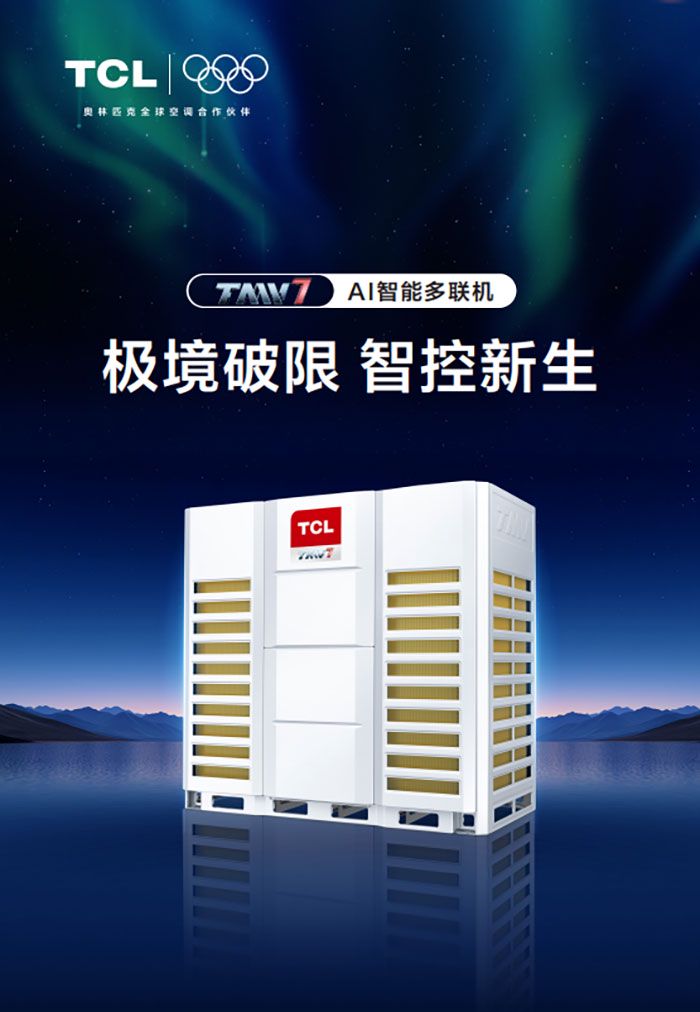
破局多联机应用三座大山:TCL TMV7 AI多联机硬核科技重塑极端之境
Xin Lang Cai Jing· 2026-02-27 10:36
Core Insights - The HVAC industry is witnessing a shift towards multi-split systems, which have become the mainstream choice for commercial buildings and public facilities, holding a market share of approximately 46.1% as per the Aiken Network's report for 2025, although growth rates are slowing down and competition is shifting towards technological advancements [1][14] - TCL Smart HVAC has launched the TMV7 AI multi-split system, aiming to address persistent industry challenges such as heating performance in extreme cold, high energy costs, and chaotic project management through intelligent and adaptable technology [1][14] Group 1: Performance in Extreme Conditions - The TMV7 AI multi-split system is designed to operate efficiently in extreme temperatures ranging from -30°C to 58°C, overcoming traditional limitations of heating and cooling performance [2][16] - In extremely cold environments, the TMV7 utilizes a large displacement flexible jet enthalpy rotary compressor, enhancing heating capacity by 20% compared to traditional models, ensuring stable indoor heating even at -30°C [5][18] - For high-temperature cooling challenges, the TMV7 employs innovative refrigerant flow designs and optimized heat exchangers to maintain cooling efficiency at 58°C, preventing performance degradation due to overheating [7][20] Group 2: Energy Efficiency Innovations - The TMV7 AI multi-split system incorporates AI big data energy-saving algorithms, allowing for intelligent adjustments to operational parameters based on real-time environmental and user data, achieving a 20% reduction in annual energy consumption [9][22] - The system features a self-developed third-generation gallium nitride chip, improving power conversion efficiency and reducing losses, while achieving a standby power consumption of only 1W, approaching zero energy use during idle periods [9][22] Group 3: Intelligent Operation and Management - The TMV7 is equipped with an AI module for automatic networking, enabling real-time online monitoring and creating a visual energy management dashboard through the IOC smart cloud platform, which provides detailed energy consumption insights [10][23] - The multi-intelligent control platform supports remote monitoring and fault alerts, transforming maintenance from reactive to proactive, which is crucial for managing energy efficiency in large commercial spaces [12][25] - The introduction of AI and big data technologies into HVAC systems represents a significant step towards smarter energy management and operational efficiency in the industry [13][26]


武城农商银行:深入市场 主动靠前 支持民营企业高质量发展
Qi Lu Wan Bao· 2026-02-25 08:03
Core Viewpoint - Wucheng Rural Commercial Bank emphasizes a customer-centric service philosophy, actively supporting the high-quality development of private enterprises, particularly in the HVAC industry [1][2] Group 1: Financial Support Initiatives - Wucheng Rural Commercial Bank has provided financial services to 2,769 clients in the HVAC and new materials sectors, with outstanding loans amounting to 1.752 billion yuan [1] - The bank has developed tailored financial support plans for clients in the HVAC industry, facilitating their transition towards intelligent and green technologies [1] - A specific case involves Shandong Aike Holding Group, which received a loan of 5 million yuan within three days to alleviate cash flow pressures due to increased order volumes [2] Group 2: Service Strategies - The bank employs a strategy of one-on-one financial support, conducting thorough visits to local enterprises to analyze their financing needs [2] - Innovative loan products such as "Working Capital Loan," "Industry Upgrade Loan," and "Wushang Hometown Loan" have been introduced to meet the financing demands of local industries [2] - The bank collaborates with industry associations and local business chambers to enhance its service offerings and support the local economy [2]
Carrier Global (NYSE:CARR) 2026 Conference Transcript
2026-02-19 19:02
Carrier Global (NYSE:CARR) 2026 Conference Summary Company Overview - **Company**: Carrier Global Corporation - **Date**: February 19, 2026 - **Speakers**: Dave Gitlin (CEO), Patrick Goris (CFO) Key Industry Insights Growth Strategy - Carrier aims to achieve accelerated growth through new product development, aftermarket services, and system-related growth, targeting a growth algorithm of 6%-8% once market conditions improve [3][4] - The company anticipates facing a market headwind of 3-4 points in 2026, particularly in the CSA RLC business, which is projected to decline in high single digits [4][6] Market Conditions - The residential HVAC market is expected to decline by 10%-15% in 2026, with Carrier projecting a high single-digit decline for itself due to destocking effects [13][62] - The company is actively monitoring inventory levels and market indicators to better anticipate market fluctuations [8][10] Product Development and Market Position - Carrier has introduced new products in the data center segment, significantly increasing market share from 10% to nearly 40% in water-cooled chillers [31][32] - The company is focusing on system-level differentiation, integrating traditional cooling with advanced technologies like AI and digital twins [34][126] Financial Performance and Projections Revenue and Margins - The company expects attractive incrementals in the second half of 2026, with sales in the residential segment projected to increase by double digits [18][19] - Operating margins have improved significantly, with data center orders in Q4 up 400% compared to previous periods [32] Cost Management - Carrier anticipates a net headwind of $60 million from material costs (steel, copper, aluminum) in 2026, offset by a price increase of approximately one point [104][106] - The company has implemented productivity measures to mitigate cost impacts, including redesigning products and optimizing logistics [104][112] Regional Insights North America - The Americas commercial HVAC segment has shown strong growth, particularly in data centers, with orders up over 80% in Q4 [29] - The company is optimistic about the recovery of the residential market, contingent on factors like existing home sales and new construction [70] Europe - In Europe, the market is currently challenging, with a projected decline of 5%-10% in 2026. However, new product introductions and system sales are expected to drive future growth [39][40] - The company is preparing for a significant new product launch aimed at capturing market share amid changing subsidy levels [42][46] Asia and Emerging Markets - Carrier is expanding its presence in Asia, particularly in India and the Middle East, where demand for commercial HVAC is strong [76][78] - The company is optimistic about growth opportunities in Japan, especially in the data center sector [80] Innovations and Future Trends - Carrier is focusing on integrating home energy management systems (HEMS) with HVAC solutions to reduce grid demand during peak hours [126] - The company is investing in AI to enhance customer service and operational efficiency, aiming to leverage data for predictive maintenance and improved aftermarket services [99][100] Conclusion - Carrier Global is strategically positioned to navigate current market challenges while focusing on innovation and growth in key segments. The emphasis on system-level differentiation and proactive cost management will be critical as the company aims to achieve its long-term growth objectives.

Lennox International (NYSE:LII) FY Conference Transcript
2026-02-17 19:52
Summary of Lennox International Conference Call Company Overview - **Company**: Lennox International - **Key Executives**: Michael Quenzer (CFO), Prakash Bedapudi (Chief Technology Officer) Industry Insights - **Industry**: HVAC (Heating, Ventilation, and Air Conditioning) - **Market Trends**: The HVAC industry has faced challenges with sell-in versus sell-out imbalances over the past 2-3 years, impacting overall market dynamics [8] Key Financial Insights - **Sales Performance**: January sales were characterized as "okay," an improvement from the previous quarter, with March being critical for sales and order rates [3][11] - **Volume Guidance**: The company anticipates a mid-single-digit decline in full-year volumes, with more significant declines expected in the residential new construction segment due to pricing pressures [11] - **Inventory Management**: Inventory levels are reportedly low, with a focus on demand recovery in 2026. The company has cleared out excess inventory and is positioned for growth [4][6] Repair and Replacement Dynamics - **Repair Activity**: Increased repair activity was noted due to regulatory changes and affordability constraints. Homeowners are opting for repairs on older units, which may not extend the lifespan significantly [15][20] - **Replacement Cycle**: The average lifespan of HVAC units is decreasing, driven by increased usage and heat pump adoption. The company expects a healthy repair environment to support growth in the coming years [12][22] Technology and Product Development - **Heat Pump Technology**: Lennox has improved its heat pump offerings, focusing on regional optimization and SKU proliferation to capture market share. The company has launched compact air handlers suitable for various applications [25][26] - **Joint Ventures**: Collaborations with Samsung for ductless solutions and Ariston for water heaters are expected to enhance product offerings and market reach [27][32] Pricing and Cost Management - **Pricing Strategy**: The company plans to implement mid-single-digit price increases to maintain margins amid rising commodity costs. The overall pricing discipline in the industry has been maintained [40][41] - **Cost Structure**: Commodity costs have risen, but the company has managed to keep overall cost increases to 2.5% through fixed contracts and effective procurement strategies [43][44] Operational Challenges - **Production and Absorption**: The company is balancing production and demand, with a focus on managing inventory levels to avoid supply chain constraints. Absorption headwinds are expected in the first quarter but are anticipated to improve in the second half of the year [48][51] - **Supply Chain Constraints**: Challenges in ramping up production due to supply chain issues, particularly with key components like compressors, have been highlighted [53] Future Outlook - **Growth Opportunities**: The company is optimistic about growth in the HVAC market, particularly in the repair and replacement segments, as well as through new product innovations and improved distribution strategies [12][60] - **Investment in Technology**: Continued investment in technology and product development is expected to enhance competitiveness and market share [64][71] Conclusion Lennox International is navigating a challenging HVAC market with strategic inventory management, a focus on repair and replacement dynamics, and ongoing investments in technology and product development. The company is positioned for growth despite current market pressures and is actively managing costs and pricing strategies to maintain margins.

特灵科技2025年业绩稳健增长,未交货订单创历史新高
Jing Ji Guan Cha Wang· 2026-02-12 18:45
Core Viewpoint - Trane Technologies has shown strong performance in its recent financial results and has received recognition for its sustainability and innovation efforts, indicating a positive outlook for the company moving forward [2][3]. Group 1: Financial Performance - In the fourth quarter of 2025, Trane Technologies reported sales of $5.1 billion, representing a 6% year-over-year increase [2]. - The adjusted earnings per share for the same period were $2.86, reflecting a 10% growth [2]. - The total backlog of unshipped orders reached a record high of $7.8 billion, suggesting a robust outlook for 2026 [2]. Group 2: Company Status - On February 4, 2026, Trane Technologies was awarded the "2025 Sustainable Development Model Enterprise" and the "2025 Technology Innovation Model Award," highlighting its advancements in low-carbon technology and AI building management [3]. Group 3: Business Progress - Based on the 2025 financial report, commercial HVAC order volume in the Americas increased by 35% year-over-year, with large equipment orders growing by over 120%, raising investor interest in the sustainability of such high-growth segments [4]. Group 4: Industry Policy and Environment - Attention should be paid to changes in data center temperature control demands, particularly how the evolution of liquid cooling technology may impact traditional HVAC business [5].
