
地铁2号线

Search documents
北京“八站两场”春运出行攻略⑦:北京北站
Xin Lang Cai Jing· 2026-02-15 14:49
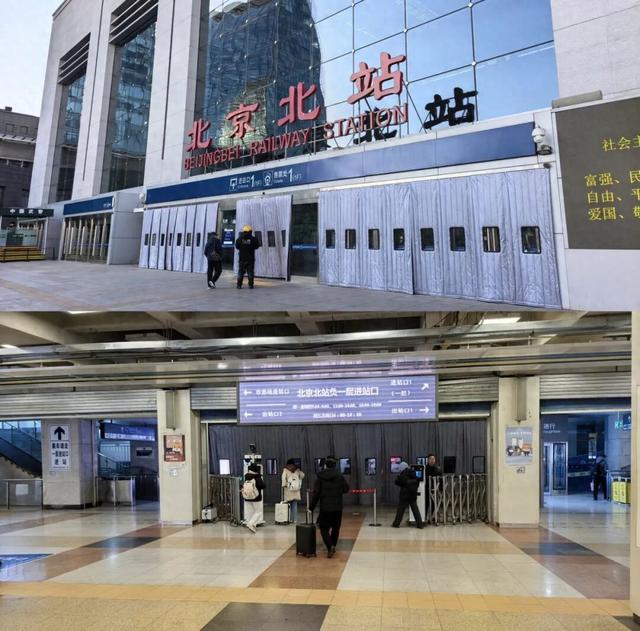
Transportation Overview - Beijing North Station serves as a significant transportation hub, integrating various modes of transport including subway, bus, taxi, ride-hailing, and private vehicles [1] Subway Access - Passengers can access the station via subway lines 2, 4, and 13, with specific exits designated for each line [1][3] - For those taking the suburban railway Huai-Mi Line, entry is through the designated "Suburban Railway" sign on the lower level [5] Bus Access - The main bus stops near Beijing North Station are Beijing North Station Bus Stop and Subway Xizhimen Bus Stop, with several bus routes available including 375, 632, 16, 26, 87, and others [7] - Passengers can enter the station from either the ground level or the lower level after disembarking from the bus [7] Taxi and Ride-Hailing Access - The drop-off area for taxis and ride-hailing services is located on the auxiliary road of Xizhimen North Street, with clear directions provided for reaching the station entrance [9] Private Vehicle Access - For those picking up passengers, the entrance to the underground parking lot is at the north gate of Kaide Mall, while the surface parking lot is accessible from the auxiliary road [24][27] - Directions are provided for navigating from the parking areas to the station entrance [27][28]

记者体验钱江三桥封闭断流后首个工作日早高峰
Hang Zhou Ri Bao· 2025-11-25 02:36
Core Viewpoint - The traffic situation in Hangzhou has been significantly impacted by the closure of the Qianjiang Third Bridge for renovation, leading to increased congestion and longer commuting times for citizens [11]. Traffic Conditions - The overall traffic volume increased by 7.5% compared to before the bridge closure, with specific increases in traffic flow for various routes: Boao Tunnel (39.4%), Qingchun Tunnel (8.7%), Wangjiang Tunnel (1.9%), and Fuxing Bridge (2.1%) [12]. - The maximum delay in the core area due to the bridge closure rose by 2.4% compared to before the closure [12]. Commuting Experience - Commuters reported that if they completed their journey before 7:30 AM, the impact on travel time was minimal; however, after 8:00 AM, the delays became more pronounced [13]. - The Fuxing Bridge has become a major route for traffic, with reports of increased travel times, such as a 42-minute journey that typically takes 30 minutes [13]. Public Transport Performance - The subway remains the preferred mode of transportation, with stable travel times and a well-organized passenger experience during peak hours [15]. - The Hangzhou Metro Group reported that the busiest lines during the morning peak were Line 2 and Line 5, with maximum load rates observed [15]. - The public bus system has also adapted, with 49 bus routes operating in conjunction with the metro, and an increase in bus availability by 8% to accommodate the surge in passengers [16].
11月24日!钱江三桥断流后首个工作日早高峰
Mei Ri Shang Bao· 2025-11-24 02:04
Core Viewpoint - The Qianjiang Third Bridge in Hangzhou has entered a fully closed construction phase starting from November 22, leading to significant traffic disruptions and the implementation of alternative transportation measures to mitigate congestion during peak hours [1] Group 1: Traffic Management and Recommendations - Nine traffic interruption points have been identified due to the closure, affecting various access ramps and interchanges [1] - The Hangzhou Public Security Traffic Management Department recommends citizens prioritize "subway + bus" as their mode of transportation to reduce private vehicle usage [2] - For those who must drive, it is advised to use navigation systems that will provide real-time optimal routes based on current traffic conditions [2] Group 2: Public Transportation Enhancements - The Hangzhou Metro has increased capacity on Line 2 and Line 7, reducing average train intervals by approximately 10% and 9% respectively during peak hours [3] - The travel time for crossing the river via the metro has been measured, with Line 2 taking about 7 minutes and Line 7 about 9 minutes during peak hours [3] Group 3: Bus and Ferry Adjustments - Bus routes that previously used the Qianjiang Third Bridge have been adjusted to utilize the Bao'ao Tunnel and other designated crossings, maintaining the same fare structure [4] - A free ferry service across the Qiantang River has been implemented, operating every 15 minutes during peak hours, although demand has surged to saturation levels [5] - Citizens are encouraged to check ferry schedules in advance due to potential service interruptions caused by tidal influences [5]
钱江三桥即将封闭施工 地铁2号线和7号线提升运能
Mei Ri Shang Bao· 2025-11-17 22:23
Group 1 - The core point of the news is that Hangzhou Metro has optimized the capacity of two key subway lines, Line 2 and Line 7, to enhance cross-river transportation for commuters [1][2] Group 2 - For Line 2, the average train interval during peak hours has been reduced from 2 minutes and 50 seconds to 2 minutes and 35 seconds, resulting in a capacity increase of approximately 10% [1] - The specific train intervals for Line 2 during peak hours are 2 minutes and 30 seconds towards Chaoyang and 2 minutes and 35 seconds towards Liangzhu in the morning, with evening peak intervals set at 3 minutes and 30 seconds for both directions [1] - For Line 7, the average train interval during peak hours has been compressed from 5 minutes and 30 seconds to 5 minutes, leading to a capacity increase of about 9% [1] - The adjusted train intervals for Line 7 during peak hours are 5 minutes towards Wushan Square and 5 minutes and 30 seconds towards Jiangdong Second Road in the morning, with evening peak intervals also at 5 minutes and 30 seconds for both directions [1] Group 3 - In addition to the subway capacity enhancements, Hangzhou Metro has collaborated with the bus group to address cross-river commuting needs by optimizing and adding bus routes at 25 key subway stations [2] - These new and optimized bus routes are designed to be around 3 kilometers long, with approximately 3 to 5 stops, further strengthening the coordination between metro and bus services [2] - Some bus routes can reach the subway stations in as little as 5 minutes, and new signage has been updated at the 25 stations to inform passengers about bus transfer options [2] - Backup trains have been arranged for lines with relatively sufficient capacity, such as Lines 1, 4, 6, and 19, to handle potential surges in passenger flow [2]
地铁扰民多年,竟因一条路未修(来信调查)
Ren Min Ri Bao· 2025-11-16 22:10
Core Viewpoint - The construction and operation of Dalian Metro Line 2 have caused significant damage to residential properties in Houge Village, leading to complaints from residents about noise and vibrations affecting their quality of life [2][5][6]. Group 1: Current Situation - Residents report that their homes have suffered damage due to blasting during the construction of the metro line, with visible cracks and structural issues [2][3]. - The vibrations and noise from the metro operations, which run daily from 5:30 AM to 11:30 PM, have created a distressing living environment for over 100 households located directly above the tunnel [2][4]. - Complaints have been made regarding the impact on health and well-being, particularly for vulnerable individuals such as the elderly and those with pre-existing conditions [4][6]. Group 2: Government Response - The local government has acknowledged the issues and has coordinated efforts to reduce noise by adjusting the speed of the trains, but residents feel these measures are insufficient [5][6]. - Temporary noise compensation has been provided to residents, with amounts based on the size of their homes, but many villagers express dissatisfaction with the compensation levels and the duration of support [7][8]. - There is a call for a more permanent solution, such as collective relocation of the village, which has been discussed in past meetings with metro officials [7][8]. Group 3: Planning and Coordination Issues - The original planning for the metro line did not account for the presence of residential buildings above the tunnel, as the area was intended for a road that has yet to be constructed [8][9]. - Delays in the construction of the planned road have exacerbated the situation, with bureaucratic hurdles and land disputes hindering progress [12][13]. - The lack of coordination between metro construction and municipal road planning has led to prolonged distress for the residents of Houge Village, highlighting the need for improved inter-departmental collaboration in urban planning [11][14].