基于18A制造工艺的个人电脑芯片

Search documents
股价几乎翻倍,市场下注英特尔“翻身”
美股IPO· 2025-10-25 05:14
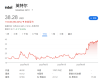
Core Viewpoint - The capital market is re-embracing Intel, leading to a nearly doubling of its stock price this year, driven by significant external funding and a brief recovery in performance, with investors betting on the company's "too big to fail" status [1][11]. Financial Performance - Intel reported an unexpectedly positive Q3 earnings report, achieving a net profit of $4.1 billion, ending a six-quarter streak of losses, which was the longest in 35 years [3][7]. - The stock price rose approximately 7.7% in after-hours trading following the earnings announcement, with Intel's stock up nearly 90% year-to-date, primarily after August [6][3]. External Funding - Since August, Intel has secured nearly $16 billion in funding from the U.S. government, Nvidia, and SoftBank, which, despite diluting some equity, has provided crucial time for the company's transformation [5][6]. - The U.S. government announced $8.9 billion in grants converted to equity, Nvidia invested $5 billion, and SoftBank contributed $2 billion [6]. Market Dynamics and Challenges - The optimism surrounding Intel is partly due to the overall expansion of data centers driven by the AI boom, rather than a fundamental improvement in Intel's competitive position [7]. - Intel's recent advancements in chip manufacturing, including the introduction of its 18A process, are significant but do not yet indicate competitiveness with TSMC, as the new chips are currently only for Intel's own designs [8]. Foundational Issues in Foundry Business - Intel's foundry business, crucial for its transformation, faces uncertainty, requiring about $100 billion in capital investment without securing major external clients [9]. - The CEO has indicated that without meaningful external demand, the company will not invest in the next-generation 14A manufacturing technology, which may deter potential clients [9]. Investor Sentiment and Market Risks - Current market sentiment is based on the belief that Intel is "too important to fail" due to its role in national security and the U.S. high-tech economy, but this belief does not guarantee success [11]. - There are concerns about stock volatility, as the gap between the VIX EQ index and the overall market VIX index has reached historical highs, indicating nervousness around certain tech stocks, including Intel [11].


股价几乎翻倍,市场下注英特尔“翻身”
Hua Er Jie Jian Wen· 2025-10-25 01:09
Core Viewpoint - The capital market is re-embracing Intel, leading to a nearly doubling of its stock price this year, driven by significant external funding and a brief performance recovery, with investors betting on the company's importance to the tech industry [1][3]. Group 1: Financial Performance - Intel's stock price has increased by over 90% this year, with most gains occurring after August, following substantial funding announcements from the U.S. government ($8.9 billion), Nvidia ($5 billion), and SoftBank ($2 billion) [4]. - The third-quarter financial report showed a net profit of $4.1 billion, reversing a net loss of $16.6 billion from the same period last year, indicating a significant recovery [4]. Group 2: External Funding and Market Sentiment - The influx of nearly $16 billion in funding has provided Intel with critical time for transformation, although it has diluted some equity [3][4]. - Investor sentiment is largely based on the belief that Intel is "too important to fail" due to its role in national security and the U.S. high-tech economy [8]. Group 3: Technological Challenges - Intel has made progress in chip manufacturing, with its advanced 18A process chips starting production, expected to be widely available by January [5]. - However, these chips are currently only for Intel's own designs, not for external clients, raising questions about its competitiveness in the foundry business [5]. Group 4: Production Economics and Yield Issues - Intel's CFO acknowledged that while chip yields are improving, they have not yet reached levels necessary for adequate profit margins, with expectations set for the following year [6]. Group 5: Foundry Business Outlook - Intel's foundry business requires approximately $100 billion in capital investment but has yet to secure any major external clients, leading to uncertainty about its future [7]. - The CEO has indicated that without significant external demand, the company will not invest in the next-generation 14A manufacturing technology, which may deter potential clients [7]. Group 6: Market Risks - There is a notable gap between market optimism and the company's actual challenges, particularly in competing with industry leader TSMC [3][8]. - Recent market indicators show heightened volatility for individual tech stocks, suggesting investor caution regarding Intel's future performance [8].