基因编辑猪肝

Search documents
深度对话|60年进步何以仅“2天”?陈忠华:猪器官移植已进入下一轮的冲刺阶段
Mei Ri Jing Ji Xin Wen· 2025-11-27 15:04
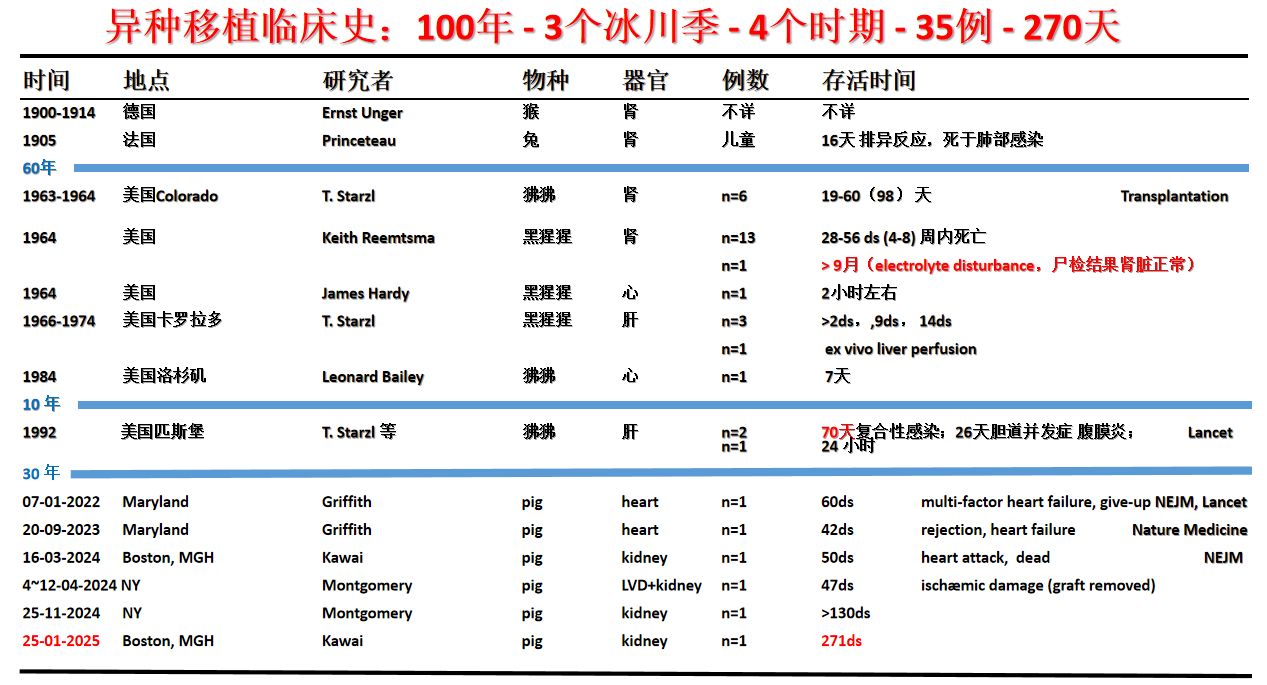
Core Insights - The field of xenotransplantation has made significant advancements in 2025, surpassing breakthroughs achieved in the past century, particularly highlighted by the case of a genetically edited pig kidney functioning in a human for 271 days [1][2] - The comparison between the recent pig kidney transplant and a historical chimpanzee kidney transplant reveals only a marginal improvement in survival time, raising questions about the progress in xenotransplantation compared to other medical advancements like artificial hearts [1][5] Summary by Sections Historical Context - The longest survival record for a kidney transplant from a chimpanzee was set in 1964, lasting 269 days, while the recent pig kidney transplant extended this record to 271 days [2][5] - The historical context shows that despite over 60 years of research, the improvement in survival time for xenotransplantation has been minimal when compared to advancements in other areas of organ transplantation [1][5] Technological Advancements - The recent case of Tim Andrews demonstrates the potential of genetically edited pig kidneys, which have been modified to enhance compatibility with human immune systems [1][9] - The use of modern immunosuppressive therapies has allowed for longer survival times in xenotransplantation, indicating progress in managing immune rejection [6][10] Challenges and Limitations - The field faces significant challenges, including the need for more effective immunosuppressive drugs specifically designed for xenotransplantation, as current medications are primarily developed for same-species transplants [15][17] - The approval process for clinical trials in xenotransplantation varies significantly between countries, with the U.S. having a more structured approach compared to China's relatively unregulated environment [17] Future Prospects - The potential for xenotransplantation to provide a sustainable source of organs is promising, especially given the increasing demand for organ transplants and the shortage of human donors [10][18] - The development of artificial organs, particularly artificial hearts, is advancing rapidly, which may create competition for xenotransplantation in the future [18][22] Ethical and Practical Considerations - Ethical concerns regarding the use of primate organs have shifted the focus to pigs, which are more practical for large-scale organ production and genetic modification [9][19] - The complexity of developing artificial kidneys and livers remains a significant barrier, with current technologies not yet capable of producing viable implantable organs [22][23]

移植猪器官后“会不会变成猪”?不可能!对话中国器官移植“拓荒者”陈忠华:人类的器官当然是最好的,可惜远远不够
Mei Ri Jing Ji Xin Wen· 2025-09-19 14:06
Core Viewpoint - The primary motivation for xenotransplantation research is the shortage of human organs, with a focus on establishing a legal framework for organ donation and promoting voluntary, non-remunerated organ donation after death [1][11]. Group 1: Progress in Xenotransplantation - Significant milestones in xenotransplantation have been achieved in the past five years, including the first successful transplantation of genetically modified pig organs into human patients [6][7]. - The first case of a genetically modified pig kidney transplanted into a living human was reported, with the patient surviving for nearly eight months [6][8]. - The FDA has approved the first clinical trial for pig kidney transplantation, marking a regulatory advancement in the field [8][9]. Group 2: Challenges and Future Directions - Despite progress, xenotransplantation faces challenges such as long-term rejection reactions, biological compatibility issues, and the risk of viral infections from pig organs [15][16]. - The supply-demand ratio for organs in China is approximately 1:8, indicating a significant gap that xenotransplantation aims to address [11][13]. - There is a need for further research and clinical trials to ensure the safety and efficacy of xenotransplantation, particularly in the context of regulatory frameworks and patient selection criteria [8][11]. Group 3: Public Perception and Education - Public concerns regarding xenotransplantation include fears of changing human characteristics and potential disease transmission from pig organs [17]. - Efforts are being made to educate the public about the realities of xenotransplantation, emphasizing that pig organs are merely biological materials and do not alter human behavior [17]. - The promotion of knowledge about xenotransplantation is seen as essential to addressing the organ shortage crisis and advancing the field [17].