基础型芯片

Search documents
美国安专家又操心:别光盯着AI,基础芯片快被中国“偷家”了!
Xin Lang Cai Jing· 2025-10-03 15:27
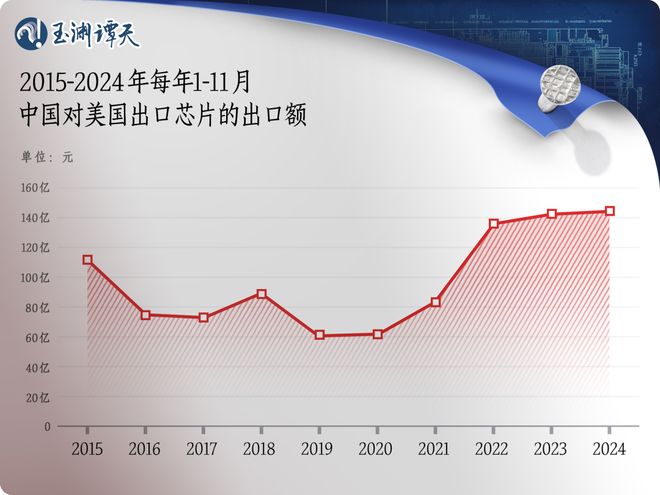
Core Viewpoint - The article highlights the increasing dependence of the United States on foundational chips from China, which poses significant national security risks, overshadowed by the focus on advanced AI semiconductor competition [1][5]. Group 1: Dependence on Foundational Chips - The U.S. is becoming increasingly reliant on foundational chips, which are essential for various sectors including automotive, medical devices, and defense systems [1]. - China currently holds nearly 40% of global chip production capacity, a figure expected to grow before 2030 [1]. - The article warns that if the U.S. continues to depend on Chinese foundational chips, it risks compromising its military capabilities and national security [5]. Group 2: Call for Action - The author urges the U.S. government to take decisive action regarding the 301 investigation into China's mature process chips, advocating for more than just tariffs [1][6]. - There is a call for increased funding and investment in foundational chip production to ensure supply chain resilience and national security [6][7]. - The article emphasizes the need for transparency in the supply chain, suggesting that U.S. companies should disclose their chip sources to mitigate risks [6]. Group 3: Strategic Implications - The article discusses the strategic implications of U.S. reliance on Chinese chips, suggesting that it undermines the logic of maintaining peace in the Taiwan Strait [5]. - The author argues that the belief that economic interdependence would prevent conflict is flawed, as China's self-sufficiency in foundational chips increases U.S. dependency [5][7]. - The article concludes that the U.S. must innovate rather than rely solely on restrictions to maintain its technological edge over China [7].

又开始了…“别光盯着AI,中国都快‘偷家’了!”
Guan Cha Zhe Wang· 2025-10-03 14:21
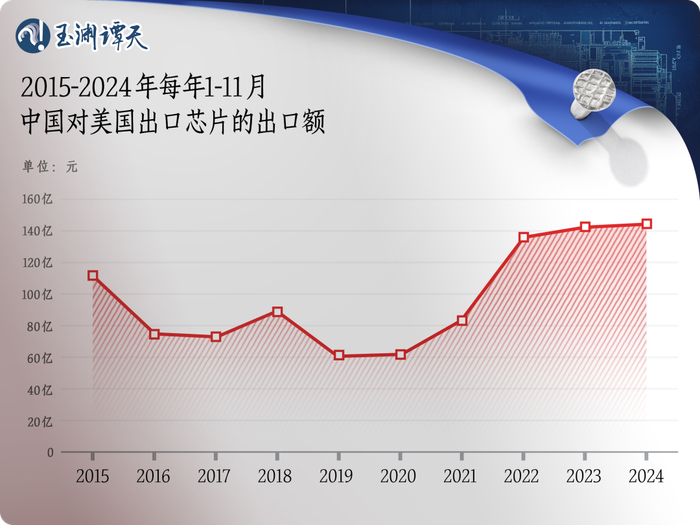
Core Viewpoint - The article highlights the increasing dependence of the United States on foundational chips produced in China, which poses significant national security risks, overshadowed by the focus on advanced AI semiconductor competition [1][2]. Group 1: Dependence on Foundational Chips - The U.S. is becoming increasingly reliant on foundational chips, which are essential for various sectors including automotive, medical devices, and defense systems [1]. - China currently holds nearly 40% of global chip production capacity, a figure expected to grow by 2030 [1]. - The article emphasizes that foundational chips are critical components for all electronic devices and are vital for national infrastructure [4]. Group 2: National Security Implications - The dependence on Chinese foundational chips creates significant security vulnerabilities for the U.S. military, as these chips are integral to systems like the F-16 fighter jet and Patriot missile [5]. - The article argues that the U.S. reliance on these chips undermines the strategic logic that assumes economic interdependence would prevent conflict [5]. Group 3: Policy Recommendations - The author calls for decisive actions from the U.S. government, including enhanced funding for foundational chip production and stricter supply chain transparency requirements for U.S. companies [6][7]. - The article critiques the previous administration's CHIPS and Science Act for lacking sufficient investment in foundational chips, urging for more robust industrial policies to counter China's subsidies [6]. - The ongoing 301 investigation into China's semiconductor industry is described as a critical opportunity for the U.S. to secure its supply chain [7]. Group 4: Global Semiconductor Landscape - The article notes that U.S. restrictions on China have not effectively curtailed its technological advancements, with recent comments from former Commerce Secretary indicating that innovation is the only viable path forward [7]. - China's recent anti-dumping investigation into U.S. semiconductor imports reflects the ongoing tensions and retaliatory measures in the semiconductor sector [8].