基金实时估值工具

Search documents
基金实时估值遭下架,他们转战微信……
Shen Zhen Shang Bao· 2026-02-09 13:31
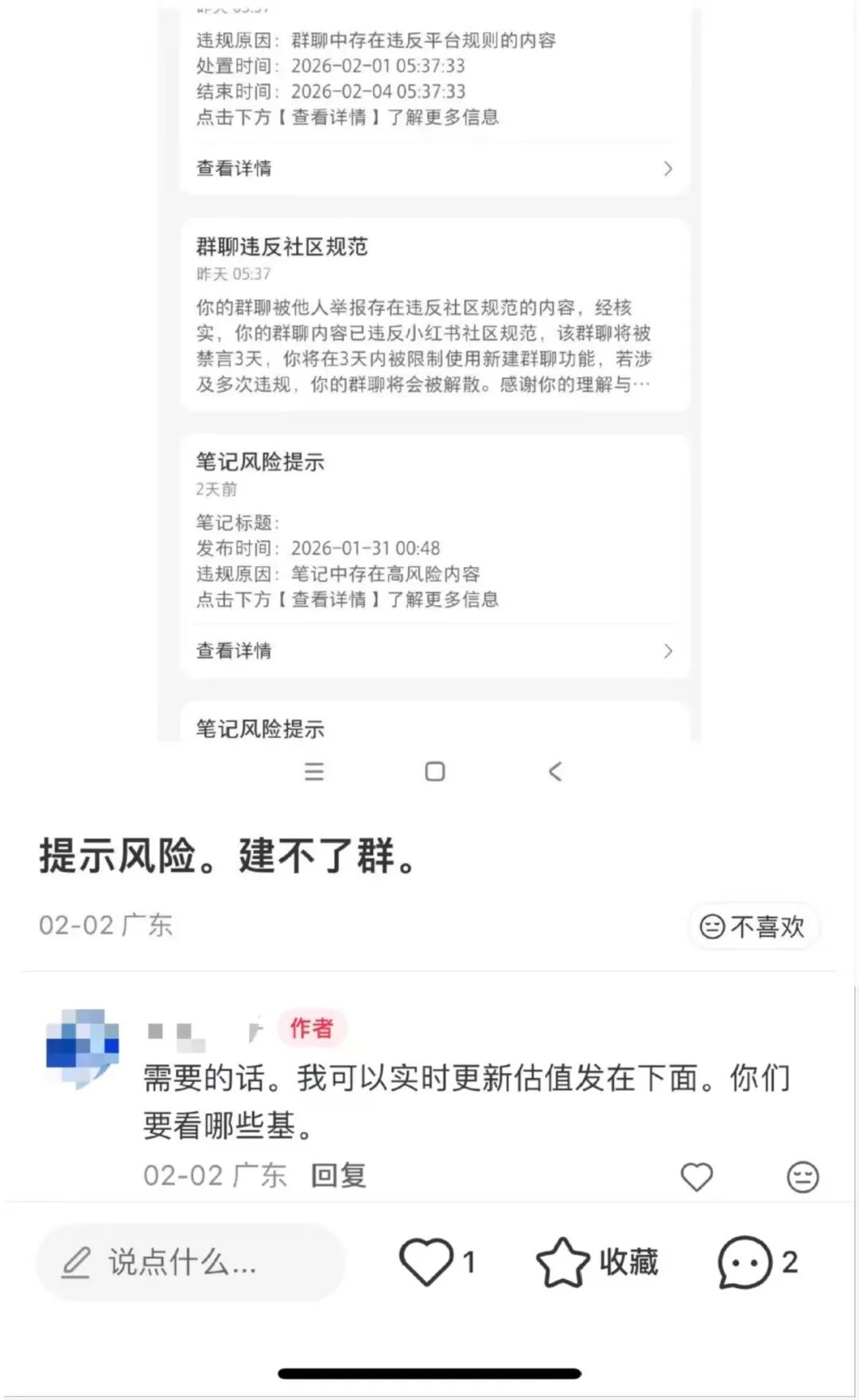
Core Viewpoint - The recent regulatory actions have led to the removal of "real-time valuation" features for funds across multiple platforms, prompting users to share alternative tools on social media, particularly on Xiaohongshu [1][2][3]. Group 1: Regulatory Actions - Regulatory bodies have mandated the removal of "real-time valuation" features, citing concerns that these could mislead investors and dilute fund product returns [2][3]. - The first quarter regulatory report for 2026 highlighted that some fund sales institutions and unlicensed third-party platforms had reintroduced "real-time valuation" functionalities, which could lead to investor complaints and disputes [2]. Group 2: User Responses and Adaptations - Following the removal of official tools, many users on Xiaohongshu have begun sharing homemade real-time valuation applications or software, despite facing bans and deletions of their posts [2][3][4]. - Some users have resorted to creating new accounts or using group chats to share these tools, indicating a persistent demand for real-time valuation despite regulatory restrictions [3][4]. Group 3: Ongoing Developments - Despite the crackdown, numerous accounts continue to post tutorials on real-time valuation tools, with some claiming ongoing testing and adjustments to their offerings [4][14]. - There are reports of inaccuracies in the valuation results provided by some shared tools, raising concerns about their reliability among users [14].

小红书禁言基金实时估值博主
Xin Lang Cai Jing· 2026-02-05 07:38
Core Viewpoint - Xiaohongshu has implemented a ban on certain "real-time fund valuation bloggers" following regulatory guidance to enhance self-inspection and rectify misleading functionalities related to fund sales [1][2]. Group 1: Regulatory Actions - Regulatory bodies have emphasized the need for fund sales institutions and third-party platforms to conduct self-checks and remove features like "real-time fund valuation," "increased positions leaderboard," and "live trading leaderboard" that may mislead investors [1][2]. - Some self-media accounts have continued to operate against regulations by developing and disseminating real-time fund valuation tools to attract followers [1][2]. Group 2: Platform Responses - A specific Xiaohongshu account has been banned for violating community rules, with multiple posts sharing real-time fund valuation tools deleted [1][2]. - Links to software selling real-time fund valuation tools have also been removed from the platform [1][2].
小红书禁言基金实时估值博主
21世纪经济报道· 2026-02-05 06:24
Group 1 - The core viewpoint of the article highlights that Xiaohongshu has implemented a ban on certain "real-time fund valuation bloggers" following regulatory announcements emphasizing the need for fund sales institutions and third-party platforms to enhance self-inspection and rectify misleading functionalities [1] - Regulatory bodies have mandated the removal of features such as "real-time fund valuation," "increased positions leaderboard," and "actual trading leaderboard" that may mislead investors, indicating a crackdown on misleading financial tools [1] - Despite regulatory actions, some self-media accounts continue to promote real-time fund valuation tools, demonstrating a disregard for compliance, as evidenced by the banning of a specific Xiaohongshu account for violating community rules [1] Group 2 - The article references previous reports indicating that real-time fund valuation tools have been removed from various platforms, with some influencers still attempting to sell alternative tools despite the crackdown [2] - The mention of the iMoutai app crashing and the rapid sellout of the 1499 yuan Flying Moutai suggests a high demand for premium products, reflecting consumer behavior trends in the market [2] - The introduction of a humanoid robot by Jia Yueting indicates ongoing innovation in technology sectors, although it raises questions about the company's focus on electric vehicle production [2]

基金实时估值遭下架,有博主仍顶风兜售替代工具
21世纪经济报道· 2026-02-03 15:05
Core Viewpoint - The article highlights the recent controversy surrounding the misleading marketing practices of fund companies, particularly focusing on the incident involving Debon Fund, which raised 12 billion in a single day, prompting regulatory scrutiny on real-time valuation tools and their potential to mislead investors [1][20]. Group 1: Regulatory Actions - Regulatory authorities have mandated fund sales institutions and third-party platforms to enhance self-inspection and remove misleading features such as "real-time valuation" and "acquisition rankings" [1][20]. - Major platforms like Ant Fund, JD Finance, and others have quickly removed these functionalities in response to regulatory demands [1][20]. Group 2: Social Media Influence - Influencers on platforms like Xiaohongshu have begun to develop and promote real-time valuation tools, despite regulatory warnings, indicating a trend of evading compliance [3][7]. - Posts related to fund valuation tools have surged on social media, with influencers directing interested investors to private groups for further engagement [3][7]. Group 3: Market Reactions - The removal of certain functionalities has led to a significant increase in user engagement on these platforms, with some platforms offering membership incentives to retain users [17][18]. - Despite the regulatory push, some platforms have not fully complied, continuing to offer modified versions of real-time valuation tools, which raises compliance concerns [11][15]. Group 4: Investor Education and Misunderstanding - There is a persistent misunderstanding among investors regarding the difference between net asset value (NAV) and real-time valuation, which can lead to significant discrepancies in perceived fund performance [20][21]. - The article emphasizes the need for better investor education to clarify these differences and mitigate the risks associated with misleading valuation tools [20][21]. Group 5: Case Study of Debon Fund - The Debon Fund incident serves as a case study illustrating the potential consequences of misleading real-time valuations, where the fund's reported real-time increase of 13.01% contrasted sharply with its actual NAV increase of only 8.31% [22][23]. - This discrepancy highlights the risks of treating funds as short-term trading instruments rather than long-term investment vehicles, raising questions about the ethical implications of such marketing practices [22][23].