墨斗IDE

Search documents
机器人行业一直被忽视的基础设施缺口,有人开始补了
机器人大讲堂· 2026-03-09 09:03
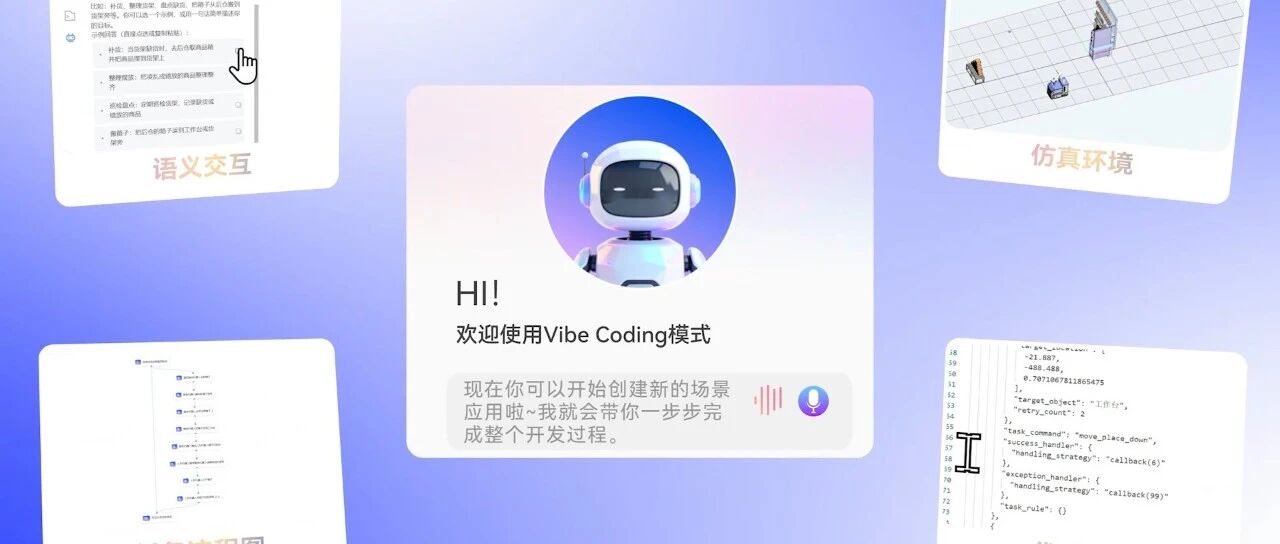
Core Viewpoint - The article highlights the structural challenges faced by the domestic robotics industry, emphasizing that while hardware can be produced locally, the core software platforms, including operating systems and development tools, still heavily rely on foreign ecosystems like ROS and NVIDIA's IsaacSim [1][3]. Group 1: Industry Challenges - The increasing autonomy rate of domestic robots reveals a critical issue: while hardware can be localized, the essential software components remain a significant vulnerability for companies in the robotics sector [3]. - The industry is at a crossroads where the integration of control systems, data platforms, and development paradigms is crucial for overcoming these challenges [4]. Group 2: Technological Advancements - Efort Qizhi has developed three core products—Mudu IDE, Dayan Data Platform, and OpenmindOS—aimed at addressing the integration of these essential components [4][6]. - The Mudu IDE serves as a one-stop simulation and development platform, integrating various stages of the development process, which traditionally required switching between multiple software tools [9][12]. Group 3: Vibe Coding - Vibe Coding, a new programming paradigm introduced by Mudu IDE, allows users to describe tasks in natural language, which the system then translates into executable programs, significantly reducing the time from idea to implementation by 65%-70% [12][14]. - This approach democratizes technology, enabling non-technical users, such as store managers and production engineers, to participate in the development process, thus unleashing a broader creative potential [15]. Group 4: Practical Applications - A demonstration of a complete task cycle in a supermarket setting showcased the seamless collaboration between different types of robots, validating the effectiveness of the integrated system [8][6]. - The Mudu IDE's capabilities include high-precision virtual controllers that allow for complex logic validation and program debugging without the need for physical hardware, thereby reducing on-site debugging time by over 30% [20][22]. Group 5: Future Prospects - The article envisions a future where the Mudu IDE not only addresses current efficiency issues but also reconstructs the entire development and commercial ecosystem of the robotics industry, similar to the evolution of app stores [31][34]. - The potential for a collaborative ecosystem is highlighted, where various stakeholders, including component manufacturers and integrators, can leverage the platform to enhance their offerings and streamline processes [35][36].


启智机器人完成近亿元天使轮融资,构建通用技术底座,探索具身智能落地可行路径
机器人圈· 2026-02-03 10:26
Core Viewpoint - The article highlights the successful completion of nearly 100 million yuan in angel round financing for Qizhi Robotics, emphasizing the strong backing from industry capital for its "general technology base" and its commercial prospects [2]. Group 1: Company Overview - Qizhi Robotics was established in May 2024, focusing on the research and development of a general technology base for intelligent robots, initiated by Efort and several investment funds [2]. - The company is led by Dr. You Wei, who has extensive experience in leading major projects in top robotics firms and has been instrumental in Efort's growth and successful listing on the STAR Market in 2020 [3]. - Qizhi Robotics has built a core team of nearly 200 high-caliber professionals, with 80% being R&D personnel, and 55% holding master's or doctoral degrees [3]. Group 2: Technology and Products - The company has developed the yobot series of robots, which includes bipedal humanoid models (R2V1, R2V2) and wheeled models (W2) [6]. - Qizhi Robotics' technology stack includes: - **Mokdou IDE**: A visual toolchain that simplifies robot skill app development, making it as efficient as mobile app development [7]. - **Openmind OS**: A software architecture that decouples hardware and software, allowing various robot types to operate on a unified platform [7]. - **Dayan Data Platform**: Provides comprehensive support for data processes, enhancing AI capabilities and user flexibility [7]. Group 3: Business Model and Market Strategy - The business model is based on "general base + full-scene carrier," with successful technology validation in complex home scenarios like kitchen organization and therapeutic massage [9]. - The strategic focus is not just on producing advanced humanoid robots but also on validating the commercial value of the "intelligent general technology base" through complex product development [9]. - Qizhi Robotics aims to collect scene data for training and product validation, using humanoid robots to challenge and prove the capabilities of its technology [9]. - The company engages the public and professional users through offline experiences, generating vast amounts of real-world data for algorithm iteration and model training [9][10].