
多模型融合算法

Search documents
“中国制造”闪耀米兰冬奥
Xin Lang Cai Jing· 2026-02-10 20:03
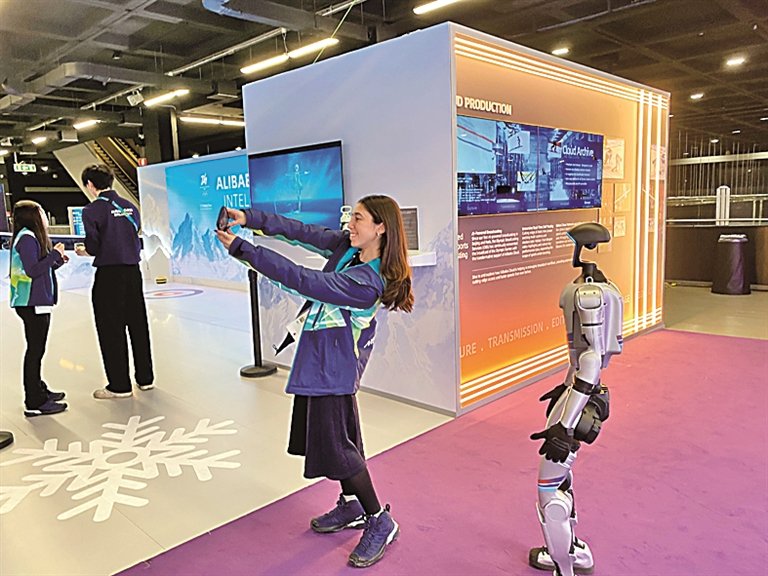
Group 1 - Chinese athlete Gu Ailing won a silver medal in women's freestyle skiing at the Milan Winter Olympics, utilizing equipment marked with "Made in China," showcasing the contribution of Chinese companies to the event [1] - The Olympic Broadcasting Services collaborated with Chinese enterprises to create the "Olympic Screen Universe," deploying hundreds of large-screen HD televisions, digital signage, and LED screens across various venues to enhance the viewing experience for athletes and spectators [1] - A "smart exhibition booth" from a Chinese company was prominently featured at the main media center of the Winter Olympics, where the International Olympic Committee (IOC) President announced the creation of the first official Olympic large model based on technology from a Chinese enterprise [3] Group 2 - The official large model developed by the Chinese company Qianwen provides AI assistance to national Olympic committees, allowing representatives to ask questions in their native languages, thus improving coordination efficiency among global teams [3] - Chinese companies have developed multi-model fusion algorithms to address broadcasting challenges, enhancing the visual experience for viewers with clearer "bullet time" freeze frames and new "time slice" effects during broadcasts [4] - The Milan Winter Olympics is noted for its geographical span, and Chinese companies supported the construction of a traffic management system using cloud computing to facilitate access from urban areas to mountainous regions [4]

中国智慧点亮米兰冬奥
Xin Lang Cai Jing· 2026-02-07 09:27
Core Viewpoint - The 2026 Milan-Cortina Winter Olympics is set to be significantly influenced by technology, particularly through the integration of Chinese AI innovations, enhancing the overall experience for athletes and spectators alike [1][3]. Group 1: Technological Innovations - The broadcasting experience of the Winter Olympics has been transformed by Chinese AI technology, with the International Olympic Committee (IOC) utilizing Alibaba's Qianwen model to create the first official Olympic large model, marking this event as the "smartest" Olympics in history [3]. - A multi-model fusion algorithm developed in China will address challenges in snow broadcasting, providing clearer visuals and real-time highlights through an "automatic media description system" [6]. - The "Olympic AI Assistant" offers multilingual support for various national delegations, enhancing communication and operational efficiency during the games [3][8]. Group 2: Athlete Experience - Athletes will benefit from customized competition gear developed using 3D scanning and AI technology, featuring lightweight, breathable materials and low-drag designs [6]. - The Olympic Village is equipped with smart living solutions, including air conditioning that monitors sleep patterns and AI glasses for navigation, ensuring athletes' comfort and efficiency [10]. Group 3: Audience Engagement - The event will feature advanced display technologies from China, creating a "screen universe" that enhances the viewing experience and allows athletes to connect with family and friends in real-time [8]. - Interactive elements, such as the "smart badge exchange station," will add a technological twist to traditional interactions, providing a unique experience for participants [8][10]. Group 4: Infrastructure and Logistics - A smart traffic management system powered by Chinese cloud technology will facilitate transportation in the challenging Alpine terrain, ensuring smooth access to venues [10].
(米兰冬奥会)中国智慧点亮米兰冬奥
Zhong Guo Xin Wen Wang· 2026-02-07 05:27
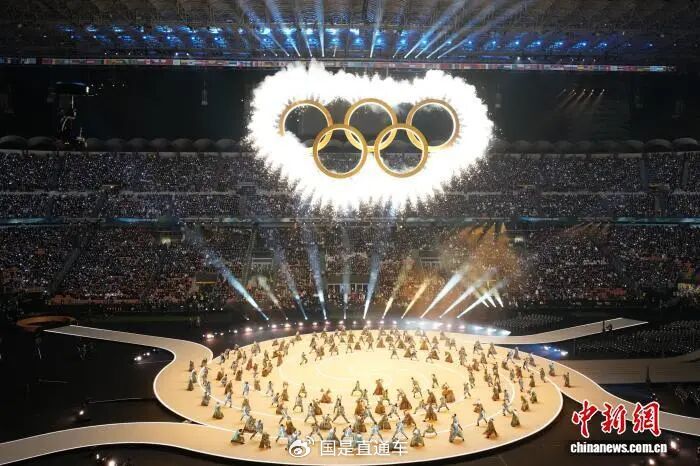
Core Viewpoint - The 2026 Milan-Cortina Winter Olympics is significantly enhanced by Chinese technology, particularly in AI and display systems, which are reshaping the experience of viewing, participating, and perceiving the Olympics [1][3][6] Group 1: Technological Innovations - The broadcasting experience of the Winter Olympics has been transformed by Chinese AI technology, with the International Olympic Committee utilizing Alibaba's Qianwen model to create the first official Olympic large model, making this the "smartest" Olympics in history [3] - A "National Olympic Committee AI Assistant" has been developed to provide multilingual event services, addressing various logistical and qualification inquiries, thereby improving global collaboration [3] - Chinese-developed multi-model fusion algorithms will enhance broadcast clarity, offering features like "bullet time" and "time slice" effects, while an "automatic media description system" will generate real-time highlights and analyses [3] Group 2: Athlete Experience - Chinese sports brands are leveraging 3D scanning and AI technology to customize competition apparel, using advanced materials to balance weight and breathability, and optimizing shoe performance with low-drag designs [3] - Athletes can connect with family and friends through high-definition screens in the Olympic Village, showcasing the emotional aspect of their victories, enabled by Chinese display technology [5] Group 3: Interactive and Supportive Technologies - The "Olympic AI Assistant" provides 24/7 multilingual support for athletes, officials, and spectators, demonstrating the human touch of technology [5] - The Olympic Village features smart living solutions, including air conditioning that senses sleep patterns and AI glasses for translation and navigation, enhancing athletes' daily lives [5] - A smart traffic management system, supported by Chinese cloud technology, operates effectively in the challenging Alpine conditions, ensuring smooth transportation to the venues [5][6]
(米兰冬奥会)中国AI助力打造奥运史上首个官方大模型
Xin Lang Cai Jing· 2026-02-05 16:09
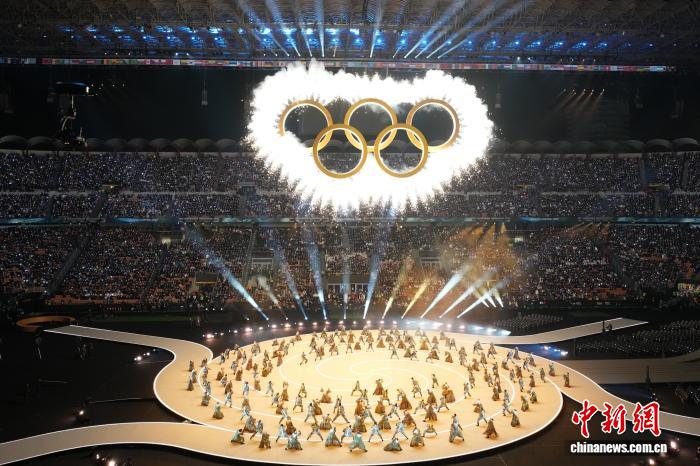
Core Insights - The 2026 Milan-Cortina Winter Olympics will be the first to utilize an official AI model developed by Alibaba, marking a significant step towards the intelligent future of the Olympic movement [1][2] - The event is expected to be the "smartest" Olympics in history, showcasing advanced AI applications in both operational and public service aspects [1] Group 1: AI Applications in Operations - The International Olympic Committee (IOC) has launched a "National Olympic Committee AI Assistant" on its website, which leverages the AI model's multilingual capabilities to assist national committees with various inquiries, enhancing collaboration efficiency among global teams [1] - An automatic media description system, based on the Qwen-VL model, has been implemented to provide real-time event descriptions during broadcasts, improving the viewer experience [2] Group 2: Enhancements in Broadcasting and Viewer Experience - A multi-model fusion algorithm developed in China addresses broadcasting challenges, enhancing visual clarity and introducing new effects like "bullet time" and "time slices" for a more immersive viewing experience [2] - The Milan Winter Olympics will feature the widest geographical span in Olympic history, with a traffic management system supported by Alibaba Cloud to facilitate access to mountainous areas during adverse weather conditions [2] Group 3: Legacy and Future Impact - The legacy of the Milan Winter Olympics is expected to be its intelligent capabilities, which the IOC believes will reshape the future of the Olympic Games [2]