大兴机场线

Search documents
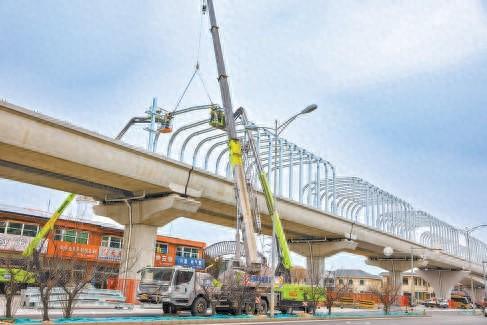
京雄快线开通后雄安可速达大兴机场!京雄快线今年具备与大兴机场线贯通运营调试条件
Xin Lang Cai Jing· 2026-02-08 14:25
Core Viewpoint - The opening of the Beijing-Xiong'an Intercity Railway (京雄快线) will significantly enhance transportation efficiency between Xiong'an New Area and Beijing Daxing International Airport, facilitating convenient commuting services for residents and businesses in both regions [1] Group 1: Project Status - The main structure of the Beijing-Xiong'an Intercity Railway has been completed, with ongoing efforts in station decoration, electromechanical installation, and operational preparations [1] - The project is currently in the comprehensive joint debugging phase, indicating progress towards operational readiness [1] Group 2: Operational Impact - Once operational, the railway will allow passengers to travel from Xiong'an Terminal Station to Beijing Daxing International Airport in just 30 minutes and to Lize Business District in one hour [1] - The integration of the Xiong'an R1 Line (京雄快线) with the Daxing Airport Line is expected to enhance connectivity and support the transportation goals outlined in the 2026 Beijing Transportation Comprehensive Governance Action Plan [1]
今年计划开通轨道交通22号线
Xin Lang Cai Jing· 2026-01-21 22:38
Core Points - Beijing's transportation services are set to improve significantly by 2026, with a focus on creating a comprehensive transportation system that is convenient, smooth, green, smart, and safe [2] - The city aims to increase the proportion of green travel in the central urban area to 76.8% this year [2] - The construction of the 22nd subway line is planned to be completed this year, along with the renovation of the Guomao transfer passage on Line 10 to enhance commuting efficiency [2] Group 1: Infrastructure Development - The Beijing-Tianjin-Hebei transportation integration will continue to deepen, with the opening of the 22nd subway line and the promotion of the Xiong'an R1 line and Daxing Airport line connectivity [2] - Key infrastructure projects include the construction of the Liangma River North Road, New National Exhibition Liaison Line, and the overall upgrade of the South Central Axis Road [3] - The city plans to enhance road traffic quality by expanding the Fourth Ring Road renovation model and improving the overall road network efficiency [3] Group 2: Public Transport Enhancements - The city will continue to deepen "multi-network integration," focusing on the core of rail transit to improve comprehensive transportation service efficiency [3] - Plans include the construction of the M101 line and the overall upgrade of the suburban railway city sub-center line from Beijing West to Liangxiang [3] - The city aims to add over 30 new bus routes outside the Fourth Ring Road and more than 20 "short, frequent, and fast" connecting routes [3] Group 3: Non-Motorized Transport and Parking Solutions - The city plans to build seven slow-moving demonstration streets and create urban greenways around the Second Ring Road [5] - An additional 100,000 non-motorized vehicle parking spaces will be added, along with the trial construction of multi-story parking facilities [5] - The city aims to address parking difficulties in central urban areas by adding 35,000 new and shared parking spaces [5] Group 4: Traffic Safety and Smart Transportation - The city will enhance traffic safety and emergency response capabilities, including improving the resilience of mountain roads against disasters [6] - A total of 8,000 traffic lights will be interconnected and controlled, with the establishment of 500 dynamic green wave roads to improve intelligent traffic management [6] - The city is focused on creating a closed-loop management system for traffic, enhancing the smart service capabilities of the transportation network [6] Group 5: Achievements and Future Goals - In 2025, the green travel proportion in the central urban area reached 76.5%, reflecting the effectiveness of the integrated transportation system [7] - The city has expanded its rail network, with the operational mileage reaching 909 kilometers and the opening of new stations to improve connectivity [7] - The transportation department is exploring comprehensive governance paths for super-large cities, with significant improvements in road accessibility and infrastructure [7]