
交通基础设施建设

Search documents
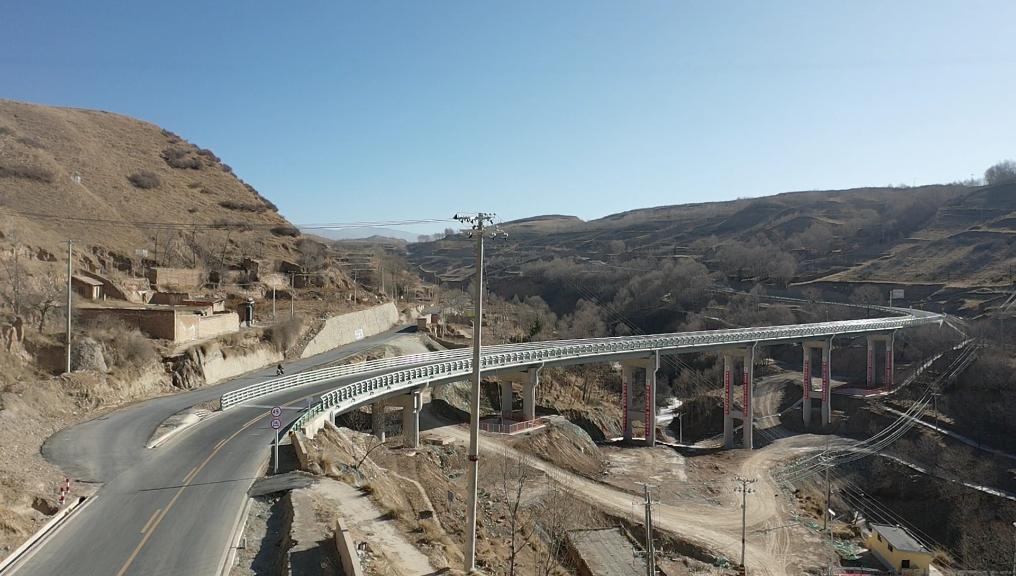
新春走基层丨路通年丰日子甜——青海海东一条公路背后的新年新图景
Xin Hua She· 2026-02-24 09:16
Core Viewpoint - The completion of the Yan-Guan Highway in Qinghai Province has significantly improved local transportation, enhancing the livelihoods of residents and facilitating economic activities in the region [3][4]. Group 1: Economic Impact - The newly constructed Yan-Guan Highway has enabled local farmers to sell livestock more easily, with one farmer reporting sales of 66,000 yuan from eight yaks, allowing for the purchase of household appliances [1][4]. - The road's improvement has led to increased business for local restaurants, with one restaurant owner noting daily revenues exceeding 3,000 yuan due to better access for customers and suppliers [6]. Group 2: Infrastructure Development - The Yan-Guan Highway, a crucial transportation link between the counties of Hualong and Minhe, underwent a major renovation with a total investment of 560 million yuan and a length of 100.28 kilometers, officially starting construction in April 2025 [3][4]. - The project is expected to be completed by November 2025, transforming a previously difficult route into a reliable and beneficial road for local communities [4]. Group 3: Social Benefits - Improved road conditions have enhanced safety for students commuting to school, as school buses can now directly access villages, eliminating the need for children to walk through muddy paths [6]. - The new road has fostered cultural exchanges among villages, with community events such as archery competitions becoming more accessible during festive seasons [6].

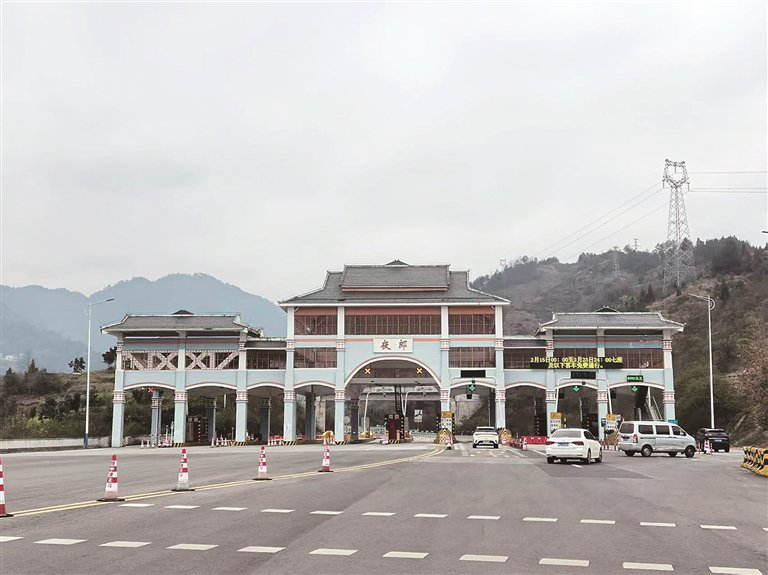
【新春走基层·走进贵州】茶台村的致富路
Xin Lang Cai Jing· 2026-02-17 22:47
Core Viewpoint - The development of transportation infrastructure in Guizhou has significantly improved the economic conditions and market access for rural areas, particularly in Tongzi County, enhancing the livelihoods of local farmers and entrepreneurs [1][3][4]. Transportation Development - Since the opening of the first high-speed train in Guizhou in 2014, the province has seen comprehensive improvements in its transportation network, with all nine cities connected by high-speed rail and rural areas accessible by roads [1]. - The enhanced transportation has transformed Guizhou into a well-connected region, making it notable in both the western and national contexts [1]. Economic Impact on Agriculture - Local farmer Luo Changhua attributes the success of his tea and citrus fruit business to improved transportation, which allows for quick delivery of products to major cities like Chongqing, Beijing, Shanghai, and Guangzhou [3][4]. - The ability to transport goods efficiently has opened up markets for local agricultural products, enabling same-day delivery to distant locations [3]. Entrepreneurial Growth - The improved infrastructure has encouraged local residents to return and invest in their hometowns, leading to the establishment of agricultural businesses and the cultivation of high-value crops [4]. - Luo Changhua has leveraged transportation advancements to collaborate with experts from Guizhou University, enhancing agricultural practices and addressing technical challenges in crop management [4]. Community Development - The local community has benefited from the transportation improvements, with increased tourism and the establishment of homestays attracting visitors from across the country [4]. - The integration of transportation infrastructure has transformed the perception of the mountainous region from an obstacle to a resource, fostering economic development and improving the quality of life for residents [4].
中泰高铁一期工程过半 计划2030年建成通车
Zhong Guo Xin Wen Wang· 2026-02-15 16:10
Group 1 - The first phase of the China-Thailand high-speed rail project has completed 51.74% of its construction, with an official target to commence operations by 2030 [1][2] - The project involves a total investment of 179.4 billion Thai Baht (approximately 39.9 billion RMB) and spans 250.77 kilometers, including 14 civil engineering contracts and 1 system engineering contract [1] - The project includes six major stations along the route: Bangkok Apivath Central Station, Don Mueang, Ayutthaya, Saraburi, Pak Chong, and Nakhon Ratchasima [1] Group 2 - The second phase of the China-Thailand high-speed rail, from Nakhon Ratchasima to Nong Khai, has received cabinet approval and completed environmental impact assessments, with a total investment of 256.4 billion Thai Baht (approximately 57 billion RMB) [2] - This second phase will cover 357.12 kilometers and include five stations: Udon Thani, Khon Kaen, Ban Phai, and Nong Khai, with plans to complete bidding and contract signing by 2026 and construction expected to take about 48 months [2] - The China-Thailand high-speed rail is considered a strategic project for Thailand's transportation infrastructure, aimed at modernizing the railway system, enhancing safety, and improving regional connectivity [2]
珠海隧道主线通车 全长约5公里 具备全天候通行能力
Nan Fang Ri Bao Wang Luo Ban· 2026-02-14 07:12
Core Viewpoint - The Zhuhai Tunnel, a key project to alleviate traffic pressure between the east and west of Zhuhai, officially opened on February 13, featuring a 5-kilometer main line designed for dual six-lane traffic and a speed of 80 km/h, equipped with advanced safety and monitoring systems [1][2] Group 1 - The Zhuhai Tunnel connects the Zhuhai Bridge and the Zhuhai Avenue, creating a "North Bridge South Tunnel" traffic pattern that significantly reduces traffic pressure on the existing main road, the Zhuhai Bridge [1] - The tunnel allows for a travel time of approximately 5 minutes for vehicles to pass through, enhancing connectivity between Xiangzhou District, Jinwan District, and Doumen District [1] - The construction faced challenges such as soft soil conditions and complex geological layers, leading to the development of a comprehensive technical matrix for future similar projects [2] Group 2 - The Zhuhai Tunnel is designed to operate under all weather conditions, ensuring safety and smooth traffic flow even during severe weather events like typhoons, thereby increasing the resilience and reliability of the urban transportation system [2]
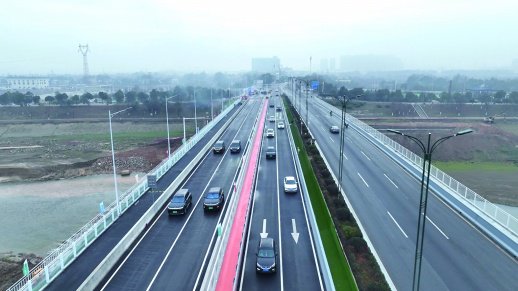
一路两桥同日通车,激活长沙城北动脉
Xin Lang Cai Jing· 2026-02-12 19:35
Core Points - The article discusses the completion and opening of three major transportation projects in Changsha's Wangcheng District, which significantly improve connectivity between Wangcheng and Yiyang [7][8] - The projects include the extension of Yinsan Road, the renovation of Leifeng Avenue Weishui Bridge, and the opening of Wangyi Bridge, all aimed at reducing travel time and enhancing traffic flow [7][8] Group 1: Yinsan Road Extension - The Yinsan Road extension spans over 720 meters and required coordination among multiple agencies, including railways and power companies, to complete [7] - Previously, residents had to detour for 20 minutes to reach Dazeh Lake, but the new road reduces this time to just a few minutes, improving commuting efficiency [7] Group 2: Leifeng Avenue Weishui Bridge Renovation - The renovated Weishui Bridge is a key route connecting Wangcheng to Yiyang and Yueyang, with the main bridge lengthened to 800 meters and upgraded to accommodate four lanes [7] - The design speed is set at 60 km/h, and the addition of new turning lanes significantly alleviates congestion at this critical junction [7] Group 3: Wangyi Bridge Opening - Wangyi Bridge connects the banks of the Liujiang River, drastically reducing the travel distance for residents from over 20 kilometers to just 2 minutes [8] - This bridge serves as a vital link for industrial collaboration and personnel exchange between the two regions, effectively ending the previous reliance on pedestrian bridges [8]
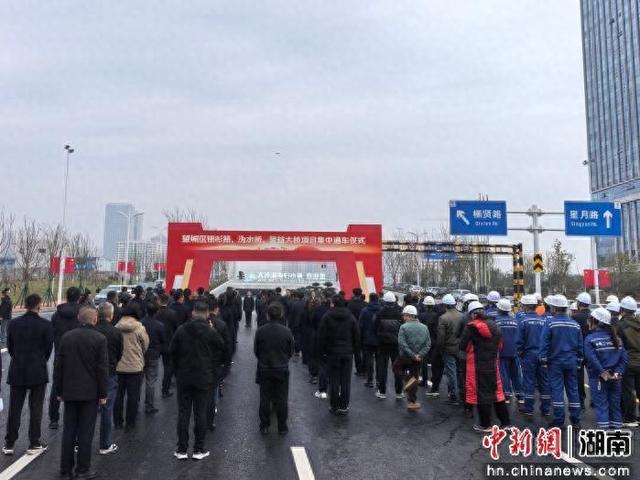
长沙望城三大交通项目集中竣工通车 区域发展“动脉”贯通
Xin Lang Cai Jing· 2026-02-12 10:19
Core Viewpoint - The completion of three major transportation projects in Wangcheng District, including Yinsong Road, Leifeng Avenue Weishui Bridge, and Wangyi Bridge, enhances the integrated transportation network, facilitating internal circulation and accelerating the integration process between Changsha and Yiyang [1][3][5]. Group 1: Project Details - Yinsong Road, over 720 meters long, connects Wangcheng District with Xiangjiang New District and improves the road network structure, addressing travel difficulties for residents and promoting industrial agglomeration and talent attraction [3][5]. - The newly constructed Weishui Bridge on Leifeng Avenue significantly improves traffic flow and safety by separating turning and straight traffic, alleviating long-standing traffic bottlenecks and enhancing regional connectivity [3][5]. - Wangyi Bridge serves as a landmark project for the integration of Changsha and Yiyang, facilitating cross-regional commuting and breaking down geographical barriers to resource flow, thus becoming a vital link for industrial collaboration and personnel exchange [5][7]. Group 2: Strategic Implications - The completion of these projects represents a significant achievement in Wangcheng District's infrastructure development, contributing to a more efficient and safe regional transportation system that strengthens the district's location advantages and urban capacity [5][7]. - The district's commitment to optimizing its transportation system aims to establish a comprehensive traffic framework that supports industrial upgrades, regional collaboration, and improved living standards, positioning Changsha as a national transportation hub [7].
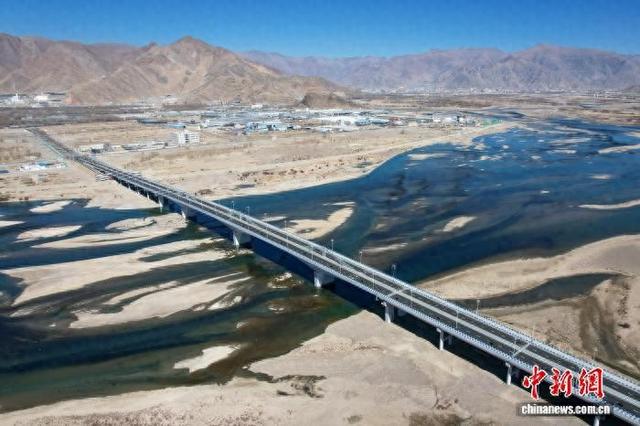
拉萨聂当特大桥通车 城区跨拉萨河桥梁达10座
Xin Lang Cai Jing· 2026-02-06 14:47
Core Viewpoint - The opening of the Niedang Grand Bridge on February 6 enhances transportation infrastructure in Lhasa, increasing the number of bridges across the Lhasa River to ten, which is expected to facilitate local travel and support regional economic development [1][3][4] Group 1: Infrastructure Development - The Niedang Grand Bridge spans 1.81 kilometers and is built to urban arterial road standards, featuring a dual four-lane design [4] - The total investment for the bridge construction was 394 million yuan [4] - The bridge's operation is anticipated to improve the local road network and promote industrial growth in the area [4] Group 2: Historical Context - Historically, transportation across the Lhasa River was challenging, with residents relying on rudimentary methods such as cable cars and wooden boats before the construction of modern bridges [3] - The first modern bridge, Lhasa Bridge, was completed in 1965, marking a significant advancement in local infrastructure [3] - The development of additional bridges since the 2007 opening of the Liuwu Bridge has accelerated urban growth in Lhasa [3]
汕梅高速韩山隧道贯通
Nan Fang Ri Bao Wang Luo Ban· 2026-02-06 08:31
Core Viewpoint - The successful completion of the last blasting at the Han Mountain Tunnel marks a significant milestone for the Shantou-Meizhou Expressway reconstruction project, aiming for completion and operation by the end of 2026 [1] Group 1: Project Details - The Han Mountain Tunnel, located in Fengshun County, Meizhou City, has a total length of 345 meters and is designed as a super-large span single-hole, single-direction four-lane tunnel [1] - Construction of the tunnel began on August 14, 2025, and is part of the first expressway reconstruction project in the mountainous and hilly areas of Guangdong Province [1] - The entire Shantou-Meizhou Expressway reconstruction project spans approximately 88 kilometers and is being built to a standard of eight lanes in both directions [1] Group 2: Regional Impact - Upon completion, the project will significantly enhance the highway traffic capacity and service level in the northeastern region of Guangdong, contributing positively to the improvement of regional transportation infrastructure [1]
又一出川大通道来了!串联九寨沟、黄龙等景区
Xin Lang Cai Jing· 2026-02-05 15:06
Core Viewpoint - The approval of land use for the G0611 Chuan Zhu Si to Wen Chuan section of the highway marks a significant milestone in the construction of the Chuan Wen Expressway, facilitating the project's substantial commencement [1] Group 1: Project Overview - The Chuan Wen Expressway is a crucial segment of the national highway network G0611, connecting Zhang Ye to Wen Chuan [1] - The project spans 199 kilometers with a bridge-tunnel ratio of 93.4% and an elevation drop of over 1800 meters [1] - It will be constructed as a dual four-lane expressway with a design speed of 80 kilometers per hour [1] Group 2: Economic and Tourism Impact - The expressway will serve as a major transportation artery for the Aba Prefecture's "Great Jiuzhai" tourism and transportation integration development core area [1] - It connects world-class tourist resources such as Jiuzhaigou and Huanglong, enhancing accessibility and promoting tourism [1]
G0611川汶高速建设用地获批,串联九寨沟、黄龙等景区
Xin Lang Cai Jing· 2026-02-05 09:57
Core Viewpoint - The approval of land use for the G0611 Chuanjusi to Wenchuan section of the highway marks a significant milestone in the construction of the Chuanwen Expressway, facilitating the project's substantial commencement [1] Group 1: Project Overview - The Chuanwen Expressway is a crucial segment of the national highway network G0611, connecting Zhangye to Wenchuan [1] - The project spans 199 kilometers, featuring a bridge-tunnel ratio of 93.4% and an elevation drop of over 1800 meters [1] - It will be constructed as a dual four-lane expressway with a design speed of 80 kilometers per hour [1] Group 2: Economic and Tourism Impact - The expressway serves as a vital transportation link for the Aba Prefecture's "Great Jiuzhai" tourism integration development core area, connecting world-class tourist resources such as Jiuzhaigou and Huanglong [1] - It enhances the northward transportation capacity from Sichuan, contributing to regional economic development [1]